Cuban Labor Minister Resigns After Denying Homelessness in the Country
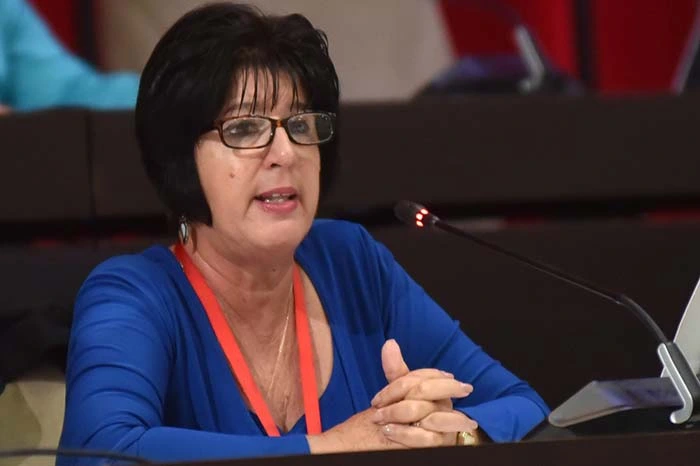
Cuba’s top labor official, Marta Elena Feitó Cabrera, resigned after claiming there were no beggars on the island, sparking anger across the country.
She made her statement in front of the National Assembly, insisting that those seen living on the street only pretended to be destitute.
This denial did not match what many Cubans see every day: more people, mostly elderly, searching through trash, begging, and struggling to get by.
The backlash was immediate and strong. Citizens took to social media and demanded action. The government responded quickly, with President Miguel Díaz-Canel and Prime Minister Manuel Marrero acknowledging that real poverty and vulnerability exist.
They admitted that the situation for many Cubans has worsened. Behind the outrage lies a severe economic collapse. Official government data shows that Cuba’s economy has shrunk by eleven percent since 2019.
Key sectors like farming, mining, and manufacturing have lost over half their strength. Blackouts are now common. Food shortages mean the average government salary—5,000 pesos monthly, or roughly $17 at street rates—cannot cover even basic groceries.
Cuba’s Unraveling Social Safety Net
A carton of eggs can cost $10. Nearly forty percent of retirees receive minimum pensions that cannot buy them even a week’s worth of food. The sugar industry, once a national pride, produced only 160,000 tons of sugar last year—the lowest in a century.
Many state-run food companies are losing money and cannot meet demand. Nearly two million Cubans have left since 2022, and millions rely on remittances sent from abroad just to get by.
Feitó Cabrera’s resignation is more than a political story—it exposes growing public pressure that even Cuba’s leaders must address. The island’s crisis is no longer just about numbers—it is about people unable to meet basic needs.
Government officials have finally admitted the depth of the problem. Yet the official response has not provided new answers to a crisis that affects nearly every Cuban family.
Cuba’s situation highlights how quickly public pressure can move even a closed government. It also shows just how far the country’s social safety net has unraveled.
The numbers and people’s daily struggles tell the story—Cuba is in deep trouble, and change cannot wait.
More: Latin America news in English, every day from The Rio Times.
This article was produced by The Rio Times’ automated newsroom system. How we use AI · Report an error
Read More from The Rio Times