
COSTA RICA · ECONOMY
Key Facts
- The country Costa Rica is a stable Central American democracy that relies on exports from free trade zones, where multinational companies make chips, medical devices and business services.
- Why it matters Growth in a close US trading partner is slowing, with free-zone exports hit by closures of electronics-component plants and by global trade tensions.
- Why now The central bank presented its monetary policy report on Friday, 30 October 2026, with lower growth forecasts for 2026 and 2027.
- What happened The central bank cut its 2026 growth forecast to 3.2% from 3.4% in July and its 2027 forecast to 3.3% from 3.5%, and gave a first 2028 forecast of 3.6%.
- The numbers Exports are projected to grow 1.4% in 2026 after 8.6% in 2025, free-zone output 3% after 12.7%, and free-zone jobs fell by 1,691 to 195,410 in the year to August 2026.
- What it means for you US companies with plants in Costa Rican free zones face slower export growth, and analysts say a stronger colón against the dollar weighs on competitiveness.
- Still open How many more free-zone jobs are lost, whether more multinationals shrink their plants, and whether zone output rebounds to the projected 4.6% in 2027.
- Power Index Costa Rica ranks 9th of 14 in The Rio Times Latin America Power Index, with 36.5 points (October 2026 edition).
In Plain English
The Banco Central de Costa Rica, known as the BCCR, is the central bank, and its monetary policy report, called the IPM in Spanish, sets out its forecasts for growth, prices and trade. Free trade zones are areas where companies, mostly multinationals, produce for export under special tax rules.
The colón is Costa Rica’s currency, and the reference rate is the central bank’s daily buy and sell price for the US dollar. The CCSS is the Costa Rican Social Security Fund, whose counts of formal workers come from payroll contributions.
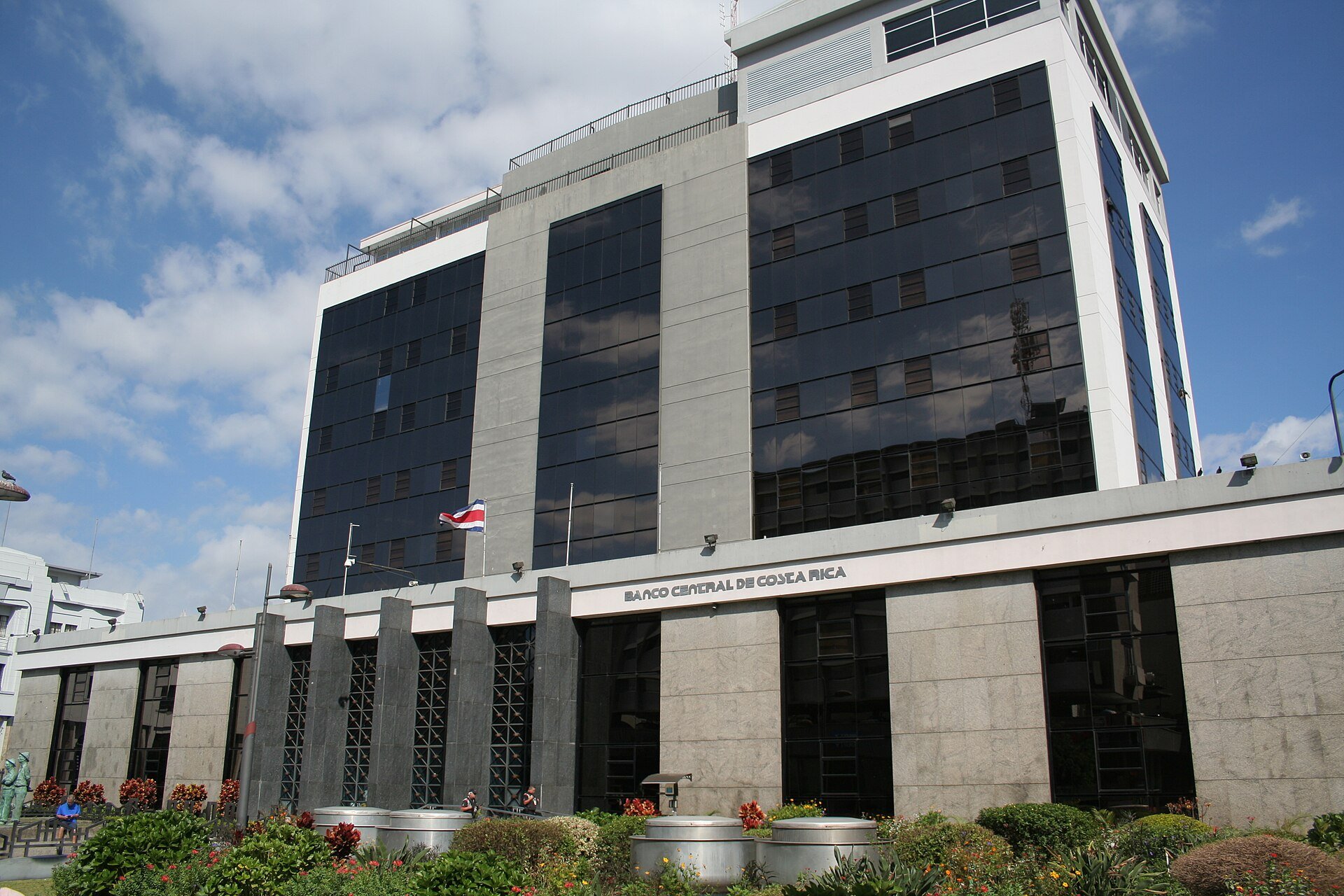
Costa Rica’s central bank cut its 2026 growth forecast to 3.2% on Friday, 30 October 2026, down from 3.4% in July and well below the preliminary 4.6% recorded in 2025. The Banco Central de Costa Rica, known as the BCCR, also lowered its 2027 forecast to 3.3% from 3.5% and gave a first forecast of 3.6% for 2028.
The slowdown matters in the United States because the free trade zones of Costa Rica generate an important share of its goods exports, and La Nación names US chipmakers Intel and Qorvo among the companies that ended manufacturing there. The bank’s report says the cut for 2027 mostly reflects a smaller contribution from net external demand, because exports are expected to expand less.
What the Forecast Says
The bank’s report says output grew 2.7% in the third quarter after 3.5% in the second, as manufacturing fell in both trade regimes, and that the oil import bill rose by almost US$700 million in the first nine months of 2026. The bank presented the figures through its president, Róger Madrigal, at a news conference on 30 October.
La Nación reports that growth rests mainly on domestic demand, and El Financiero reports that household consumption is projected to grow 2.5% in 2026 after 3.8% in 2025. La Nación adds that two international bodies see faster 2026 growth, with the UN regional commission ECLAC at 3.7% and the International Monetary Fund at 3.3%.
Exports and Free Trade Zones
The bank projects export growth of 1.4% in 2026 after 8.6% in 2025, and La Nación reports that Madrigal tied the slowdown to the exit of two companies and to medical-device exports growing more slowly than in 2025. The bank had foreseen the effect of the Intel and Qorvo manufacturing exit on 2026 exports since July 2025, La Nación adds.
Output in the free trade zone regime is projected to grow 3% in 2026 after a preliminary 12.7% in 2025, before rising 4.6% in 2027 and 5.3% in 2028. The regime of companies that pay income tax is projected to grow 3.3% in 2026, then 3.1% and 3.3% in the next two years.
Jobs, Wages and the Colon
Madrigal said the number of free-zone workers, measured as a three-month moving average, fell from 197,101 to 195,410 between August 2025 and August 2026 (1,691 fewer, or 0.9%), while real wages there rose 2.8% on average. The BCCR report says the fall was concentrated in administrative and support services (4,052 fewer), professional and technical services (2,674 fewer) and information and communications (2,286 fewer), partly offset by 4,761 more manufacturing workers.
Madrigal attributed the job decline to adjustments by global companies, and La Nación quotes him saying “Costa Rica no se exime de eso”, meaning the country is not exempt. La Nación notes that he did not mention the colón’s appreciation against the US dollar, which analysts cite along with US tariffs, the war in Iran and higher oil prices as pressures on competitiveness.
The BCCR reference rates for 30 October were ¢450.80 buy and ¢455.44 sell per US$, a midpoint of ¢453.12, as shown by La Nación and El Financiero with the central bank as the source. The social security fund CCSS counted 200,602 formal workers in the special regime through September, almost 2,000 fewer than a year earlier, and La Nación says business services show the largest drop.
Inflation Outlook
Inflation was 0.3% year on year in September, the bank’s presentation shows, and the report projects a gradual rise toward its 3% target, to about 2.7% in the second half of 2027. El Financiero puts the September reading at 0.34% after 16 months of negative readings, and CRHoy says the bank expects prices to rise on fuel costs, farm inputs and the El Niño weather pattern.
El Financiero reports that the bank sees downside inflation risks from weaker global growth and upside risks from supply shocks and El Niño. Readers tracking Costa Rica’s public finances can also follow the report on the bond plan before the Assembly.
What It Means for You
For US companies with plants in Costa Rica’s free trade zones, the BCCR projects slower export growth in 2026 and a rebound in zone output to 4.6% only in 2027. For US travelers and importers, analysts consulted by La Nación say the colón’s appreciation against the dollar, at ¢453.12 per US$ on 30 October, weighs on Costa Rican competitiveness.
For US investors, the report separates a cooling free-zone sector from a steadier domestic regime that the BCCR projects to grow 3.3% in 2026. Household consumption is projected to grow 2.5% in 2026, which supports the bank’s view that growth rests mainly on domestic demand.
What Is Not Known
La Nación names Intel and Qorvo as the exiting companies, while the BCCR report refers only to closures of firms making electronic components and boards. The BCCR report also does not say how many free-zone jobs the closures cost, since the job losses it lists were concentrated in services.
The BCCR report bases the 2026 estimate on activity so far this year and the expected last quarter, and it does not split the 0.2-point cut by cause. It is also unclear how many more free-zone jobs will be lost, since the BCCR figures run only to August 2026 and the social security count to September.
Frequently Asked Questions
How much will Costa Rica’s economy grow in 2026?
The central bank projects 3.2% growth for 2026, down from 3.4% in its July report and below the preliminary 4.6% of 2025. It projects 3.3% for 2027 and 3.6% for 2028.
Why did Costa Rica’s central bank cut its forecast?
The bank says its 2027 cut mostly reflects a smaller contribution from net external demand, as exports are expected to expand less. La Nación reports that its president tied slower 2026 exports to the exit of two companies and slower medical-device growth.
Are jobs in Costa Rica’s free trade zones falling?
Slightly, since free-zone employment fell from 197,101 to 195,410 workers between August 2025 and August 2026, a 0.9% drop. Real wages in the zones rose 2.8% on average, according to the central bank president.
What is the dollar exchange rate in Costa Rica?
The central bank’s reference rates on 30 October 2026 were ¢450.80 buy and ¢455.44 sell per US$, a midpoint of ¢453.12. Analysts told La Nación that the colón’s appreciation hurts competitiveness.
What is inflation in Costa Rica?
Inflation was 0.3% year on year in September, according to the central bank’s presentation. The bank projects it will reach about 2.7% in the second half of 2027, against a 3% target.
Sources: Banco Central de Costa Rica, Informe de Política Monetaria, 30 October 2026; Banco Central de Costa Rica, IPM presentation, 30 October 2026; La Nación, 30 October 2026, growth forecast; La Nación, 31 October 2026, free-zone jobs; CRHoy, 30 October 2026; El Financiero, 30 October 2026.
Editorial responsibility: Matthias Camenzind, Editor-in-Chief · Editorial standards · Report an error