Cost of Living in San Miguel de Allende for Foreign Residents
Mexico · Cost of Living
Key Facts
- —What it costs San Miguel de Allende costs about US$1,390 a month for a lean single life and US$6,500 for a couple in the centre.
- —What rent looks like Crowdsourced surveys in August 2026 put a one-bedroom in the historic centre near US$1,121 a month, and US$692 outside it.
- —What the tax is A house with a fiscal value of about US$116,000 pays roughly MXN 5,950 a year in property tax (about US$346).
- —Who can move there Temporary residency asks for monthly income of about US$4,640, or savings of about US$78,207, proved at a Mexican consulate abroad.
- —The catch A twelve-month average above roughly 250 kilowatt-hours a month moves a household onto the penalty tariff, for a year.
- —Getting out of town There is no airport. Querétaro Intercontinental is about an hour and twenty minutes by road, with shuttles from about US$28.
Two towns share one name here. The prices in the historic centre and the prices five streets out belong to different countries.
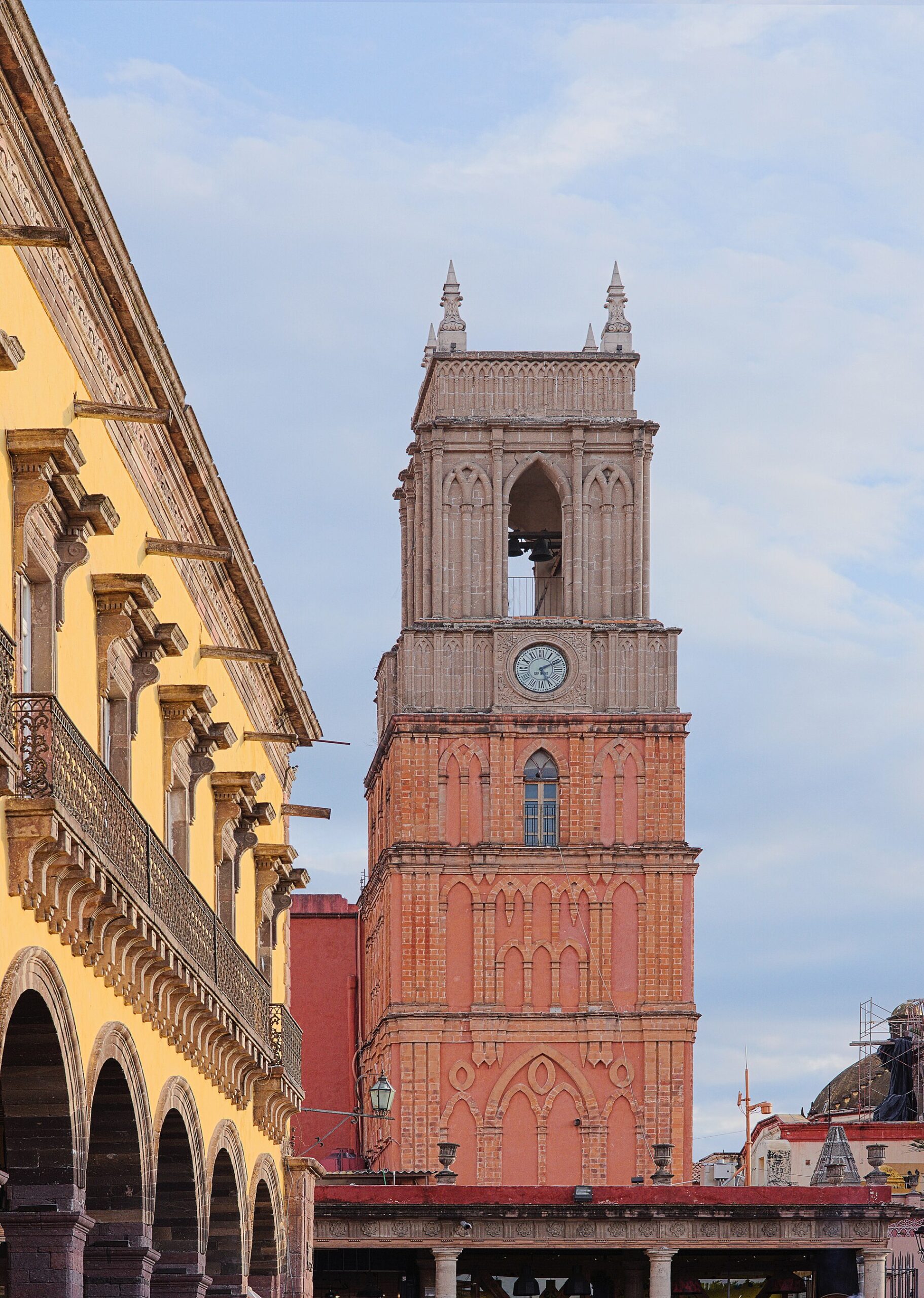
The cost of living in San Miguel de Allende is now two costs, not one. Which of them you pay depends on a line that runs through the middle of the town.
All dollar figures here use 17.19 Mexican pesos to the dollar, the ExchangeRate-API rate for 17 September 2026. Each price below carries the date it was collected.
A UNESCO town that grew a second price tier
San Miguel de Allende sits at 1,900 metres in Guanajuato, 274 kilometres from Mexico City. UNESCO inscribed the town and the nearby Atotonilco sanctuary on the World Heritage list in 2008.
The 2020 INEGI census counted 174,615 people in the municipality and 72,452 in the town itself. Foreign residents are estimated at 20,000 to 25,000, at least half of them from the United States.
That is an estimate rather than a census count, and no official nationality breakdown exists at this level.
The town has moved a long way from what it once cost to live in. The published asking prices show where it has landed.
What a roof costs, street by street
Numbeo, a crowdsourced site, put a one-bedroom flat in the centre at MXN 19,270 (about US$1,121) on 19 August 2026. Outside the centre the same survey gave MXN 11,891 (about US$692).
That survey rests on 23 contributors, so read it as a signal rather than a market average.
A listings aggregator, TheLatinvestor, put Centro Histórico, Guadiana and Ojo de Agua at MXN 30,000 to 60,000 on 3 July 2026. That is about US$1,745 to US$3,490.
San Antonio, Guadalupe and the Centro edges ran MXN 12,000 to 24,000 (about US$698 to US$1,396) in the same survey. Family houses in Los Frailes, La Lejona and Malanquín ran MXN 18,000 to 45,000 (US$1,047 to US$2,618).
Mexico Relocation Guide, writing on 24 March 2026, puts basic rentals in San Antonio, Atascadero and Santa Julia near US$500. The same town, five streets apart, is a different market.
One cost foreigners rarely budget for is the póliza jurídica, a compulsory legal guarantee and background check on a lease. The Mexico Handbook puts it at 30 to 50 per cent of one month’s rent.
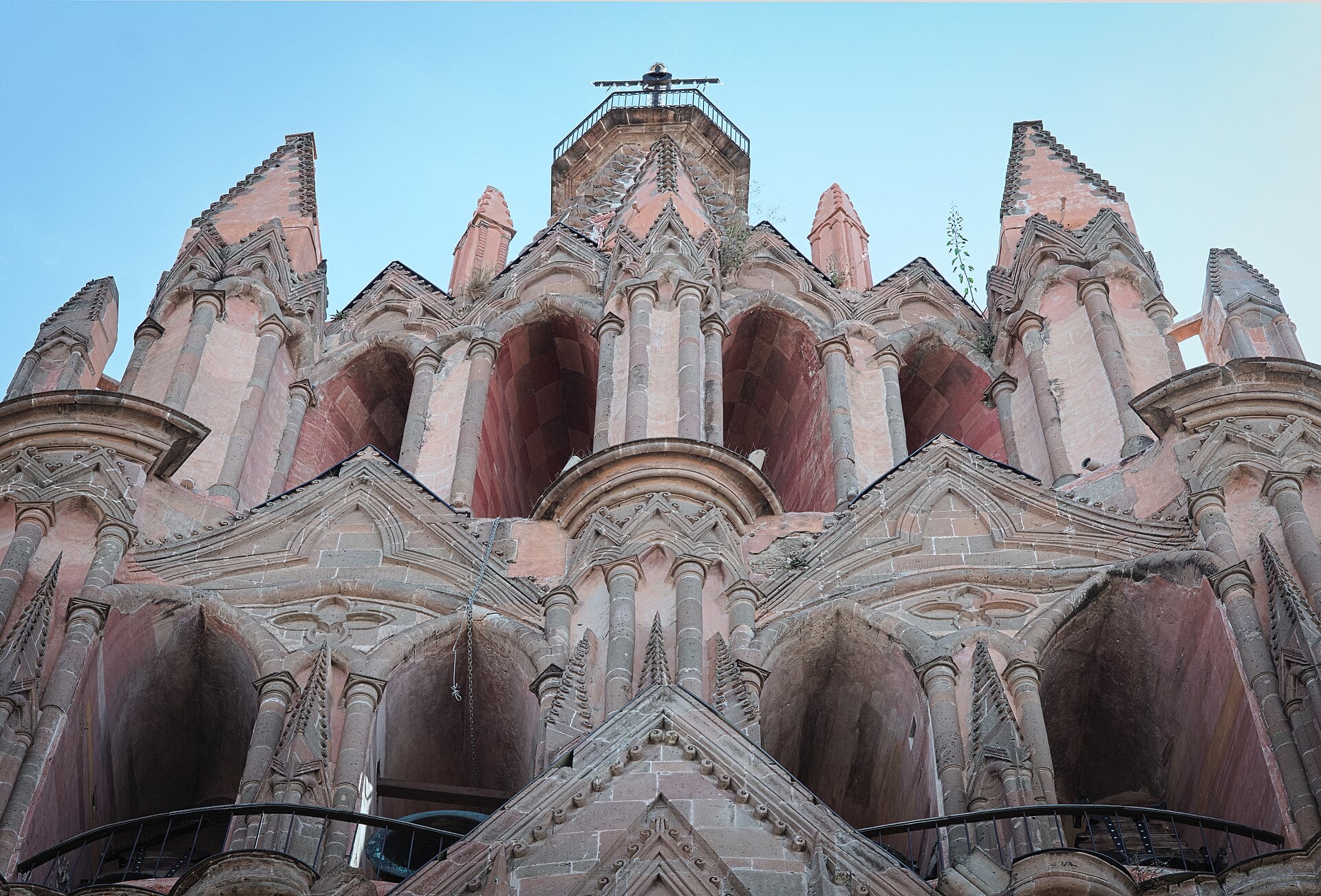
Buying is expensive; the tax on it is not
TheLatinvestor’s price-per-square-metre survey, updated 16 June 2026, gave a city median of MXN 28,500 (about US$1,658). Centro Histórico ran MXN 45,000 to 90,000 (about US$2,618 to US$5,235).
Villa de los Frailes came in at MXN 24,000 to 36,000 a square metre (about US$1,396 to US$2,094). Olimpo and Santa Julia, at the bottom of the table, were MXN 16,000 to 25,000 (US$931 to US$1,454).
The median whole house in that survey was MXN 5.2 million, or about US$302,500.
The property tax, predial, is set in the municipal revenue law published on 30 December 2025. Urban built property is charged on a marginal scale running from 0.234 to 0.354 per cent a year.
Those rates apply to the valor fiscal, the cadastral value, and not to the market price. A house with a fiscal value of MXN 2 million (about US$116,000) pays MXN 5,950 a year (about US$346).
The minimum annual charge is MXN 349.48 (about US$20.33). Paying in full in January earns fifteen per cent off the bill.
The reason those bills look small is in the same law. Cadastral land values in mid-centre residential zones top out around MXN 3,827 a square metre (about US$223).
Market prices in the Centro Histórico are twelve to twenty-four times that. The tax base sits far below what buyers pay.
The electricity trap that catches newcomers
Mexican households get subsidised power until they use too much of it. Cross the threshold and the Comisión Federal de Electricidad moves the address onto the high-consumption tariff known as DAC.
Infobae reported on 1 May 2026 that the trigger is a twelve-month rolling average of monthly use. For Tariff 1 that average is 250 kilowatt-hours a month, and for Tariff 1A it is 300.
Tariff classes are assigned by summer temperature, not by income or by neighbourhood. San Miguel sits high and cool, so it should fall in the lowest threshold classes.
That is an inference from the temperature rule, not a published assignment. The utility’s own tariff pages could not be reached, so the figures below come from Mexican press and a tariff calculator.
CalcEle published reference values on 3 May 2026 of MXN 0.987 a kilowatt-hour (about US$0.057) for basic consumption. Infobae put DAC at a fixed MXN 142.41 a month (US$8.28) plus MXN 6 to 7 a kilowatt-hour (US$0.35 to US$0.41).
Getting off DAC takes twelve consecutive months under the threshold, then a reclassification request with receipts. One hot summer with a pool pump can cost a year of six-fold bills.
A normal bill here is small. The Mexico Handbook put a standard bimonthly bill at US$20 to US$50 on 8 April 2026, and a DAC bill above US$150.
The market, the supermarket and the gas truck
The Mexico Handbook, published 8 April 2026, puts a couple shopping imported North American goods at US$400 to US$600 a month. The same couple shopping the local markets spends US$250 to US$350.
Numbeo’s basket of 19 August 2026 gave a litre of milk at MXN 27.78 (about US$1.62). A dozen eggs were MXN 54.63 (US$3.18) and chicken breast about MXN 225 a kilo (US$13.09).
Street tacos run US$1 to US$3 each and a comida corrida, the set lunch, US$6 to US$8. A mid-range dinner for two is US$30 to US$50.
Cooking gas is sold under a weekly regional maximum price set by the federal energy regulator. In the week of 6 to 12 September 2026 the town paid MXN 19.60 a kilo, or about US$1.14.
Domestic help, and what the law actually sets
Mexico’s general minimum wage rose to MXN 315.04 a day (about US$18.33) on 1 January 2026. Across a month that is roughly MXN 9,577 (about US$557), the legal floor for full-time work.
Since 2019, employers of domestic workers must enrol them in the public social security institute, IMSS. A specific going rate for this town is not published anywhere we could reach.
Pay is quoted by the day or the half-day, not by the hour. The foreign market sets the rate here, not the legal minimum.
Where the serious cases go
The town has small private facilities: Hospital San Miguel Arcángel, Hospital San Rafael and Clínica San Miguel. Expat Exchange, on a page dated 14 June 2025, names León and Mexico City for larger hospitals.
There is no tertiary centre here. Cardiac, cancer, neurosurgical and major trauma cases leave town.
A consultation with a doctor or a specialist runs US$40 to US$70. A walk-in clinic attached to a pharmacy charges MXN 50 to 100 (about US$2.90 to US$5.80).
International private cover runs US$150 to US$300 a month for a healthy adult, and about US$350 at the top tier. Expat Exchange warns that cover after the age of 60 is expensive and weak.
The public voluntary scheme, IMSS Seguro de Salud para la Familia, charges by age band from 1 March 2026. Someone aged 60 to 69 pays MXN 20,600 a year, about US$1,198, or US$100 a month.
Getting in and out without an airport
San Miguel has no commercial airport of its own. The nearest is Querétaro Intercontinental, about an hour and twenty minutes away by road.
A shuttle seat with BajioGo runs about MXN 480 one way (about US$28). A private car with Heros Transportation is around MXN 900 (about US$52).
First-class intercity buses reach Mexico City in four to five hours from the terminal on the edge of town. Counter fares could not be obtained, and a resale platform listed US$58, which is a ceiling rather than the fare.
Inside town a city bus is MXN 10 (about US$0.58) and a central taxi MXN 50 to 80 (about US$2.90 to US$4.70). Petrol was MXN 26.75 a litre in August 2026, about US$1.56.
The income a consulate wants to see
Residency is applied for at a Mexican consulate abroad, and the card is issued inside Mexico. The income thresholds are now set against the UMA, a daily reference unit.
That change of basis was announced in the official gazette on 25 July 2025. It replaced the minimum wage, which had been rising far faster.
Mexperience, writing on 11 September 2026, puts temporary residency at 680 times the daily UMA, or MXN 79,771 a month (about US$4,640). Permanent residency is 1,140 times, or MXN 133,733 (about US$7,779).
The savings route is an alternative to the income route, not an addition to it. It is MXN 1,344,373 (about US$78,207) for temporary status and MXN 5,378,664 (about US$312,895) for permanent.
Consulates apply their own exchange rates, so expect a spread of five to ten per cent either way. The UMA rises about three per cent a year, so these thresholds now creep rather than jump.
Three budgets, and the line between them
The Mexico Handbook set out three monthly budgets for the town on 8 April 2026. They are that source’s figures rather than our own reporting.
A single person living locally, out towards San Antonio, budgets US$1,390 a month. Rent is US$650 of that, groceries US$250 and health insurance US$120.
A remote worker in Guadiana or San Antonio budgets US$2,820. Rent is US$1,400, dining out US$400 and insurance US$200.
A couple in the Centro Histórico or Balcones budgets US$6,500 and upwards. Rent is US$3,500, household staff US$350 and dining US$800.
Set those against the average local net wage, which Numbeo put at MXN 11,333 a month (about US$659) in August 2026. A one-bedroom in the centre costs about 1.7 times that wage.
That gap is the whole story. Living here is cheap measured against Texas and expensive measured against Guanajuato.
The second comparison is the one you live inside every day. The cost of living in San Miguel de Allende is set by the foreign market, not by the local one.
More: Mexico coverage, every day from The Rio Times.
Sources: Mexico Relocation Guide on rents outside the centre, Congreso del Estado de Guanajuato on the 2026 municipal revenue law, Numbeo on crowdsourced prices in the town, TheLatinvestor on rents by neighbourhood, TheLatinvestor on the price per square metre, The Mexico Handbook on three 2026 monthly budgets, Infobae on the high-consumption electricity tariff, Mexperience on the financial criteria for residency, Expat Exchange on hospitals and referrals out of town, GTO Libre on the weekly maximum gas price in Guanajuato
This article was produced by The Rio Times’ automated newsroom system. How we use AI · Report an error
Read More from The Rio Times