
Colombia’s military says an overnight bombing in the Catatumbo border region killed four armed-group members and led to six arrests. The strike matters to Americans because this lawless corner of Colombia sits on a major cocaine route and Colombia is a long-standing US security partner.
Colombian forces bombed three rural camp areas near Tibú, a town in the Catatumbo region of Norte de Santander province, early on Monday, 9 November 2026. President Abelardo de la Espriella announced the result himself, saying four people died and six were captured.
The target was Frente 33, a unit of FARC dissidents, meaning fighters who rejected the 2016 peace deal that disarmed Colombia’s largest rebel army. The Catatumbo borders Venezuela and has long been one of Colombia’s biggest coca-growing zones, so events there feed directly into the cocaine supply that reaches the United States.
Key Facts
- Raid. Colombian air and ground forces struck three rural camps near Tibú in the early hours of Monday, 9 November.
- Toll. Four armed-group members died and six were captured, according to President Abelardo de la Espriella.
- Target. Frente 33, a FARC dissident unit in the faction of Calarcá, a dissident leader.
- Seized. Seven rifles and 15 grenades built for drone attacks.
- As of 9 November 2026, 21:40 GMT.
What Happened in Tibú
Colombia’s Army and Air Force carried out the operation, which the president called Operation Noah. He said it hit three separate camp areas in the countryside around Tibú.
Troops seized seven rifles and 15 grenades adapted for use with drones. Armed groups in the Catatumbo have increasingly used drones to drop explosives on soldiers and police.
The most senior captive is alias Barba Chivo, also known as Costeño, described by officials as a commission leader and trusted aide to Frente 33’s top commander. De la Espriella said the man had been committing crimes in Tibú for about 11 years.
The president added that Barba Chivo is the first rebel leader to survive one of the bombings his government has authorised. He is among the six people captured.
Who Is Frente 33
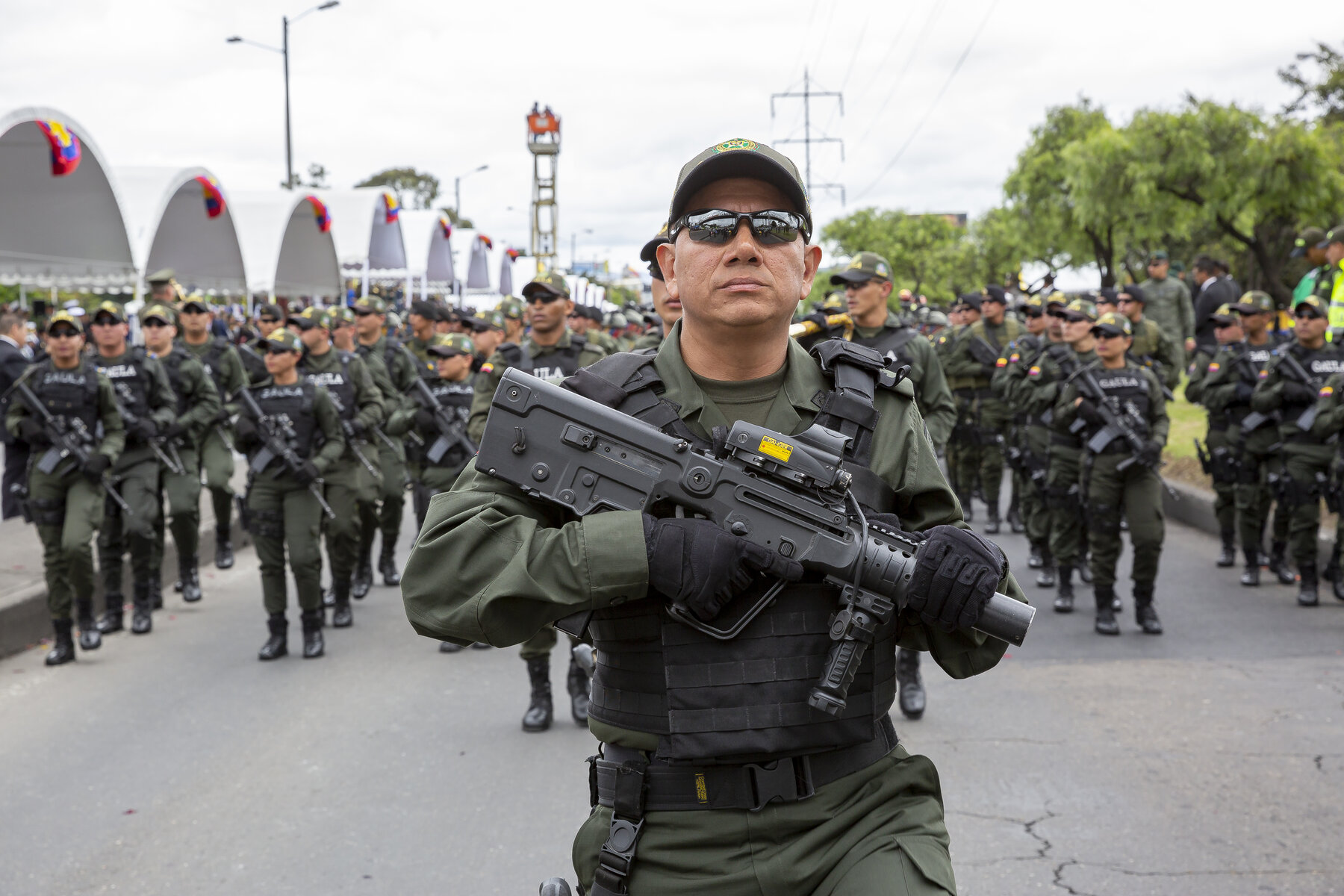
Frente 33 belongs to the faction led by alias Calarcá, one of several FARC dissident groups that kept fighting after 2016. The president named it as the structure he wants to break in the Catatumbo.
The region has been a battlefield for years, with dissidents, the National Liberation Army (ELN, Colombia’s largest remaining guerrilla group) and criminal gangs competing for coca fields and smuggling routes. Fighting there has displaced tens of thousands of residents in recent years.
The raid follows earlier air strikes in the same region. In October, the military reported that an operation against Frente 33 camps near Tibú killed three men and a 16-year-old girl, which drew public criticism.
That history explains why each new bombing is watched closely. Human rights groups and some courts have questioned strikes when minors may be present in camps.
Why Washington Is Watching
Colombia is the world’s largest cocaine producer, and most of the drug supply that reaches the United States starts with coca grown in areas like the Catatumbo. A weaker armed group means fewer taxes and protection payments flowing to traffickers.
The country is also a long-standing US security partner. How its military handles armed groups influences US aid decisions, counter-narcotics cooperation and debates over migration from the region.
Investors have a separate interest. Instability near the Venezuelan frontier can disrupt roads, oil-sector logistics and cross-border trade, as the Rio Times reported in its coverage of Colombia’s tighter Venezuela border controls.
Wider developments are on the Colombia hub. Earlier border tension is covered in the report on a disputed rebel camp strike claim.
What Comes Next
More military operations in the Catatumbo are possible in the coming days. Frente 33 may answer with attacks on soldiers, roads or civilians, as armed groups there have done before.
Prosecutors will decide how to charge the six captives, who are suspects until a court rules. The identities of the other five detainees and of the four dead had not been published at the time of writing.
What We Do Not Know
The casualty and seizure figures come from the president’s account. Security cordons set by the armed group had slowed access to the three sites, and checks on the ground were still incomplete.
We do not know who the four dead were, whether any were minors, or whether any civilians were hurt. Frente 33 and Calarcá had not publicly responded when this article was written.
What It Means for You
If you buy Colombian bonds or shares, today’s news is about security rather than markets, and it is unlikely to move prices on its own. A long campaign near the border, or a wave of reprisals, would be the signal worth watching.
If you plan to travel in Colombia, the Catatumbo remains a region to avoid, and the US government’s advisory for the country is the place to check before booking. Tourist areas such as Cartagena, Medellín and Bogotá are far from the fighting.
Frequently Asked Questions
Where is the Catatumbo?
The Catatumbo is a mountainous region of Norte de Santander province in north-eastern Colombia, on the Venezuelan border. Tibú, where the raid took place, is its largest town.
What is Frente 33?
Frente 33 is a unit of FARC dissidents, fighters who rejected the 2016 peace deal. It belongs to the faction led by alias Calarcá and operates in the Catatumbo.
How many people died and were captured?
President Abelardo de la Espriella said four people died and six were captured in the 9 November operation. Independent checks at the sites were still incomplete when this article was written.
Why does this matter to the United States?
The Catatumbo is a major coca-growing region, and cocaine from Colombia supplies much of the US market. Colombia is also a key US security partner.
Sources
Sources: official statements and public records.
This article was produced by The Rio Times’ automated AI newsroom. Editorial responsibility: Matthias Camenzind, Publisher and Editor-in-Chief. The Rio Times also runs Ask Rio Times, which answers from 100,000+ of our own articles, the daily Latin America Power Map, and prediction-market odds on elections and markets.. How we use AI · Report an error