Colombian Peso Gains 19% in 2026 as Oil Exports and Record Remittances Lift It
Markets · Colombia
Key Facts
- —The run The peso has gained about 19% against the dollar in 2026, ranking it among the world’s best-performing currencies.
- —The drivers Oil and coal exports, record remittances, and a central bank rate held at 12.0% since July.
- —The winners Importers, travellers and dollar earners gain; farm exporters and families living on remittances lose value at home.
- —The catch An August earthquake pushed up inflation forecasts, and Colombia’s budget deficit is still 8.2% of GDP.
- —The daily Our markets desk tracks the peso and the COLCAP stock index every trading day.
For years, the Colombian peso was the region’s worry, falling first whenever markets panicked. This year it is the exception, rising instead, up about 19% against the dollar so far.
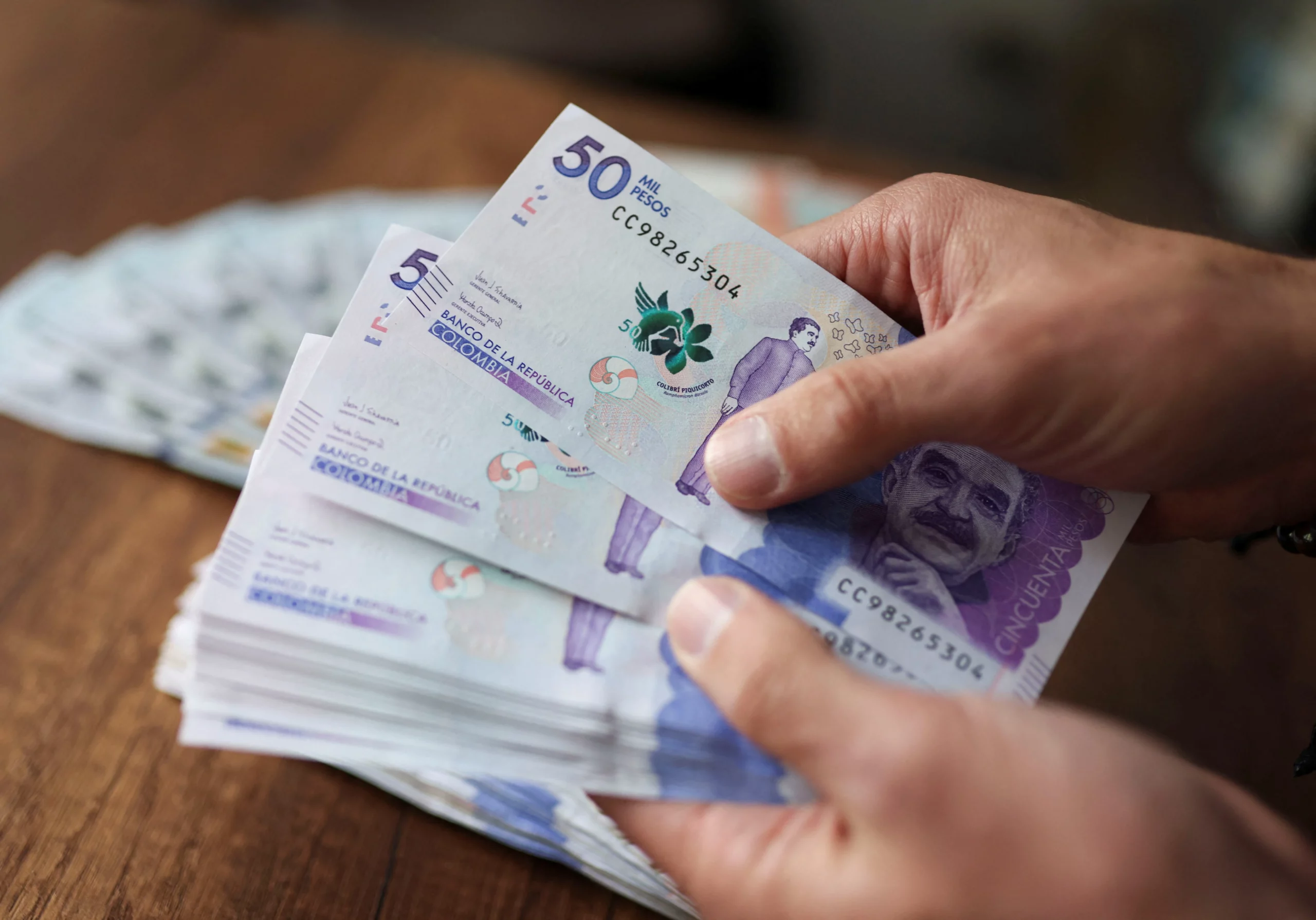
Why the peso is strong
Three flows are lifting the peso this year. Oil and coal exports brought in more dollars.
Colombia’s fuel and mining exports rose 18.6% in the first half of 2026, to roughly US$11.3 billion.
Remittances from Colombians abroad topped US$6 billion in the same six months, a record pace. A third factor is the central bank, which has held its rate at 12.0% since July.
That rate is well above many neighbours’, which keeps foreign money parked in Colombian bonds.
Who wins, who pays
A strong peso cheapens imports — fuel, machinery, medicines — and helps keep inflation on a downward path most of this year. Colombian travellers and online shoppers feel the difference immediately.
Coffee, flower and other exporters earn less in pesos for every dollar they sell abroad. So do the families who depend on remittances, since each dollar sent home now buys fewer pesos than it did in January.
Live Market IntelligenceColombia — Live Market Board
Rio Times · Live Market Intelligence
Colombia — Live Market Board
-1.75%
205,079.25
-0.17%
68,969.69
+0.06%
10,972.40
+0.02%
3,017,221
—
2,521.34
-1.75%
59,664.64
+0.40%
| Instrument | Last | Change | YoY | Prev. | High | Low | Volume |
|---|---|---|---|---|---|---|---|
| COLCAP | 2,521.34 | -1.75% | — | 9.04 | 9.05 | 9.02 | 4,133 |
| USD/COP | 3,140 | +0.03% | -22.04% | 3,139 | 3,141 | 3,105 | — |
| BRENT | 88.88 | -0.03% | +34.42% | 88.91 | 90.07 | 88.12 | 29,713 |
| WTI | 83.11 | -0.11% | +31.57% | 83.20 | 84.35 | 82.40 | 166,848 |
| ECOPETROL | 16.92 | -0.53% | +98.01% | 17.01 | 17.05 | 16.79 | 737,591 |
| BANCOLOMBIA | 95.87 | -2.18% | +96.15% | 98.01 | 100.36 | 95.73 | 188,740 |
| GRUPO AVAL | 5.40 | +2.66% | +76.89% | 5.26 | 5.49 | 5.32 | 146,447 |
| TECNOGLASS | 42.30 | -1.10% | -48.04% | 42.77 | 42.73 | 42.05 | 60,908 |
| CREDICORP | 375.17 | -0.49% | +49.60% | 377.00 | 384.43 | 372.27 | 88,375 |
| BUENAVENTURA | 34.45 | -1.02% | +88.07% | 34.80 | 35.62 | 34.33 | 275,831 |
| SOUTHERN COPPER | 193.97 | -0.26% | +104.01% | 194.48 | 199.36 | 192.59 | 367,102 |
The fiscal shadow
Colombia’s government expects a budget deficit of 8.2% of GDP in 2026, its worst shortfall since the pandemic. Public debt is nearing 63% of GDP.
Markets have mostly looked past both figures so far, while export and remittance income keep flowing in.
That patience is not guaranteed. The peso’s history is full of calm stretches that ended abruptly once investors focused on the deficit instead of the export numbers.
What could break the run
Three risks top the list: a sharp drop in oil prices, unplanned government borrowing, or a shift in US rate expectations. Any of those could pull capital back home.
A newer, fourth risk has already arrived this year.
An earthquake near Armenia on 10 August damaged roads and buildings across Colombia’s coffee region. It pushed the private bank Banco de Bogotá to raise its year-end inflation forecast to 6.8%, up from 6.03% in July.
Colombia’s central bank can smooth swings but has said it will not defend a particular exchange rate. Cutting rates further to protect the peso would carry its own cost for economic growth.
How to follow it
For anyone with money at stake — expats, families receiving remittances, small importers — the standard advice is to convert in stages. Do not bet on hitting one exact exchange-rate level.
The peso’s strength is real and driven by trade flows, but it can reverse. Our markets desk publishes the daily rate; Bogotá’s next budget will publish the harder answer.
The remittance economy
Remittances have become one of Colombia’s largest sources of foreign currency, now outpacing combined coffee and coal export revenue. May 2026 alone brought in US$1.12 billion, the 24th straight month above the US$1 billion mark.
This flow says two things at once. Colombians working abroad are earning well, and many left because pay at home was not enough.
Scenarios into 2027
The base case among analysts is a gradual peso pullback as rate gaps with other countries narrow. A more optimistic case has credit-rating agencies rewarding a credible deficit-reduction plan from Bogotá.
The downside case is an oil-price slide combined with a fiscal shock, a combination that has ended peso rallies before. Timing that turn is guesswork; preparing for it is not.
What the central bank can and cannot do
Banco de la República, Colombia’s central bank, is independent and has held its benchmark rate at 12.0% since 1 July 2026. It can smooth swings with that rate and occasional intervention.
But it cannot hold the peso at a fixed level, and it says so openly.
That honesty is itself a form of credibility, and investors tend to reward central banks that admit their limits. Colombia’s bond auctions this year reflect some of that trust.
The playbook for expats and remitters
A strong peso means every dollar buys fewer pesos than it did last year. That affects expats living in Medellín and Bogotá, along with families receiving money from relatives abroad.
Splitting conversions into weekly amounts smooths out the swings. If you earn pesos and pay bills abroad, this stretch has worked in your favour.
Such periods for the peso have historically lasted months, not years.
The peso’s long memory
Colombians who lived through the peso’s 2022 crash tend to treat this year’s rise as temporary. History mostly backs that instinct.
Strong peso runs over the past 20 years have usually ended with a drop tied to oil prices or politics.
What is different this time is the mix behind the rally. Remittances and services income now make the flow base broader than a bet on commodities alone, though broader does not mean risk-free.
The practical layer: accounts, exchange, timing
Colombia’s peso trades in a single official, liquid market, without the parallel black-market premium seen in Argentina. Banks, exchange houses and fintech apps quote slightly different rates, and on large conversions that spread is worth comparing.
Foreigners opening bank accounts generally find the paperwork easier than the region’s reputation suggests. A cédula de extranjería, Colombia’s foreign-resident ID card, unlocks far more than a passport alone.
Oil-price headlines and scheduled central-bank meetings are the peso’s two most reliable movers. Anyone converting a meaningful sum can plan around those dates rather than guess day to day.
More: Colombia news in English, every day from The Rio Times.
The big picture: Colombia explained — economy, politics, society and daily life in one read.
The COLCAP connection
The peso does not move alone. Bogotá’s stock benchmark, the COLCAP index, tends to rise and fall with the same capital flows.
On 4 September 2026, COLCAP closed up 1.81% at 2,534.46 points. The peso traded near 3,140 to the dollar that same day, according to our markets desk.
A fiscal scare tends to hit bond auctions first, then stocks, with the peso reflecting the damage within hours. There is no wall between Bogotá’s politics and its exchange rate.
For Colombian asset holders, watching the peso and COLCAP together, rather than separately, is the more useful habit. When they move in opposite directions — a strong peso alongside weak stocks — that usually signals something has changed.
Connected Coverage
Colombia Markets: COLCAP & the Peso — September 4, 2026
Colombia’s Law to Join the BRICS Bank Died in Congress Without a Single Debate
More from the Colombia section
The Big Picture
Markets & Finance — currency and index coverage
Latest developments
- Best Places to Live in Ghana for Expats 2026 — 18 October 2026
- Best Places to Live in Kenya for Expats 2026 — 18 October 2026
- Colombia Energy Deficit May Hit 7,669 GWh — 18 October 2026
- IMF Warns Colombia Over 3.5% Deficit — 18 October 2026
This article was produced by The Rio Times’ automated newsroom system. How we use AI · Report an error · Editorial responsibility: Matthias Camenzind, Editor-in-Chief
LatAm Markets: Live Signals → — real-time movers, turnover leaders and FX across Latin America.
Expat Guide to Colombia
What The Rio Times publishes for foreigners who live in or move to Colombia.
Start here
- Colombia SIM Card and Internet for Foreigners in 2026
- Colombia Rent Increase Limit Is 5.10% in 2026
- Bancolombia Explained, Colombia's Largest Bank in 2026
- Cost of Living in Colombia for Expats in 2026: Rent, Transport and Health in Five Cities
City guides
Medellín, Bogotá, Cartagena, Cali
Coming up in Colombia
- Fonseca El Campín Concert Set for 24 October 2026 in Colombia 24 Oct
- Ryan Castro El Campín Halloween Show Set for 31 October in Colombia 31 Oct
- Los Tigres del Norte Play Bogotá's El Campín Stadium on 7 November 7 Nov
- Cartagena Independence Festivities: 11 to 16 November 2026 11 Nov
Understand Colombia