Colombia · Security
Key Facts
- —What happened A gold mine collapse in Nariño killed 13 miners and injured seven on Wednesday.
- —How big a jump Four victims came from one Quillasinga family in Puerto Rico, Policarpa.
- —The real story Most local gold is dug informally, and 85% of Colombian exports are illegal.
- —The catch Early reports of an explosion were corrected; the collapse followed a swollen river.
- —Who it touches Smallholder farmers and Indigenous Quillasinga miners from the El Peñol reservation nearby.
- —What comes next No mining agency bulletin has been published, leaving legal and oversight questions open.
Four of the thirteen dead came from one Quillasinga family, in a corner of Nariño where most gold is dug without papers.
A Colombia gold mine collapse killed 13 people on Wednesday afternoon in the southern department of Nariño. Seven more were hurt when a wall of earth came down on an artisanal pit in the village of Puerto Rico.
Rescuers worked through the night before the search was called off early Thursday.
What Happened at the Colombia Gold Mine
The pit sits in the village of Puerto Rico, high in the mountains of Policarpa, Nariño. Miners were working the open face on 19 August when the slope above them gave way.
Tons of earth came down in seconds. Thirteen people were killed and seven were hurt, according to the department’s disaster risk office.
Before that moment, the Colombia gold mine was simply the village’s main source of cash.
A Night of Digging
Rescue work ran through the night because the site is remote and hard to reach. Firefighters came from Pasto, Policarpa and El Tambo, while neighbours brought in two excavators.
Gabriel Ocaña, who directs disaster risk management for Nariño, gave the official count. He said a slope had collapsed at the mine and that the trapped workers were pulled out.
Reuters reported that crews stopped around 2 a.m. after everyone missing had been found. Still, several Colombian outlets said one farmer remained unaccounted for as teams kept searching.
Who the Miners Were
Most of those working the face were smallholder farmers and Indigenous Quillasinga people. Many belonged to the El Peñol reservation nearby.
So the Colombia gold mine was, in effect, a community enterprise. Four of the dead came from the same Quillasinga family, residents told agency reporters.
In a settlement this small, that is a loss almost everyone feels.
Why the Slope Gave Way
For now, officials describe the cause as the failure of a talud, the cut earth wall of an open pit. Heavy rain had swollen the Patía river, which runs below the workings.
Local reporting links that surge directly to the slide that buried the miners. However, no formal technical finding has been published yet.
Early bulletins on Wednesday night spoke of an explosion and a much smaller toll. Those first accounts were corrected once rescuers reached the site.
The Kind of Mine This Was
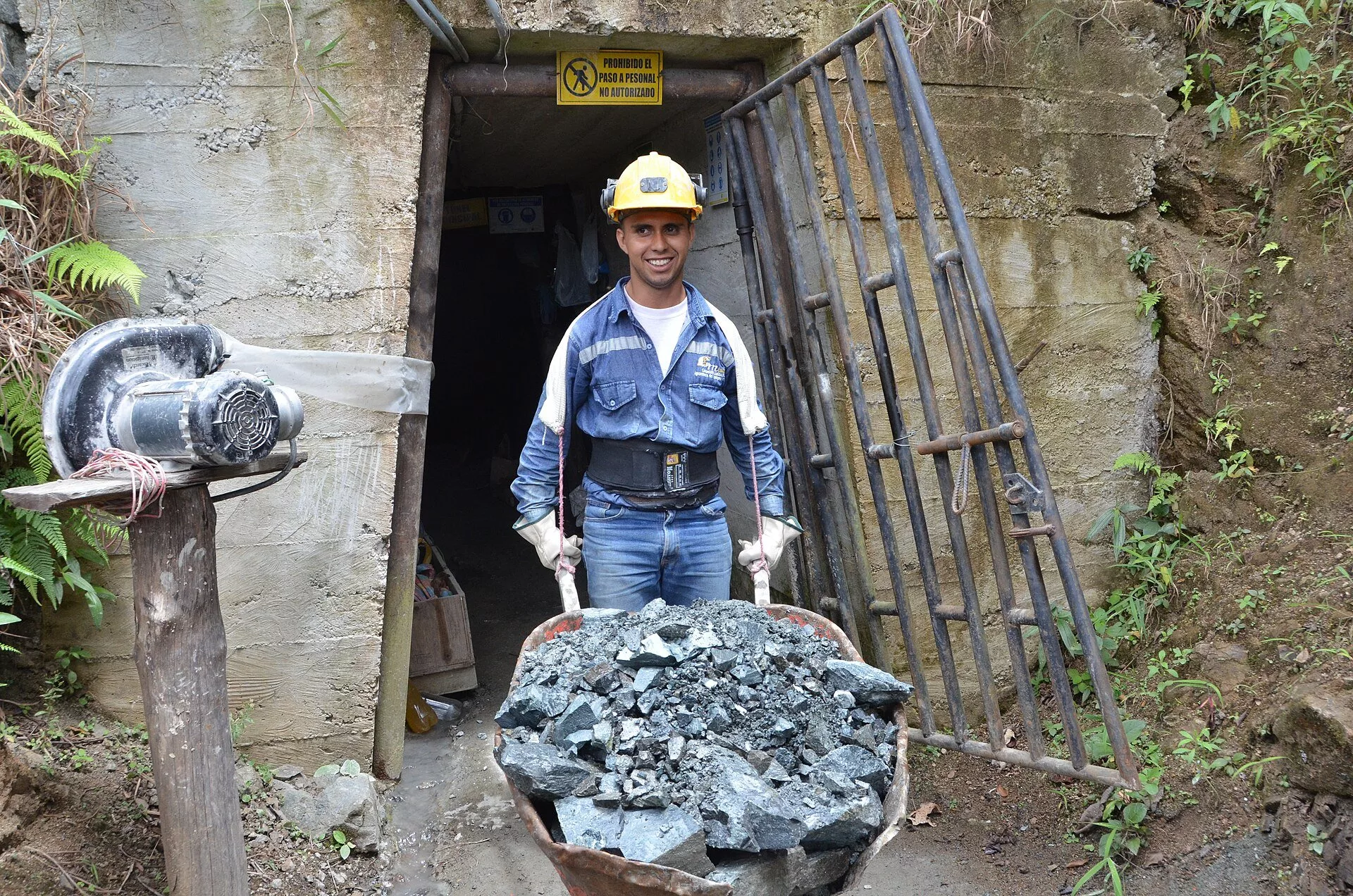
In short, this was an artisanal open-pit operation worked largely by hand. Colombians call the method barequeo, and the mining code recognises it.
In practice, barequeo means washing sand manually, without machinery, to recover gold. Barequeros need no mining title, but they must register with the local mayor and get the landowner’s consent.
No agency has said publicly whether this particular site was on that register. Since the record has not been released, its exact legal standing is still unclear.
Gold Without Papers
Colombia’s gold trade is overwhelmingly informal, and that is the backdrop to this accident. The Procuraduría General de la Nación estimates about 85% of exported Colombian gold comes from illegal mining.
Even so, the legal side is substantial. DANE recorded US$3.886 billion in gold exports from January to November 2025, up 8.5% on the same months a year earlier.
Meanwhile, volumes moved the other way. Agencia Nacional de Minería figures show exports falling from roughly 61 tonnes in 2024 to about 52 tonnes in 2025.
Why Armed Groups Want the Gold
In recent years, record prices have pulled more than farmers into the hills. Gold traded near US$4,500 an ounce in late August 2026, and that pull reaches deep into the countryside.
A 2026 study by Fedesarrollo and the Loom Strategy Centre priced the criminal gold economy. In 2025 it was worth 32 to 34 trillion pesos, the researchers found.
That is roughly US$7.5 to US$8 billion, or about 1.9% of national output. In their findings, the researchers list ELN units, Clan del Golfo structures and FARC dissidents active along the whole gold chain.
They tax miners, move the metal and launder the money.
Nariño’s Contested Mountains
Policarpa sits in the Patía basin, which is one of the country’s most disputed corners. The Ombudsman’s office has issued repeated warnings about rival armed groups there.
Its alerts name FARC dissident fronts, the ELN’s Comuneros del Sur and paramilitary-style outfits. So miners in these hills already work under pressure from more than the weather.
Registering a small pit, or reporting a dangerous one, can carry a real cost.
A Hard Year for Colombian Miners
Sadly, this is not an isolated accident, and it follows a pattern. National tallies reported in Colombian media counted 60 miner deaths in 46 accidents in the first half of 2025 alone.
So far, this year has been grim too. Nine men died at Sutatausa in May, and six more were killed by a methane blast at Cucunubá in August.
Over the longer run, the mining agency logged 1,634 deaths in 1,454 emergencies between 2005 and 2020. Most recent victims were working informal or unlicensed sites.
In other words, the people least protected by the system are the ones dying in it.
What Comes Next
After the digging stopped, the injured went to hospitals in the area and bodies were returned to families. Officials have promised support, although no national decree has been announced.
Nariño’s governor, Luis Alfonso Escobar, oversees a department already stretched by rural emergencies. The mining agency has not yet published a bulletin on Policarpa.
Until it does, questions about titles, oversight and the river’s role stay open. For families in Puerto Rico, though, the answers will not change what Wednesday took from them.
More: Colombia news in English, every day from The Rio Times.
How many people died in the Policarpa mine collapse?
Nariño’s disaster risk office put the toll at 13 dead and seven injured. Some regional outlets also reported one person missing while the search continued.
Was the collapse caused by an explosion?
No. Early Wednesday-night bulletins described a blast, but officials later corrected that. The accepted account is the collapse of a pit slope after the Patía river swelled.
Was the mine legal?
That has not been confirmed. It is described as an artisanal barequeo working.
Why is informal gold mining so common in Colombia?
Gold prices are at record levels and rural jobs are scarce. Because most gold leaves the country through informal channels, armed groups profit at every step.
Connected Coverage
Sources: Reuters; EFE; teleSUR English; Semana; Vanguardia; La Opinión; DANE; Agencia Nacional de Minería; Procuraduría General de la Nación; Fedesarrollo.
Frequently Asked Questions
This article was produced by The Rio Times’ automated newsroom system. How we use AI · Report an error · Editorial responsibility: Matthias Camenzind, Editor-in-Chief