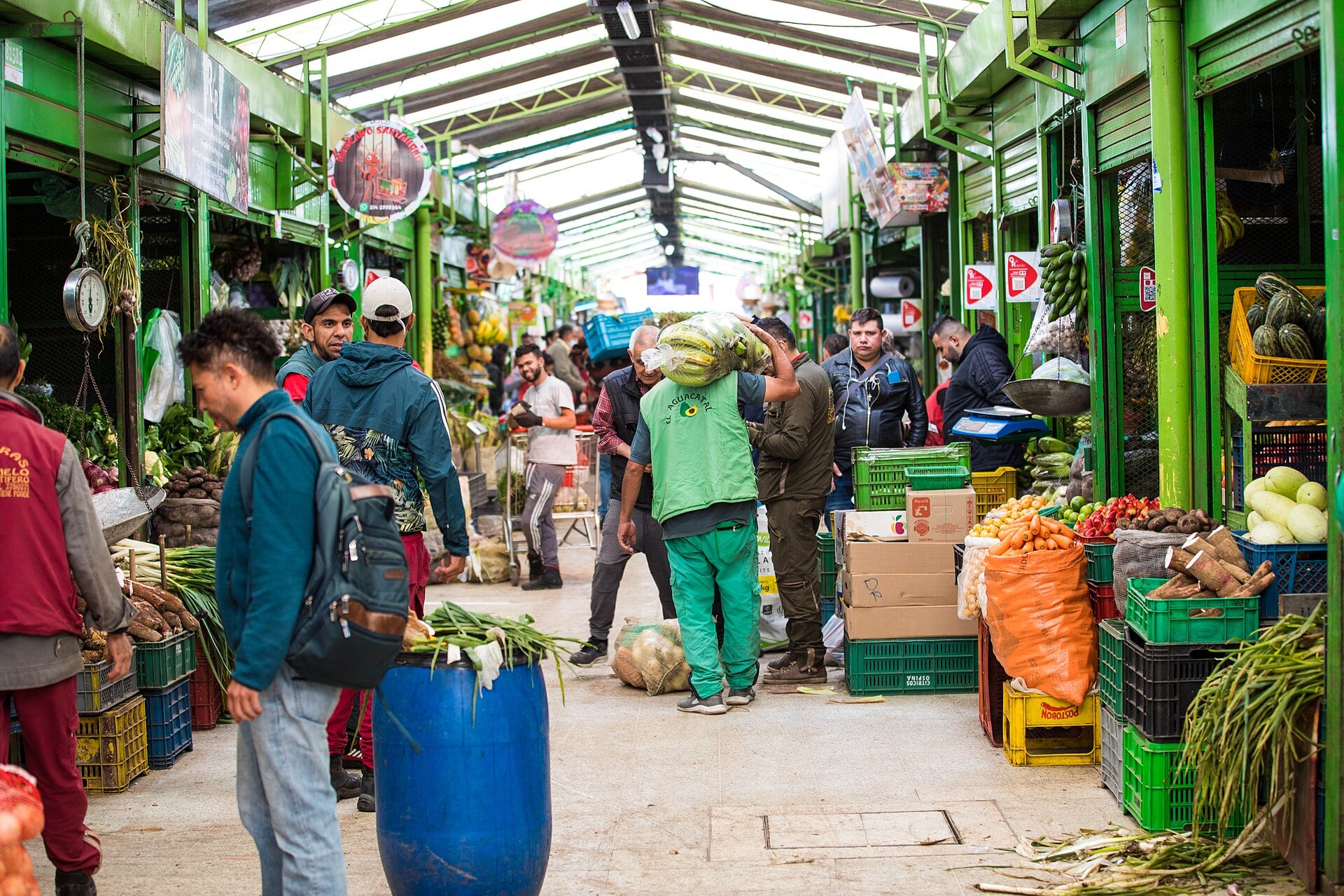
Colombia’s President Abelardo de la Espriella promised on Sunday 15 November 2026 that the family food basket will pay no value-added tax (VAT, called IVA in Colombia). The promise comes while the bill his government filed on 29 October would move most fresh fruit and vegetables, sugar, pasta and roasted coffee to the 19% rate from January 2028.
The gap between the pledge and the bill is the story for anyone with money or family in Colombia. No amended text had been published at the time of writing, and the president said his Finance Ministry is also studying a lower general rate of 18% or 17%.
Key Facts
- Pledge President Abelardo de la Espriella said on 15 November the family food basket will pay no VAT.
- Bill The bill would tax most fresh produce, sugar, pasta and roasted coffee at 19% from 2028.
- Rate He said the Finance Ministry is studying a general VAT cut from 19% to 18% or 17%.
- Politics Colombia’s Liberal Party said on 10 November it will seek changes, questioning 19% VAT on sugar and coffee.
- As of Monday 16 November 2026, 06:45 GMT.
- Power Index Colombia ranks 6th of 14 in The Rio Times Latin America Power Index, with 51.1 points (November 2026 edition).
Colombia’s president has promised no tax on basic food. The draft law in Congress still taxes part of the basket.
What the President Promised
In an address marking his first 100 days in office, De la Espriella said he is seeking agreement in Colombia’s Congress on the fiscal adjustment bill and that “la canasta familiar no pagará IVA”. He said his government “will not impose VAT on the products of the family food basket”, in our translation from Spanish, and will not promote new VAT burdens on the farm sector.
He also said Colombia’s Finance Ministry is studying a cut in the general rate from 19% to 18%, or even 17%, and that he hopes to give “good news” soon. No new rate has been published.
What the Bill Says Today
The government filed the Ley de Rescate Económico, the “Economic Rescue Law”, as bill 477 of 2026 on 29 October. According to the bill’s text, most fresh fruit and vegetables, such as tomato and onion would move from the excluded list to 19% from 2028.
Roasted coffee, sugar, pasta and table chocolate, now taxed at 5%, would also move to 19% from 2028, and the bill scraps the 5% rate with few exceptions. Bread and potatoes stay outside the tax, and meat and eggs stay exempt.
VAT in Plain English
VAT is a sales tax collected at each stage of production and paid in the end by the shopper. In Colombian law an “excluded” product sits outside the tax, an “exempt” product has a zero rate, and the rest pay the general rate, now 19%.
For a product that moves from 5% to 19%, the rate rises by 14 percentage points. On a base price of 10,000 pesos (about US$3) the tax would be about 1,900 pesos (US$0.57) instead of 500 (US$0.15).
That is our own worked example at 3,315 pesos per US$ (13 November close), not a forecast of shelf prices. Shelf prices will also depend on how much of the tax shops pass on.
Where Congress Stands
Colombia’s Liberal Party, one of the country’s main parties, said on 10 November that it will propose changes to the bill. It questioned a 19% VAT on sugar, roasted coffee and other basics from 2028.
The party also asked the government to explain the effects on consumers, small traders and producers. It questioned whether EfectIVA, the government’s VAT-refund scheme for low-income households, can compensate every affected household.
A speech does not rewrite a bill. The government would have to amend the text, back amendments from lawmakers or file a new draft before the change takes legal effect.
What It Means for You
For shoppers in Colombia, nothing changes at the till today, and the earliest date in the bill for higher rates on these foods is 1 January 2028. Expats who budget in dollars should watch whether sugar, pasta, coffee and fruit stay on the list when the bill is voted.
For investors, the food clause is a small part of a bigger test of whether the government can pass a package that repairs public finances without losing its allies. Related Rio Times coverage includes what the president promised on tax reform, the plan for 19% VAT on gasoline and tax penalty relief, and more is in our Colombia coverage.
What Is Not Known
The government has not published how much revenue the food changes were meant to raise, or how it would replace that money if they are dropped. We found no date for the committee votes in Congress.
The new general rate of 18% or 17% is only under study. We will rewrite this report when the government files amendments or the committee sets a vote.
Frequently Asked Questions
Will Colombia tax basic food with VAT?
President De la Espriella said on 15 November that the family food basket will not pay VAT. The bill as filed on 29 October still moves most fresh fruit and vegetables, sugar, pasta and roasted coffee to 19% from 2028.
What is the general VAT rate in Colombia?
It is 19% today. The president said the Finance Ministry is studying 18% or 17%, but no new rate has been published.
When would higher rates start?
The bill proposes 1 January 2028 for moving most fresh fruit and vegetables and 5% products to the 19% rate. Nothing changes before the law is passed.
What has the Liberal Party said about food VAT?
Colombia’s Liberal Party said on 10 November that it will propose changes and questioned a 19% VAT on sugar, roasted coffee and other basics from 2028. It also questioned whether EfectIVA, a VAT-refund scheme for low-income households, can compensate every affected household.
Sources: President Abelardo de la Espriella, address on his first 100 days, 15 November 2026; Government of Colombia, Proyecto de Ley 477 de 2026 (Ley de Rescate Económico), filed in Congress on 29 October 2026; Partido Liberal Colombiano, positions on the bill, 10 November 2026
In depth
This article was produced by The Rio Times’ automated AI newsroom. Editorial responsibility: Matthias Camenzind, Publisher and Editor-in-Chief. The Rio Times also runs Ask Rio Times, which answers from 100,000+ of our own articles, the daily Latin America Power Map, and prediction-market odds on elections and markets.. How we use AI · Report an error