Chicaque Cloud Forest: Bogotá’s Exotic Sanctuary Under an Hour Away
FRONTIER LIVING
Key Facts
—Location. Parque Natural Chicaque sits in San Antonio del Tequendama, roughly 30 minutes by car from Bogotá’s southern edge.
—Altitude. The park spans 2,100 to 2,700 metres above sea level, creating a permanent cloud forest ecosystem.
—Entry fee. Day passes cost approximately COP 25,000 (US$6.50) for adults, with additional charges for guided activities.
—Biodiversity. The reserve hosts over 200 bird species, including the endemic black inca hummingbird and the torrent duck.
—Accommodation. On-site lodging ranges from basic camping at COP 30,000 (US$7.80) per person to private cabins starting around COP 180,000 (US$47) per night.
The Chicaque cloud forest delivers a genuine high-Andean wilderness experience less than an hour from Bogotá’s financial district, offering expats and investors a rare combination of ecological value and weekend accessibility that few capital cities can match.
What Makes the Chicaque Cloud Forest Different
Parque Natural Chicaque is a privately managed 300-hectare reserve built around a steep-walled canyon draped in permanent mist. The park’s name comes from the Muisca word meaning “our struggle,” a reference to the indigenous people who once used these forested slopes as a refuge from Spanish conquistadors.
Unlike Bogotá’s better-known Monserrate or the crowded Ciclovía routes, Chicaque offers genuine ecological immersion. The temperature drops noticeably as you descend from the entrance, and within minutes the city’s noise gives way to the sound of rushing streams and bird calls.
The reserve protects one of the last intact fragments of sub-Andean forest in the Bogotá savannah corridor. For a city of 11 million people expanding rapidly into its surrounding hills, that makes Chicaque both a recreational asset and a conservation landmark.
The Silver Veil Effect: Why the Forest Looks Like Falling Sky
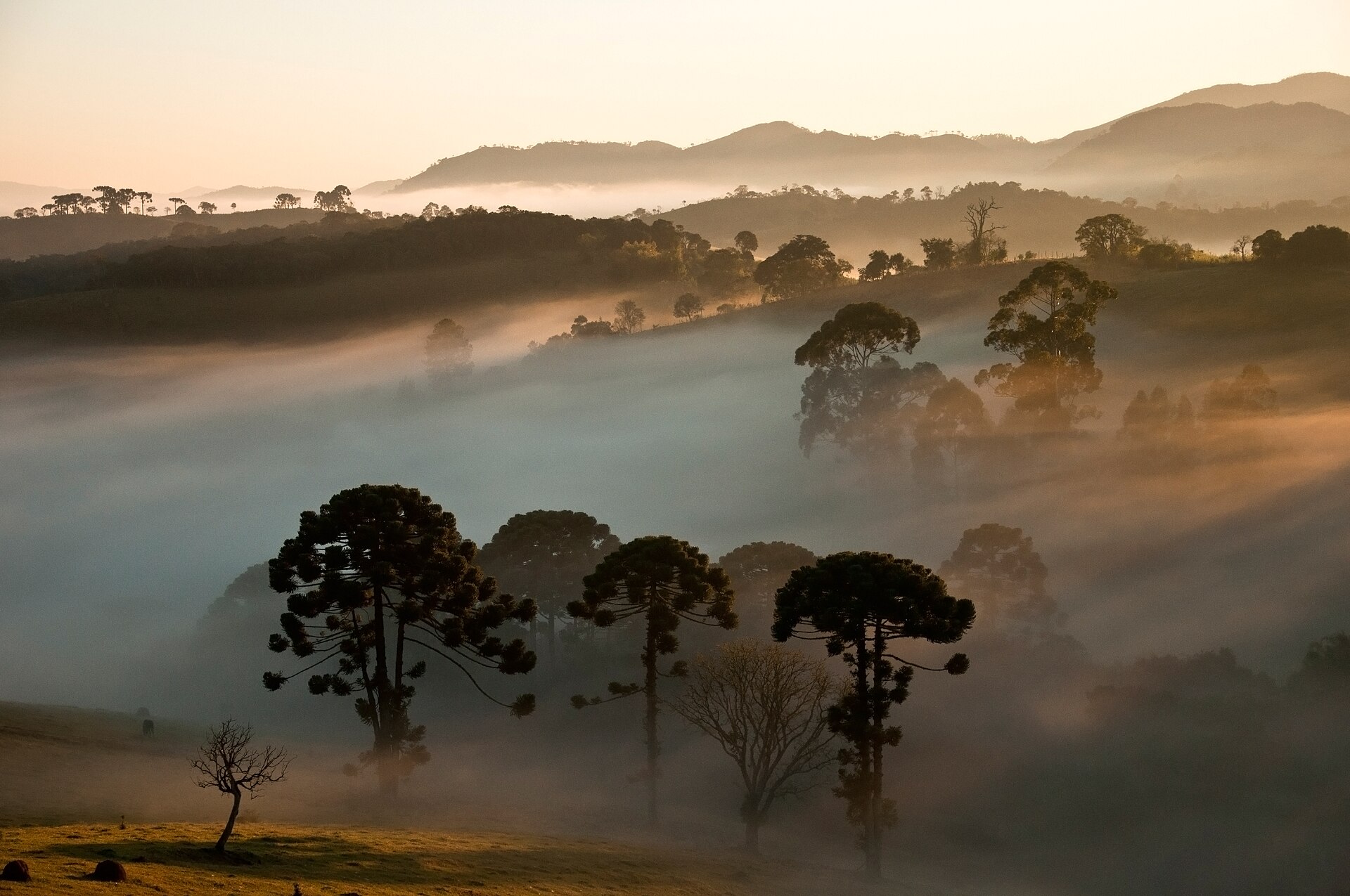
The poetic description of a “silver veil falling from the sky” is not marketing exaggeration. Chicaque sits at the precise altitude band where warm air from the Magdalena Valley meets cold Andean currents, producing near-constant cloud cover that clings to the canopy.
Morning visitors typically watch fog banks roll up the canyon walls like slow-motion waterfalls. By midday, filtered sunlight turns the mist into a luminous curtain, and epiphyte-laden oak trees emerge from the haze draped in silver-grey lichen.
This hydrological cycle sustains the entire ecosystem. The forest captures moisture directly from clouds, feeding seven permanent streams that cut through the property and eventually drain into the Bogotá River watershed.
Trails, Wildlife, and What a Day Trip Actually Costs
The park maintains roughly 15 kilometres of marked trails ranging from the gentle 1.5-kilometre Oak Forest loop to the demanding 5.6-kilometre descent to the Pico del Águila waterfall. The main trail drops 600 vertical metres through three distinct vegetation zones in under two hours.
Birders regularly log 30 to 40 species in a single morning. Resident spectacles include the black inca hummingbird, the masked trogon, and the torrent duck, which nests behind waterfalls along the park’s streams.
A day trip for two people — including round-trip transport from northern Bogotá, entry fees, and a simple lunch at the park’s restaurant — runs roughly COP 180,000 to 250,000 (US$47 to US$65). That positions Chicaque as a mid-tier weekend option, cheaper than a full Chingaza expedition but pricier than the free Quebrada La Vieja hike in the city’s eastern hills.
The Investment Read-Through: Ecotourism Real Estate Near Bogotá
Chicaque’s success as a private reserve points to a broader trend reshaping Bogotá’s peri-urban land market. Properties within a one-hour drive of the city that offer altitude, water access, and established forest cover have appreciated steadily since 2020, driven partly by remote-work flexibility among Bogotá’s professional class.
The San Antonio del Tequendama corridor, where Chicaque sits, has seen land prices rise roughly 15 to 20 per cent in dollar terms over the past three years, according to local real estate brokers. Small farms with cloud forest remnants now trade at a premium to cleared agricultural plots, reversing a decades-old pattern.
For foreign investors, the regulatory landscape remains mixed. Colombia allows direct foreign ownership of rural land, but the 2022 national development plan introduced new restrictions on purchases near páramos and protected watersheds.
Chicaque’s buffer zone falls outside those restrictions, but due diligence on any nearby parcel requires a careful review of the local land-use plan.
How Chicaque Fits Into Colombia’s Ecotourism Push
Colombia’s government has identified nature tourism as a priority sector for post-extractive economic diversification. The national tourism registry counted 48 registered nature-tourism operators in Cundinamarca department as of 2024, up from 22 in 2019.
Chicaque predates this policy push by decades — the park was founded in 1990 — but it benefits from the same tailwinds. International visitor numbers to Bogotá’s surrounding natural areas grew an estimated 12 per cent year-on-year in 2024, with European and North American birdwatchers representing the fastest-growing segment.
The park’s management has responded by adding English-language guided walks and upgrading its cabin infrastructure. Occupancy rates on weekends now routinely exceed 80 per cent, and advance booking is essential during the December-to-February dry season.
Practical Advice for Expats and First-Time Visitors
Reaching Chicaque requires a vehicle. The turnoff from the Bogotá-La Mesa highway is well-signed, but the final 4 kilometres follow an unpaved road that can be muddy after rain — a standard sedan manages it in dry conditions, but a high-clearance vehicle is safer year-round.
The park opens at 8:00 a.m. and closes at 5:00 p.m. Arrive early to complete the waterfall trail with time to climb back out.
The return ascent from the canyon floor takes roughly twice as long as the descent, and Bogotá residents unused to the altitude should budget extra time.
Mobile phone signal is patchy throughout the reserve. Download offline maps before leaving Bogotá, and carry cash — the park’s restaurant and small shop do not reliably accept card payments.
Frequently Asked Questions
How long does it take to drive from Bogotá to the Chicaque cloud forest?
The drive from Bogotá’s Chapinero or Usaquén districts typically takes 50 to 70 minutes, depending on traffic on the Autopista Sur. From the southern suburb of Soacha, the journey is roughly 30 minutes.
Is Chicaque suitable for children and older visitors?
The Oak Forest and interpretive trails are flat and accessible for most fitness levels, including families with young children. The waterfall trail involves a steep descent and is not recommended for visitors with knee problems or limited mobility.
Can you stay overnight inside the Chicaque cloud forest?
Yes, the park offers camping areas, shared dormitories, and private cabins. Overnight guests gain access to dawn birding, when the forest is most active and the mist effects are at their most dramatic.
Connected Coverage
Havana’s Grand Theatres Trace a Turbulent Scenic History
Mexico City Summer Theatre 2026: What to See and Where to Book
This article was produced by The Rio Times’ automated newsroom system. How we use AI · Report an error
Read More from The Rio Times