Cali Security Lockdown: What Foreigners Need to Know Today
Key Facts
- Today. Colombia’s handover is at 3 p.m. in Cali. The drone ban is already running; the alcohol ban starts at 6 a.m. and the car-free day at 7 a.m.
- The scale. 11,100 security personnel — about 6,000 military and 5,100 police — across Cali and its metropolitan area.
- Car-free day. Private cars, motorcycles, hybrids and EVs banned 7 a.m.–8 p.m. MIO transit is free, but you still need a MIO card to get through the turnstiles.
- Dry law. Selling and drinking alcohol is banned city-wide from 6 a.m. to 8 p.m.
- Drone ban. No private drones over Cali, Yumbo, Jamundí, Candelaria or Palmira from 6 to 8 August.
- At the airport. Only ticketed passengers may enter the terminal. Companions are turned away, except one escort for unaccompanied minors, elderly or reduced-mobility passengers and anyone needing medical assistance.
- The reward. Up to 500 million pesos (about US$158,000) for information on threats.
The Cali security lockdown puts 11,100 troops and police on the streets for Colombia’s first presidential inauguration held outside Bogotá, with a car-free day, a dry law, a drone ban and an airport closed to anyone without a boarding pass.
The Cali security lockdown is the largest operation Colombia has mounted for a handover in years, and if you are in the Valle del Cauca today it will shape your morning more than the ceremony itself. The restrictions come on in stages rather than all at once, so the practical question is what applies when. Here is the timetable, and how to plan around it.
The Cali security lockdown, hour by hour
| When | What applies |
|---|---|
| Already running | Drone ban across Cali, Yumbo, Jamundí, Candelaria and Palmira, in force since 6 August and running to 11:59 p.m. on Saturday 8 August. Heavy cargo, debris and removals trucks are also restricted. |
| From 6 a.m. Friday | Dry law city-wide. Selling and drinking alcohol are both banned until 8 p.m. |
| From 7 a.m. Friday | Car-free day until 8 p.m. Private cars, motorcycles, hybrids and EVs off the road. MIO transit free all day. |
| Noon | Congress convenes for the swearing-in session. |
| 3 p.m. | The handover at the Arena USC of the Universidad Santiago de Cali. |
| About 5 p.m. | Troop-recognition ceremony at the Batallón Pichincha. Calle 5 is closed from Carrera 56 to the battalion. |
| 8 p.m. Friday | Car-free day and dry law both end. The drone ban continues. |
| 8 a.m. Saturday | The new government’s first security council, at the Marco Fidel Suárez air base. |
One of the biggest operations in years
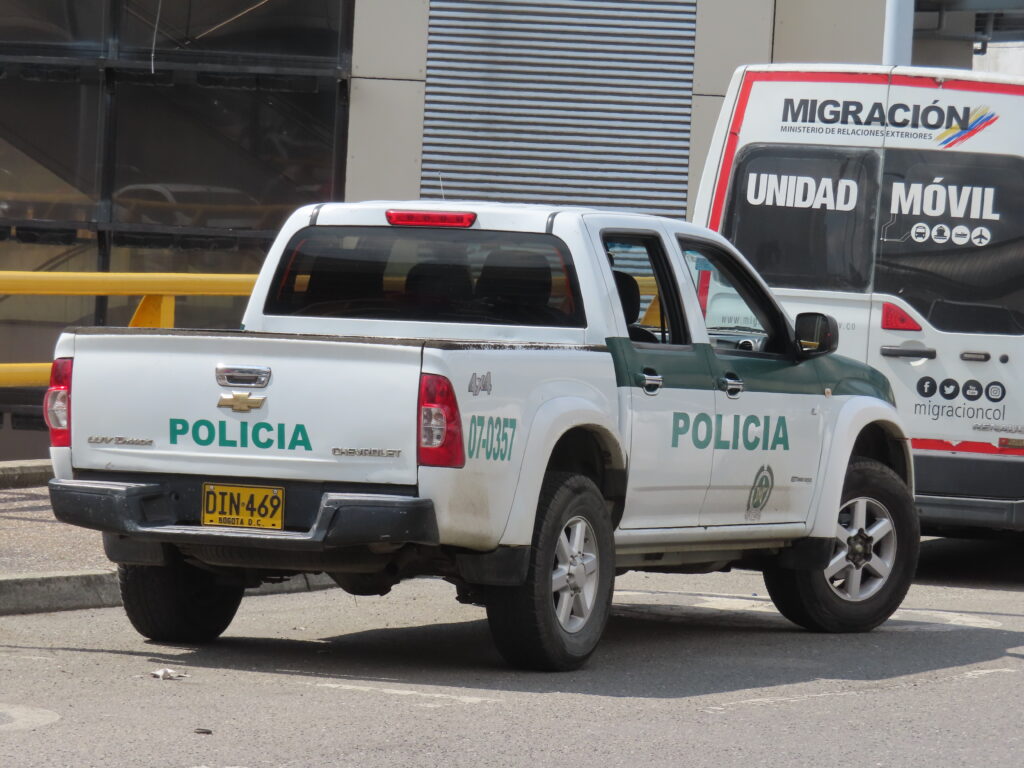
The Defense Ministry has put 11,100 members of the military and police into Cali and its metropolitan area — roughly 6,000 soldiers and 5,100 police — backed by anti-explosive units, special-operations groups, motorised patrols, air support and aeromedical evacuation teams. Surveillance runs by land, air and river, including patrols on the Cauca, and the Navy is reinforcing the Pacific coast around Buenaventura and the highway that links it to Cali.
The southwest is the tensest part of the country — armed groups operate around Jamundí — which is why the ring extends well past the city, out through Palmira, Yumbo, Candelaria, Dagua, Tuluá, Florida and Pradera. There are around 15 control points on the strategic corridors and more than 400 traffic agents on the streets.
What is restricted, and what it costs you
The dry law comes from municipal Decree 4112.010.20.0952 of 2026 and bans both the sale and the consumption of alcohol anywhere in the city from 6 a.m. to 8 p.m. That includes bars and restaurants, so a lunchtime beer is not on today. Fines run from 233,454 pesos (about US$74) to 1,867,632 pesos (about US$592).
The car-free day runs 7 a.m. to 8 p.m. and covers private cars, motorcycles, hybrids and electric vehicles, plus heavy cargo and removals trucks. Breaking it costs 633,200 pesos (about US$201). There is one exemption that matters to travellers: if you have a flight that day, or are coming back from one, you are allowed to drive — carry your ticket. MIO transit is free all day, but the turnstiles still need a MIO card, so nothing is charged but no card means no entry.
The drone ban is wider than a single day. Aeronáutica Civil has closed the entire airspace of Cali, Yumbo, Jamundí, Candelaria and Palmira to private drones from 6 to 8 August, recreational and commercial alike, including perimeter and approach areas. Only military, police and specifically authorised aircraft may fly. If you shoot drone footage for work, plan for three days without it.
Authorities are offering a reward of up to 500 million pesos (about US$158,000) for advance information on possible attacks, weapons, suspicious vehicles or unauthorised drones.
If you are flying today
This is the change most likely to catch you out. Aeronáutica Civil has closed the Alfonso Bonilla Aragón terminal to anyone who is not flying: you need a boarding pass or ticket and original photo ID to get inside. Family, friends and greeters cannot wait in the public areas — the one exception is a single escort for unaccompanied minors, elderly or reduced-mobility passengers and anyone needing medical assistance — and the forecourt bays are drop-off and pick-up only, with no waiting.
So unless you fall into one of those categories, plan to meet arrivals outside the terminal, and allow extra time for the checkpoints on the corridors linking Cali with Palmira, Jamundí and Candelaria. Air activity, including helicopters, is heavy across the Valle today and tomorrow.
Carry your passport or cédula, build margin into every transfer, and confirm tours or intercity travel in advance — routes and timings can change at short notice.
The ceremony itself
Abelardo De La Espriella is sworn in as president at 3 p.m. at the Arena USC of the Universidad Santiago de Cali, with José Manuel Restrepo as vice-president. Senate president Honorio Henríquez confers the presidential sash. Congress convenes at noon, and a troop-recognition ceremony follows at about 5 p.m. at the Batallón Pichincha, which closes Calle 5 from Carrera 56.
Opposition demonstrations are planned in the city today, and an Indigenous Minga is arriving in Cali to join a rally. They are expected to be peaceful, but they will add to the road closures.
What it means for foreigners
Nothing here touches your visa or residency. It only changes how you get around, and for one day it changes that quite a lot.
The practical takeaway: if you are in the Valle del Cauca today, do not drive between 7 a.m. and 8 p.m. unless you have a flight, do not count on buying or drinking alcohol before 8 p.m., do not fly a drone until Sunday, and do not go to the airport unless you are the one travelling. This is general information, not legal or travel advice.
More: Colombia news in English, every day from The Rio Times.
Frequently Asked Questions
What is the Cali security lockdown?
It is the security operation around Colombia’s first formal presidential inauguration held outside Bogotá. The Defense Ministry has deployed 11,100 troops and police across Cali and its metropolitan area, alongside a car-free day, a city-wide dry law and a drone ban.
Can I drive in Cali today?
Not between 7 a.m. and 8 p.m. Private cars, motorcycles, hybrids and EVs are all banned, and the fine is 633,200 pesos (about US$201). If you have a flight that day you are exempt — carry your ticket.
Can I buy a drink in Cali today?
No. The dry law bans both selling and drinking alcohol city-wide from 6 a.m. to 8 p.m., including in bars and restaurants. Fines run from 233,454 pesos (about US$74) to 1,867,632 pesos (about US$592).
Can I fly a drone in Cali?
No. Private drone flights are banned from 6 to 8 August across the whole airspace of Cali, Yumbo, Jamundí, Candelaria and Palmira, for recreational and commercial operators alike.
Can I go to the airport to meet someone?
No. Only ticketed passengers with a boarding pass and original ID can enter the terminal. Companions and greeters are not allowed inside — the exception is one escort for unaccompanied minors, elderly or reduced-mobility passengers and anyone needing medical assistance — and drivers cannot wait in the forecourt bays.
What time is the ceremony and who is being sworn in?
Abelardo De La Espriella takes office at 3 p.m. at the Arena USC of the Universidad Santiago de Cali, with José Manuel Restrepo as vice-president. A troop-recognition ceremony follows at about 5 p.m.
Does this affect my residency or status?
No. It is purely a security and logistics operation; it changes nothing about visas, residency or entry rules.
Sources: Colombian Defense Ministry; Alcaldía de Santiago de Cali (Decree 4112.010.20.0952 of 2026); Aeronáutica Civil; Gobernación del Valle del Cauca.
This article was produced by The Rio Times’ automated newsroom system. How we use AI · Report an error
Read More from The Rio Times