
BRAZIL · BANKING
Caixa Econômica Federal, Brazil’s state-owned bank and its largest mortgage lender, said on Friday 13 November that it is studying higher mortgage interest rates. It would follow rises by two large private banks in late October, as Brazil’s interest rates stay high, and it concerns foreigners financing a home there and investors who follow Brazil’s banks.
Key Facts
- Signal Caixa, Brazil’s state-owned bank, says it is studying higher mortgage rates; it gave no new rate.
- Size Caixa holds 68.2% of Brazil’s mortgage market, a R$1.043 trillion (US$186 billion) portfolio.
- Rivals Itaú Unibanco and Bradesco, two private banks, raised mortgage rates in late October.
- Backdrop Copom, the central bank’s rate-setting committee, held the Selic, Brazil’s benchmark interest rate, at 13.75% on 4 November.
- Prediction markets Polymarket, a prediction-market platform where users bet real money, prices 90.0% on no December rate change (12:55 p.m. ET, 13 November).
- Power Index Brazil ranks 1st of 14 in The Rio Times Latin America Power Index, with 74.2 points (November 2026 edition).
What Caixa Said
Inês Magalhães, Caixa’s housing vice-president, said on 13 November that the bank is “studying, yes, the question of adjusting the interest rate”. She spoke while the bank presented its third-quarter results.
Marcos Brasiliano Rosa, the bank’s finance vice-president, said “soon there will be this news” and gave no timeline. He added that Caixa is “owner of practically 70% of the system”.
Rosa said that not acting would cut lending volume “tragically”. He added that keeping current rates would shrink the credit Caixa can offer.
Magalhães said Caixa is studying a rate adjustment that depends on the volume of funds. Neither executive named a new rate, a date or a plan by product.
How the Private Banks Moved
Itaú Unibanco announced on Thursday 29 October a minimum mortgage rate of 12.95% a year plus the TR, a government-set reference rate added to Brazilian loans. Itaú said the change reflects current funding conditions.
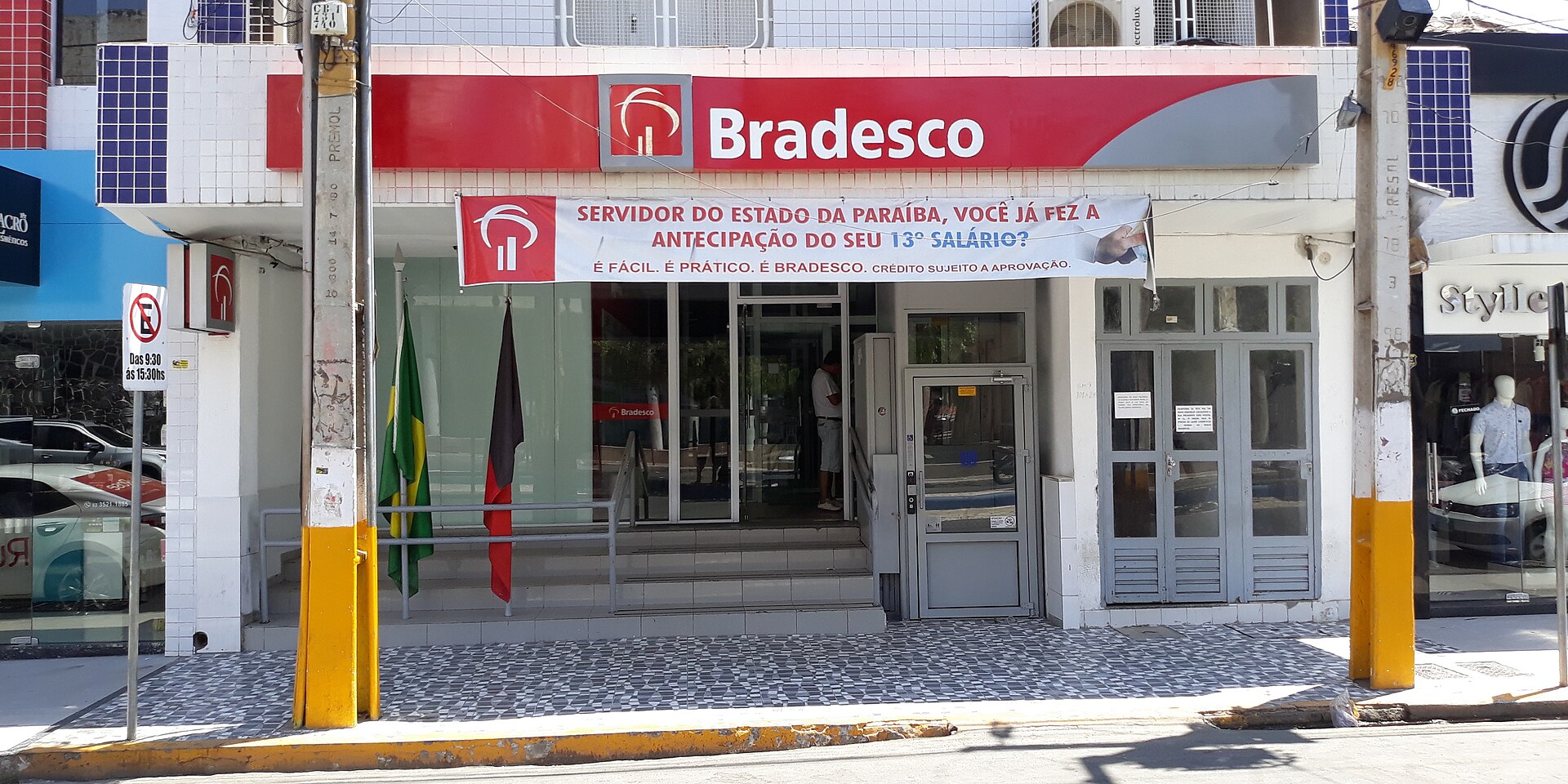
Bradesco also raised its mortgage rates in late October, with its main-line rate now 15% a year plus TR. It cited the rise in market interest rates.
Caixa in Numbers
Caixa’s mortgage portfolio stood at R$1.043 trillion (about US$186 billion) on 30 September, up 15.5% in 12 months. We convert reais at the central bank’s reference exchange rate, PTAX, of R$5.6143 per US$ on 12 November.
Caixa lent R$210.1 billion (about US$37.4 billion) in the first nine months of 2026, up 20.9%, in about 799,500 contracts. About R$131 billion (about US$23.3 billion) came from the FGTS, a workers’ severance fund, and the Fundo Social, a government social fund.
Another R$79 billion (about US$14.1 billion) came from SBPE, the savings-funded mortgage system, which grew about 32%. Caixa’s savings balance reached R$407.8 billion (about US$72.6 billion), up 4.1%.
Why It Matters
The mechanism is funding. Caixa’s mortgage portfolio grew 15.5% in a year while its savings balance grew 4.1%.
That leaves the bank leaning on market-priced funding, including R$268.7 billion (about US$47.9 billion) of LCIs, real-estate credit notes it sells to investors. Brazil’s central bank, through its Copom committee, held the Selic at 13.75% on Wednesday 4 November, when analysts were split on whether the committee would cut by 0.25 percentage point or hold.
Central bank data show SBPE savings had net outflows of R$6.19 billion (about US$1.10 billion) in September, the fourth monthly deficit in a row. The August outflow was about R$9.5 billion (about US$1.69 billion).
If Caixa raises rates, new borrowers would pay more. If it holds them, Rosa warned, fewer borrowers would get loans, which is the counter-view Caixa itself has voiced.
The next checkpoint is the Copom decision, scheduled for 8 and 9 December. Rosa said the news will come soon, without a timeline.
What Prediction Markets Say
On Polymarket, traders put 90.0% on no change in Brazil’s December rate decision at 12:55 p.m. ET (17:55 UTC) on 13 November. They gave 6.9% to a 25 basis point cut, a quarter of a percentage point, and 1.0% to a 25 point rise.
Bets of 50 points or more drew 0.95% for a cut and 0.65% for a rise, and US$73,952 was traded in the market. The January market shows 65.5% for no change, 13.9% for a 25 point cut and 7.45% for a 25 point rise, with US$13,423 traded.
These prices are bets, not polls, and a price is not a forecast. They concern the central bank’s rate, not Caixa’s mortgage rates.
Why we show this: prediction markets turn real-money bets into a live probability that moves within minutes of the news, which is why investors, campaigns and newsrooms in the United States now follow them closely. We show them next to polls and official results, never instead of them.
What Is Not Known
Caixa has not said what the new rate will be, when it starts, or which products it covers. The products include SBPE loans, FGTS-funded loans and Minha Casa Minha Vida, the government’s social housing programme.
Bradesco’s full new range is reported inconsistently. We therefore give only its main-line rate.
What It Means for You
Anyone financing a Brazilian home through Caixa should know that quotes could change, though no rate or date exists yet. Foreign buyers who borrow in reais carry the exchange-rate risk as well as the interest rate.
Investors in Brazil’s banks can compare the published ranges at a central bank signalling high rates will last longer with whatever Caixa announces. The trust that long-term rates depend on and the real at a 12-month low are the wider backdrop.
More: Brazil news, every day from The Rio Times.
In Plain English
- Selic is Brazil’s benchmark interest rate, set by the central bank’s Copom committee.
- TR is a government-set reference rate that banks add to many Brazilian mortgage rates.
- FGTS is a workers’ severance fund that finances subsidised housing loans.
- SBPE is the mortgage system funded by savings accounts.
Frequently Asked Questions
Is Caixa raising its mortgage rates?
Not yet. On 13 November its executives said the bank is studying an adjustment, and neither gave a new rate or a date.
How much of Brazil’s mortgage market does Caixa hold?
Caixa has a 68.2% market share, with a mortgage portfolio of R$1.043 trillion (about US$186 billion) on 30 September.
Which private banks raised mortgage rates?
Itaú Unibanco and Bradesco raised mortgage rates in late October. Itaú’s minimum is 12.95% a year plus the TR.
What is the Selic rate now?
Brazil’s central bank held the Selic at 13.75% a year on 4 November. The next Copom decision is scheduled for 8 and 9 December.
What do prediction markets expect for December?
On Polymarket, bettors put 90.0% on no change in December. That is a price from real-money bets, not a forecast.
Sources: Caixa, investor relations, third-quarter 2026 results presented 13 November 2026; Banco Central do Brasil, Copom decisions and Selic history; Banco Central do Brasil, PTAX exchange rates; Polymarket, Bank of Brazil decision in December, read 13 November 2026, 12:55 p.m. ET.
This article was produced by The Rio Times’ automated AI newsroom. Editorial responsibility: Matthias Camenzind, Publisher and Editor-in-Chief. The Rio Times also runs Ask Rio Times, which answers from 100,000+ of our own articles, the daily Latin America Power Map, and prediction-market odds on elections and markets.. How we use AI · Report an error
Brazil runoff, Sunday, October 25: Brazil runoff: date, poll closing times and when results start. Latest: Brazil runoff polls, Flávio 51%, Lula 49%.