
BRAZIL · ENERGY
Key Facts
- The country Brazil is Latin America’s largest economy, and it imports part of its diesel and gasoline.
- What happened The dollar jumped up to 12% against the real during Monday’s session, making a barrel of oil up to 11% dearer in reais.
- The numbers Brent crude closed at US$116.72 on Friday and traded between US$115 and US$116 on Monday.
- What to watch Petrobras’s next price decision and whether the government renews the diesel subsidy.
- Power Index Brazil ranks 1st of 14 in The Rio Times Latin America Power Index, with 75.0 points (October 2026 edition).
Live tonight
Brazil’s runoff, live
The official TSE count for Flávio Bolsonaro and Lula, updated every minute (voting closed at 7 p.m. Brasília, 6 p.m. ET).
Brazil runoff polls · Polymarket and Kalshi odds · When results come · Brazil election poll data (CSV)
Prediction markets · who wins the runoff
Implied chance of winning Brazil’s presidency on 25 October, from traders’ prices.
Polymarket
Flávio Bolsonaro – · Lula – (US$249 million traded)
Kalshi (regulated in the US by the CFTC)
Flávio Bolsonaro 0.4% · Lula 99.6%
As of 25 October, 11:40 pm ET (03:40 Lisbon), updated every 20 minutes. Prices are bets, not polls, and can move fast.
Why we show this: prediction markets turn real-money bets into a live probability that moves within minutes of the news, which is why investors, campaigns and newsrooms in the United States now follow them closely. We show them next to polls and official results, never instead of them.
Brazil fuel prices face new pressure as oil became up to 11% dearer in reais, Brazil’s currency, on Monday 26 October 2026. The dollar jumped by as much as 12% after President Lula’s election win, while Brent crude, the world oil benchmark, eased slightly.
A weaker real raises the cost of imported diesel and gasoline, and it squeezes Petrobras, the state-controlled oil company, on prices. Its board was scheduled to meet on Monday to review fuel prices, and the government must also decide on a subsidy.
How Oil Got 11% Dearer in Reais
Brent crude closed on Friday at US$116.72 a barrel, with the dollar at about 4.99 reais. That put a barrel at roughly R$583, or about US$117 at Friday’s rate of R$4.99.
During Monday’s session the dollar rose by more than 12% at its peak, and Brent traded between US$115 and US$116. At the real’s weakest point a barrel cost about R$645 (about US$115), roughly 11% more than on Friday.
At 1 p.m. in Brasília the dollar stood at 5.45 reais, up 9.2%, so a barrel cost near R$630 (about US$116). That is roughly 8% above Friday, and our report on the real’s slump after Lula’s win has the first market reaction.
Why Brazil Fuel Prices Follow the Real
Brazil still buys part of its diesel and gasoline abroad, and importers pay for those cargoes in dollars. When the real falls, the same cargo costs more reais, so Brazil fuel prices rise at import level even if dollar oil is flat.
Petrobras sets its refinery prices in reais and has not raised diesel for nearly five months, while world prices climbed. Importers call the difference between its price and the import price the lag.
Live Market IntelligenceBrazil — Live Market Board
Rio Times · Live Market Intelligence
Brazil — Live Market Board
-14.69%
174,959.47
-14.69%
69,879.62
-0.01%
10,575.59
-1.59%
3,017,221
—
2,487.00
-2.09%
57,093.72
-0.06%
| Instrument | Last | Change | YoY | Prev. | High | Low | Volume |
|---|---|---|---|---|---|---|---|
| IBOV | 174,959.47 | -14.69% | +21.85% | 205,082.56 | 168,310 | 167,142 | — |
| USD/BRL | 5.16 | +0.01% | -5.13% | 5.16 | 5.18 | 5.14 | — |
| SELIC | 14.00% | — | — | — | — | — | |
| PETR4 | 41.64 | -0.05% | +35.19% | 41.66 | 41.97 | 41.15 | 41,499,400 |
| VALE3 | 72.97 | +0.83% | +30.75% | 72.37 | 73.54 | 72.66 | 17,658,000 |
| ITUB4 | 38.60 | -1.03% | +4.57% | 39.00 | 39.34 | 38.39 | 29,487,800 |
| BBDC4 | 16.85 | +0.36% | +3.50% | 16.79 | 16.90 | 16.67 | 19,416,900 |
| BBAS3 | 19.37 | +0.47% | +0.73% | 19.28 | 19.44 | 19.16 | 11,069,200 |
| B3SA3 | 14.26 | -0.21% | +12.73% | 14.29 | 14.47 | 14.11 | 33,037,800 |
| ABEV3 | 14.89 | -0.80% | +21.91% | 15.01 | 15.07 | 14.81 | 16,453,100 |
| WEGE3 | 47.59 | +0.49% | +29.99% | 47.36 | 48.08 | 47.36 | 3,364,600 |
| PRIO3 | 59.14 | -0.19% | +50.67% | 59.25 | 59.81 | 58.74 | 3,325,600 |
| SUZB3 | 41.33 | +2.35% | -23.55% | 40.38 | 41.48 | 40.35 | 3,914,900 |
| RENT3 | 34.68 | -0.09% | +0.84% | 34.71 | 34.96 | 34.35 | 7,979,100 |
| AZZA3 | 15.89 | -2.63% | -53.76% | 16.32 | 16.42 | 15.82 | 1,330,300 |
| CSNA3 | 4.30 | +0.47% | -42.65% | 4.28 | 4.41 | 4.26 | 10,076,100 |
| GGBR4 | 24.69 | +2.19% | +51.38% | 24.16 | 24.85 | 24.18 | 7,047,600 |
| ENEV3 | 24.21 | -1.38% | +70.49% | 24.55 | 24.64 | 23.99 | 9,297,000 |
Diesel Is the Pressure Point
Abicom, the association of Brazilian fuel importers, put diesel at Petrobras refineries R$3.53 (about US$0.65) a litre below the import price on Thursday 22 October. That is more than the R$3.52 (about US$0.65) of support importers receive, the first time the lag passed the aid.
A weaker real widens that gap if nothing else changes, which is why Brazil fuel prices could rise after the vote. Abicom expects any Petrobras correction to be gradual, which would soften the immediate hit to drivers.
The company’s earlier pricing stance is covered in our report on the Petrobras diesel decision. Importers also say the dollar conversion of a barrel is only a guide, because the real import bill has other cost components.
The Subsidy Decision Facing the Government
The federal government pays a diesel subsidy of R$2.12 (about US$0.39) a litre, and importers receive an extra R$1.40 (about US$0.26). The 30-day period for the main payment ends around the turn of the month, so a renewal decision is due.
Keeping the aid prolongs its cost to the federal budget, while ending it could push up transport and food costs. The choice comes as investors already worry about public finances after Lula’s re-election.
What It Means for US Readers
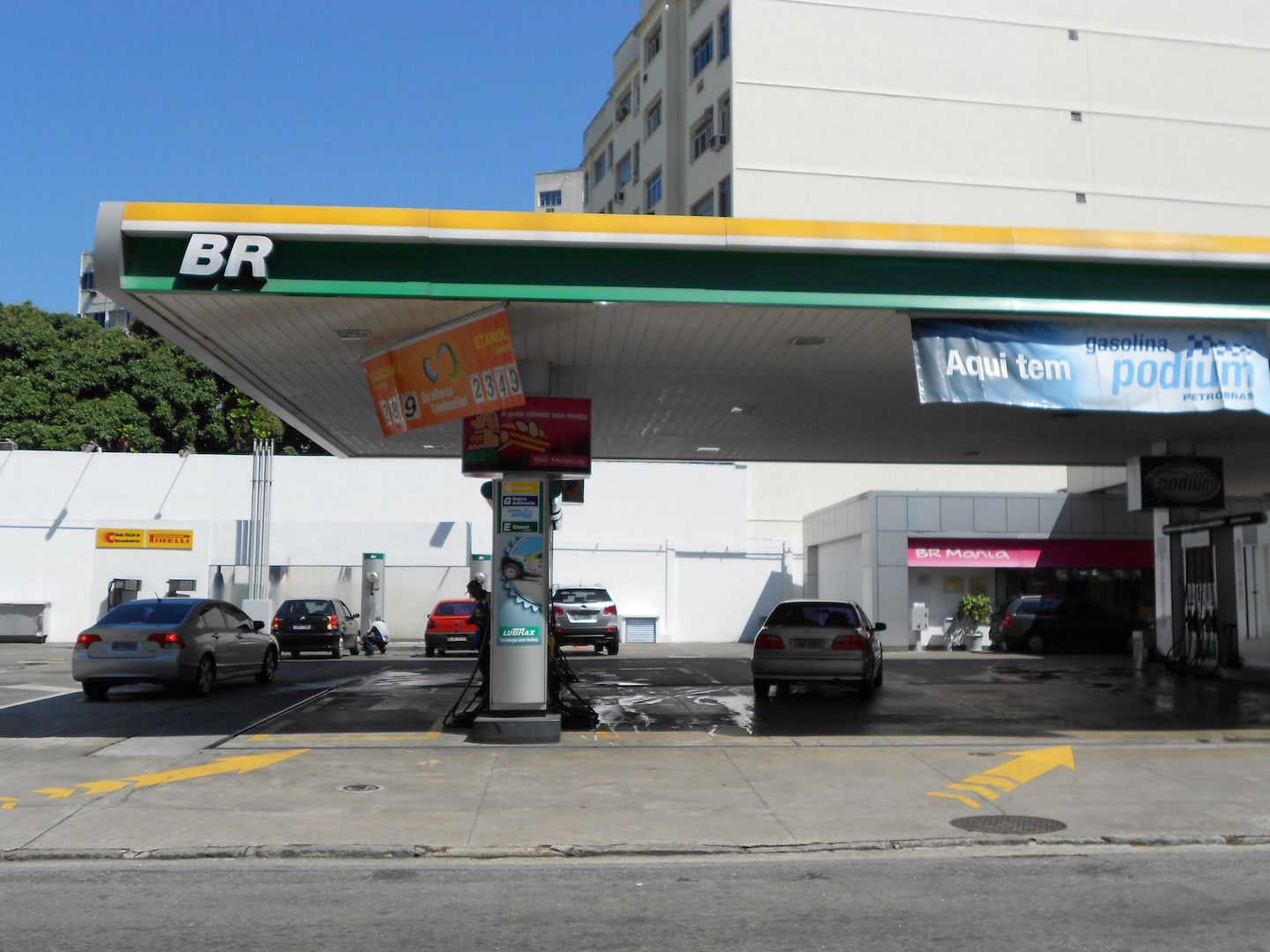
For Americans holding Petrobras shares in New York, Brazil fuel prices matter because the pricing decision depends on the real as much as on oil. A rise in refinery prices would narrow the gap with world prices, but it would also feed Brazilian inflation.
Brent is priced in dollars, so American drivers feel little direct effect from the real’s fall. The weaker currency matters more to US investors in Brazilian stocks and bonds.
What Is Not Known
It is not known whether Petrobras will raise diesel or gasoline prices before the end of October, or by how much. Its board was due to meet on Monday, and no decision had been reported at the time of writing.
The government has not said whether it will renew the diesel subsidy that runs out at the turn of the month. How far Brazil fuel prices move at the pump depends on taxes, ethanol blending and station margins.
More: Brazil news in English, every day from The Rio Times.
Frequently Asked Questions
Why is oil 11% more expensive in Brazil?
Oil is priced in dollars, and the dollar rose by as much as 12% against the real during Monday’s session after the election. That raised the cost of a barrel in reais by up to about 11%, even though Brent itself eased.
Will Brazil fuel prices rise after the election?
That depends on Petrobras, whose board was due to meet on Monday, and on the government’s subsidy decision. Petrobras has not raised diesel for nearly five months.
What is Petrobras?
Petrobras is Brazil’s state-controlled oil company and its dominant fuel supplier. Its shares trade in São Paulo and in New York.
What is Brent crude?
Brent is the global benchmark price for crude oil, quoted in US dollars a barrel. It closed on Friday at US$116.72 and traded between US$115 and US$116 on Monday.
Does the weaker real affect US drivers?
Not directly, because US pump prices follow oil prices quoted in dollars. The effect falls on Brazilian consumers and on investors holding Brazilian assets.
Sources: Veja, 26 October 2026; InfoMoney, 26 October 2026; eixos, 23 October 2026; Jornal do Comércio (Abicom), 20 October 2026; Trading Economics (Brent), 26 October 2026; Investing.com Brasil, 26 October 2026.
Editorial responsibility: Matthias Camenzind, Editor-in-Chief · Editorial standards · Report an error