Brazil Loses Another Health Minister Pressured by Bolsonaro to Reopen Economy and Use Chloroquine
RIO DE JANEIRO, BRAZIL – On Friday, May 15th, Nelson Teich, an oncologist, resigned his position as Minister of Health, less than a month after taking on the most sensitive portfolio to tackle the Covid-19 pandemic, amid public disagreements with President Jair Bolsonaro.
Teich is the second Health Minister to leave office during the spread of Covid-19, which has already caused almost 14,000 deaths in Brazil.

With a brief administration marked by the strong influence of the military and the delay in measures to tackle the crisis, the oncologist took over the post left by ex-Minister Luiz Henrique Mandetta with the mission of combining social distancing measures with the reopening of the economy, as Bolsonaro had been pressuring.
At first, he pointed out that he would not make abrupt changes in the Ministry’s policy, but that he would instead draw up a plan to combine the two, and pledged to be guided by science.
But in a short time, he saw his management bruised – under criticism from state and municipal health secretaries – and found himself isolated. Teich took office as a Minister, posing as a mediator after a political crisis. He accepted that the President, and not himself, should choose the number two in the Ministry of Health, General Eduardo Pazuello.
Unlike Mandetta, he avoided publicly criticizing the president and always reiterated that he would not comment on the behavior of the president during the pandemic. However, the disagreements between the now ex-Minister and Bolsonaro over measures to tackle the greatest health crisis in decades, became more apparent in recent days.
Last week, he was surprised when, during a press conference, he was asked by journalists about a Presidential decree that included declaring services in beauty salons, barbershops, and gyms as essential activities.
He had not even been consulted about the measure. Nevertheless, he considered it to be Bolsonaro and the Ministry of Economy’s decision. He argued that the role of the Ministry of Health was to help them see the best way to achieve this opening “by protecting the people”.
Last Thursday, May 14th, Bolsonaro further increased the pressure on his Minister of Health and demanded that Teich recommend the use of chloroquine for the treatment of patients infected with the novel coronavirus at the very early stages of Covid-19.
Currently, the Ministry of Health only authorizes the use of the drug provided there is a mutual agreement between doctor and patient, as the effectiveness of the drug in treating the disease has not yet been scientifically proven, and doctors alert to the risks of its severe side effects.

Teich was in line with a resolution by the Federal Council of Medicine. “Now, they voted for me to decide and this chloroquine issue goes through me”, argued the President, in an online meeting with major entrepreneurs, in which he voiced his dissatisfaction with the Minister’s lack of action on the issue and pledged that the protocol on chloroquine would change.
To allies, Teich had been complaining that it was very difficult to heed the President’s wishes while respecting what science prescribes. Repeatedly, the Minister objected to deliberately recommending the use of chloroquine before there were studies providing greater safety for its use in the treatment of Covid-19.
“Chloroquine is still uncertain today. There were initial studies that suggested benefits, but there are studies today that say otherwise,” the then minister said at a press conference on April 29th. “The preliminary data from China is that it has had a high mortality rate and that the drug will not be a watershed in relation to the disease,” he added.
He also faced criticism from state and municipal health secretaries, who complained of being excluded from the national decision-making process when the SUS [national health system] has its management shared among them. They also complained that the Federal Government had been slow to transfer medical supplies while the epidemic was spreading in the country.
When he took over the Ministry, the oncologist pledged to conduct mass population testing. Days later, he explained that mass testing does not mean testing the entire population. Teich doubled the number of tests Mandetta had promised and said the country would reach 46 million tests.
But by Friday, the government had only managed to distribute half of the 17 million tests expected to be delivered by the end of May.
The Minister also changed the platforms with data on the epidemic’s progression in the country, but was unsuccessful in providing the data promised since the onset of the crisis, such as the total number of intensive care beds and their occupation in both the public and private hospital networks.
Teich’s major project was the development of a risk matrix to help managers decide whether to relax or tighten social distancing measures. The tool was developed but was rejected by state and municipal health managers. They stated that they would only discuss a reopening – advocated by President Bolsonaro – when there was evidence that the coronavirus contagion was slowing in the country.
“It is inopportune to discuss relaxing isolation when we see the death toll rise,” criticized the president of the Council of State Secretaries for Health, Alberto Beltrame. Teich vowed that he would engage in dialogue with the managers, but felt increasing pressure from the President.
Since taking over the Ministry, Teich has also been criticized for his limited awareness of the National Health System (SUS). “The Minister has difficulties, he does not have a full grasp of what the SUS is and this creates additional challenges. Things have been flowing very slowly,” Beltrame said in an interview.
An oncologist and private sector entrepreneur, Teich defended himself on social media and said he had started his career in the public sector. While health care systems collapsed in several states, the ex-Minister opposed the suggestion of establishing a single wait list for ICU beds.
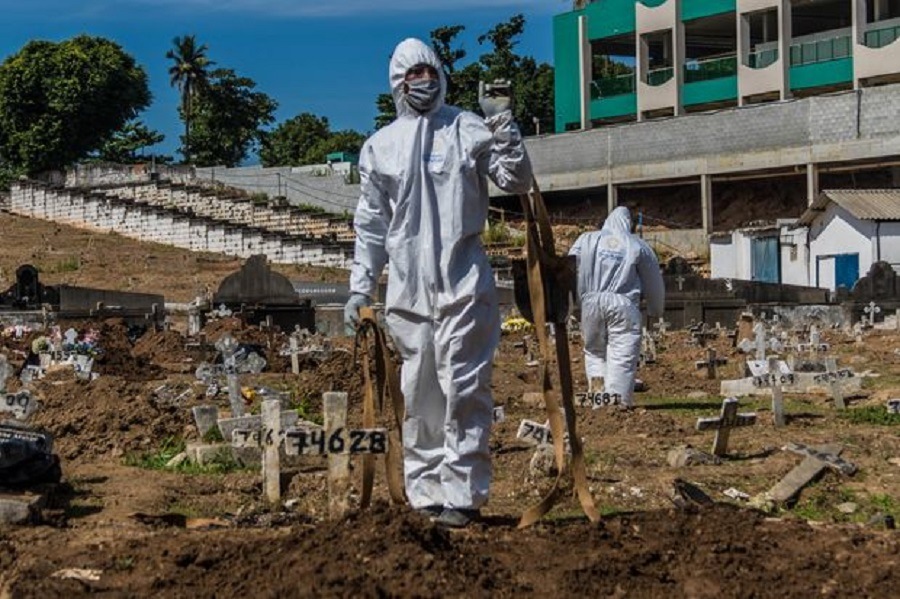
The new Minister to be appointed by Bolsonaro will take over as the country is experiencing a steep upward trend of the spread of Covid-19, with more than 200,000 people infected. And he or she will need to provide answers quickly to states and municipalities, which often complain about delays in the transfer of ventilators, personal protective equipment, and medical supplies.
Source: El País
More: Brazil news in English, every day from The Rio Times.
This article was drafted with automated assistance and reviewed before publication. How we use AI · Report an error
Read More from The Rio Times