Bolsonaro House Arrest Aims to Display Moraes’ Defiance to U.S. Sanctions but Risks Deepening U.S.–Brazil Rift
(Commentary) Jair Bolsonaro, the former president of Brazil, is under house arrest in Brasília by order of Supreme Court Justice Alexandre de Moraes.
Official court documents show that Moraes imposed this measure on August 4, 2025, after interpreting Bolsonaro’s actions as violating a judicial ban on public communication—even through family accounts.
However, many observers note that Moraes constructed the case for house arrest around this perceived infraction, with the actual breach still disputed legally.
This judicial action closely followed the decision by the United States, under the Trump administration, to apply Global Magnitsky Act sanctions against Justice Moraes.
The sequence of events led to the widespread perception that Moraes’s decision to confine Bolsonaro was a demonstration of defiance against the U.S.—asserting his independence and authority in the face of growing international criticism.
The U.S. State Department responded by publicly condemning the house arrest, describing it as a restriction on Bolsonaro’s rights and warning that further measures might follow.
Washington maintained that democratic norms and due process should be upheld and declared that it would hold accountable anyone assisting sanctioned individuals.
This criticism reflected a hardening U.S. stance on Brazil’s internal affairs, specifically connecting future actions—including economic measures—to the country’s judicial actions against the former president.
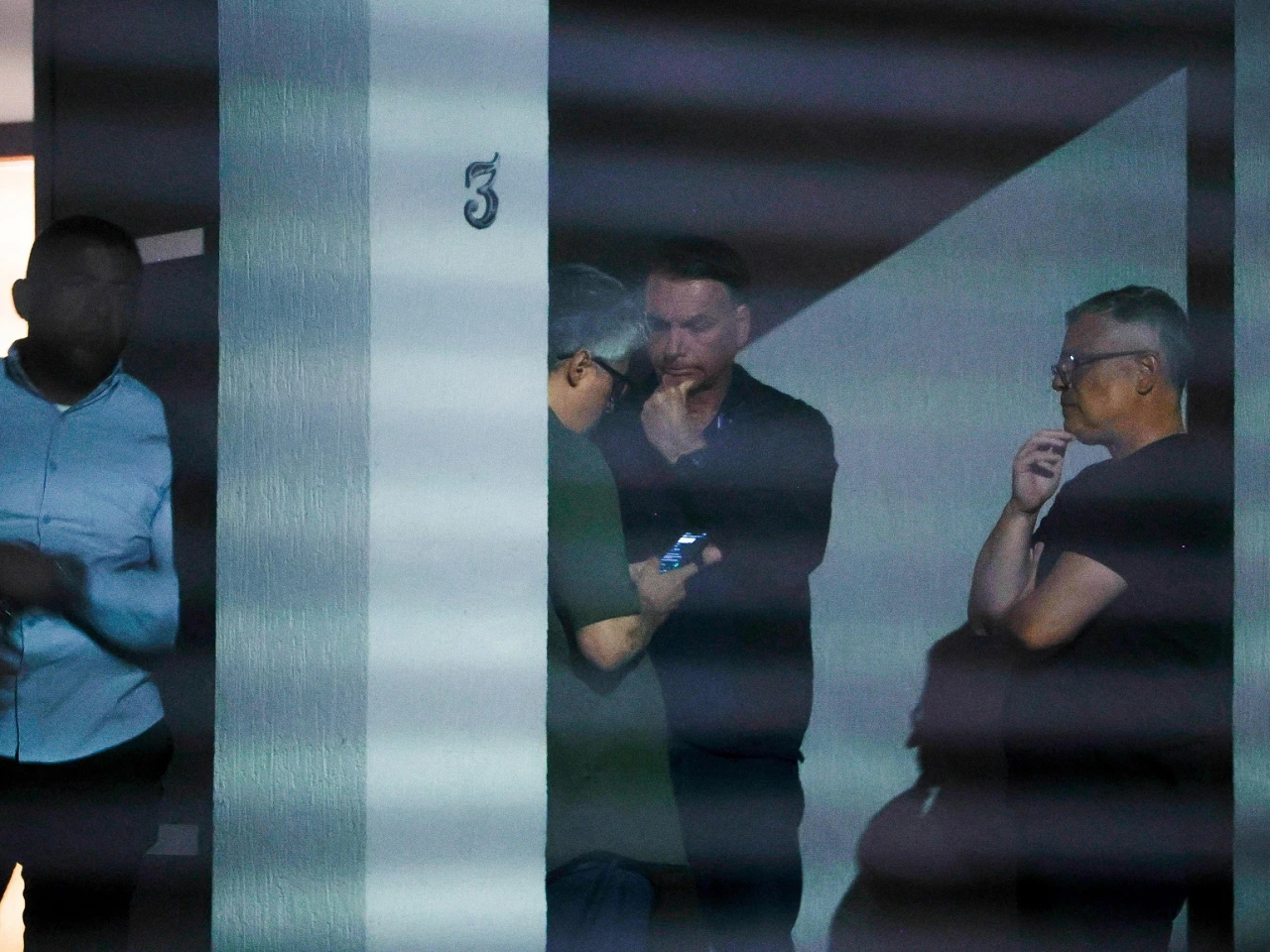
Political reactions in Brazil were immediately charged. Governor Tarcísio de Freitas labeled the court’s decision “absurd” and contended publicly that punishment arrived for Bolsonaro even “before any official process began.”
He questioned whether “ending democracy to save it” had logic, warning that institutions appeared ready to override individual rights.
Governor Romeu Zema, also a Bolsonaro ally, denounced the arrest as a “chapter of political persecution,” lamenting that such moves could unbalance the separation of powers and silence the opposition.
Bolsonaro Family’s Election Hopes Fade as Court Orders Ex-President into Home Confinement
Bolsonaro’s legal team vigorously protested, stating through official appeals that he did not violate court orders. They insisted his words and actions did not amount to any criminal act or concrete breach of restrictions.
His sons, Flávio and Eduardo, publicly ramped up criticism. Eduardo, now living in the United States, described Moraes as a “human rights violator” and claimed Brazil was no longer a democracy.
Flávio argued the house arrest reflected personal revenge, linking its timing to recent US sanctions against Moraes. Public rallies followed, with Bolsonaro’s supporters framing the situation as persecution.
Other governors, including Ronaldo Caiado and Eduardo Leite, warned the case created a precarious precedent, risking Brazil’s democratic foundation and the right to free speech.
Political figures from across the country warned that such judicial moves set a dangerous precedent, threatening free speech and core civil liberties.
More: Brazil news in English, every day from The Rio Times.
This article was produced by The Rio Times’ automated newsroom system. How we use AI · Report an error
Read More from The Rio Times