Paul Biya Military Reshuffle Amid 58-Day Absence
Cameroon · Politics
Key Facts
- Sweeping reshuffle. Paul Biya signed three decrees on Monday replacing commanders in four of Cameroon’s five joint military regions.
- Inner circle promoted. The head of the Presidential Guard rose from colonel to brigadier general, and the Rapid Intervention Brigade got a new commander.
- 58 days unseen. The 93-year-old president left for Europe on 7 June and has not appeared in public since.
- Official denial. Spokesman René Emmanuel Sadi told RFI the president is alive and will return to Yaoundé soon.
- Opposition pressure. The MRC is openly asking who is exercising presidential functions in Biya’s absence.
The Paul Biya military reshuffle announced on Monday replaces commanders across four of Cameroon’s five joint military regions while the 93-year-old president remains out of sight in Europe. The timing, 58 days into his absence, has sharpened questions about who really holds power in Yaoundé.
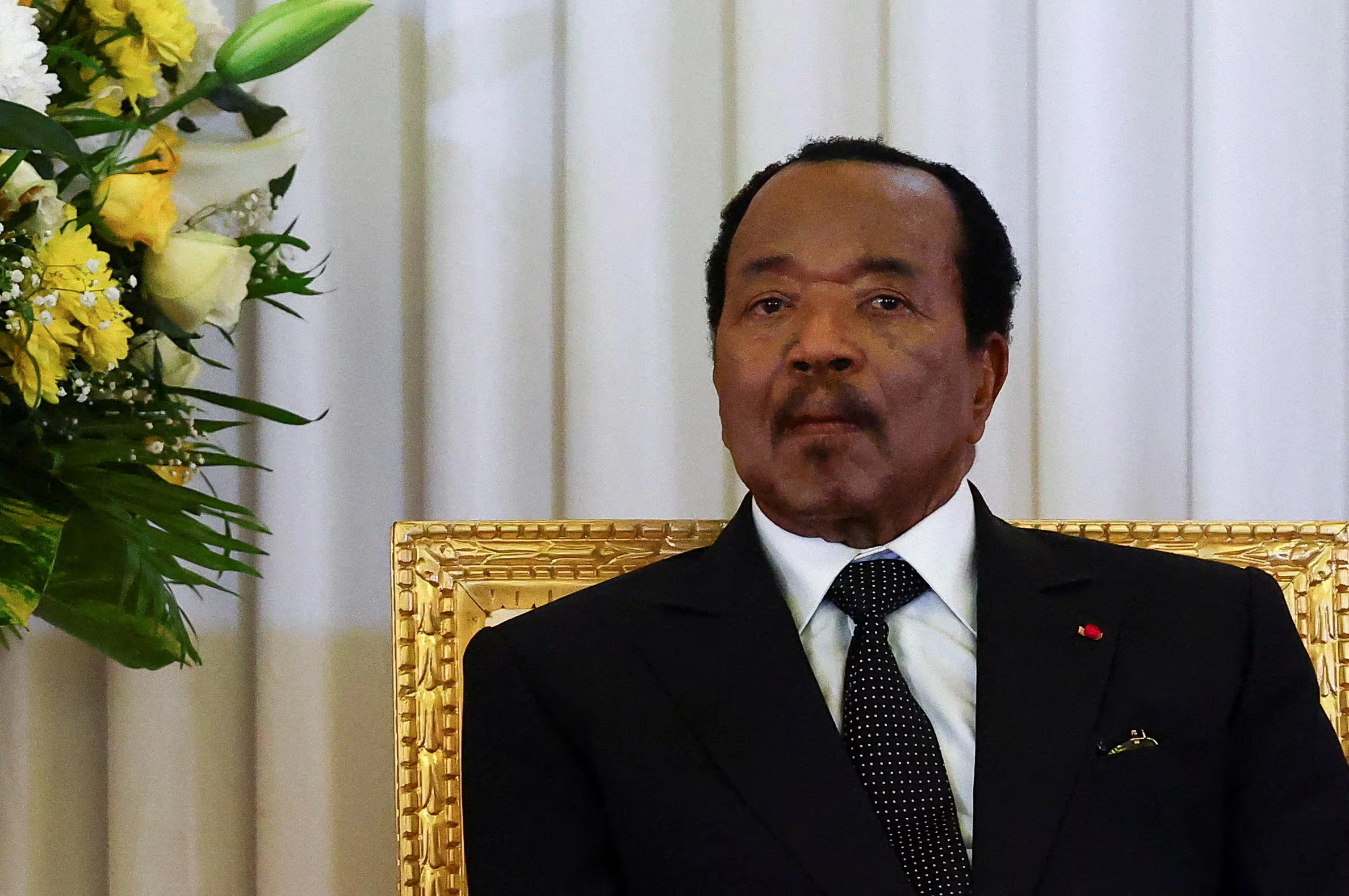
The three decrees were signed on Monday and read out on national radio. They reach into the most sensitive layers of Cameroon’s security architecture.
Alongside the regional commanders, the head of the Presidential Guard was promoted from colonel to brigadier general. The elite Rapid Intervention Brigade, the army’s most capable unit, received a new commander.
Major General Ebaka Hippolyte was also elevated to Major General of the Armed Forces General Staff. Taken together, the changes amount to the broadest military shake-up in years.
Why the Biya military reshuffle matters now
Biya has ruled Cameroon since 1982, making him one of the world’s longest-serving leaders. At 93, every personnel decision at the top of the army is read through the lens of succession.
The president left the country on 7 June for what his office called a brief private stay in Europe. He has not been seen in public since, a stretch of 58 days that has fuelled intense speculation at home.
His spokesman, René Emmanuel Sadi, pushed back on Sunday, telling RFI that “the president is alive” and would return to Yaoundé soon. The assurance has not quietened the debate.
A vacuum the opposition wants named
The opposition Movement for the Rebirth of Cameroon is now asking the question aloud. Party figure Justin Noa has demanded clarity on who is exercising presidential functions while Biya is away.
A new government was only announced at the end of December 2025, after months of delay. The ruling CPDM held a rare leadership meeting last month, another sign that the party is preparing for an uncertain transition.
Cameroon’s constitution provides for the Senate president to take over if the presidency falls vacant. But the Senate chief is himself in his nineties, and the informal power map matters more than the formal one.
Security strains on several fronts
The reshuffle lands while the army fights on two fronts. Boko Haram and its offshoots remain active in the Far North, where suicide attacks and raids on villages continue.
In the North-West and South-West, the nine-year Anglophone separatist conflict grinds on. Both crises have stretched a military that relies heavily on the same elite units now getting new commanders.
Changing regional leadership mid-conflict carries operational risk. It also lets the presidency test loyalties and place trusted officers in the posts that would matter in a contested succession.
The costs of an absent president
Public frustration is already visible in the cities. Power cuts, fuel queues and high food prices have kept discontent simmering, and the absence of a visible head of state adds uncertainty to daily economic management.
Cameroon is also a logistics hub for the region. Instability at the top in Yaoundé reverberates through CEMAC neighbours that rely on Douala’s port and on Cameroonian fuel and food supplies. Those neighbours are knitting closer together, with a CEMAC QR-code system linking payments across six Central African states.
Douala’s business community tends to price political risk quickly. A prolonged absence would show up first in wider bond spreads and in delayed public payments to contractors. Regional rivals are meanwhile locking in freight routes, with Congo approving a US$1.26 billion Lobito Corridor railway.
For now, the machinery of state keeps moving. Ministers sign documents, the ruling party issues statements and the decrees keep coming, all in the name of a president no one has seen in weeks.
The economy in the background
Cameroon is Central Africa’s largest economy, exporting oil, cocoa and timber. Political uncertainty at the top feeds directly into investor caution and a fragile fiscal position. That fragility is already on the record, with four state firms holding 80% of Cameroon’s on-lent debt. Capital is still reaching the continent, as Chinese Belt and Road investment in Africa hits a record US$33.5 billion, but it rewards predictability.
The succession question is one The Rio Times has examined in its report on Paul Biya’s succession and Cameroon’s future. The broader contest for influence in the region is tracked in our pillar analysis, The New Scramble for Africa in 2026, and on our Central Africa hub.
What to watch
First, whether Biya reappears in Yaoundé in the coming days, as his spokesman promised. A public appearance would calm the speculation; another week of silence would amplify it.
Second, how the newly promoted commanders deploy. Moves around the Presidential Guard and the Rapid Intervention Brigade are the ones diplomats watch most closely.
Third, whether the CPDM convenes again. A second rare meeting in quick succession would suggest the party is actively war-gaming a transition.
Connected coverage
Frequently Asked Questions
What did the Paul Biya military reshuffle change?
Three decrees signed on Monday 3 August 2026 replaced the commanders of four of the five joint regions into which Cameroon’s armed forces are divided. The head of the Presidential Guard was promoted from colonel to brigadier general, the Rapid Intervention Brigade received a new commander, and Major General Ebaka Hippolyte was elevated within the Armed Forces General Staff.
Where is Paul Biya and how long has he been out of sight?
Biya left Cameroon on 7 June 2026 for what his office called a brief private stay in Europe and had not appeared in public for 58 days when the decrees were signed. He is reported to be in Geneva. Government spokesman René Emmanuel Sadi told RFI the president is alive and would return to Yaoundé soon.
Who takes over if the Cameroonian presidency falls vacant?
The constitution hands interim power to the president of the Senate, who must then organise elections. The formal rule is only part of the picture. The Senate president is himself in his nineties, and the ruling CPDM and army networks built around Biya would shape any real transition more than the text does.
Why does the timing of the reshuffle matter?
Biya has ruled since 1982 and is 93, so senior army appointments are read as succession positioning rather than routine administration. The changes touch the Presidential Guard and the Rapid Intervention Brigade, the units that would matter most in a contested handover, and they land while the army fights Boko Haram in the Far North and Anglophone separatists in the North-West and South-West.
Sources: CNBC Africa, Pan African Visions
This article was produced by The Rio Times’ automated newsroom system. How we use AI · Report an error
LatAm Markets: Live Signals → — real-time movers, turnover leaders and FX across Latin America.
Read More from The Rio Times