Argentina Flood Risk Covers 5.5 Million Hectares of Farmland
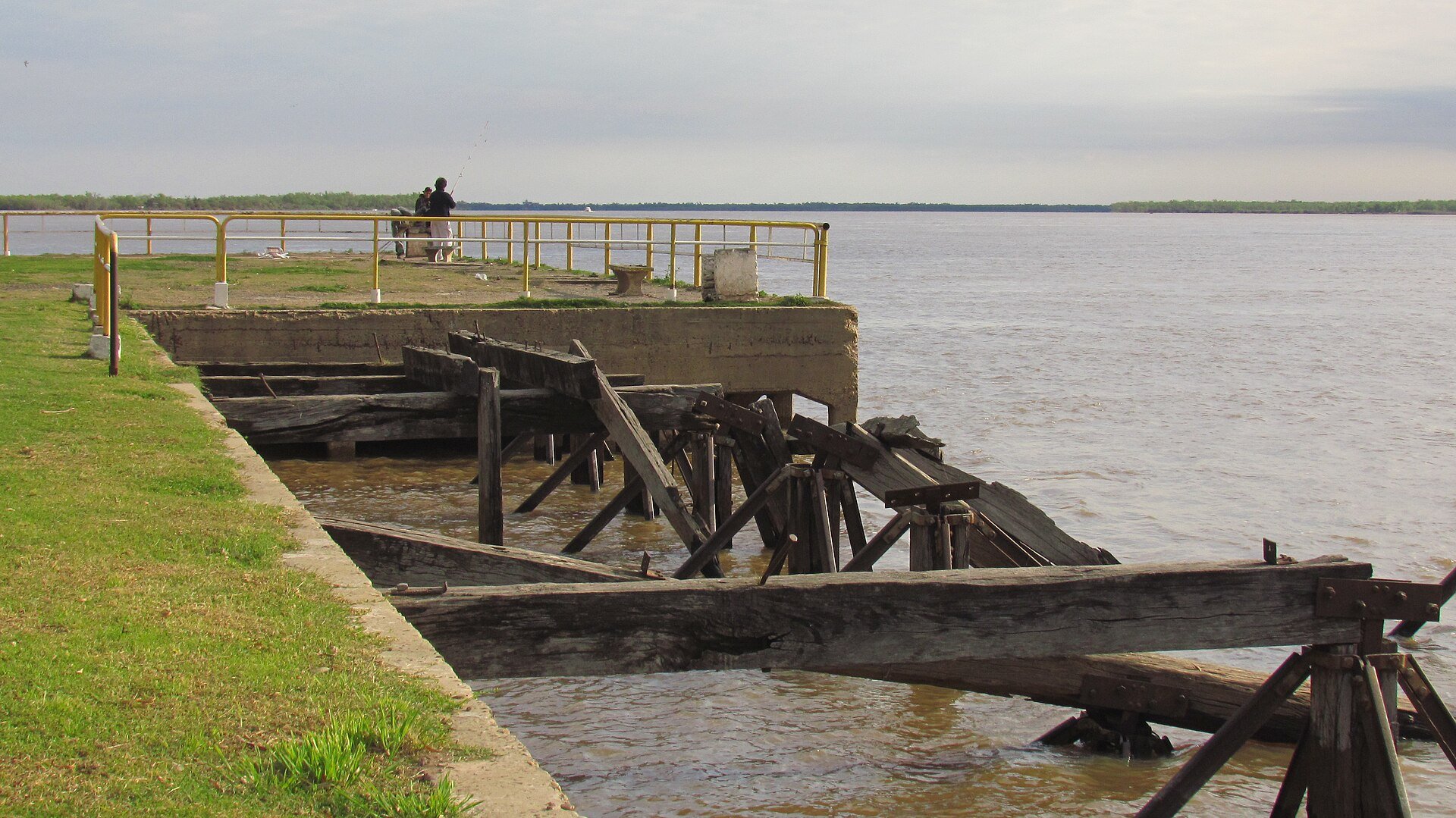
Argentina · AGRICULTURE
Key Facts
- —What happened Argentina’s government tool maps 5,476,680 hectares of farmland as potentially floodable, not yet underwater.
- —How big a jump The area equals about 5.5 million hectares, a size comparable to some small countries.
- —The real story Seven provinces covering Argentina’s core farming belt face the highest heavy rain watch.
- —The catch The land is only at risk, not flooded, leaving time for preventive measures.
- —Who it touches Wheat farmers in Buenos Aires, Santa Fe, Entre Ríos, Corrientes, Misiones, Formosa and Chaco.
- —What comes next Wheat planting stands at 99.6% of 6.5 million hectares, with key crop weeks ahead.
Wheat planting is nearly complete, but the wet season is just beginning in Argentina’s core farming provinces.
Argentina flood risk covers 5.5 million hectares of farmland, according to a government geospatial tool. The area is not currently underwater, but it is considered potentially floodable.
How the Argentina Flood Risk Map Works
A government geospatial monitoring tool maps 5,476,680 hectares of Argentine land as potentially floodable. The land is not flooded; it is the area considered at risk.
The report came on 18 August 2026. Federal authorities are monitoring heavy rain and flood risk across several provinces.
Provinces Under High Watch
Seven provinces are under the highest watch for heavy rain and flooding. They are Buenos Aires, Santa Fe, Entre Ríos, Corrientes, Misiones, Formosa and Chaco.
These regions form the core of Argentina’s farming belt. In addition, Argentina is one of the world’s largest exporters of maize, soybeans and wheat.
The farming belt sits mostly in these named provinces.
Live Market IntelligenceArgentina — Live Market Board
Rio Times · Live Market Intelligence
Argentina — Live Market Board
+0.32%
192,114.55
+2.63%
64,531.68
+1.10%
10,990.15
+0.67%
2,767,663
+0.32%
2,515.02
-0.59%
59,751.67
+0.18%
| Instrument | Last | Change | YoY | Prev. | High | Low | Volume |
|---|---|---|---|---|---|---|---|
| MERVAL | 2,767,663 | +0.32% | +30.51% | 3,022,485 | 3,042,365 | 2,991,150 | — |
| USD/ARS | 1,493 | +0.10% | +12.96% | 1,491 | 1,494 | 1,480 | — |
| YPF | 7,810 | +0.26% | +72.84% | 7,790 | 7,850 | 7,600 | 1,763,858 |
| GGAL | 6,980 | -0.78% | +1.82% | 7,035 | 7,115 | 6,920 | 1,564,062 |
| PAMPA | 5,115 | +0.69% | +26.70% | 5,080 | 5,140 | 5,000 | 721,190 |
| TXAR | 747.50 | -2.35% | +18.67% | 765.50 | 770.00 | 742.50 | 771,892 |
| ALUAR | 938.00 | -1.21% | +29.83% | 949.50 | 951.00 | 932.50 | 135,426 |
| TGS | 8,870 | -0.17% | +15.05% | 8,885 | 9,075 | 8,720 | 143,546 |
| CEPU | 2,156 | +1.84% | +28.36% | 2,117 | 2,165 | 2,086 | 404,146 |
| MIRGOR | 1,650 | -1.20% | -92.90% | 1,670 | 1,670 | 1,635 | 20,877 |
| COME | 40.93 | -0.73% | -30.47% | 41.23 | 41.60 | 40.50 | 4,258,884 |
| LOMA NEGRA | 3,130 | +0.08% | +5.80% | 3,128 | 3,205 | 3,090 | 182,992 |
| BYMA | 275.00 | -1.70% | +35.14% | 279.75 | 282.50 | 272.00 | 1,409,575 |
| TELECOM ARG | 4,233 | -0.70% | +55.19% | 4,263 | 4,335 | 4,160 | 31,896 |
| GLOBANT | 38.10 | -2.26% | -49.65% | 38.98 | 38.70 | 36.77 | 793,552 |
| MERCADOLIBRE | 1,870 | -3.59% | -20.71% | 1,940 | 1,927 | 1,870 | 329,640 |
Wheat Planting Nearly Complete
Wheat planting has reached 99.6% of a projected 6.5 million hectares. The figure comes from the Buenos Aires grain exchange, the Bolsa de Cereales.
However, delays linger in the south. This progress is encouraging for the season.
Still, the flood risk could affect the remaining areas.
Maize Area Projected Lower
The Rosario exchange projects the 2026 and 2027 maize area at 10.4 million hectares. That is down 7.3%, or about 600,000 hectares, on the previous season.
Therefore, farmers are adjusting their plans. The flood risk adds another layer of uncertainty.
Understanding the Scale
A hectare is 10,000 square metres, about two and a half acres. This is a vast area, comparable to the size of some small countries.
In short, the scale of the risk is significant.
Monitoring Continues
Federal authorities are keeping a close eye on the situation. Meanwhile, local officials are preparing for possible heavy rain.
The monitoring tool helps identify vulnerable zones. As a result, early warnings can be issued.
Impact on Farming
For farmers, the flood risk means potential delays and losses. Since the farming belt is in the watch zones, the impact could be widespread.
However, the land is not yet flooded. Therefore, there is still time to take preventive measures.
Regional Differences
The southern delays in wheat planting are a concern. By contrast, other areas have completed planting.
Moreover, the maize area is projected to shrink. This could be a response to weather risks.
What the Argentina Flood Risk Means for the Season
The coming weeks will be crucial for the crops. If heavy rain hits, the flood risk could become a reality.
In the meantime, farmers and authorities are watching the sky. Overall, the situation requires careful attention.
More: Argentina news in English, every day from The Rio Times.
What does Argentina flood risk cover?
Argentina flood risk covers 5,476,680 hectares of farmland, according to a government tool. This is the area considered potentially floodable, not currently flooded.
Which provinces are at highest risk?
The provinces under the highest watch are Buenos Aires, Santa Fe, Entre Ríos, Corrientes, Misiones, Formosa and Chaco. These are the main farming regions.
How much wheat has been planted?
Wheat planting has reached 99.6% of a projected 6.5 million hectares, according to the Buenos Aires grain exchange. Delays remain in the south.
Is the land already flooded?
No, the land is not flooded. The area is only considered at risk of potential flooding.
Connected Coverage
Sources: Argentine government monitoring data; Bolsa de Cereales de Buenos Aires; Bolsa de Comercio de Rosario.
Frequently Asked Questions
This article was produced by The Rio Times’ automated newsroom system. How we use AI · Report an error · Editorial responsibility: Matthias Camenzind, Editor-in-Chief