South Africa’s African National Congress (ANC) and Democratic Alliance (DA) are deep in coalition discussions to establish a new government.
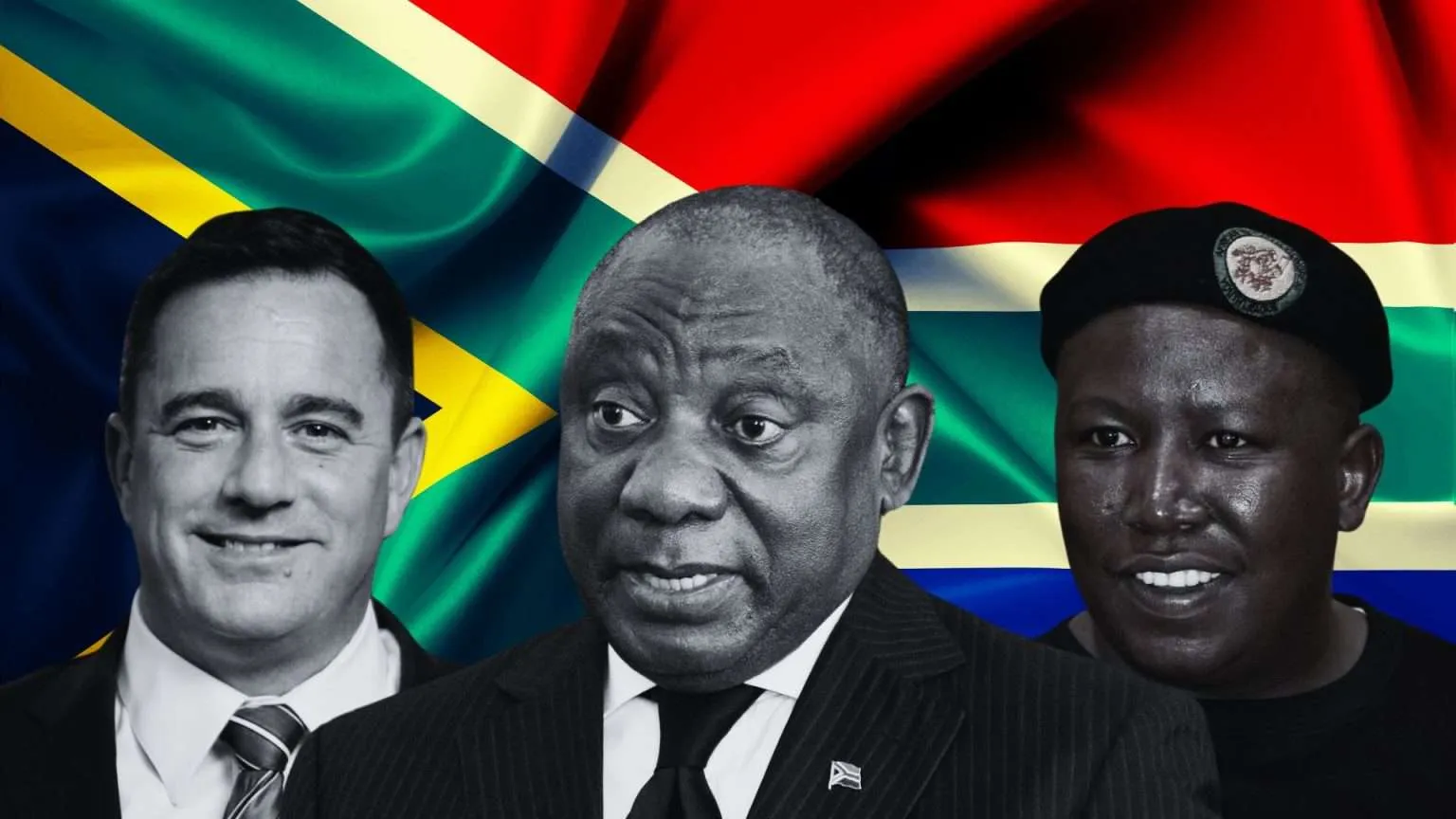
Despite significant tensions, they aim to finalize a cabinet soon. President Cyril Ramaphosa and DA leader John Steenhuisen have held several meetings to negotiate their terms.
The DA seeks 11 ministerial roles, with Steenhuisen as deputy president. However, the ANC, with 40% of the vote compared to the DA’s 22%, resists these demands.
Leaked letters between the DA’s Helen Zille and the ANC‘s Fikile Mbalula revealed a contentious negotiation process.
Yet insiders maintain that both parties are dedicated to concluding talks this week. The ANC has suggested the DA propose six names for a 28-member cabinet.
This coalition effort is significant as South Africa lacks a history of national-level coalition governance.
Looking globally, Germany’s coalition negotiations offer a useful comparison. Parties like the SPD, Greens, and FDP engage in similar processes.
Key issues often include policy agreements and ministerial roles, such as their recent talks on financial policies and climate protection.
In South Africa, an ANC-DA coalition is viewed as a move to maintain stability and counter the more radical Economic Freedom Fighters (EFF).
However, there is skepticism about the coalition’s viability due to fundamental policy differences and historical rivalry.
Successfully navigating these internal and external pressures is crucial for any coalition involving the ANC.
This evolving political scenario underscores the complexity and necessity of coalition politics in modern democracies.
It highlights both the challenges and opportunities they present for effective governance.
Why This Matters
The outcome of these negotiations is crucial for South Africa’s political stability.
A successful coalition could lead to a more balanced and representative government capable of addressing the country’s challenges more effectively.
However, failure could result in political instability, affecting the country’s economy and social fabric.
In summary, the ANC and DA’s efforts to form a coalition government are critical in the context of South Africa’s declining voter support for the ANC and the need for stable governance.
Comparisons with global examples like Germany provide valuable insights into the process and potential outcomes.
More: South Africa news in English, every day from The Rio Times.
This article was produced by The Rio Times’ automated newsroom system. How we use AI · Report an error
Part of our ongoing coverage
Africa: The New Scramble — the great-power contest over the continent.
Read More from The Rio Times