IBOV 187,502.60 ▲ 1.01% IPSA 11,284.97 ▼ 0.75% IPC MEX 64,479.96 ▼ 0.52% MERVAL 3,107,396 ▼ 0.09% COLCAP 2,580.41 ▼ 0.14% BVL PERÚ 60,702.89 ▼ 1.24% USD/BRL5.10▼ 0.24% USD/MXN16.96▲ 0.41% USD/CLP940.55▲ 1.39% USD/COP3,096▼ 0.68% USD/PEN3.37▲ 0.44% USD/ARS1,512▼ 0.12% USD/UYU40.24▲ 3.05% USD/PYG5,868▲ 2.26% USD/BOB12.36▲ 1.91% USD/DOP58.60▲ 0.17% USD/CRC447.58▲ 1.69% USD/GTQ7.63▲ 3.04% USD/HNL26.85▲ 0.57% USD/NIO36.62▲ 0.34% USD/VES825.67▼ 0.13% USD/PAB1.00— 0.00% USD/BZD2.00— 0.00% USD/JMD 157.28 — 0.00% USD/TTD6.73▲ 2.40% EUR/BRL5.92▲ 0.18% BRENT 88.88 ▼ 0.03% WTI 83.11 ▼ 0.11% IRON ORE 161.91 — — COPPER 6.61 ▲ 0.03% GOLD 4,461 ▲ 1.78% SILVER 65.59 ▲ 1.26% SOY 1,184 ▲ 3.20% CORN 480.50 ▲ 10.02% WHEAT 655.00 ▲ 3.93% COFFEE 317.25 ▼ 5.51% SUGAR 16.43 ▼ 1.79% ORANGE JUICE 138.55 ▼ 0.47% COTTON 85.03 ▲ 2.33% COCOA 5,719 ▲ 3.18% BEEF 223.60 ▼ 3.93% CATTLE 339.10 ▼ 3.16% LITHIUM 75.20 ▲ 1.47% PETR4 41.64 ▼ 0.05% VALE3 72.97 ▲ 0.83% ITUB4 38.60 ▼ 1.03% BBDC4 16.85 ▲ 0.36% ABEV3 14.89 ▼ 0.80% BBAS3 19.37 ▲ 0.47% B3SA3 14.26 ▼ 0.21% WEGE3 47.59 ▲ 0.49% PRIO3 59.14 ▼ 0.19% SUZB3 41.33 ▲ 2.35% RENT3 34.68 ▼ 0.09% AZZA3 15.89 ▼ 2.63% CSAN3 3.22 ▼ 1.83% RAIZ4 0.25 — 0.00% PCAR3 2.75 ▼ 0.36% GMAT3 3.65 ▼ 1.08% PSSA3 48.13 ▼ 0.54% CVCB3 1.33 ▼ 2.92% POSI3 3.36 ▲ 2.44% SLCE3 13.34 ▲ 0.30% NATU3 8.14 ▼ 0.73% IBOV 187,502.60 ▲ 1.01% IPSA 11,284.97 ▼ 0.75% IPC MEX 64,479.96 ▼ 0.52% MERVAL 3,107,396 ▼ 0.09% COLCAP 2,580.41 ▼ 0.14% BVL PERÚ 60,702.89 ▼ 1.24% USD/BRL 5.16 ▲ 0.01% USD/MXN 17.06 ▼ 0.24% USD/CLP 913.98 ▲ 0.04% USD/COP 3,140 ▲ 0.03% USD/PEN 3.36 ▼ 0.66% USD/ARS 1,493 ▲ 0.10% USD/UYU 40.27 ▲ 1.24% USD/PYG 5,939 ▲ 1.68% USD/BOB 11.64 ▼ 0.76% USD/DOP 58.34 ▲ 1.25% USD/CRC 445.92 ▲ 0.89% USD/GTQ 7.62 ▲ 2.21% USD/HNL 26.79 ▲ 1.57% USD/NIO 36.62 ▲ 0.69% USD/VES 762.44 ▼ 0.13% USD/PAB 1.00 — 0.00% USD/BZD 2.00 — 0.00% USD/JMD 157.28 — 0.00% USD/TTD 6.70 ▲ 0.61% EUR/BRL 5.95 ▲ 1.01% BRENT 88.88 ▼ 0.03% WTI 83.11 ▼ 0.11% IRON ORE 161.91 — — COPPER 6.61 ▲ 0.03% GOLD 4,461 ▲ 1.78% SILVER 65.59 ▲ 1.26% SOY 1,184 ▲ 3.20% CORN 480.50 ▲ 10.02% WHEAT 655.00 ▲ 3.93% COFFEE 317.25 ▼ 5.51% SUGAR 16.43 ▼ 1.79% ORANGE JUICE 138.55 ▼ 0.47% COTTON 85.03 ▲ 2.33% COCOA 5,719 ▲ 3.18% BEEF 223.60 ▼ 3.93% CATTLE 339.10 ▼ 3.16% LITHIUM 75.20 ▲ 1.47% PETR4 41.64 ▼ 0.05% VALE3 72.97 ▲ 0.83% ITUB4 38.60 ▼ 1.03% BBDC4 16.85 ▲ 0.36% ABEV3 14.89 ▼ 0.80% BBAS3 19.37 ▲ 0.47% B3SA3 14.26 ▼ 0.21% WEGE3 47.59 ▲ 0.49% PRIO3 59.14 ▼ 0.19% SUZB3 41.33 ▲ 2.35% RENT3 34.68 ▼ 0.09% AZZA3 15.89 ▼ 2.63% CSAN3 3.22 ▼ 1.83% RAIZ4 0.25 — 0.00% PCAR3 2.75 ▼ 0.36% GMAT3 3.65 ▼ 1.08% PSSA3 48.13 ▼ 0.54% CVCB3 1.33 ▼ 2.92% POSI3 3.36 ▲ 2.44% SLCE3 13.34 ▲ 0.30% NATU3 8.14 ▼ 0.73%
since 2009
Thursday, September 10, 2026

Africa Northern Africa

Algeria’s Presidential Election: Key Facts for September 7, 2024

By · September 6, 2024 · 2 min read

Africa Intelligence

One email, every weekday morning. African markets, politics and business — filed from our newsroom in Rio.

Yesterday’s subject line: “Nigeria's Dangote signs for Africa's biggest IPO ever”

Free. We send a confirmation link first — nothing arrives until you click it. Unsubscribe with one click in any edition. If you stop opening us for 30 days we stop sending by ourselves, as we assume the interest is no longer there. See our privacy policy. We never share your email.

The 2024 Algerian presidential election, set for September 7, marks a critical juncture for Africa’s largest country and a key energy supplier to Europe.

Incumbent President Abdelmadjid Tebboune, 78, is widely favored to win a second term against two challengers in a vote that will shape Algeria’s political and economic trajectory.

Candidates and Political Landscape

Three main candidates are vying for the presidency:

1. Abdelmadjid Tebboune (Independent): The incumbent president enjoys strong backing from a coalition of major parties.

This coalition includes the National Liberation Front (FLN), National Democratic Rally (RND), Future Front, and El Binaa Movement. This coalition holds 243 seats in the National People’s Assembly.
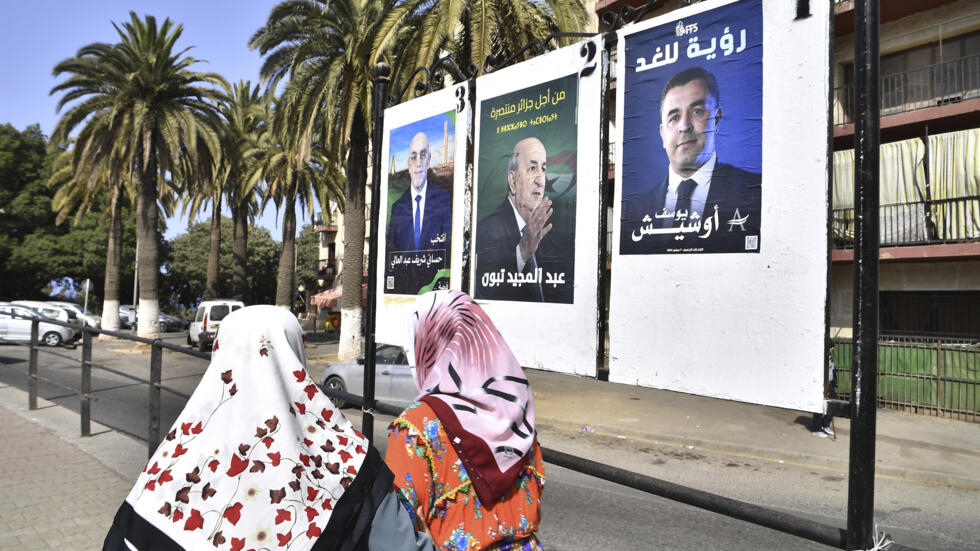
Algeria's Presidential Election: Key Facts for September 7, 2024
Algeria’s Presidential Election: Key Facts for September 7, 2024.
One-stop reference
Company Intelligence
Every listed company in Latin America — financials, ownership and structure for 1,450+ companies across 26 exchanges, in one place.
Browse the directory →
RT
Ask Rio Times
17 years of Latin America reporting, on demand.
Open the full Ask Rio Times →

2. Youcef Aouchiche (Socialist Forces Front, FFS): Representing the democratic and progressive movement, Aouchiche aims to revitalize political participation. This marks the FFS’s second presidential bid since 1999.

3. Abdelaali Hassani Cherif (Movement of Society for Peace, MSP): The main Islamist candidate, though the Islamist field remains divided.

Campaign and Promises

The election campaign, which began on August 15, has been notably calmer than the tumultuous 2019 election that saw a 62% abstention rate.

Candidates have focused on public rallies to present their programs, with no televised debates held.

  • Tebboune promises economic reforms aimed at increasing GDP to $400 billion, job creation, and reducing inflation.
  • Aouchiche advocates for increasing the minimum wage, introducing a basic income for vulnerable groups, and reforming towards a semi-presidential system.
  • Hassani Cherif emphasizes economic growth and constitutional reform.

Context and Challenges

The election takes place against a backdrop of complex economic and political challenges:

Economic Pressures: Despite being a major oil and gas exporter, Algeria faces high youth unemployment and inflation.

The country’s GDP stood at $239.9 billion in 2023, with expectations to become Africa’s third-largest economy in 2024.

Political Reform: The election is the first under the 2020 constitutional reforms, adopted following the Hirak protest movement that ousted long-time leader Abdelaziz Bouteflika.

Human Rights Concerns: Human rights organizations have noted a “steady erosion of human rights” under Tebboune’s first term, including disbandment of political parties and arbitrary arrests.

Electoral System and Participation

Approximately 24.5 million Algerians are eligible to vote, including 300,000 first-time voters and 900,000 overseas voters.

The Independent Electoral Authority (ANIE), established after Bouteflika’s ouster in 2019, supervises the election. Voter turnout will be a crucial indicator of the election’s success and citizens’ engagement.

The 2019 election saw a historic low turnout of 39.9%, with one in eight casting invalid ballots as a form of protest.

International Implications

As a major energy supplier to Europe and a key player in North African politics, the outcome of Algeria’s election will have regional and international implications.

The country’s stance on issues such as Western Sahara, relations with neighboring Morocco, and energy partnerships with European countries will be closely watched.

In conclusion, while President Tebboune is expected to secure a second term, the election raises questions about Algeria‘s political future and economic reforms.

It also highlights the balance between continuity and change in a nation striving to address long-standing challenges while maintaining stability.

This article was produced by The Rio Times’ automated newsroom system. How we use AI · Report an error

Part of our ongoing coverage

Africa: The New Scramble — the great-power contest over the continent.

More from Northern Africa

Read More from The Rio Times

The Rio Times · Power Map
See who really holds power in Latin America
Click to open the Power Map

Rotate for Best Experience

This report is optimized for landscape viewing. Rotate your phone for the full experience.