Algeria Accuses UAE of Trying to Sway Two Presidential Elections
Algeria · GEOPOLITICS
Key Facts
- —What happened Algeria severed diplomatic relations with the United Arab Emirates in September 2026, citing what it called provocative or hostile actions.
- —The accusation President Abdelmadjid Tebboune said in February 2026 that a country had tried to interfere in Algeria’s first and second elections, a remark widely read as referring to the UAE.
- —The trigger Algiers gave the Emirati ambassador 48 hours to leave the country after announcing the rupture.
- —The backdrop Tensions had sharpened after Abu Dhabi normalised relations with Israel through the Abraham Accords, a move Algiers opposed.
- —What comes next The rupture deepens a rivalry over influence in Libya, Tunisia, Mali, Sudan and Western Sahara, with no immediate path to reconciliation.
Algeria accuses UAE of trying to sway two presidential elections, a charge that has now escalated into a full diplomatic rupture between the North African heavyweight and the Gulf petro-state.
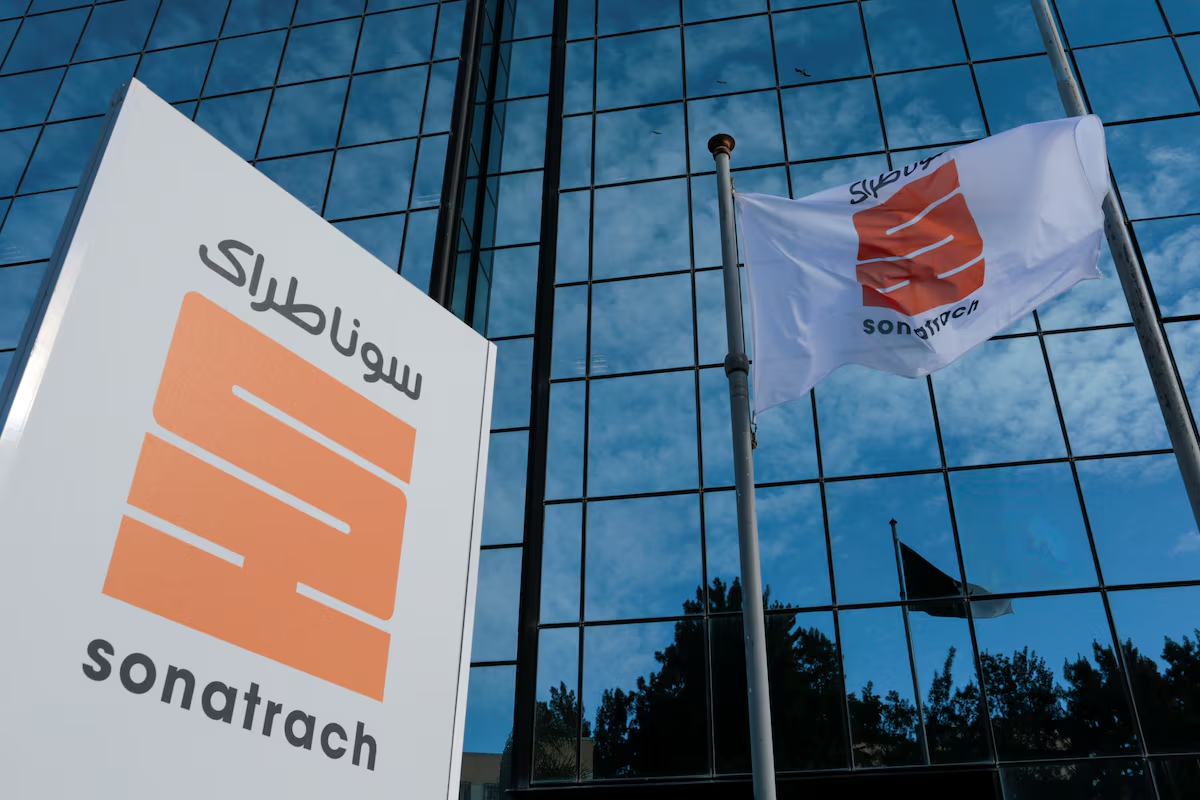
Algeria has cut diplomatic relations with the United Arab Emirates, accusing Abu Dhabi of election interference and a pattern of hostile actions across North Africa and the Sahel. The September 2026 decision marks one of the sharpest breaks between Arab League members in years.
The accusation from Algiers
President Abdelmadjid Tebboune first aired the election claim in a February 2026 television interview. He said “a country” had tried to interfere in Algeria’s “first and second elections,” without naming the UAE directly.
Reporting at the time widely interpreted the remark as aimed at Abu Dhabi. Tebboune also accused that unnamed country of seeking to “impoverish Algeria” through arbitration threats.
The comments fit a longer pattern of Algerian frustration. Since Tebboune’s first term, Algiers has voiced concern over Emirati roles in Libya, Tunisia, Mali, Sudan and Western Sahara.
A diplomatic rupture in September
By September 2026, the war of words had become a formal break. Algeria announced it was severing diplomatic relations with the UAE, citing “provocative or hostile” actions.
The Emirati ambassador was given 48 hours to leave Algerian territory. Abu Dhabi denied or downplayed the rupture, saying it remained committed to joint interests.
The speed of the break surprised many observers. Arab League members rarely expel each other’s envoys, making the move a pointed signal from Algiers.
Money, power and the Abraham Accords
Tensions between the two states sharpened after Abu Dhabi normalised relations with Israel through the Abraham Accords. Algeria, a longtime supporter of the Palestinian cause, viewed that step as a betrayal of Arab consensus.
Algerian-aligned media went further in January 2025, accusing the UAE of backing destabilising activity and financing the Kabylie separatist movement MAK. That claim is contested and has not been independently verified in available reporting.
Algiers has also described the UAE as a “micro-state,” a dismissive label that underscores the bitterness of the rivalry. For its part, Abu Dhabi has sought to minimise the dispute publicly.
The regional read-through
The rupture is not just bilateral. It reflects a wider contest for influence across North Africa and the Sahel, where Algeria and the UAE back rival factions and security agendas.
In Libya, Tunisia and Mali, the two countries have often found themselves on opposite sides of political and military struggles. Western Sahara remains another fault line, with Algiers backing the Polisario Front while Abu Dhabi has leaned toward Morocco.
This competition for money, security leverage and diplomatic weight mirrors the broader great-power scramble reshaping Africa. The pattern echoes the dynamics covered in Africa: The New Scramble.
What Algiers gains and loses
By breaking ties, Algeria signals that it will not tolerate perceived meddling in its domestic politics. The move also positions Tebboune as a defender of national sovereignty ahead of any future electoral cycle.
Yet the rupture carries costs. The UAE has been a source of investment and a player in regional security, and cutting ties removes a channel for managing disputes.
Algiers appears willing to absorb those costs. The decision suggests the leadership sees the UAE’s regional posture as a direct threat to Algerian interests.
What to watch next
The immediate question is whether other Arab states will mediate. Egypt, Saudi Arabia or Qatar could step in, though none has announced a formal initiative.
A longer-term test will be how the break affects Algeria’s position in Libya and the Sahel. If Abu Dhabi deepens its ties with Algiers’ rivals, the rupture could harden into a prolonged cold war.
For investors and professionals watching North Africa, the split adds a new layer of political risk. It also reinforces a pattern of shifting alliances that is reshaping the region’s geopolitics.
Frequently Asked Questions
Why did Algeria cut diplomatic ties with the UAE?
Algeria severed relations in September 2026, citing what it called provocative or hostile actions and giving the Emirati ambassador 48 hours to leave.
What did President Tebboune accuse the UAE of doing?
In February 2026, Tebboune said a country had tried to interfere in Algeria’s first and second elections, a remark widely read as referring to the UAE.
What is the broader context of the Algeria-UAE dispute?
The row is part of a wider rivalry over influence in Libya, Tunisia, Mali, Sudan and Western Sahara, sharpened by Abu Dhabi’s normalisation with Israel through the Abraham Accords.
Connected Coverage
Sources
This article was produced by The Rio Times’ automated newsroom system. How we use AI · Report an error
Read More from The Rio Times