Who Backs Whom in Africa 2026: China, Russia, US, Gulf

AFRICA · GEOPOLITICS
Key Facts
- —The basics China is Africa’s largest single trading partner, Russia’s state-run Africa Corps has replaced Wagner in the Sahel, and the US, Gulf states, EU, Turkey and India compete for ports, minerals and bases.
- —Why it matters Outside backing shapes the wars in Sudan, the Sahel, Libya and eastern Congo, and decides who controls cobalt, copper and the Red Sea route to the Suez Canal.
- —The numbers China took about 16% of Africa’s goods trade in 2025, and its two-way trade with Africa hit a record US$348 billion. In 2021 to 2025 the US supplied 19% of Africa’s arms imports, China 17%.
- —Who is who Assimi Goïta leads Mali’s junta, Abdel Fattah al-Burhan’s army fights Mohamed Hamdan Dagalo’s Rapid Support Forces in Sudan, and Rwanda-backed AFC/M23 rebels hold Goma in eastern Congo.
- —What to watch Sudan’s stalled truce efforts, whether Mali’s rebels take Gao, the US-brokered Congo peace deal, and whether BRICS admits a new member in 2026.
- —Prediction markets Polymarket gives an 11.5% chance of a Sudan ceasefire by 31 December 2026 and 4.8% that Assimi Goïta leaves office by then (16 October, 7:42 a.m. ET).
- —What it means for you US investors in African miners and oil producers, Red Sea shippers and cobalt buyers face risks from these rivalries, while AGOA duty-free access now runs to 31 December 2028.
Outside powers are again competing for Africa with money, weapons, ports and diplomacy. Here is who backs whom in Africa in October 2026, and what each side gets in return.
Who backs whom in Africa starts with China, the continent’s largest single trading partner, with about 16% of its 2025 goods trade. Russia’s Africa Corps, run by its defence ministry, has replaced the Wagner mercenary group in the Sahel.
The United States, the Gulf states, the EU, Turkey and India are all bidding for ports, minerals and military access. The contest runs from Gulf-run ports and the Lobito railway to arms deals and bases in the Sahel.
This guide anchors the Great Powers in Africa dossier, one of the Rio Times topic dossiers. Backer links are labelled documented, reported or alleged.
The Scale of the Contest
IMF trade statistics, drawn largely from African records, give China about 16% of Africa’s US$1.48 trillion goods trade in 2025. India, the UAE and the United States held about 5% each.
China’s customs data put two-way trade with Africa at a record US$348.05 billion in 2025, up 17.7%, Singapore’s Nanyang Technological University found. The US Trade Representative’s office puts US goods trade with sub-Saharan Africa at US$56.4 billion for 2025.
Arms are more evenly split, according to SIPRI, the Stockholm International Peace Research Institute. The US supplied 19% of Africa’s major arms imports in 2021 to 2025, China 17% and Russia 15%.
Africans generally balk at a world dominated by Washington or Beijing, South African analyst Jakkie Cilliers wrote for Brookings in January 2026. Burundi’s President Évariste Ndayishimiye chairs the 55-member African Union in 2026, and Djibouti’s Mahmoud Ali Youssouf heads its Commission.
BRICS, founded by Brazil, Russia, India and China, counts South Africa, Egypt and Ethiopia as members and Nigeria and Uganda as partners. Its New Delhi summit on 12 and 13 September 2026 closed with the same 11 full members.
China: Trade, Loans, Ports and Mines
At the Forum on China-Africa Cooperation in September 2024, Beijing pledged RMB 360 billion (about US$53.7 billion) over three years. Conversions in this guide use open.er-api.com rates for 15 October 2026, about 6.71 yuan and 0.89 euros per US$1.
New lending fell to just under US$2.1 billion across six projects in 2024, the Boston University Global Development Policy Center found. Kenya converted about US$3.5 billion of railway debt into renminbi in 2025, part of a refinancing wave.
Chinese firms now prefer owning factories, mines and power plants to building on credit. Africa drew a record US$33.5 billion of Belt and Road investment in January to June 2026, a University of Queensland report found.
The 1,860-kilometre TAZARA railway, built with Chinese money in the 1970s, links central Zambia to Dar es Salaam in Tanzania. In 2025, state-owned China Civil Engineering Construction Corporation agreed to invest US$1.4 billion for a 30-year concession.

CMOC, a Chinese miner listed in Shanghai and Hong Kong, runs the Tenke Fungurume and Kisanfu copper and cobalt mines in Congo. China opened its first overseas military base in Djibouti in 2017.
Beijing also sells weapons to governments Moscow courts, and Mali was sub-Saharan Africa’s third-largest arms importer in 2021 to 2025. Janes, a defence intelligence publisher, has reported new Chinese armoured vehicles and rocket launchers in Mali’s army.
Russia and the Africa Corps
The Africa Corps is a force under Russia’s defence ministry that absorbed the Wagner group’s African operations after Wagner’s 2023 mutiny. The Congressional Research Service, the US Congress’s research arm, said it took over Wagner’s Mali network in mid-2025.
That April 2026 report counts up to 2,500 Russian personnel in Mali and about 1,500 in the Central African Republic. Libya hosts another large deployment, while Burkina Faso and Niger have smaller contingents.
Mali, ruled by General Assimi Goïta since coups in 2020 and 2021, is the main test. On 25 April 2026, the al-Qaeda affiliate JNIM and the Tuareg-led Azawad Liberation Front launched coordinated attacks across the country.
Africa Corps fighters fought alongside Malian troops, NPR reported. Critical Threats, a US think-tank project, later reported Malian and Russian withdrawals from Kidal and Tessalit.
In Niger, Africa Corps troops helped the presidential guard put down a mutiny in Niamey on 29 August 2026, Janes reported. Niger’s ruling general, Abdourahamane Tiani, has hosted Russian forces since 2024.
A 2023 UN human rights report found Malian troops and foreign military personnel killed at least 500 people at Moura in 2022. Human Rights Watch said in July 2026 that Africa Corps aircraft killed eight civilians in a Mopti village.
Moscow’s deals often trade security for payment or access to natural resources, the research service notes. In early 2026, Washington lifted sanctions on three Malian officials once designated over Wagner.
The United States
US Africa Command, or AFRICOM, runs American military operations in Africa from Stuttgart, Germany. Air Force Gen. Dagvin Anderson took command in August 2025, and the main US base is Camp Lemonnier in Djibouti.
Washington leans heavily on sanctions, including against both sides in Sudan. In January 2025, the US sanctioned army chief Abdel Fattah al-Burhan and Mohamed Hamdan Dagalo of the paramilitary Rapid Support Forces.
The State Department also determined that members of the Rapid Support Forces (RSF) and allied militias had committed genocide. From 1 January 2026, a December 2025 proclamation fully restricts US entry from 12 African countries, including Mali, Niger and Sudan.
On 4 December 2025, Congo’s President Félix Tshisekedi and Rwanda’s President Paul Kagame signed the Washington Accords. The package paired a peace framework with US cooperation on Congo’s strategic minerals.
The US International Development Finance Corporation (DFC) signed a US$553 million loan for the Lobito Atlantic Railway in Angola in December 2025. The line carries Congolese copper to the Atlantic along the Lobito Corridor.
AGOA, the 2000 law granting African goods duty-free US access, lapsed in September 2025 and returned in February 2026. President Donald Trump signed an extension to 31 December 2028 on 2 September 2026, as part of a stopgap funding law.
France and the EU
France has closed bases in Mali, Burkina Faso, Niger, Chad, Côte d’Ivoire and Senegal since 2022, leaving Djibouti as its main base. The French military exit opened space in the Sahel that Russian forces filled.
The EU competes mainly with money through Global Gateway, its infrastructure programme. Its Africa-Europe Investment Package targets €150 billion (about US$168 billion) of public and private funding.
On Western Sahara, an EU-Morocco Association Council on 29 January 2026 said genuine autonomy could be one of the most viable solutions. The joint statement, signed by EU foreign policy chief Kaja Kallas, welcomed UN Security Council Resolution 2797 of 2025.
The Gulf: UAE, Saudi Arabia and Qatar
The United Arab Emirates works in Africa largely through state-linked port operators. DP World, the Dubai-owned operator, runs terminals in Berbera in Somaliland, Dakar in Senegal and Dar es Salaam in Tanzania.
AD Ports Group, controlled by Abu Dhabi’s ADQ fund, took over the Luanda multipurpose terminal in Angola under a 20-year agreement. The deals are tracked in the Gulf’s push into African ports and Gulf investment in Africa.
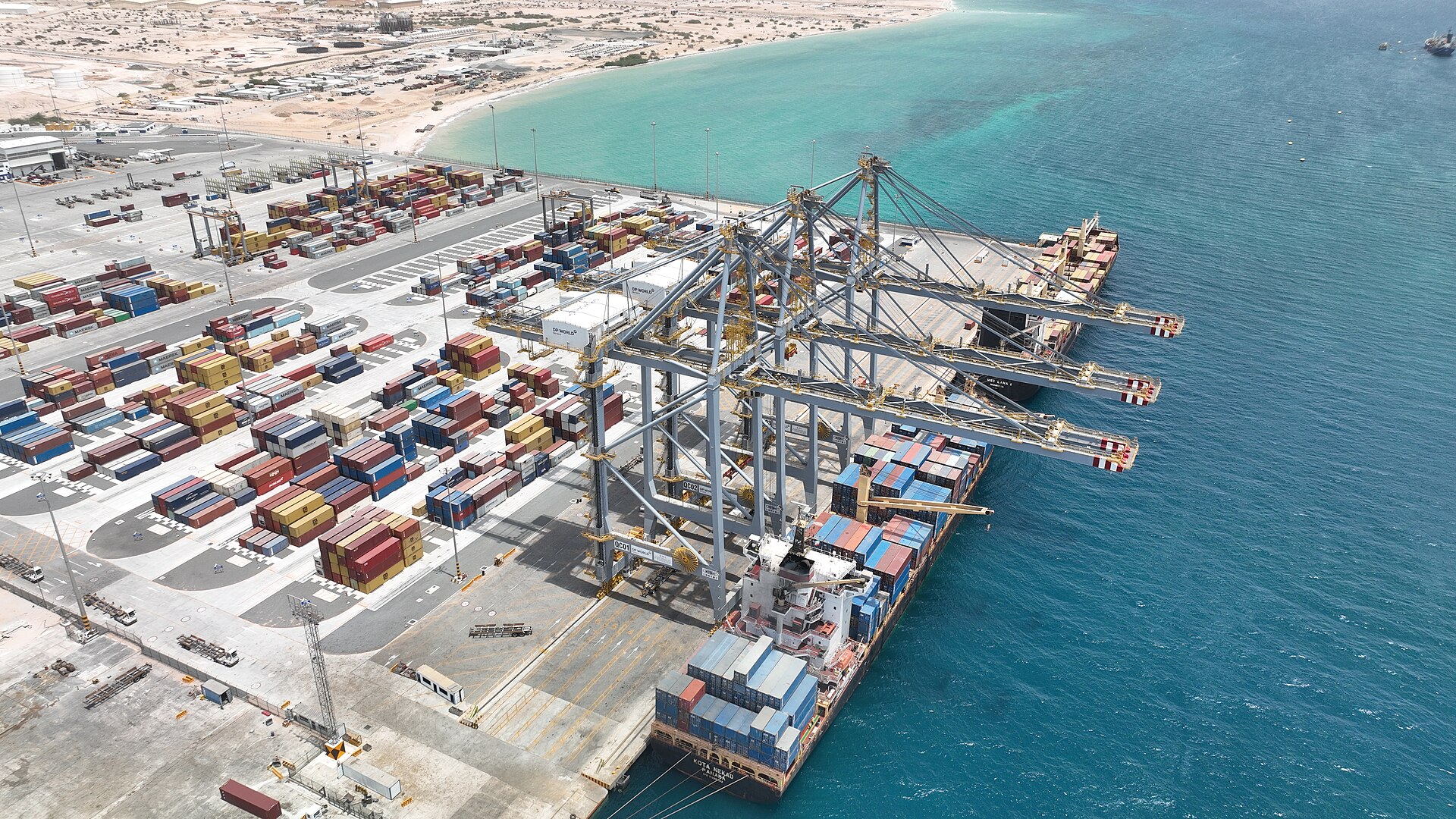
Crisis Group, a conflict-prevention think tank, calls the UAE and Saudi Arabia Gulf heavyweights at odds in Yemen and the Horn. It says the UAE has the most pull with the RSF, while Saudi Arabia and Egypt have most with Burhan.
A UN Panel of Experts report of January 2024 called allegations of UAE arms flights to Sudan’s RSF via Chad credible. The UAE says those flights carried humanitarian aid for a field hospital and denies arming the RSF.
In May 2025, the International Court of Justice threw out Sudan’s genocide case against the UAE for lack of jurisdiction. Saudi Arabia hosted the 2023 Jeddah talks and joins the US, UAE and Egypt in the Quad, which has secured no ceasefire.
Qatar brokered a framework agreement between Kinshasa and the AFC/M23 rebels, a Congolese rebel alliance, in November 2025. Crisis Group says Doha is well positioned to help ease tensions in the Great Lakes.
Turkey and India
Türkiye has become a major arms supplier, with 11% of sub-Saharan Africa’s major arms imports in 2021 to 2025, SIPRI says. SIPRI also lists it among five known suppliers of drones, armoured vehicles and aircraft to Sudan’s army.
Ankara opened Camp TURKSOM, a training base for Somali troops in Mogadishu, in 2017. In Libya, Turkish forces have backed the Tripoli government since 2020, including at Mitiga airport.
India’s foreign ministry lists 196 lines of credit worth US$12 billion to 42 African countries, as of August 2024. In February 2024, India and Mauritius opened an airstrip and jetty on Agaléga, a Mauritian island in the Indian Ocean.
Who Backs Whom: Theatre by Theatre
The cards list outside backing in five theatres as of October 2026. Documented means a UN, government, court or SIPRI record; reported means credible research or press; alleged means a disputed claim.
The Horn is covered in depth in the Horn of Africa dossier and its guide to Red Sea geopolitics. Both track the ports, bases and recognition disputes above.
Why Africa Matters to Each Power
Minerals come first for Washington and Beijing, from Congolese cobalt to Guinean bauxite, as the critical minerals dossier sets out. China wants secure supply for its refiners, while the US wants supply chains outside China.
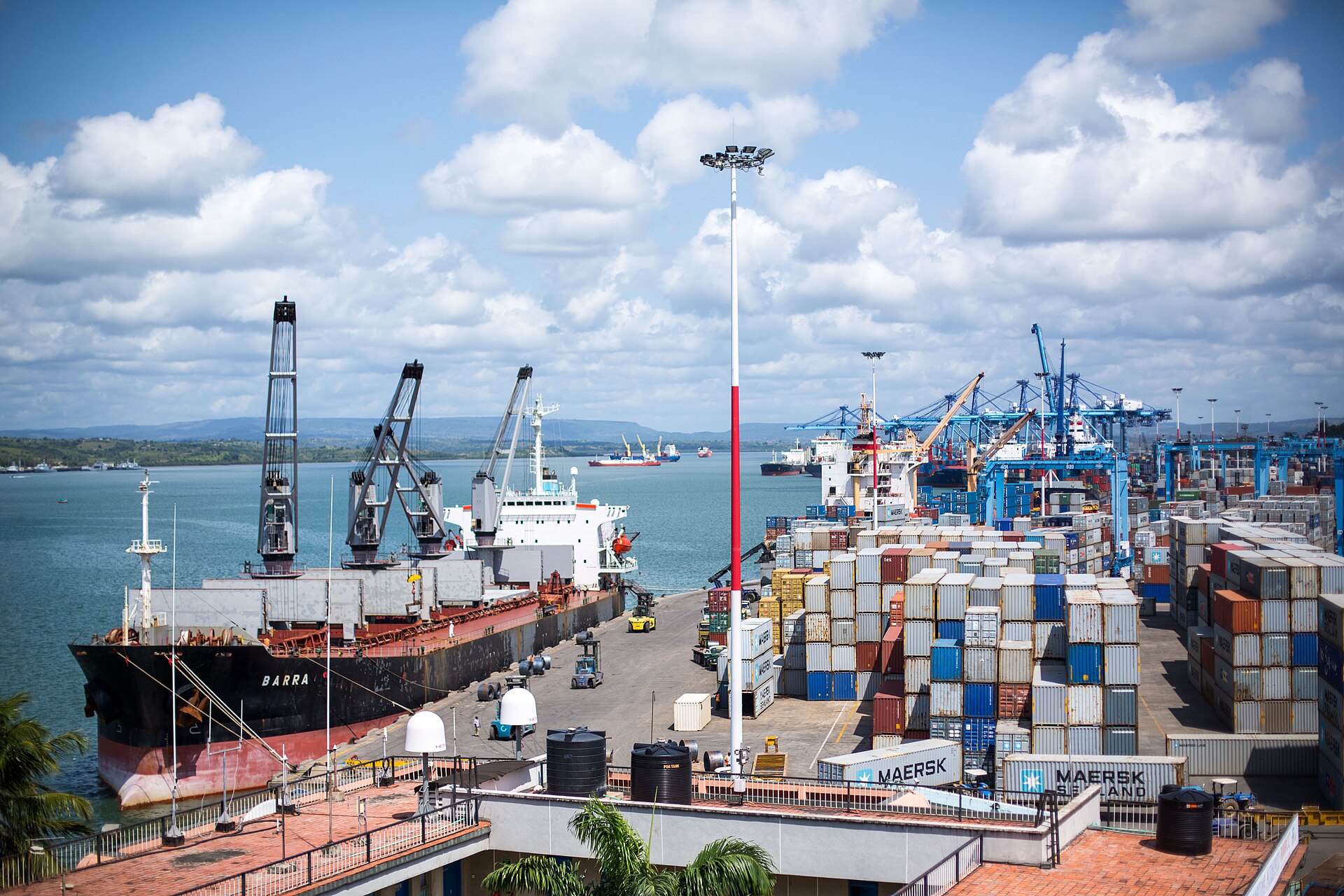
Ports and sea lanes matter to every power. Ships bound for the Suez Canal pass the Bab el-Mandeb strait off Djibouti, where the US, China and France all keep bases.
Votes matter too, because Africa’s 54 UN member states hold 28% of the General Assembly’s 193 seats. Europe’s priority is migration across the Mediterranean, while the US focus remains counter-terrorism in Somalia and the Sahel.
Country pictures differ, as guides to Kenya’s foreign partners and Egypt’s foreign partners show. South Africa trades with all sides, as its foreign players and geopolitics explainers set out.
Three Scenarios for 2027
Analysts outline three paths for the new scramble for Africa in 2027. None is a forecast, and each depends on wars outside powers can fuel or end.
In a contained rivalry, Sudan agrees a truce and the Congo deal holds, easing the flashpoints Crisis Group lists for 2026. China and the Gulf would gain most, and risk premiums on African assets would fall.
In a militarised Sahel and Red Sea, Mali’s insurgency spreads and Sudan’s war draws in neighbours, the interstate risk Crisis Group flags. Russia and arms sellers would gain, while shippers, insurers and Sahel gold miners would pay more.
In a more African-led bargaining order, governments play outside powers against each other for better terms. Cilliers argues that Africa’s freedom of action depends on balancing the US and China.
Export bans, ownership rules and BRICS ties would be the tools, with the EU and India gaining. Investors would face more renegotiations but more competition for their capital.
What the Markets Say
Polymarket, a crypto-based prediction market, prices an 11.5% chance of a Sudan civil war ceasefire by 31 December 2026. That market group had about US$119,600 in volume when read on 16 October 2026 at 7:42 a.m. ET.
Traders give Assimi Goïta a 4.8% chance of leaving Mali’s presidency by 31 December 2026 and 23.5% by 30 June 2027. That market group had about US$62,000 in volume.
A separate bet puts an 18.5% chance on rebels capturing the northern Malian city of Gao by 31 December, on about US$13,200. Bets that BRICS adds a new member in 2026 trade at 13%, on about US$38,400.
Why we show this: prediction markets turn real-money bets into a live probability that moves within minutes of the news, which is why investors, campaigns and newsrooms in the United States now follow them closely. We show them next to polls and official results, never instead of them.
What It Means for US Readers
For US strategy, Africa is a contest for access through bases, minerals deals and port finance. Sanctions exposure is real for firms dealing with Sudan’s warring parties or Russian-linked security companies.
Critical-minerals supply runs through Congo and Zambia, which is why the DFC backs the Lobito railway. Shipping costs depend on calm in the Red Sea and off Somalia, where piracy surged again in April 2026.
US-listed companies with African exposure include AngloGold Ashanti (NYSE: AU), which mines gold in Ghana, Guinea and Tanzania. Chevron (NYSE: CVX) produces oil and gas in Angola and Nigeria, its annual filings show.
What Is Not Known
Chinese customs count US$348 billion of trade with Africa in 2025, while African records compiled by the IMF show about US$240 billion. Current Russian troop numbers in Libya are uncertain, the Congressional Research Service says.
SIPRI lists some suppliers of Sudan’s RSF as unknown, so foreign arms flows are not fully mapped. Whether the Washington Accords can end the fighting in eastern Congo is still open.
This guide sits beside three other dossier pillars: lithium in Latin America, copper in Latin America and Africa’s critical minerals. All coverage of rival powers in Africa is collected in the Great Powers in Africa hub.
Frequently Asked Questions
Who is Africa’s biggest trading partner?
China is Africa’s largest single trading partner, with about 16% of the continent’s goods trade in 2025, IMF data show. Chinese customs put two-way trade at a record US$348.05 billion that year.
What is the Africa Corps?
The Africa Corps is a Russian force under the defence ministry that took over the Wagner group’s African operations. Russian forces serve in Mali, the Central African Republic, Libya, Burkina Faso and Niger.
Who backs the RSF in Sudan?
A UN Panel of Experts report in January 2024 found credible allegations that the UAE flew arms to the RSF through Chad. The UAE denies arming the RSF and says the flights carried humanitarian aid.
Which African countries are in BRICS?
South Africa, Egypt and Ethiopia are full BRICS members, and Nigeria and Uganda are partner countries. The September 2026 summit in New Delhi left the bloc at 11 full members.
Sources: IMF, International Trade in Goods by partner country (IMTS), Africa with China and world, 2025 (accessed 15 October 2026); SIPRI, Trends in International Arms Transfers 2025 (March 2026); SIPRI Arms Transfers Database; Chinese Ministry of Foreign Affairs, FOCAC Beijing Action Plan (2025-2027); Boston University Global Development Policy Center, Chinese Loans to Africa (January 2026); UN Panel of Experts on the Sudan, final report S/2024/65; UN Group of Experts on the DRC, final report S/2026/466 (June 2026); Congressional Research Service, Russia’s Security Operations in Africa (April 2026); Office of the US Trade Representative, Africa; US State Department, genocide determination in Sudan; US Treasury, sanctions on Burhan (16 January 2025); Federal Register, Proclamation 10998; White House, H.R. 6500 signed into law (2 September 2026); International Court of Justice, Sudan v. United Arab Emirates; Ministry of External Affairs of India, lines of credit; University of Queensland and GFDC, China BRI Investment Report 2026 H1; NTU Centre for African Studies, China-Africa trade 2025; Human Rights Watch, Mali air strikes; Brookings, Foresight Africa 2026; Crisis Group, Seven Peace and Security Priorities for Africa in 2026; Critical Threats, Africa File, 30 April 2026; Critical Threats, Congo War Security Review, 28 August 2026; NPR via OPB, Mali attacks; Janes, Niger mutiny; North Africa Post, UN report on Moura; Sudan Tribune, Sudan truce analysis; Sudan Tribune, Burhan rules out talks (6 October 2026); Arab News Pakistan, Sudan truces; New York Review of Books, Libya; Daily Monitor, BRICS summit; Policy Circle, BRICS New Delhi summit; The Star (Kenya), AU chair 2026; Corporate Council on Africa, AGOA renewal; BusinessTech, AGOA extension; IOL, AGOA and South Africa; Logistafrica, DFC Lobito loan; allAfrica, Washington Accords; Bankable, DRC-US-Rwanda minerals framework; Janes, Mali displays new Chinese equipment; TAZARA, history; The Citizen, TAZARA concession; Hespress, EU-Morocco Association Council; North Africa Post, EU and Western Sahara; 21st Century Chronicle, EU investment package; WAM, AD Ports Luanda; Geeska, Somaliland recognition; US Africa Command, leadership; US Africa Command, Gen. Anderson testimony (May 2026); exchange rates from open.er-api.com (all accessed 15 October 2026).
This article was produced by The Rio Times’ automated newsroom system. How we use AI · Report an error · Editorial responsibility: Matthias Camenzind, Editor-in-Chief
Horn of Africa and the Red Sea
- Horn of Africa 2026: Why It Matters and Who Backs Whom
- Ethiopia’s Neighbors Explained, Ports, Eritrea, Somalia
- Eritrea Explained 2026, a Red Sea Country Guide
- Somalia Explained: Al-Shabaab, Somaliland, the Ports and the Fight Over a 2026 Vote