Zambia Interest Rate at 10.75%, What It Means for Copper
The Zambia interest rate stood at 10.75% as of 26 November 2026, and annual inflation was 6.3% in October. The Bank of Zambia's Monetary Policy Committee meets on 25 and 26 November, which matters to US readers who buy copper or hold Zambian bonds.

ZAMBIA · ANALYSIS
Zambia is a southern African copper producer that is rebuilding its finances after a debt default and a restructuring. This analysis explains the rate path, inflation, the kwacha, copper and the IMF programme, using the facts in today’s Africa Intelligence Brief.
Key Facts
- What is happening The Bank of Zambia’s Monetary Policy Committee is scheduled to meet on 25 and 26 November 2026.
- Why it matters The rate path, the kwacha and a pending IMF programme shape how Zambia earns from copper and services its debt.
- The numbers The policy rate is 10.75% (Bank of Zambia, 30 September 2026) and inflation was 6.3% in October 2026 (ZamStats).
- Who is who Governor Denny Kalyalya leads the central bank.
- What to watch The committee meeting on 25 and 26 November, possible VAT on petroleum from 1 December and a date for IMF board approval.
- What it means for you US holders of Zambian bonds and buyers of copper should treat the IMF board vote as the next real test, because the research found no data on direct US copper supply.
The Zambia interest rate stood at 10.75% as of 26 November 2026, and annual inflation was 6.3% in October. The Bank of Zambia’s Monetary Policy Committee meets on 25 and 26 November, which matters to US readers who buy copper or hold Zambian bonds.
The Rate Path and Inflation
How the Policy Rate Fell
The Bank of Zambia, the country’s central bank, set its policy rate at 10.75% on 30 September 2026. That was a cut of 250 basis points from 13.25%, announced by Governor Denny Kalyalya, and a basis point is one hundredth of a percentage point.
The easing cycle began in late 2025. The bank held at 14.5% in August 2025 and cut to 14.25% in November 2025, according to OpenZambia and Zambia Invest.
Central Banking and allAfrica reported a 75 basis point cut to 13.5% in February 2026, and a further cut to 13.25% followed in May. Zawya, citing Reuters, reported that economists had expected a hold in May.
Kalyalya said the September move reflected “the need to align the monetary policy stance with the improved inflation outlook,” Mwebantu reported. He also urged commercial banks to cut their lending rates.
The Monetary Policy Committee is scheduled to meet on 25 and 26 November 2026. The current policy rate is 10.75%.
Where Inflation Stands
The statistics agency ZamStats reported annual inflation of 6.3% in October 2026, according to the Rio Times. That is up from 6.1% in September.
- Headline inflation: 6.3% in October 2026, with monthly inflation at 0.7%, up from 0.4% in September (ZamStats, via the Rio Times).
- Food inflation: 5.7% in October 2026, down from 5.8%.
- Non-food inflation: 7.4% in October 2026, up from 6.6%.
- Target band: 6% to 8% (Bank of Zambia, via Mwebantu).
The pattern matters more than the headline. Food prices are easing.
At 6.3%, inflation sits close to the lower edge of the bank’s band.
The fuel excise duty, a tax charged per litre, was reinstated in October. Trading Economics says VAT on petroleum is due back on 1 December 2026, a date we could not check against the revenue authority or the finance ministry.
That points to inflation rising from a low base, driven by fuel and tax changes. A hold at 10.75% is the natural reading, though no source tells us what the bank will decide.
The Kwacha and Copper
The Kwacha
In October 2025 it stood at 22.76 per dollar, its strongest since February 2024, Bloomberg reported on 10 October 2025.
Kalyalya credited the stronger currency mainly to higher mining export earnings and better supply of foreign exchange. He linked the latter to Currency Directives issued in December 2025, Mwebantu reported.
Gross reserves were US$6.1 billion in September, the IMF said on 9 October 2026.
Not every signal points one way. Trading Economics linked part of the October inflation rise to a weaker kwacha, and we could not confirm a consistent November series for the currency.
Copper
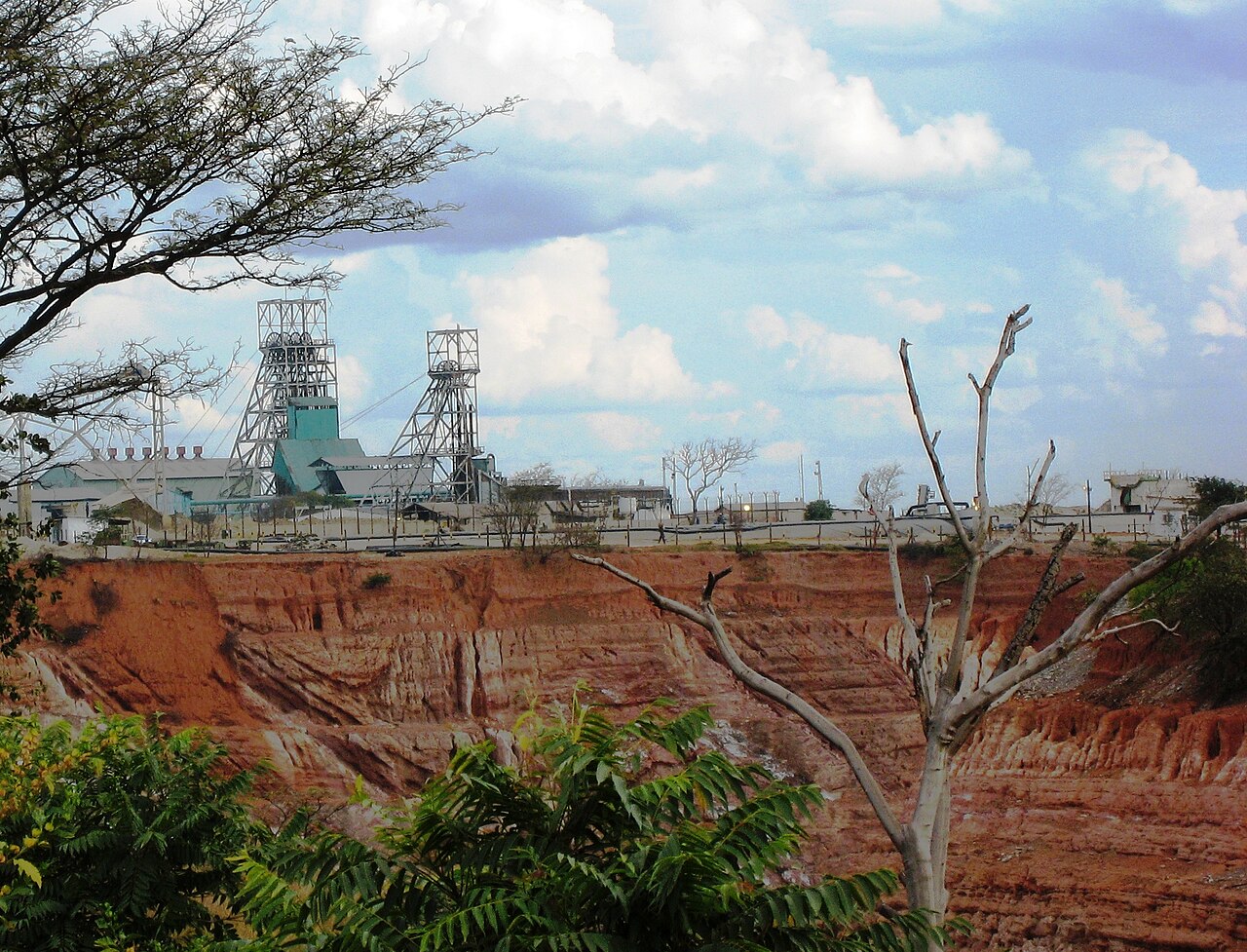
Refined copper exports reached 446.1 thousand tonnes in January to June 2026, up 7.4% from 415.2 thousand tonnes a year earlier. That comes from ZamStats data reported by Shanghai Metals Market, which also put first-half mine output at 447,182 tonnes, up only 0.45%.
First-quarter output was 208,992 tonnes, down 4.27%, according to the Ministry of Mines and Minerals Development. Shanghai Metals Market reported that First Quantum’s Zambian output rose 5% in the first half.
Bloomberg reported on 27 January 2026 that the government expects output above 1 million tonnes this year. The longer target is 3 million tonnes a year by 2031, according to Shanghai Metals Market.
Trade data for September 2026 show a deficit of ZMW 3,779.9 million, against a surplus of ZMW 973.4 million in August. Exports were ZMW 32,575.1 million and imports ZMW 36,354.9 million, according to Trading Economics.
Intellinews reported that Zambia extended a waiver of export duty on copper concentrate, though we could not confirm the date. We also could not confirm the London Metal Exchange copper price on 26 November, so this analysis quotes none.
The Actors, the IMF and the Debt
Who Decides
Several institutions shape the outcome. Each has a different stake in how fast rates fall and how copper income is used.
- Bank of Zambia, led by Governor Denny Kalyalya: sets the policy rate and aims to keep inflation in the 6% to 8% band.
- Government of President Hakainde Hichilema, in a second term from September 2026: wants a new IMF programme and a steady kwacha.
- Mines Minister Brenda Tambatamba, appointed after the election, according to Reuters via Kitco on 28 October 2026: oversees copper policy and was previously labour minister.
- IMF: lends against reforms and has endorsed the move toward lower rates.
- ZamStats: publishes the inflation figure that guides the bank.
Hichilema won the 13 August election with about 61% of the vote against Brian Mundubile’s roughly 38%, according to Al Jazeera. Election observers reported irregularities but concluded he would have won anyway, and the vote was disputed.
Mundubile and running mate Makebi Zulu were taken into police custody and charged with treason on 27 and 28 August 2026. The Constitutional Court said it received no petition challenging the result within the seven-day window.
The IMF Programme
The previous 38-month IMF arrangement ended with a sixth and final review on 27 January 2026. It released about US$190 million and brought total disbursements to about US$1.7 billion, the IMF said.
On 9 October 2026 IMF staff reached a staff-level agreement on a new 36-month arrangement worth US$1,472 million. That equals 1,076 million Special Drawing Rights, the IMF’s unit of account.
The deal still needs approval from the IMF Executive Board and prior actions by Zambia, and no board date has been given. The IMF projects growth of 5.6% in 2026.
The IMF says the fiscal position weakened this year on VAT and fuel-tax shortfalls and overspending by the Food Reserve Agency. It targets a primary surplus, the budget balance before interest, of 3% of GDP by 2029, starting in 2027.
On monetary policy the IMF said “normalization has begun” and called for exchange-rate flexibility and prudent reserve accumulation. That framing fits the rate cuts, although the release does not comment on the next decision.
Debt and US Investors
Restructuring agreements covered about 94% of the debt perimeter as of May 2026, the IMF said after a staff visit on 14 May. Afreximbank was reported close to a deal, and talks with the Trade and Development Bank were described as in good faith.
Reuters, via Devdiscourse, reported on 9 October 2026 that the bid for the 2033 Eurobond rose to 95.82 cents on the dollar after the IMF deal. The IMF said it could accommodate a return to the Eurobond market if the authorities chose.
In June 2026 a buyback of about US$1.3 billion to US$1.36 billion won 97.85% bondholder approval, according to Lusaka Times, Baker McKenzie and Engineering News. It used a US$600 million African Development Bank loan, with estimated savings of about US$275 million over 15 years.
We could not establish how much Zambian debt US funds hold or where the 2053 bond trades. US investors should read the 95.82 cents figure as one data point, not a market summary.
Scenarios
These are scenarios, not forecasts. They show what could stabilise the picture and what could tip it.
- Stable path: the bank holds at 10.75% at its November meeting, inflation stays inside the 6% to 8% band, the IMF board approves the programme and the kwacha holds near current levels.
- Pressure path: fuel and tax effects push inflation toward the 8% ceiling, which would make further cuts harder to justify.
- Disruption path: board approval slips or prior actions are missed, or post-election tension weighs on the currency and on the Eurobond bid.
The gap between these paths is narrow in the near term. Inflation is inside the band and the IMF has endorsed the direction, but fuel taxes and the pending board vote leave room for surprise.
What It Means for You
For US industrial buyers of copper, the research found no data on Zambian shipments to the United States, tariffs or transport routes. It does show rising refined exports, a government expectation of more than 1 million tonnes of output in 2026 and a first-quarter output decline of 4.27%.
For US holders of Zambian bonds, the signals are mixed but constructive. About 94% of the debt perimeter was covered by agreements as of May 2026, and the 2033 bond bid stood at 95.82 cents on the dollar on 9 October.
For investors weighing local assets, the policy rate of 10.75% minus October inflation of 6.3% leaves a gap of 4.45 percentage points. That is our own subtraction, not a bank figure, and it will move if inflation keeps rising.
For executives with Zambian operations, borrowing costs and fuel prices are the near-term variables. The bank urged lenders to cut rates.
What Is Not Known
Several gaps limit what can be said with confidence. We could not open the Bank of Zambia or ZamStats websites, so most figures here come from secondary reports and the IMF.
- The outcome of the November decision, the committee’s vote split and its guidance.
- Whether the bank will treat fuel-tax-driven inflation as temporary.
- The IMF board date and the detail of the prior actions.
- The current copper price and the kwacha’s recent path.
- Any US-specific copper supply data.
- The size of post-election political risk after the disputed vote.
Treat every number here as a snapshot with the date given.
What to Watch
- 25 and 26 November 2026: the Bank of Zambia’s Monetary Policy Committee meets.
- 1 December 2026: VAT on petroleum is due back, according to Trading Economics, a date not yet confirmed.
- Late December 2026: the next ZamStats inflation release, date unconfirmed.
- End-2026: no IMF board date has been given.
We did not find the bank’s 2027 meeting calendar. The November decision will show whether the easing cycle has paused or continues.
Related reading: Moving to and Living in Zambia in 2026; Who Dominates Zambia, Elites and Regions Explained; Zambia Population and Ethnic Groups Explained; more from Zambia.
Frequently Asked Questions
What is the Zambia interest rate?
The Bank of Zambia’s policy rate was 10.75% as of 26 November 2026, after a 250 basis point cut on 30 September 2026. The Monetary Policy Committee is scheduled to meet on 25 and 26 November 2026.
What is inflation in Zambia?
Annual inflation was 6.3% in October 2026, up from 6.1% in September, according to ZamStats as reported by the Rio Times. The bank’s target band is 6% to 8%.
Will the Bank of Zambia cut rates in November?
The policy rate is currently 10.75% and the Monetary Policy Committee meets on 25 and 26 November. The committee’s vote split and guidance are not yet known.
What is the kwacha exchange rate?
In October 2025 it stood at 22.76 per dollar, according to Bloomberg.
How much copper does Zambia export?
Refined copper exports were 446.1 thousand tonnes in January to June 2026, up 7.4% on a year earlier, according to ZamStats data reported by Shanghai Metals Market. Mine output in the first half was 447,182 tonnes.
What is the status of Zambia’s IMF programme?
IMF staff agreed a new 36-month arrangement of US$1,472 million with Zambia on 9 October 2026. It still needs Executive Board approval, and no date has been given.
Sources: riotimesonline.com, riotimesonline.com, riotimesonline.com, mwebantu.com, mwebantu.com, diggers.news. Retrieved 26 November 2026.
This article was produced by The Rio Times’ automated AI newsroom. Editorial responsibility: Matthias Camenzind, Publisher and Editor-in-Chief. The Rio Times also runs Ask Rio Times, which answers from 100,000+ of our own articles, the daily Latin America Power Map, and prediction-market odds on elections and markets.. How we use AI · Report an error
Part of our ongoing coverage
Africa: The New Scramble — the great-power contest over the continent.
Critical Minerals in Africa
- Africa’s Critical Minerals 2026: Who Holds What and Why
- DR Congo Explained 2026, Its War, Cobalt and Politics
- Zambia Explained: The Country, Its Copper Economy, Its Politics and What to Watch
- The Lobito Corridor: A New Railway for African Copper