Brazil · Companies
Key Facts
—H1 2026 throughput Vports handled approximately 4.1 million tonnes across its Espirito Santo complex, a 12% increase year-on-year.
—Key growth sectors Offshore-related cargo rose 202% in Q1, while concentrated minerals climbed 108% and vehicle handling doubled.
—Investment plan Vports plans to invest more than R$500 million (~US$98 million) by 2027 to expand cargo capacity by 80% over five years.
—2024 performance The complex moved 8.4 million tonnes in 2024, up 15%, far outpacing Brazil’s national port growth average of 2%.
—Terminal footprint Operations span the ports of Vitoria, Vila Velha, and Barra do Riacho, plus the Praia Mole terminal.
Vports Espirito Santo handled a record 4.1 million tonnes of cargo in the first half of 2026, a 12% jump that cements the privately operated complex as one of Brazil’s fastest-growing logistics hubs.
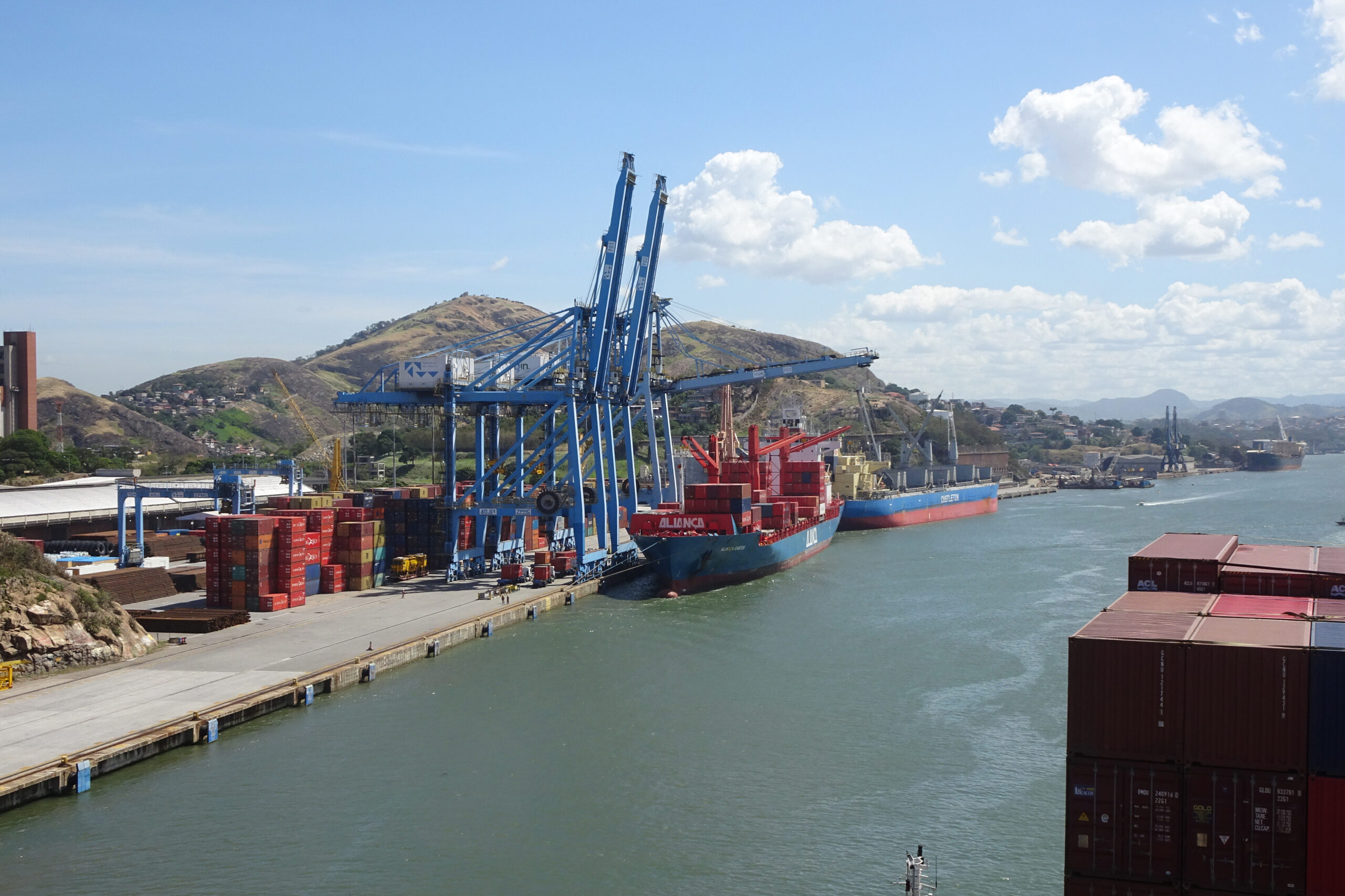
Vports Espirito Santo: A Record First Half
Vports is the private operator that manages the port complex in Brazil’s southeastern state of Espirito Santo. The company took over the concession in a landmark privatization, becoming the country’s only fully private port authority.
For foreign investors and expats unfamiliar with the region, the complex is not a single dock but a network of terminals. It spans the cities of Vitoria, the state capital, and neighboring Vila Velha, along with the Port of Barra do Riacho and the Praia Mole terminal.
This multi-site footprint allows Vports to handle a diverse cargo mix. The complex serves as a strategic gateway for Brazil’s industrial heartland, connecting mining, agriculture, and manufacturing to global markets.
Breaking Down The Record Cargo Mix
The 4.1 million tonnes moved in the first half of 2026 reflects a sharp pivot toward higher-value industrial and energy-related cargo. Vports reported that offshore-linked cargo surged 202% in the first quarter, driven by what the company called “the heating up of the oil and gas industry.”
Concentrated mineral cargoes jumped 108% year-on-year in the same period. Pig iron exports rose 94%, while granite block shipments increased 60%.
These figures highlight Espirito Santo’s role as a key outlet for Brazil’s mineral wealth.
Vehicle handling doubled, with imports and exports flowing through Vitoria and Vila Velha. Fertilizer imports climbed 45%, machinery rose 83%, and general equipment shipments grew 39%.
January 2026 data provided an early signal of the trend. The Vitoria and Vila Velha terminals alone moved 700,000 tonnes that month, up 15% year-on-year.
Solid bulk cargo accounted for 352,000 tonnes, a 28% increase.
Offshore Oil And Gas Fuels The Surge
The standout performer in the first half was offshore support logistics. Vports directly attributed the 202% spike in offshore cargo to increased activity in Brazil’s oil and gas sector.
Espirito Santo sits near key offshore basins, making the complex a natural hub for supplying rigs, transporting equipment, and moving materials for exploration and production. The rebound in global energy investment has channeled more traffic through Vitoria and Vila Velha.
This segment requires specialized handling and storage, capabilities Vports has been expanding. The growth signals that international energy firms are routing more supply-chain activity through the state.
Investment Plan: R$500 Million To Expand Capacity
Vports has committed to investing more than R$500 million (~US$98 million) by 2027. The goal is to boost cargo-handling capacity by 80% over a five-year period.
The capital expenditure plan covers terminal upgrades, new equipment, and improved rail connectivity. Brazilian port press has separately reported R$180 million (~US$35.3 million) in port works underway in Espirito Santo, reinforcing the broader infrastructure push.
Rail links are a critical piece of the strategy. Better rail connections would allow minerals, agricultural goods, and industrial products to reach the docks more efficiently from inland states such as Minas Gerais.
Vports’ long-term target, according to company statements cited in local media, is to achieve major throughput growth at the Port of Vitoria by 2029. The 2026 half-year record suggests the operator is on track.
Outpacing National Averages
The Espirito Santo complex has consistently grown faster than Brazil’s port sector as a whole. In 2024, Vports moved 8.4 million tonnes, a 15% increase compared to a national average of just 2%.
That year already set records for imports, solid bulk, and vehicle handling. The 2026 first-half performance builds on that momentum, with a more diversified cargo base insulating the complex from downturns in any single commodity.
Industrial imports, agricultural and mining-linked cargo, offshore support, and a rising vehicle business together make Espirito Santo one of Brazil’s most dynamic logistics corridors. For international traders and investors, the complex offers a fast-growing alternative to the country’s more congested southern ports.
What The Record Means For Foreign Investors
The throughput record is a tangible signal that privatization is delivering results. Vports’ ability to attract diverse cargo types – from granite blocks to complex oilfield equipment – demonstrates operational flexibility that state-run ports often struggle to match.
For expats and foreign businesses looking at Brazilian logistics, the Espirito Santo complex offers a case study in how private management can unlock capacity. The 80% expansion target and rail investments point to further growth ahead.
The offshore surge also highlights Brazil’s enduring appeal as an energy investment destination. As global oil majors maintain or increase spending on Brazilian basins, demand for specialized port services in Espirito Santo is likely to remain strong.
More: Brazil news in English, every day from The Rio Times.
Frequently Asked Questions
What is Vports?
Vports is the private operator of the port complex in Espirito Santo, Brazil. It is the country’s only fully private port authority, managing terminals in Vitoria, Vila Velha, Barra do Riacho, and Praia Mole.
How much cargo did Vports handle in the first half of 2026?
Vports handled approximately 4.1 million tonnes in the first half of 2026, a record for the period and a 12% increase compared to the same timeframe in 2025.
What is driving growth at the Espirito Santo port complex?
Growth is driven by a diversified cargo mix including offshore oil and gas logistics, concentrated minerals, pig iron, granite blocks, vehicles, fertilizers, and machinery. The offshore segment alone rose 202% in Q1 2026.
Connected Coverage
Petrobras Energy Transition Chief Named in Brazil Oil Clash
Brazil Markets: Ibovespa & the Real — July 25, 2026
Sources: Vports.
This article was produced by The Rio Times’ automated newsroom system. How we use AI · Report an error · Editorial responsibility: Matthias Camenzind, Editor-in-Chief
LatAm Markets: Live Signals → — real-time movers, turnover leaders and FX across Latin America.
Brazil runoff, Sunday, October 25: Brazil runoff: date, poll closing times and when results start. Latest: Brazil runoff polls, Flávio 51%, Lula 49%.