Venezuela’s Electoral Saga: Maduro’s Reported Victory Amid Claims of Election Fraud
In the recent Venezuelan election, President Nicolás Maduro reportedly won another term with 51.2% or 5,150,092 votes.
Edmundo González received 44.2% of the vote, totaling 4,445,978 votes, according to official Consejo Nacional Electoral (CNE) results.
This election echoed the disputed 2018 vote, which faced global scrutiny and saw Juan Guaidó recognized by many as the legitimate leader despite Maduro’s declared victory.
The latest results have stirred significant debate and suspicion, highlighting deep national divides and the fragile nature of Venezuelan democracy
Maduro’s reported re-election continues the socialist policies established by his predecessor, Hugo Chávez, despite not being the pre-election favorite.
He praised Venezuela’s electoral system for its transparency, asserting it as a beacon of democratic integrity.
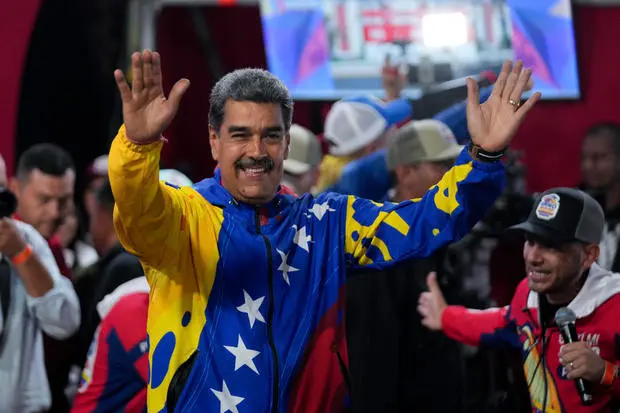
Meanwhile, Maduro positioned his win as a bulwark against what he described as rising fascism within the country.
The term “fascism” or “far-right” is often used by socialist governments to demonize the opposition while simultaneously resonating powerfully as a descriptor.
However, the opposition vehemently disputed the results. Opposition leaders María Corina Machado and Edmundo González disputed the CNE’s figures, with Machado claiming González won 70% of the vote.
They called for electoral witnesses to stay at polling stations, underscoring their resolve to challenge the official tally.
A hacking incident and restricted opposition witness access to polling data further compromised the election’s credibility.
Elvis Amoroso, the CNE President, insisted on the election’s integrity and promised to soon make detailed results public.
Nonetheless, these assurances have done little to quell the concerns of manipulation and transparency.
Internationally, opinions on the election’s fairness are mixed, with some suggesting the results reflect authoritarian tendencies rather than a fair democratic process.
The controversy not only highlights domestic polarization but also affects Venezuela’s global standing and governance.
Venezuela’s Electoral Saga: Maduro’s Reported Victory Amid Claims of Election Fraud
Complicating matters, reports indicate a consolidation of judicial power under Maduro’s government, involving his family and close associates.
This has sparked fears about the erosion of judicial independence and the rule of law in Venezuela.
Also in question is the National Electoral Council’s (CNE) decision to allow only a small fraction of Venezuelans abroad to vote.
Despite nearly 4 million Venezuelans being eligible to vote from abroad, authorities only allow 69,211 to do so—a mere 1.7%.
Observers both within and outside of Venezuela continue to scrutinize the unfolding political drama.
The ongoing disputes and allegations following this election underscore significant challenges to the stability and legitimacy of Venezuela’s democratic institutions.
More: Venezuela news in English, every day from The Rio Times.
This article was produced by The Rio Times’ automated newsroom system. How we use AI · Report an error
In depth
Read More from The Rio Times