
VENEZUELA · POWER GRID · ENERGY
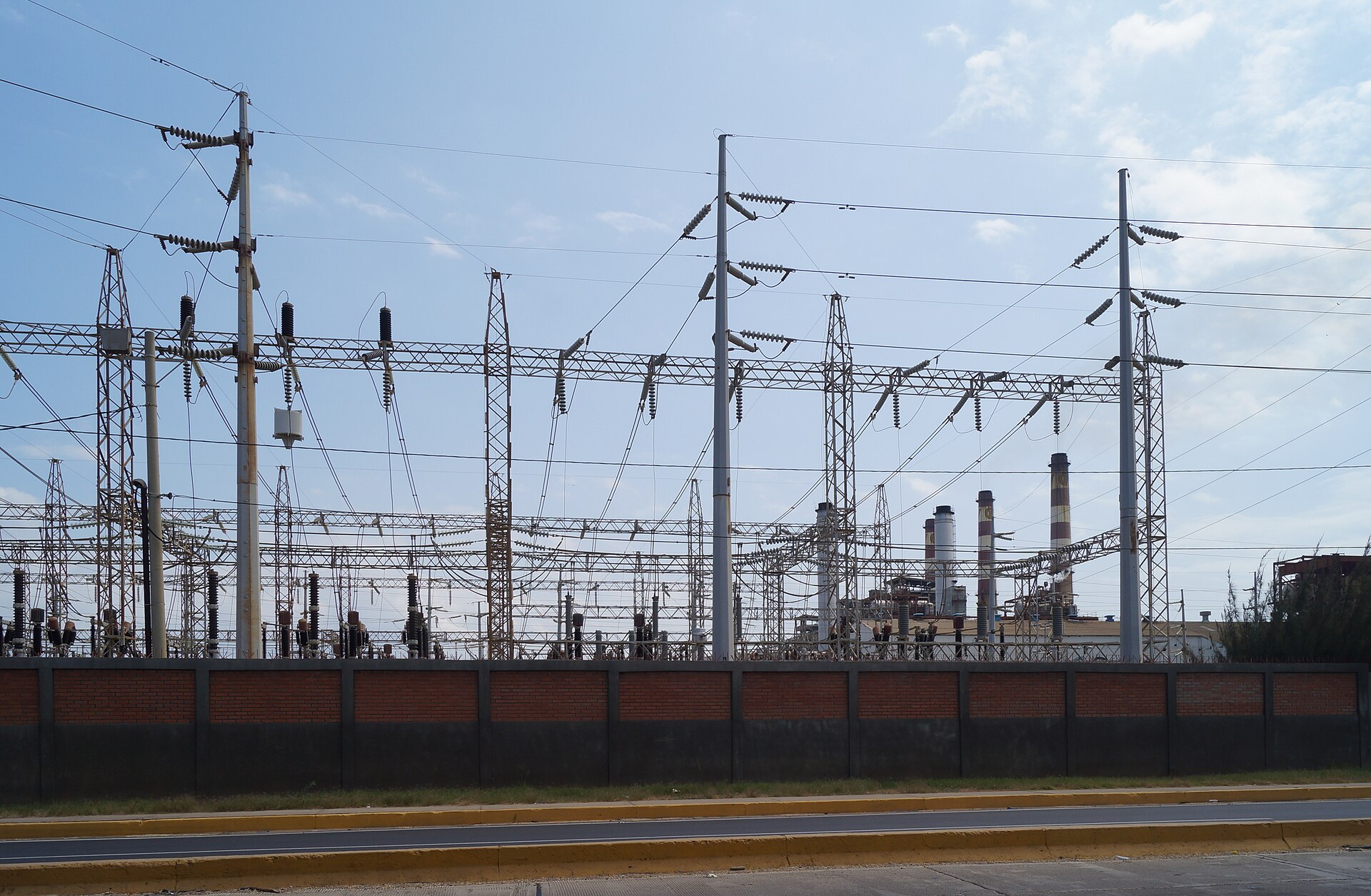
Venezuela’s government says a long-idle 600-megawatt unit at its largest thermal power plant will return to the grid soon with Chinese help, a repair that touches blackouts, oil and US sanctions policy.
Key Facts
- —What Unit 6 at Planta Centro, rated 600 megawatts (MW), is due back on the grid.
- —Where Carabobo state, about 135 km (84 miles) west of Caracas, at Venezuela’s largest thermal power plant.
- —Who China Machinery Engineering Corp., a Chinese state-owned contractor, has worked at the plant since about 2010.
- —Why it matters Power cuts fuel daily protests, and the US licence for Venezuela’s power sector excludes Chinese-linked firms.
- —Who governs Delcy Rodríguez has been acting president since Saturday, 3 January 2026, after US forces captured Nicolás Maduro.
- —Prediction markets Kalshi gives Delcy Rodríguez a 94% chance of leading Venezuela in practice at the end of 2026 (Sunday, 25 October, 5:04 a.m. ET).
- —Power Index Venezuela ranks 13th of 14 in The Rio Times Latin America Power Index, with 27.0 points (October 2026 edition).
Venezuela’s government says unit 6 of Planta Centro, a 600-megawatt (MW) steam unit at the country’s largest thermal power plant, will be connected to the grid “very soon” with help from China. Bloomberg reported on Saturday, 24 October, citing unnamed sources, that the Chinese state-owned contractor China Machinery Engineering Corp. plans to start the unit next month.
It matters to US readers because blackouts now trigger protests almost daily and slow the oil recovery that US companies such as Chevron are betting on. It also shows a Chinese state-owned firm still working in Venezuela while US officials say they want less Chinese influence there.
In Plain English
- Unit 6: one of six steam-turbine generators at Planta Centro, and the biggest single unit in Venezuela’s thermal fleet.
- MW: a megawatt is one million watts; Venezuela’s grid is rated for roughly 36,000 MW on paper, but industry estimates say less than 40% works.
- Corpoelec: Venezuela’s state electricity company, which owns the plant.
What Venezuela’s Government Has Said About Unit 6
Electricity minister Rolando Alcála announced on Tuesday, 29 September, that unit 6 would start “in the coming days” and supply 600 MW to the central and central-western regions. On Thursday, 8 October, acting president Delcy Rodríguez told the annual assembly of the Fedecámaras business federation: “I also highlight the cooperation with the People’s Republic of China; very soon machine 6 of Planta Centro will be connected” (our translation).
Two days later the information ministry described the repair as backed by “technical advice from China”, part of a plan to add 1,300 MW before the end of the year. The timeline below shows how the promised start date has moved.
Timeline
- Wednesday, 24 June: a double earthquake hits Venezuela; the minister later says about 800 MW of thermal generation was lost.
- Saturday, 8 August: the minister says unit 6 should join the grid “in the coming months”.
- Tuesday, 29 September: he says it will start “in the coming days”.
- Thursday, 8 October: Rodríguez says “very soon” and thanks China for its cooperation.
- Saturday, 24 October: unnamed sources say the Chinese contractor plans a start next month.
Unit 6 entered commercial service in April 2016 and left the grid after a failure on Wednesday, 4 December 2019, the Valencia daily El Carabobeño reported on Monday, 5 October. AidData, a research group that tracks Chinese overseas lending, records that China Development Bank committed a loan for the unit in December 2010 and that China Machinery Engineering was an implementing agency.
Why the Power Cuts Matter
The Venezuelan Observatory of Social Conflict, a monitoring group, counted 1,101 protests in September, and 531 of them demanded steady electricity. A year earlier it counted 25 power protests in September, so the number is about 21 times higher.
Alcála blames higher demand from hot weather linked to El Niño and from economic growth, and says the June earthquakes delayed repairs. Opposition figures and independent experts blame corruption and missing maintenance, while the government points to sanctions, El Diario reported.
Washington is betting on the grid too. The US Energy Department said on Wednesday, 2 September, that GE Vernova, a US equipment maker, plans to bring 1 gigawatt (1,000 MW) of new power online within 24 months and 5 gigawatts over the following four years.
“The earthquake hit the national electric system, which was already quite battered by Venezuela’s lack of access to the main parent companies that make spare parts for our electric system.”
Delcy Rodríguez, 8 October 2026, as published by Venezuela’s information ministry (translated)
Who Governs Venezuela Today
Delcy Rodríguez, who was executive vice president under Nicolás Maduro, has led the government since Saturday, 3 January 2026. That day the Supreme Court ordered her to exercise the powers of president “in an acting capacity” after US forces captured Maduro, and it said the order did not settle whether his absence is temporary or permanent.
The US Energy Department calls her Venezuela’s interim president, and the US Treasury removed her from its sanctions list on Wednesday, 1 April, and her brother Jorge Rodríguez, the National Assembly president, on Wednesday, 14 October. Her government is negotiating with part of the opposition in US-backed talks, and State Department spokesman Tommy Pigott said Washington fully supports them.
We found no announced date for a presidential election. Secretary of State Marco Rubio said on Friday, 9 October, that Washington wants not just an election but a lasting democracy, and the State Department said the third round of talks, which opened on Wednesday, 14 October, would focus on choosing a new Supreme Court and on guarantees for credible elections.
US Sanctions and the Chinese Role
The United States has eased Venezuela sanctions step by step since January, but dealings with the state and its oil company still run mostly through licences from the Treasury’s Office of Foreign Assets Control (OFAC). General License 48D, issued on Monday, 28 September, lets US companies supply goods and services for making, moving and distributing electricity in Venezuela.
What General License 48D Says
- Covers: goods, technology, software or services supplied from the United States or by US persons for electricity generation, transmission, storage and distribution, including repair and maintenance.
- Conditions: contracts with the Venezuelan government or the state oil company PDVSA must send disputes to the United States, United Kingdom, France or Singapore, and payments to blocked parties go into the “Foreign Government Deposit Funds” named in an executive order of Friday, 9 January.
- Excludes: any transaction involving a person located in or organised under the laws of China, Russia, Iran, North Korea or Cuba, or a firm they own or control, or a joint venture with them.
In plain terms, a US company cannot use this licence for a deal that involves a Chinese-linked party, and the licence says nothing about what a Chinese firm may do on its own in Venezuela. Bloomberg recalled that Secretary of State Rubio told a Senate committee on Wednesday, 28 January, that Washington was holding serious talks about eroding Iranian, Chinese and Russian influence there.
What Prediction Markets Say
Kalshi, a US-regulated exchange, gives Delcy Rodríguez a 94% chance of leading Venezuela “de facto” at the end of 2026, with about 15,800 contracts traded. Polymarket puts the chance that she is out as leader by Thursday, 31 December, at 6%, in a market with about US$192,000 traded (both on Sunday, 25 October, 5:04 a.m. ET).
Both platforms also run contracts on who “officially” holds the title, where Nicolás Maduro trades at about 78% on Polymarket and 79% on Kalshi. The wording matters, because the Supreme Court named Rodríguez only as acting president, and we cannot say why traders price the two questions so differently.
Why we show this: prediction markets turn real-money bets into a live probability that moves within minutes of the news, which is why investors, campaigns and newsrooms in the United States now follow them closely. We show them next to polls and official results, never instead of them.
What It Means for You
For US investors and energy companies, the repair is a test of whether Venezuela can keep the lights on while US-backed oil projects grow. Chevron announced on Wednesday, 2 September, that it will invest more than US$7 billion in Venezuela over five years, the US Energy Department said, so unreliable power is a direct business risk.
For companies that work in Venezuela, the licence text matters, because a US supplier with a Chinese-linked partner cannot rely on General License 48D for that deal. For Venezuelan families in the United States, the main effect would be fewer or shorter outages for relatives at home, if the unit starts and stays online.
The repair also puts two stated US goals side by side: rebuilding Venezuela’s power so that oil output can grow, and reducing Chinese influence there. How Washington weighs them in licensing decisions is not public.
What to Watch
- Whether unit 6 is connected to the grid, and how many hours it then stays online.
- Whether the 1,300 MW target for the last quarter of 2026 is met.
- Any new OFAC licence or guidance on power-sector work that involves Chinese-linked firms.
What Is Not Known
No start date is confirmed, and no official statement says the unit has been connected. The minister promised it “in the coming days” on 29 September, and the unnamed sources behind the 24 October report point to next month.
The fuel is unclear, because those sources say the unit will burn fuel oil from the state oil company PDVSA, while engineer José Aguilar told El Carabobeño that units 5 and 6 were converted to gas without certified tests. He warned that starting without tests could cause explosions and loss of life, and we found no official reply.
The cost is also disputed: El Carabobeño reports investment above US$1.5 billion, which Aguilar calls excessive, while AidData lists a US$840 million China Development Bank loan. We found no US government comment on the repair, no published contract terms and no confirmation that the 1,300 MW target for the last three months of 2026 can be met.
Connected Coverage
Frequently Asked Questions
What is Planta Centro?
Planta Centro is Venezuela’s largest thermal power plant, in Carabobo state. It has six steam units, but a local engineer says most have been out of service for years.
Who governs Venezuela now?
Delcy Rodríguez has been acting president since Saturday, 3 January 2026, under a Supreme Court order issued after US forces captured Nicolás Maduro. We found no announced date for a presidential election.
Do US sanctions stop China from working there?
General License 48D does not cover US companies’ dealings with Chinese-linked parties. It does not say what a Chinese firm may do on its own, and we cannot say whether other US rules apply.
Will unit 6 end Venezuela’s blackouts?
Not on its own. The government wants to add 1,300 MW by the end of 2026, of which unit 6 would supply 600 MW.
Sources: Venezuela information ministry, Alcalá on unit 6, 29 September 2026, Rodríguez at Fedecámaras, 8 October 2026, Rodríguez on the earthquake and spare parts, 8 October 2026, 1,300 MW plan and technical advice from China, 10 October 2026, Alcalá on unit 6, 8 August 2026, Earthquake losses, 800 MW of thermal generation, OFAC, Venezuela General Licenses 46E, 48D and 49B, 28 September 2026, OFAC, General License 48D text, OFAC, Rodríguez delisting, 1 April 2026, OFAC, Jorge Rodríguez delisting, 14 October 2026, US Energy Department fact sheet, 2 September 2026, Teleamazonas, Supreme Court order of 3 January 2026, Runrun.es, Observatory of Social Conflict, 21 October 2026, El Diario, September protests, 21 October 2026, El Diario, 1,300 MW plan, 30 September 2026, El Carabobeño, 5 October 2026, AidData, Planta Centro loan record, Efecto Cocuyo, 14 October 2026, NTN24, State Department on the talks, Voz, Rubio on 9 October, La República (Colombia), Bloomberg report of 24 October 2026, Turbomachinery Magazine, 3 September 2026. All opened on 25 October 2026. Prediction-market prices: Kalshi and Polymarket public data, 25 October 2026, 5:04 a.m. ET.
This article was produced by The Rio Times’ automated newsroom system. How we use AI · Report an error · Editorial responsibility: Matthias Camenzind, Editor-in-Chief
Venezuela and the United States
- What Is Going On Between Venezuela and the United States?
- What Is Going On Between Venezuela and the United States?
- Venezuela Geopolitics Explained, US Now Runs Its Oil
- Venezuela Politics 2026, Who Holds Power After Maduro