Guyana Urges Venezuela to Accept Coming World Court Ruling on Essequibo at UN Assembly
GUYANA · DIPLOMACY
Key Facts
- Who Essequibo is a region covering more than two-thirds of Guyana that Venezuela has claimed since the colonial era. Guyana’s president is Irfaan Ali; Venezuela’s acting president is Delcy Rodríguez.
- What happened President Irfaan Ali urged Venezuela at the UN on Thursday 24 September 2026 to abide by the coming ICJ ruling.
- Update, 25 September Supporters of the opposition WIN party picketed outside the UN during Ali’s speech, News Americas reported.
- Venezuela’s line A day earlier, acting President Delcy Rodríguez asked Guyana to return to negotiations under the 1966 Geneva Agreement.
- The case Guyana wants the court to confirm the 1899 award that fixed the border; hearings ended in May 2026.
- The catch No judgment date has been set, and Venezuela still rejects the court’s jurisdiction.
- What is at stake Essequibo covers more than two-thirds of Guyana, and Venezuela’s sea claim reaches into the Stabroek oil block.
- What comes next Guyana expects a ruling between November 2026 and January 2027; the sea border needs separate talks.
This story is part of our coverage of the Venezuela US tensions. Who runs Venezuela, the US sanctions and oil deals, the Maduro case and the odds are in our dossier.
Guyana’s President Irfaan Ali used his address to the UN General Assembly on 24 September 2026 to urge Venezuela to abide by the International Court of Justice’s coming ruling on the Essequibo border dispute.
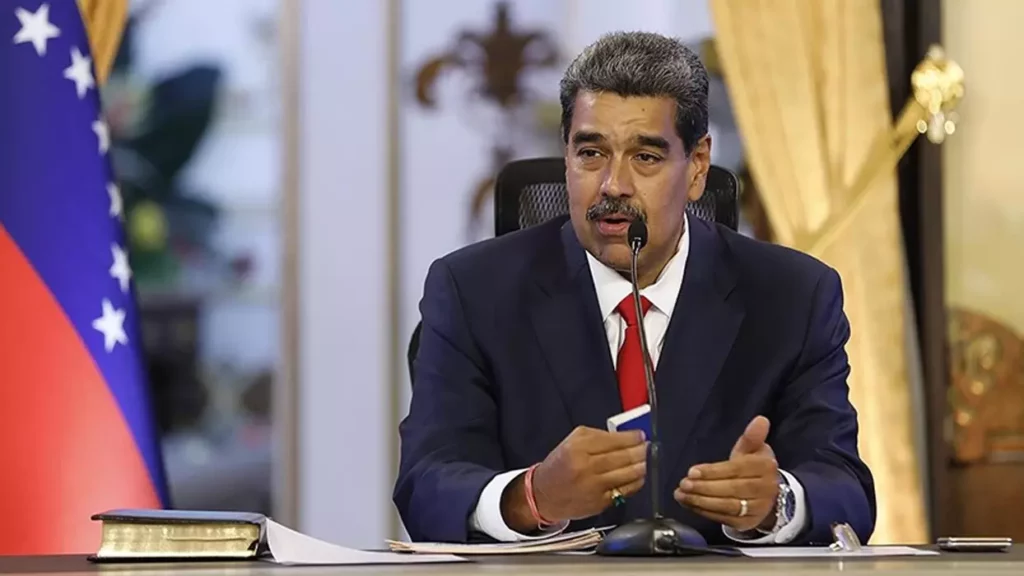
Guyana has used the UN General Assembly to press Venezuela over Essequibo, a vast region Caracas has long claimed. President Irfaan Ali urged Venezuela on Thursday 24 September to abide by the International Court of Justice’s coming ruling.
“We urge Venezuela to abide by the forthcoming ruling in accordance with their obligation under the UN Charter, as Guyana will do,” Ali said in New York.
What Ali Said About Essequibo
Ali said Guyana went to the court only after decades of trying to settle the dispute bilaterally. That included a mixed commission and the good offices of the UN secretary-general.
He called the 1899 Arbitral Award “the full, perfect, and final settlement” of the border. Guyana had “endured long and repeated provocations and aggression”, he added.
It was his first address to the Assembly since the court finished hearing the case in May 2026. He said both countries had taken part in those hearings.
“We look forward to a new era of neighbourly relations,” he said. He tied that hope to the development of both countries and the stability and prosperity of the region.
Ali said Guyana has “always advanced the peaceful settlement” of the border controversy. It took part in the case in full respect for international law, he added, and encouraged Venezuela to do the same.
Venezuela’s Answer, a Day Earlier
Venezuela’s acting president, Delcy Rodríguez, spoke from the same podium on Wednesday 23 September. She reaffirmed what she called Venezuela’s historic rights over Guyana-Essequibo.
“Here, I appeal to the Cooperative Republic of Guyana to resolve the issue and to return to negotiations,” she said. In Venezuela’s view, that is what the Geneva Agreement requires.
Agreements reached bilaterally last longer and work better than those imposed by outside bodies, she argued. She wore a brooch showing a map of Venezuela that included Essequibo.
Rodríguez took over after US forces removed Nicolás Maduro on 3 January 2026. She was previously responsible for Venezuela’s case at the court, AFP noted.
She said Venezuela wants to rebuild ties with its South American neighbours and the United States. Those ties must rest on respect and equality, she added.
She did not criticise the United States or ExxonMobil, Demerara Waves noted. Instead she thanked President Donald Trump and his government for their readiness to resume diplomatic relations and cooperation.
She called a recent US–Venezuela agreement “one of the most all-encompassing and significant ever signed”. It will help ensure the hemisphere’s energy balance, she said.
Where the ICJ Case Stands
The border dates from the colonial era. An arbitration tribunal in Paris fixed it in 1899.
The Geneva Agreement was signed in February 1966 by the United Kingdom, Venezuela and British Guiana, three months before Guyana’s independence. Venezuela says the 1899 award is null and void.
In its view the Geneva Agreement requires a practical settlement negotiated with Guyana. Guyana filed the case in 2018 after the UN secretary-general referred the dispute to the court under the Geneva Agreement.
It asks the judges to confirm that the 1899 award and its boundary are valid and binding. The court ruled in 2020 that it had jurisdiction and rejected a further Venezuelan objection in 2023.
It has also twice granted Guyana’s requests for provisional measures. The latest, in 2025, ordered Venezuela not to hold, or prepare to hold, elections in the disputed territory.
Venezuela boycotted the court’s 2018–2020 jurisdiction phase but has taken part since then, while still rejecting the court’s authority. No judgment date has been announced, and the court gives two weeks’ notice.
Guyana’s government has estimated a ruling between November 2026 and January 2027.
Why Essequibo Matters
Guyana is a small English-speaking country just east of Venezuela. Essequibo makes up more than two-thirds of its territory of about 83,000 square miles.
Oil was discovered offshore in 2015. Venezuela’s maritime claim reaches into ExxonMobil’s Stabroek Block, Guyana’s main oil area.
That is why the dispute weighs on investors as well as diplomats. The land boundary is what the court will rule on.
The maritime boundary would need separate talks, because Venezuela has not signed the UN Convention on the Law of the Sea. The United States has said it is willing to help settle that maritime line after the ruling, Demerara Waves reported.
ExxonMobil hopes to resume exploration in parts of the Stabroek Block nearer Venezuela afterwards. Maduro’s repeated calls to annex the territory once raised fears of armed conflict.
Ali and Maduro met in Argyle, St Vincent, in December 2023 and pledged not to threaten or use force.
Why It Matters If You Invest in Guyana
For oil companies, contractors and investors, a clear ruling could reduce a major political risk over Guyana’s offshore boom. That depends on Caracas accepting it, and the ruling would not settle the sea border.
Guyana is also a founding member of Trump’s Shield of the Americas, a US-led security coalition against drug cartels. Venezuela, under Rodríguez, is rebuilding relations with the US at the same time.
Outside the Hall: Opposition Supporters Protest
While Ali spoke on Thursday 24 September, supporters of the opposition We Invest in Nationhood (WIN) party protested outside the UN, News Americas reported. Members and supporters of the party’s New York chapter, launched in late August, staged the picket.
Signs read “Let the Courts Do Their Jobs, No to Victimization” and “More Democracy, No to Dictatorship”. The chapter listed seven grievances, from alleged persecution of Opposition Leader Azruddin Mohamed to accountability for the MV Barima ferry disaster in July, which killed more than 70 people.
Its statement also cited an Inter-American Development Bank estimate that 58% of Guyanese lived on less than US$6.85 a day. The estimate rests on 2021 survey data, and the government says it is out of date.
The group picketed again that evening outside Ali’s meeting with the diaspora in Queens, News Americas reported. At the Queens event, Ali urged US-based Guyanese to invest in the country’s farm sector, calling himself a farmer of ten years, Demerara Waves reported.
No direct government response to the protest had been reported by Friday. At the Queens event, though, Ali said without naming Mohamed that “you can be my best friend but if you do the crime, you have to do the time,” Demerara Waves reported.
Mohamed cannot travel to the United States, where he and his father are wanted over alleged financial crimes and are fighting extradition. WIN won 16 seats in the September 2025 election and is the main opposition party.
What Comes Next
The next milestone is the court’s announcement of a date to deliver its judgment. Both governments have now set out their positions before the full UN membership.
Watch too for any US move on the maritime boundary. Another question is how Rodríguez’s government would respond to an adverse ruling.
Sources: News Americas, WIN protesters picket Guyana President outside UN, 25 September 2026; Demerara Waves, Ali in Queens, 25 September 2026; Kaieteur News, WIN New York chapter, 1 September 2026; Department of Public Information, Guyana, Ali at the UN, 24 September 2026; Demerara Waves, Rodríguez at the UN, 23 September 2026; Department of Public Information, Guyana, on the judgment timeline, 5 June 2026; International Court of Justice, Guyana v. Venezuela case page; AFP via RTL Today, Guyana urges Venezuela, 24 September 2026.
Frequently Asked Questions
What is the Essequibo dispute?
Venezuela claims the Essequibo region, which makes up more than two-thirds of Guyana. Guyana says the 1899 Arbitral Award settled the border for good and has asked the ICJ to confirm it.
What did Guyana say at the UN?
President Irfaan Ali urged Venezuela to abide by the ICJ’s forthcoming ruling, as Guyana will do. He said Guyana went to court only after decades of failed bilateral efforts.
When will the ICJ rule on Essequibo?
The court finished hearings in May 2026 but has not set a date. Guyana’s government has estimated November 2026 to January 2027.
What does Venezuela want?
Venezuela wants direct negotiations under the 1966 Geneva Agreement and rejects the court’s jurisdiction. It has nevertheless taken part in the proceedings since the jurisdiction phase.
Connected Coverage
- US Puts US$2 Million Into Guyana’s Skies as It Watches Venezuela
- Guyana Opens Its Oil Economy to Ibero-American Investors
This article was produced by The Rio Times’ automated AI newsroom. Editorial responsibility: Matthias Camenzind, Publisher and Editor-in-Chief. The Rio Times also runs Ask Rio Times, which answers from 100,000+ of our own articles, the daily Latin America Power Map, and prediction-market odds on elections and markets.. How we use AI · Report an error
Venezuela and the United States
- What Is Going On Between Venezuela and the United States?
- What Is Going On Between Venezuela and the United States?
- Venezuela Geopolitics Explained, US Now Runs Its Oil
- Venezuela Politics 2026, Who Holds Power After Maduro