
GUIDES · VENEZUELA
Key Facts
- —The country Venezuela sits on the Caribbean coast of South America and covers 912,050 square kilometres. It had about 28.5 million people in 2025, and 6,978,009 Venezuelans lived elsewhere in Latin America and the Caribbean as of August 2026.
- —Four dates Independence was declared on 5 July 1811, and the last dictator fled in 1958. The Chávez constitution dates from 1999, and US forces seized Nicolás Maduro on 3 January 2026.
- —Oil and money The state took over the oil industry from foreign firms after a law approved in August 1975. Output of goods and services fell from about US$371.8 billion in 2012 to about US$99.7 billion in 2025, measured in current dollars.
- —Who governs Delcy Rodríguez, Maduro’s former vice-president, has been acting president since January 2026. No date for a presidential election had been announced as of 17 October 2026.
- —Prediction markets Polymarket gives a 9.5% chance that Venezuela schedules a presidential election by 31 December 2026 (17 October, 9:22 a.m. ET).
- —Power Index Venezuela ranks 13th of 14 in The Rio Times Latin America Power Index, with 27.0 points (October 2026 edition).
A plain-English timeline of Venezuela, from its first peoples to the events of 2026. It shows how oil, strongmen and a long fight over who may rule explain the country now in the news.
Venezuela history runs from Indigenous chiefdoms to the 1811 declaration of independence, then through a century of strongmen and an oil boom. It reaches, for now, the US seizure of Nicolás Maduro in January 2026, which put Venezuelan oil and elections on Washington’s agenda.
Every date below comes from a primary or official record, and every disputed claim is labelled as a claim. The sections follow the calendar, and the closing sections show what the past means for investors, travellers and families.
Before Columbus: The First Peoples
Before the Spanish arrived, the land that is now Venezuela held many small peoples rather than one empire. The Library of Congress country study says some were nomadic hunters and gatherers, while others built towns and farmed with irrigation and terraces.
In the Andes the Timoto-Cuica lived in a series of chiefdoms, built roads and traded with the plains and the Maracaibo basin. No Aztec or Inca-style power ruled the whole territory, which made conquest slower and less rewarding for Spain.
That lack of a single centre shaped what followed. The Spanish found no capital to seize, and the conquest took far longer than those of Mexico and Peru.
Spanish Conquest and Colonial Venezuela (1498 to 1810)
Christopher Columbus sighted the Paria Peninsula in 1498. The Library of Congress study says that on 1 August that year he became the first European to step onto the South American mainland.
A year later Alonso de Ojeda and Amerigo Vespucci reached Lake Maracaibo. Houses on stilts reminded Vespucci of Venice, and the name Venezuela, or Little Venice, followed.
Pearls drew the first colonists, but the oyster beds were exhausted by the 1520s, and slave raids on the coast took their place. The study says those raids fed labour demand in Panama and the Caribbean and fuelled more than a century of low-intensity warfare.
In 1528 the indebted Spanish crown handed western Venezuela to the German banking house of Welser, which ran it until 1556. Diego de Losada founded Santiago de León de Caracas in 1567, after more than a decade of fierce fighting with the local population.
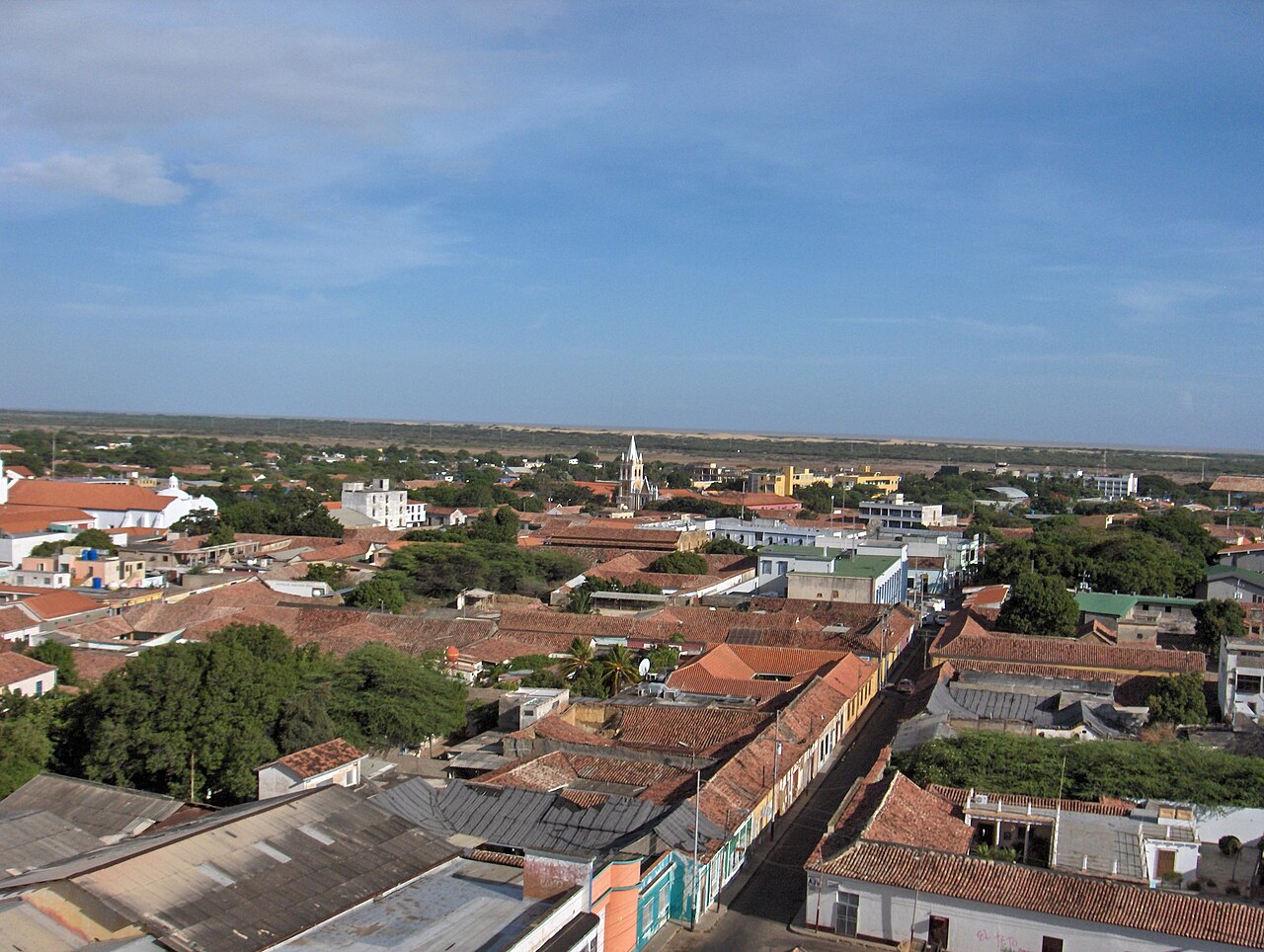
For two and a half centuries Venezuela was a backwater, split into provinces governed from Santo Domingo and later Bogotá. Only in 1777 did the crown create a Captaincy General of Venezuela seated in Caracas, the first recognition of Venezuela as a political entity.
From the 1620s cocoa was the main export, and its plantations created demand for enslaved Africans. By the late eighteenth century, the study says, mixed-race pardos were more than half of the people and enslaved Africans about 20 percent.
In 1728 the crown gave a Basque firm, the Caracas Company, exclusive trading rights to stamp out smuggling. Growers resented its low prices, and a revolt led by Juan Francisco de León in 1749 was crushed by troops from Spain.
Independence and the Bolívar Era (1810 to 1830)
Napoleon’s invasion of Spain in 1808 cut the link between Caracas and the crown. On 19 April 1810 the Caracas town council ousted the Spanish governor and set up a junta in the name of the captive King Ferdinand VII.
A congress declared independence on 5 July 1811. A constitution that December began the First Republic.
Venezuelans call it La Patria Boba, the Silly Republic. Its Caracas elite ignored the poor and the mixed-race majority, many of whom stayed loyal to the crown.
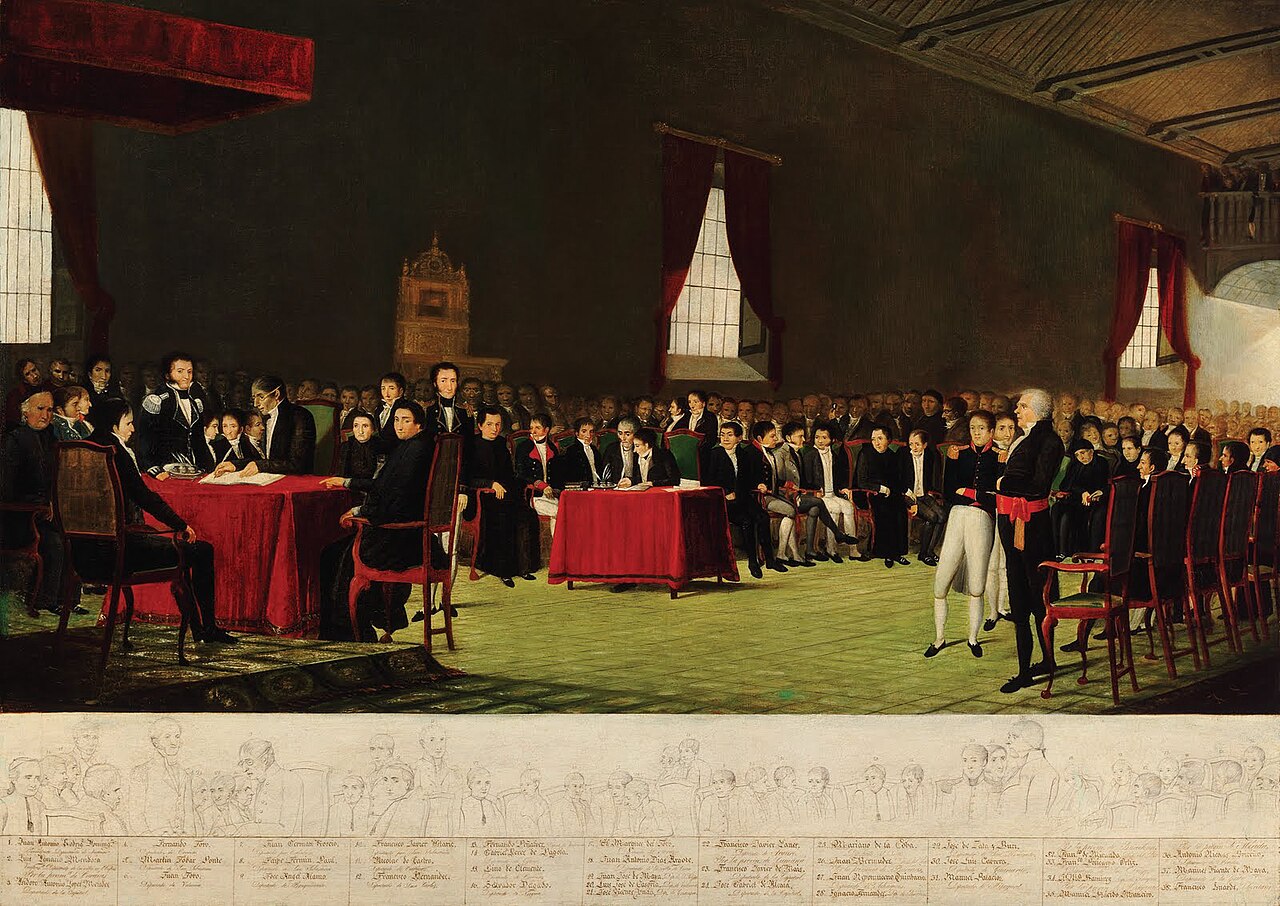
A major earthquake in March 1812 struck pro-independence towns and spared royalist ones, and on 25 July 1812 the republican commander Francisco de Miranda surrendered. Miranda died in a Spanish prison in 1816.
Simón Bolívar, born in Caracas in 1783 to an aristocratic creole family, took up the fight and proclaimed “war to the death” in 1813. His Second Republic fell in 1814 to the royalist chief José Tomás Boves, whose plainsmen saw the creole elite, not Spain, as the enemy.
Bolívar then allied with the plainsman José Antonio Páez, and the 1819 Congress of Angostura named him president. His victories at Boyacá in 1819 and Carabobo in June 1821 freed New Granada and Caracas.
Venezuela became part of Gran Colombia, governed from Bogotá, which many Venezuelans resented. Páez led the break around 1830, and Bolívar died that December, saying he had “plowed the sea”.
Two decades of war had killed between a quarter and a third of the people, estimated at about 800,000 in 1830. The United States recognised Venezuela on 28 February 1835 and opened diplomatic relations on 30 June 1835, the State Department historian records.
A Century of Caudillos and the Oil Dictator (1830 to 1935)
After 1830 power went to regional strongmen called caudillos, who competed to control the Caracas bureaucracy. Páez ruled with the creole elite for sixteen relatively peaceful years, helped by high coffee prices.
When coffee prices fell in the 1840s the elite split into Conservatives and Liberals, and the Monagas brothers ousted Páez in 1848. The study calls the abolition of slavery in 1854 their only noteworthy act.
The Federal War of 1858 to 1863 pitted local caudillos against each other, and the Liberals won. Antonio Guzmán Blanco then ran a dictatorship from 1870 to 1888 that brought peace, schools and railways, and a large personal fortune.
In 1899 Cipriano Castro marched on Caracas from the Andean state of Táchira and took the presidency. His rule provoked blockades and bombardments by British, German and Italian warships over foreign claims.
In 1908 his aide Juan Vicente Gómez seized power and held it until his death in December 1935. The “Tyrant of the Andes” relied on a loyal army and a secret police, and thousands of opponents were jailed.
Under Gómez foreign companies began pumping oil, which let him pay off the whole foreign debt. Most Venezuelans gained little, because oil created few jobs and imports pushed up food prices.
In 1928 students at the Central University rose against Gómez and were jailed or exiled. Several of that “generation of 1928”, including Rómulo Betancourt and Raúl Leoni, later led the country.
Oil, Democracy and the Punto Fijo Years (1935 to 1989)
Gómez’s death in 1935 closed the century of caudillos. Two successive presidents from Táchira eased his controls.
A 1943 law raised the state’s oil income. On 18 October 1945 Democratic Action and junior officers overthrew President Medina Angarita.
A 1946 decree gave every citizen over eighteen the vote, women included, and the novelist Rómulo Gallegos took office as president in February 1948. The army removed him in November 1948, and Marcos Pérez Jiménez ran a harsh dictatorship until 1958.
After the dictator Pérez Jiménez fled on 23 January 1958, the main parties agreed to share power under the Pact of Punto Fijo. The Library of Congress study says Betancourt’s inauguration in 1959 began a period of civilian democratic rule of unprecedented length.
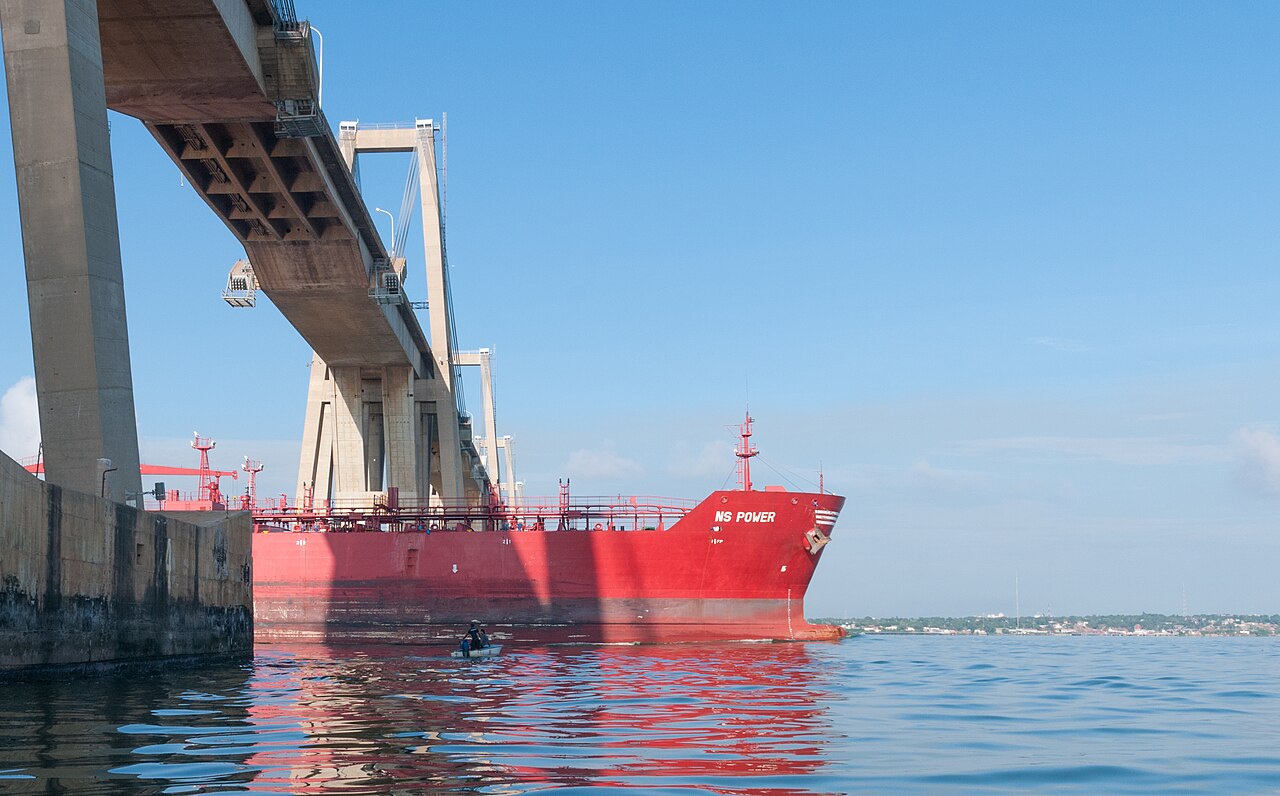
In 1960 Venezuela, with Kuwait, Saudi Arabia, Iraq and Iran, founded OPEC, an idea of oil minister Juan Pablo Pérez Alfonso. In March 1964 the presidential sash passed for the first time from one elected president to another.
The 1973 oil shock roughly quadrupled crude prices in two months. President Carlos Andrés Pérez spent the windfall freely.
Congress approved nationalisation in August 1975, with about US$1 billion paid to fourteen foreign firms. The state company Petróleos de Venezuela (PDVSA) took over.
Oil income then levelled off, and by 1983 outside analysts put the foreign debt at about US$32 billion. In February 1983 the government imposed exchange controls, and the study says disillusion with the political system began to grow.
Crisis, the Caracazo and the Rise of Chávez (1989 to 2013)
On 27 February 1989 riots over higher transport fares began in Guarenas and spread across Caracas. The Inter-American Court of Human Rights recorded 276 dead by official count, a figure later questioned when mass graves appeared.
In February 1992 Lieutenant Colonel Hugo Chávez led a failed coup against President Carlos Andrés Pérez and spent two years in prison before a pardon. He founded the Bolivarian Revolutionary Movement and was first elected president in 1998.
In 1999 Venezuela adopted a new constitution under Chávez. The charter created a single-chamber legislature, set a six-year presidential term and renamed the country the Bolivarian Republic of Venezuela.
On 11 April 2002 mass protests and military pressure removed Chávez for a brief period, after at least 18 people died. The military restored him, and from December 2002 to February 2003 an opposition strike cut oil exports and the government fired thousands of PDVSA staff.
On 15 August 2004 a recall referendum kept Chávez in office by 59.3 percent to 40.7 percent. It followed a May 2003 accord facilitated by the OAS and the Carter Center.
Chávez won re-election in December 2006 with 62.87 percent. He narrowly lost a constitutional reform vote in December 2007 and conceded.
Rising oil prices paid for social programmes and made Chávez popular among the poor. Critics, including US officials and human rights groups, said democratic institutions weakened.
The Congressional Research Service links the later fall in oil output partly to the firing of technocrats after the 2002 strike. It also cites Chávez’s failure to save oil profits and his habit of taking on debt.
Chávez died in March 2013 after governing since 1999. Nicolás Maduro, whom Chávez had named vice-president in October 2012, became acting president.
Maduro, Collapse and Exodus (2013 to 2024)
Maduro narrowly beat opposition candidate Henrique Capriles in April 2013. The opposition alleged significant irregularities.
In December 2015 the opposition won two-thirds of the National Assembly. The pro-government Supreme Court blocked three of its deputies and later took over the legislature’s functions.
Clashes between protesters and security forces left more than 130 people dead in 2017, the Congressional Research Service says. That July the government elected a 545-member Constituent Assembly despite an opposition boycott.
Most Venezuelans and much of the international community called Maduro’s May 2018 re-election illegitimate. The Congressional Research Service says the vote was minimally competitive and held amid state repression.
In January 2019 National Assembly president Juan Guaidó took an oath as interim president. The United States and nearly 60 countries recognised him, the Congressional Research Service says.
US sanctions hit the state oil company in January 2019, adding to the effects of mismanagement. The economy shrank by about 75 percent from 2014 to 2021, according to International Monetary Fund figures cited by the Congressional Research Service.
The World Bank series puts output at about US$99.7 billion in 2025, against about US$371.8 billion in 2012, though exchange-rate swings distort such comparisons. By August 2026 the regional response platform for Venezuelan refugees and migrants counted 6,978,009 Venezuelan refugees and migrants in Latin America and the Caribbean.
The 2024 Election and the Road to 2026
A deal signed in Barbados in October 2023 promised a fair 2024 vote. The Supreme Court nonetheless upheld a ban on opposition leader María Corina Machado.
Machado had won the opposition primary with 93 percent. Edmundo González Urrutia ran in her place.
Venezuelans voted on 28 July 2024, and the next day the electoral council, the CNE, said Maduro won with 51.2 percent against 44.2 percent for González. It did not publish results by polling station, and the opposition’s own tallies showed González with 67 percent.
The Carter Center, which had been invited to observe, said the vote did not meet international standards and could not be considered democratic. In October 2025 the Nobel Committee gave Machado the Peace Prize for her work for democratic rights and a peaceful transition from dictatorship to democracy.
On 3 January 2026 US forces seized Maduro and his wife, Cilia Flores, in Caracas in what the White House calls Operation Absolute Resolve. Both pleaded not guilty in a New York federal court on 5 January, and Maduro said he had been kidnapped.
The Supreme Court’s constitutional chamber let Vice-President Delcy Rodríguez act as president. The Venezuelan lawyer José Ignacio Hernández argued this broke the constitution’s rules on presidential absence.
Rodríguez told the UN General Assembly on 23 September 2026 that Venezuela will hold elections. She named no date.
A White House fact sheet of 31 August 2026 describes 100-year concessions on 17 oil fields for a private firm, North American Blue Energy Partners. The US government would hold a 35 percent stake in the firm’s parent company, it says.
The fact sheet says a new Venezuelan hydrocarbons law, adopted with US support, governs those concessions. It also says the United States sponsors talks between the 2015 National Assembly and the interim authorities.
It credits the talks with judicial reforms and the release of hundreds of political prisoners. The sources reviewed here do not confirm those claims.
How the Past Shapes Venezuela Now
Oil explains most of the pattern. The Library of Congress study ties the post-1958 democracy to oil wealth, and mismanagement, falling output and sanctions fed the crisis after 2013.
The second pattern is the strongman and the barracks, from Páez and Gómez to Chávez and Maduro. The civilian decades after 1958 are the long exception.
The third pattern is the national myth of Bolívar. Chávez often invoked the Liberator, and in 1999 he renamed the country the Bolivarian Republic of Venezuela.
A border question reaches back to 1899, when an arbitral award fixed Venezuela’s frontier with what is now Guyana. Venezuela disputes that award, and the International Court of Justice held hearings on the merits from 4 to 11 May 2026.
The court’s case page showed no judgment as of 17 October 2026. A ruling would shape the long dispute over the Essequibo region.
What It Means for US Readers
For investors, Venezuelan oil is again a US policy matter. Treasury licences change often, and a September 2026 notice from the Office of Foreign Assets Control amended a general licence.
For travellers, the State Department publishes a travel advisory for Venezuela that should be read before any plan. The country’s politics remain unsettled, and conditions can change quickly.
For families and employers, the 6,978,009 Venezuelans counted abroad in August 2026 matter for US immigration policy. They also shape labour markets in neighbouring countries such as Colombia, Peru and Brazil.
For anyone following the courts, the Manhattan case against Maduro is set for trial on 1 June 2027, the Irish Times reported after a hearing on 22 July 2026. A defence lawyer told the judge he would seek dismissal on the ground that Maduro is immune as a head of state.
What Prediction Markets Say
On Polymarket, traders gave a 9.5% chance that Venezuela schedules a presidential election by 31 December 2026 (17 October, 9:22 a.m. ET). That contract had traded about US$148,000 in volume, and its price slipped about one point in the previous day.
Earlier contracts in the same series, for a date set by 31 January and by 31 March 2026, expired unmet after trading about US$305,000 and US$187,000. These are bets, not polls, and they price an announced date, not the vote itself.
Why we show this: prediction markets turn real-money bets into a live probability that moves within minutes of the news, which is why investors, campaigns and newsrooms in the United States now follow them closely. We show them next to polls and official results, never instead of them.
What Is Not Known
It is not known when Venezuela will hold a presidential election, because no date had been announced as of 17 October 2026. Nor is it clear whether Rodríguez’s interim mandate has a legal end date, a point her critics dispute.
The full death toll of the Caracazo is uncertain, since the court recorded 276 deaths by official count and noted later mass graves. The number of political prisoners released in 2026 comes from the US government and has not been confirmed here.
The Venezuelan government’s own account of the 2026 oil concessions was not reviewed, so their terms rest on the White House description. The date and content of any International Court of Justice ruling on the Essequibo are also unknown.
Historians still debate the size of the Indigenous population before 1498 and how many people died in the independence wars. Whether the court accepts Maduro’s immunity argument, and what role Machado will play in any vote, also remain open.
Connected Coverage
- Venezuela Explained: The Transformation, the Oil Economy and What to Watch
- Who Is Nicolás Maduro? Venezuela’s Deposed Leader and His 2027 US Trial Explained
- Who Is María Corina Machado? Venezuela’s Nobel Laureate, Her Record and What Comes Next
- Who Dominates Venezuela, Elites and Regions Explained
- Venezuela Geopolitics Explained, US Now Runs Its Oil
- Who Runs Venezuela’s Economy, the Key Players in 2026
- More Venezuela coverage from The Rio Times
Frequently Asked Questions
When did Venezuela become independent?
Venezuela declared independence from Spain on 5 July 1811, but royalist forces crushed the First Republic and the fight lasted until the Battle of Carabobo in June 1821. It left Gran Colombia and became a separate republic around 1830.
Who was Simón Bolívar?
Bolívar, born in Caracas in 1783, led the campaigns that freed Venezuela and New Granada and carried the fight on to Ecuador, Peru and Bolivia. He died in December 1830, and Venezuela later named itself the Bolivarian Republic in his honour.
How did oil change Venezuelan history?
Foreign companies began pumping oil under the dictator Juan Vicente Gómez, and the 1973 price shock sent the state’s income soaring. Congress approved nationalisation in August 1975, and the state company PDVSA took over.
What was the Caracazo?
It was a wave of riots that began in Guarenas on 27 February 1989 over higher transport fares and spread across Caracas. The Inter-American Court of Human Rights recorded 276 deaths by official count, and later mass graves cast doubt on that number.
Who runs Venezuela now?
Delcy Rodríguez, Maduro’s former vice-president, has been acting president since January 2026. No presidential election date had been announced as of 17 October 2026.
What happened in the 2024 election?
The electoral council said Maduro won with 51.2 percent against 44.2 percent for Edmundo González Urrutia. It never published results by polling station, and the Carter Center said the vote could not be considered democratic.
Sources: Library of Congress, Venezuela: A Country Study, History chapters (1990); US Department of State, Office of the Historian, Venezuela; Congressional Research Service, Venezuela: Political Conditions and US Policy, 2003-2009; Congressional Research Service, Venezuela: Background and US Relations; Congressional Research Service, Venezuela: Political Crisis and US Policy, 24 May 2019; Congressional Research Service, Venezuela’s 2024 Presidential Election; Inter-American Court of Human Rights, Case of the Caracazo v. Venezuela, judgment of 29 August 2002; The Carter Center, statement on the Venezuela election, 30 July 2024; Nobel Prize, Peace Prize 2025; Courthouse News, Maduro arraignment, 5 January 2026; The Irish Times, trial date, 22 July 2026; I•CONnect, José Ignacio Hernández, 5 January 2026; UN News, Delcy Rodríguez at the General Assembly, 23 September 2026; The White House, fact sheet, 31 August 2026; International Court of Justice, Arbitral Award of 3 October 1899 (Guyana v. Venezuela); World Bank, GDP (current US$), Venezuela; Regional response platform, refugees and migrants from Venezuela, August 2026; US Treasury OFAC, recent actions, 16 September 2026. Market data from Polymarket public listings. All accessed 17 October 2026.
This article was produced by The Rio Times’ automated newsroom system. How we use AI · Report an error · Editorial responsibility: Matthias Camenzind, Editor-in-Chief
Expat Guide to Venezuela
What The Rio Times publishes for foreigners who live in or move to Venezuela.
Start here
- Healthcare in Venezuela for Expats: Clinics, Insurance and the Private Option
- Taxes in Venezuela for Expats: What Foreigners Pay During the Transformation
- Venezuela Visa and Residency 2026, Entry Rules and Steps
- Spain and Portugal Close Their Golden Visa Doors, Forcing LATAM Investors to Reroute
Understand Venezuela