Venezuela’s military response to a perceived UK threat marks a significant moment in the ongoing Esequibo region dispute.
The Venezuelan National Bolivarian Armed Forces (FANB) intensified their military activities following the approach of the British naval vessel HMS Trent near Guyanese waters.
This region has been at the heart of a longstanding territorial dispute between Venezuela and Guyana.
President Nicolás Maduro led these defensive measures, focusing on Venezuela’s sovereignty.
He deployed over 5,600 military personnel in the General Domingo Sifontes Joint Military Exercise, targeting the Eastern Caribbean and the Venezuelan Atlantic facade.
Maduro views the UK’s actions as provocative and unacceptable, reflecting his commitment to national sovereignty.
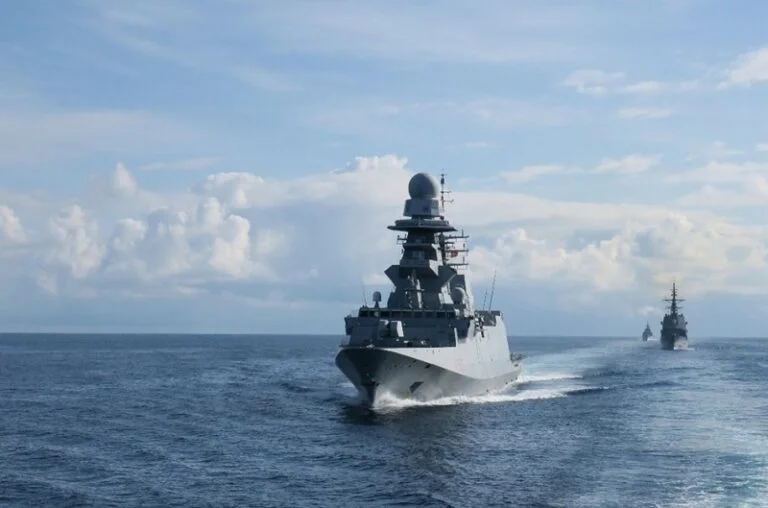
Domingo Hernández Lárez, Chief of the FANB’s Strategic Operational Command, has been overseeing these exercises.
His focus has been on assessing the readiness and cohesion of the forces to respond effectively to threats.
Vice President Delcy Rodríguez also condemned the UK’s involvement, underscoring the need to adhere to the Argyle Declaration.
This agreement, promoting peaceful dispute resolution, excludes external military threats in the Guyana-Venezuela conflict.
The escalation of military tensions, particularly around the resource-rich Esequibo region, has attracted international attention.
This situation underscores the delicate balance of regional diplomacy and the importance of international peace agreements.
In contrast, as a global power and NATO member, the UK’s military capabilities surpass those of Venezuela.
The UK’s advanced naval fleet and air force, backed by a larger defense budget and training facilities, starkly contrast with Venezuela’s more regionally focused and resource-limited military.
While the UK can leverage global military alliances through NATO, Venezuela’s alliances remain predominantly regional, emphasizing local defense over global military presence.
More: Venezuela news in English, every day from The Rio Times.
This article was produced by The Rio Times’ automated newsroom system. How we use AI · Report an error
Read More from The Rio Times