The UN Sees Venezuela Growing 6.5% in 2026 — With 385% Inflation
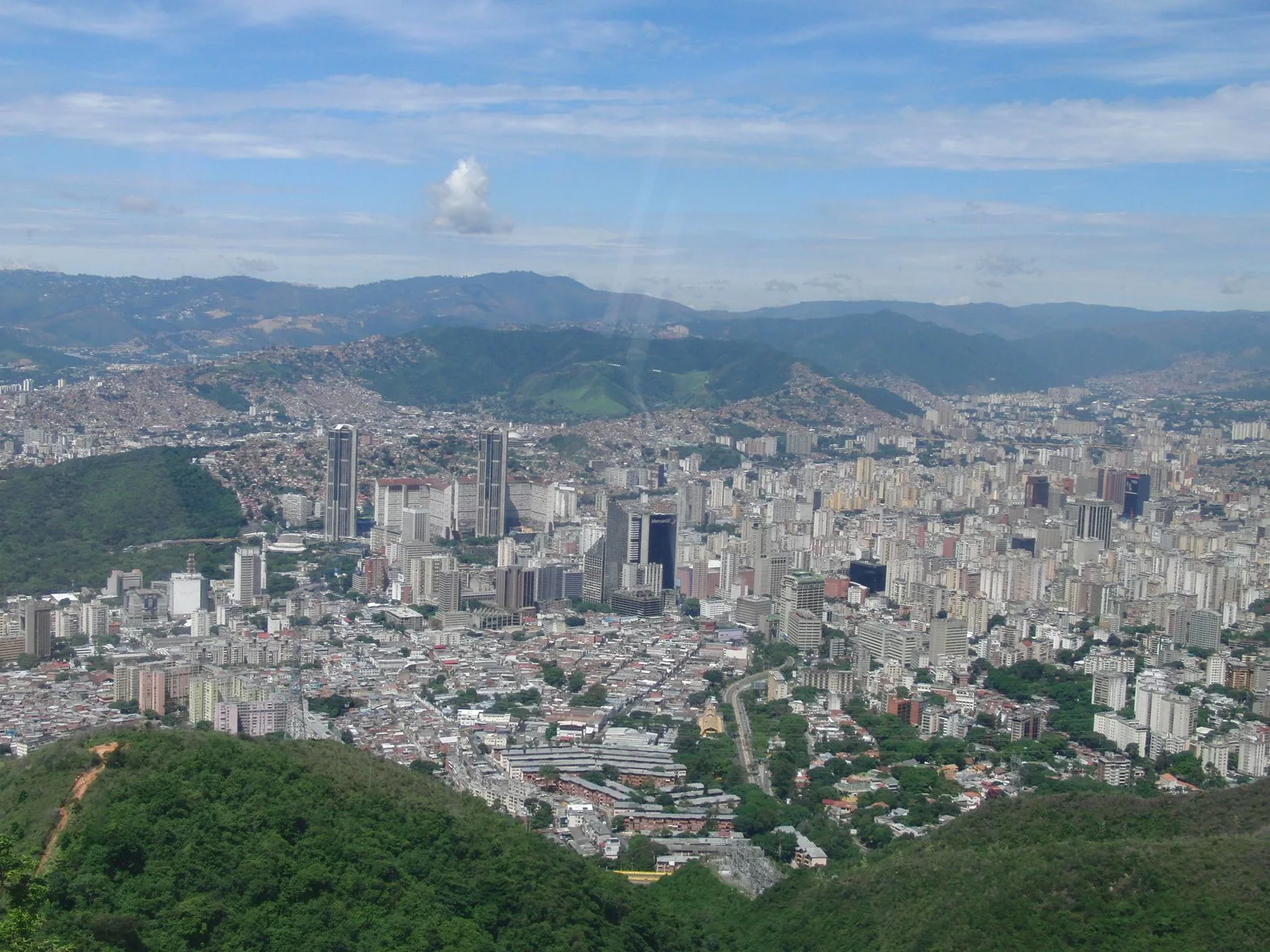
The real story isn’t whether Venezuela grows next year — it’s whether that growth can outpace the cost of living. For anyone holding bolivars or considering a move, the gap between GDP and prices is what actually shapes daily budgets and business margins.
If you’re watching Venezuela’s 2026 growth numbers, you’ve probably seen a tidy figure like 6.5%. You might have thought: that’s solid.
But here’s the catch — that same forecast also says prices will rise by roughly 385%. So while the economy is expanding on paper, your money’s purchasing power is still being chewed up at a brutal clip.
The UN Development Programme’s projection, cited in mid-August, already accounts for a 0.5-point hit from the June 24 earthquakes. Other shops — Oxford Economics, Ecoanalítica, Americas Quarterly — all land within a whisker of that growth rate.
But their inflation calls swing widely. That spread is where the real risk lives.
Key Facts
- UNDP Call The UN Development Programme sees Venezuela’s 2026 GDP expanding near 6.5%, with inflation around 385%.
- Quake Hit That forecast already trims 0.5 percentage points off growth due to the June 24 earthquakes.
- Oxford View Oxford Economics is a touch cooler at 6.3% growth and 303% end-2026 inflation.
- Ecoanalítica Range The local firm puts growth between 5.8% and 6.6%, with inflation from 251.5% to 361.4%.
- AQ Estimate Americas Quarterly’s revised figure lands at 5.8% growth, with inflation likely near 350%.
- No Consensus All major forecasters cluster in a 5.8%–6.6% band, but inflation estimates diverge by more than 100 points.
Venezuela’s 2026 growth: the numbers that matter
Let’s start with the headline. The UNDP sees GDP up about 6.5% in 2026, with inflation at 385%.
That’s not a typo — you read that right. The quakes shaved half a point off the growth estimate.
That tells you the disaster had a measurable but contained economic impact. Oxford Economics is slightly more conservative at 6.3% growth and 303% inflation.
Ecoanalítica offers two scenarios. A conservative one is 5.8% growth with 251.5% inflation.
A heterodox one is 6.6% growth with 361.4% inflation. Americas Quarterly’s revised estimate sits at 5.8% growth.
Inflation will likely end the year around 350%.
Notice the pattern: growth estimates are remarkably tight, all between 5.8% and 6.6%. That’s a narrow band for a country that’s been through hyperinflation and sanctions.
But inflation is a different beast — the gap between the lowest call (251.5%) and the highest (385%) is over 130 percentage points. That’s not a rounding error.
That’s the difference between prices doubling every few months versus every few weeks. For anyone budgeting in bolivars, that spread is existential.
Why you should care even if you’re not in Caracas
If you live in Latin America or have money parked in the region, Venezuela’s numbers ripple outward. The country’s oil exports, remittances, and informal trade touch Colombia, Brazil, and the Caribbean.
A 6% growth year means more imports and more cross-border commerce. It also means more pressure on neighboring currencies as Venezuelans spend abroad.
Conversely, 300%+ inflation means continued migration pressure and humanitarian strain. Those factors affect regional labor markets and public finances from Bogotá to Boa Vista.
For investors, the takeaway is simpler: don’t confuse GDP growth with stability. A 6.5% expansion in a country with 385% inflation is not the same as 6.5% growth in, say, Chile or Peru.
Real returns get obliterated by price increases. If you’re considering any exposure — bonds, equities, or real estate — the inflation forecast matters more than the growth figure.
The quakes add another layer of uncertainty. That is especially true for infrastructure and logistics in affected regions.
What the forecasters agree on — and where they split
All four sources agree on one thing: Venezuela will grow next year. It will also still have triple-digit inflation.
That’s a remarkable consensus for a country where data is often patchy and politically charged. The growth band — 5.8% to 6.6% — suggests the recovery is real but not explosive.
It’s not a boom. It’s a slow climb from a very low base, interrupted by natural disasters and policy uncertainty.
The inflation split is more telling. Oxford’s 303% and Ecoanalítica’s 251.5% imply some confidence in monetary tightening or dollarization gains.
The UNDP’s 385% and AQ’s 350% suggest those efforts are failing or incomplete. The truth probably lies somewhere in between.
But the range itself is the story: nobody really knows how fast prices will rise. That uncertainty is baked into every business decision, every salary negotiation, and every import contract.
The quake effect and what comes next
The June 24 earthquakes cost Venezuela half a point of GDP growth in the UNDP model. That’s not catastrophic, but it’s not trivial either.
Reconstruction costs, disrupted supply chains, and damaged infrastructure will linger into 2026. Oxford Economics also trimmed its forecast post-quake.
That suggests the disaster is a known quantity — but the long-term effects on investor confidence and public finances are harder to model.
For you, the practical question is: what does this mean for your money or your plans? If you’re a nomad thinking about spending a few months in Venezuela, the growth numbers are irrelevant.
What matters is whether you can get dollars and whether prices are stable enough to plan a week ahead. If you’re an investor, the inflation spread should make you cautious.
A 6.5% growth rate with 385% inflation is not an opportunity. It’s a warning.
The recovery is real, but it’s fragile. The earthquakes have only added to the fragility.
Sources: UN Development Programme (UNDP); Oxford Economics; Ecoanalítica; Americas Quarterly, August 2026.
Frequently Asked Questions
Is Venezuela’s economy really growing at 6.5%?
That’s the UNDP’s central forecast for 2026. Other major forecasters agree within a narrow band — Oxford Economics says 6.3%, Ecoanalítica ranges from 5.8% to 6.6%, and Americas Quarterly cites 5.8%.
So yes, the consensus is that Venezuela will grow next year. But that growth comes from a very low base and amid still-crippling inflation.
Why is inflation so much higher than growth?
Inflation and GDP are different measures. GDP tracks the value of goods and services produced.
Inflation tracks how fast prices rise. Venezuela’s economy is partially dollarized.
But the bolívar still dominates domestic transactions, and monetary policy has not fully tamed price increases. So you can have a growing economy and still see the cost of living surge by 300% or more.
How did the June 24 earthquakes affect the forecasts?
The UNDP cut its 2026 growth estimate by 0.5 percentage points because of the quakes. Oxford Economics also trimmed its forecast.
The disasters damaged infrastructure and disrupted supply chains. The overall impact on GDP appears modest.
The bigger risk is long-term, in terms of reconstruction costs and investor confidence.
In depth
This article was produced by The Rio Times’ automated AI newsroom. Editorial responsibility: Matthias Camenzind, Publisher and Editor-in-Chief. The Rio Times also runs Ask Rio Times, which answers from 100,000+ of our own articles, the daily Latin America Power Map, and prediction-market odds on elections and markets.. How we use AI · Report an error
Venezuela and the United States
- What Is Going On Between Venezuela and the United States?
- What Is Going On Between Venezuela and the United States?
- Venezuela Geopolitics Explained, US Now Runs Its Oil
- Venezuela Politics 2026, Who Holds Power After Maduro