Brazil’s Vale Output Jumps as Government Pushes Into Board
Brazil · Companies
Key Facts
—Q2 iron ore output. Vale produced roughly 85 million metric tons, a sharp quarterly recovery driven by Capanema and Vargem Grande volumes.
—Cost pressure. Analysts at Citi project a 14% drop in net profit to about US$1.8 billion, with high costs eating into revenue gains.
—Government nominee. The Brazilian government formally nominated a candidate for Vale’s board of directors, reviving a long-running governance debate.
—Shareholder lens. The production beat supports the dividend story, while the board nomination raises questions about strategic independence.
—Next catalyst. Full second-quarter financial results are scheduled for release on July 30, 2026, after the market closes.
Vale delivered a double-barreled news day for shareholders on Monday, posting a solid recovery in iron ore production just as the Brazilian government renewed its push for a seat in the company’s boardroom.
Production Recovers, Costs Do Not
The world’s second-largest iron ore miner extracted roughly 85 million metric tons in the second quarter, according to analyst estimates compiled by Citi.
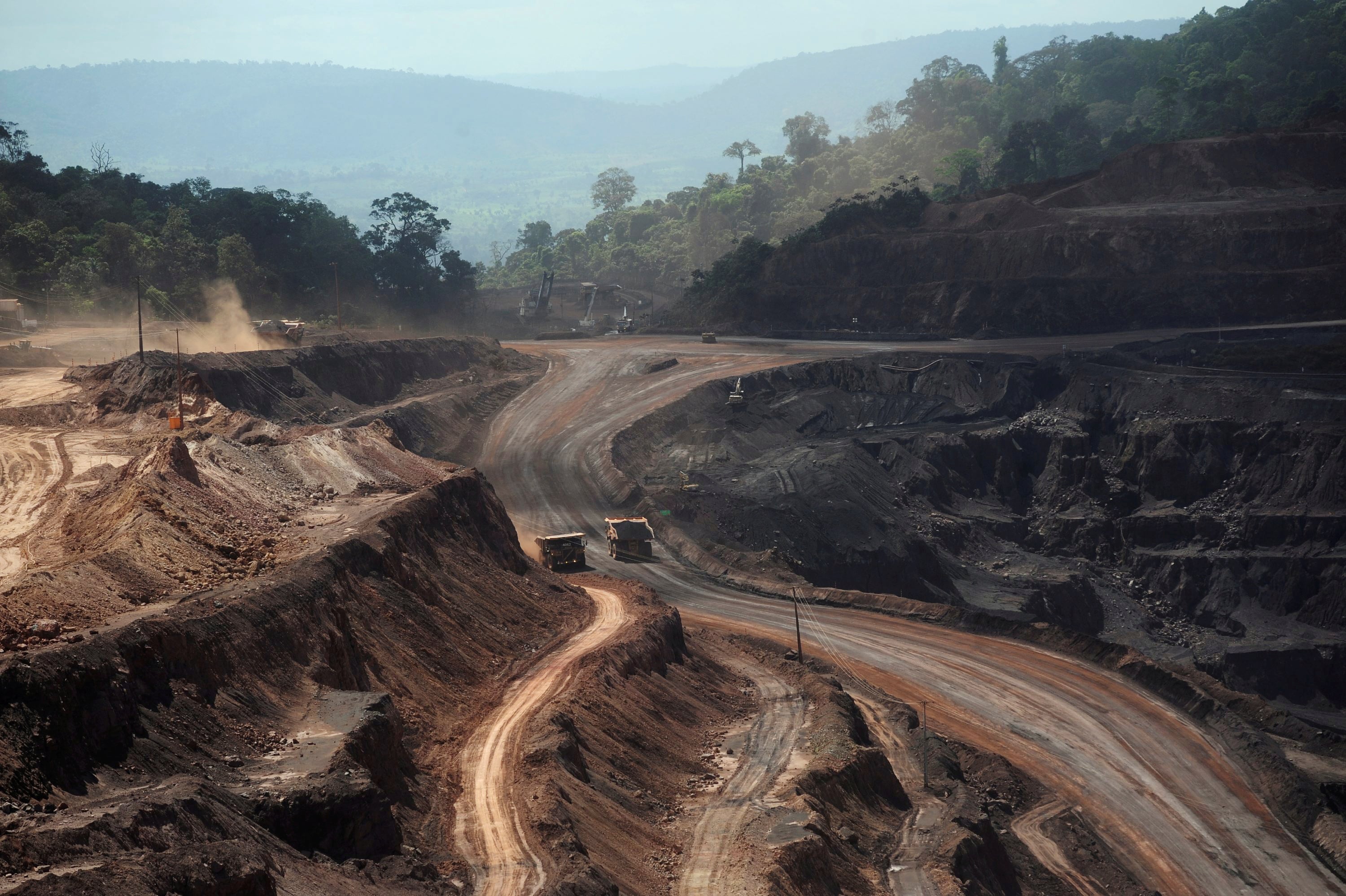
That marks a brisk rebound from the first quarter, fueled by additional volumes from the Capanema and Vargem Grande complexes in Minas Gerais.
The production beat is a welcome sight for foreign investors who track Vale through its New York-listed ADRs, which let overseas shareholders trade the stock in dollars.
More tons in the ground typically translate into stronger free cash flow and, eventually, fatter dividends.
Yet the cost side of the ledger tells a trickier story.
Citi’s preview warns that stubbornly high operating expenses will likely push net profit down 14 percent year-on-year, to roughly US$1.8 billion, even as revenue gets a lift from higher sales volumes.
Adjusted EBITDA is expected to land near US$3.8 billion, a healthy 15 percent jump from a year ago but no blowout.
For a shareholder, the math is straightforward: revenue is growing, but costs are growing faster, squeezing the margin that funds buybacks and payouts.
Those costs reflect a mix of global inflationary pressures and local realities, including higher diesel prices and the expense of moving ore over longer distances as older pits are depleted.
Foreign readers accustomed to quarterly reports from BHP or Rio Tinto will recognize the pattern: a volume recovery is only half the story if the cost per ton refuses to budge.
The Boardroom and Vale’s Governance
On the very same day, Brasília formally nominated a candidate for Vale‘s board of directors, reopening a sensitive chapter in the miner’s governance.
The move is a reminder that the Brazilian state, though no longer a controlling shareholder after the landmark 1997 privatization, still wields influence through its golden share and political heft.
For a foreign portfolio manager, the nomination revives a familiar question: will the board prioritize shareholder returns or national industrial policy?
Vale‘s management has spent years convincing the market that it is a commercially driven company, not a tool of the state, pointing to its disciplined dividend policy and asset divestments as proof.
A government-appointed director does not automatically derail that thesis.
But it does mean that capital allocation decisions will face an extra layer of scrutiny from a stakeholder with non-commercial goals, such as job creation or subsidized steel for domestic industry.
The golden share gives Brasília veto power over certain strategic decisions, including a change in control.
Adding a direct board voice amplifies that influence, even if the government holds only a small direct equity stake through development bank BNDES and other state-linked entities.
Live Company IntelligenceVale SA ADR — the full investor dossier
Wall Street view
Valuation & profitability
Price & risk
$10.5952-wk high
$17.44
Revenue trend · 6y
Ownership
Dividend
What the Twin Signals Mean for Shareholders
Taken together, the two developments pull an investor in opposite directions.
The operational update is a quiet green light: Vale can still dig, ship, and generate cash even in a choppy commodity cycle.
The boardroom news is a yellow flag that requires watching, not panic.
Governance battles in Brazil tend to move slowly, and a single nominee does not shift the balance of a 13-member board overnight.
The practical takeaway for a shareholder is to keep an eye on the July 30 earnings call.
That is when executives will have to address both the cost trajectory and the government’s renewed presence at the table.
For expats and foreign retirees holding Brazilian stocks, the governance angle matters beyond Vale itself.
It is a litmus test for how much political interference large, state-adjacent companies in Latin America still face, a factor that can shape the risk premium across the entire B3 exchange.
Background: A Giant in the Global Iron Trade
To understand why these two headlines matter, it helps to step back and see what Vale actually is.
Headquartered in Rio de Janeiro, the company is the world’s largest producer of iron ore and nickel, and a major supplier of copper, with mines stretching from the Carajás complex in the Amazon to operations in Canada and Indonesia.
Iron ore is the company’s financial engine, accounting for the vast majority of its revenue.
That ore travels by rail and ship to steel mills, overwhelmingly in China, making Vale a direct play on global infrastructure spending and the health of the Chinese economy.
The 1997 privatization was a watershed moment, designed to free the company from political patronage and unlock shareholder value.
Yet the golden share and periodic board nominations show that the divorce between Vale and the Brazilian state was never entirely complete.
What Happens Next
Analysts will sharpen their pencils when the full second-quarter numbers land after the market closes on July 30.
The key figure to watch is the all-in cost per ton, which will reveal whether the production recovery is actually flowing through to the bottom line.
On the governance front, the nomination will follow the standard corporate calendar, with a shareholder vote likely months away.
Foreign investors, who hold a large chunk of Vale‘s freely traded shares, will have a say in whether that seat is filled.
For now, the story is one of a mining giant doing what it does best while its oldest political dance partner asks for another turn.
Neither thread is resolved today, but both are now firmly on the radar of anyone holding the stock.
More: Brazil news in English, every day from The Rio Times.
Frequently Asked Questions
When does Vale report full Q2 2026 results?
Vale will publish its complete second-quarter 2026 financial results on July 30, 2026, after the market closes. The release will include detailed income statements, cash flow figures, and management commentary on both operational performance and the cost outlook.
Why is the Brazilian government nominating a board member?
The government retains a golden share and significant political interest in Vale, and it periodically seeks direct board representation to influence strategic decisions. The golden share, a legacy of the 1997 privatization, grants Brasília veto power over certain matters, and a board seat would give it an additional voice in areas such as dividend policy, major investments, and the pace of asset sales.
What does the production recovery mean for dividends?
Higher iron ore volumes generally support stronger free cash flow, which is the pool of money Vale uses to pay shareholder dividends and fund buybacks. However, investors should watch the cost figures on July 30 closely, because if expenses remain elevated, the extra revenue from higher output may not fully translate into the surplus cash that underpins generous payouts.
Connected Coverage
São Paulo Daily Brief — Wednesday, July 22, 2026
Brazil Markets: Ibovespa & the Real — July 22, 2026
Sources: Vale’s Q2 2026 production and sales report; Citi analyst estimates.
This article was produced by The Rio Times’ automated newsroom system. How we use AI · Report an error · Editorial responsibility: Matthias Camenzind, Editor-in-Chief
Brazil runoff, Sunday, October 25: Brazil runoff: date, poll closing times and when results start. Latest: Brazil runoff polls, Flávio 51%, Lula 49%.