US Senate Approves AGOA Extension Until End of 2028
United States · TRADE
Key Facts
—Senate approval: The US Senate voted 90–6 on 8 August 2026 to pass H.R. 6500, which it amended into a government-funding measure that extends the African Growth and Opportunity Act through 31 December 2028; because the Senate changed the bill, it returns to the House for a concurrence vote before it can become law.
—Eligible countries: AGOA currently covers 33 eligible sub-Saharan African countries, granting duty-free access for thousands of products.
—Legislative timeline: AGOA lapsed on 30 September 2025, received a one-year extension to 31 December 2026 in February 2026, and now faces a three-year extension to 31 December 2028.
—Duty refunds: The bill provides for refunds of duties on eligible goods entered after 30 September 2025 and before enactment, covering the period when AGOA had lapsed.
—Apparel provisions: The extension preserves the third-country fabric provision, allowing some apparel made in beneficiary countries using non-AGOA yarns and fabrics to qualify for duty-free access.
—Great-power context: Africa holds about 30 percent of the world’s critical minerals, and lawmakers increasingly frame AGOA as a tool to compete with China for African markets and supply chains.
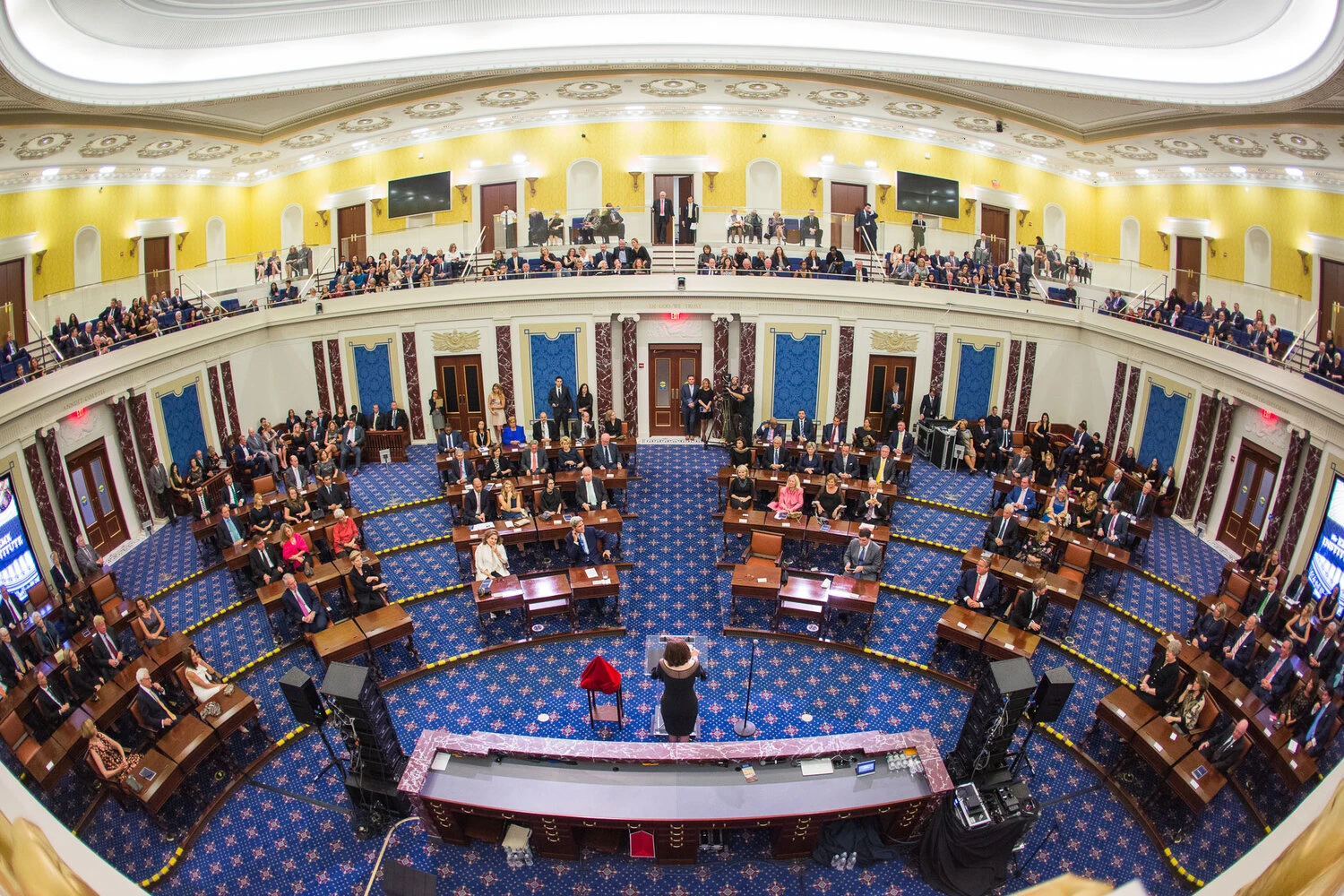
The US Senate approved a bill extending the African Growth and Opportunity Act through 31 December 2028, restoring three years of trade-preference certainty for 33 eligible sub-Saharan African countries after the programme lapsed in late 2025.
What the AGOA extension bill actually does
The Senate-approved bill extends duty-free treatment under the African Growth and Opportunity Act through 31 December 2028. It also extends duty-free treatment under the Generalised System of Preferences for beneficiary sub-Saharan African countries.
The legislation preserves AGOA’s apparel preferences and the third-country fabric provision, which allows some apparel made in beneficiary countries using non-AGOA yarns and fabrics to still qualify for duty-free access. It also provides for refunds of duties on eligible goods entered after 30 September 2025 and before enactment, covering the period when AGOA had lapsed.
The House of Representatives passed the three-year extension (H.R. 6500) on 12 January 2026 by 340–54. Because the Senate amended the bill on 8 August, it now returns to the House for final approval before reaching the president’s desk.
A timeline of uncertainty for African exporters
AGOA was first enacted in 2000 and most recently extended in 2015, when Congress prolonged it to September 2025. When that deadline arrived on 30 September 2025, the programme lapsed, leaving exporters and logistics firms in limbo.
In February 2026, Congress and the president enacted a one-year extension to 31 December 2026, retroactive to the lapse date. Reuters described that short-term fix as a temporary reprieve rather than a durable settlement.
The current three-year extension to 31 December 2028, now approved by the Senate, aims to give businesses a longer planning horizon. For apparel manufacturers placing orders months in advance and for investors deciding whether to finance factories in Africa, that certainty matters directly to the bottom line.
Why the AGOA extension is about more than tariffs
AGOA has shifted from a largely technocratic trade preference into a strategic instrument of great-power competition. The core question is no longer only whether Africa gets tariff-free access, but whether Washington is willing to use trade policy as a long-term geopolitical tool.
China is the main comparator in the background. Analysts and congressional supporters increasingly frame AGOA as part of a US effort to compete with Beijing for African markets, manufacturing links, and critical minerals.
Africa holds about 30 percent of the world’s critical minerals, a fact often used to explain why Washington sees commercial policy as strategic policy. Some lawmakers have pushed versions of the bill that would use eligibility criteria to reward countries seen as aligned with US interests and penalise those closer to China or Russia.
South Africa and the geopolitics of eligibility
For South Africa, the issue has been especially sensitive. Pretoria is a major AGOA beneficiary but also a geopolitical outlier in Washington’s eyes due to its relations with Russia and China.
Reuters and other sources have described uncertainty over South Africa’s standing in the programme amid strained bilateral ties. In January 2026, South Africa welcomed the House approval of the AGOA renewal, signalling how much the programme matters for its export sectors.
The programme has also become entangled in the Trump administration’s broader “America First” trade posture. The one-year extension in February 2026 was widely read as a signal that Washington was keeping its options open on which countries would remain eligible.
What the AGOA extension means for business and investment
AGOA matters because it can materially affect export margins in labour-intensive sectors. The programme offers duty-free access for thousands of products from eligible countries, supporting jobs and investment across the continent.
In business terms, the extension reduces near-term policy risk for exporters, logistics firms, and investors deciding whether to place orders, finance factories, or shift sourcing into Africa. The apparel sector has been particularly dependent on AGOA, using US market access to support export-led manufacturing.
The wider contest over trade influence, industrial supply chains, and geopolitical alignment in Africa is reshaping how programmes like AGOA are debated in Washington. As covered in our pillar Africa: The New Scramble, the continent’s resources and markets are at the centre of a new global competition.
What to watch next on the AGOA extension
The Senate vote is a significant step, but the bill must still complete the remaining legislative process before it becomes law. African governments and businesses will be watching closely for any amendments that might tighten eligibility criteria.
The key date to watch is 31 December 2026, when the current one-year extension expires. If the three-year bill is not enacted by then, AGOA would lapse again, throwing trade flows back into uncertainty.
African governments are also trying to balance access to the US market against ties with China, Russia, and other partners. How they navigate that balancing act will shape which countries remain eligible and which lose their preferential access.
Frequently Asked Questions
What is the AGOA extension and how long does it last?
The AGOA extension is a US Senate-approved bill that extends the African Growth and Opportunity Act through 31 December 2028, restoring three years of duty-free trade preferences for 33 eligible sub-Saharan African countries.
Which countries benefit from AGOA?
AGOA currently covers 33 eligible sub-Saharan African countries, granting duty-free access for thousands of products, with the apparel sector being a particularly important beneficiary.
What happens if the AGOA extension is not enacted by the end of 2026?
If the three-year bill is not enacted by 31 December 2026, AGOA would lapse again, throwing trade flows and investment decisions back into uncertainty for African exporters and their US buyers.
Connected Coverage
For deeper analysis of how trade, critical minerals and great-power rivalry are reshaping the continent, read our pillar Africa: The New Scramble.
Sources
This article was produced by The Rio Times’ automated newsroom system. How we use AI · Report an error
LatAm Markets: Live Signals → — real-time movers, turnover leaders and FX across Latin America.
Read More from The Rio Times