Uneven Real Estate Market Rebound Centered in Brazil’s Southeast
SÃO PAULO, BRAZIL – While in São Paulo the construction industry is starting to rebound from one of the greatest crises in its history, in much of Brazil the sector is still slow to react. Last year, construction companies continued to reduce jobs in 14 of Brazil’s 26 states, according to a survey by the São Paulo State Civil Construction Union (SindusCon-SP).

However, according to the survey, the average number of jobs in construction increased 1.88 percent in Brazil in 2019. This growth was partly driven by the State of São Paulo, which last year accounted for 27 percent of the sector’s jobs in Brazil.
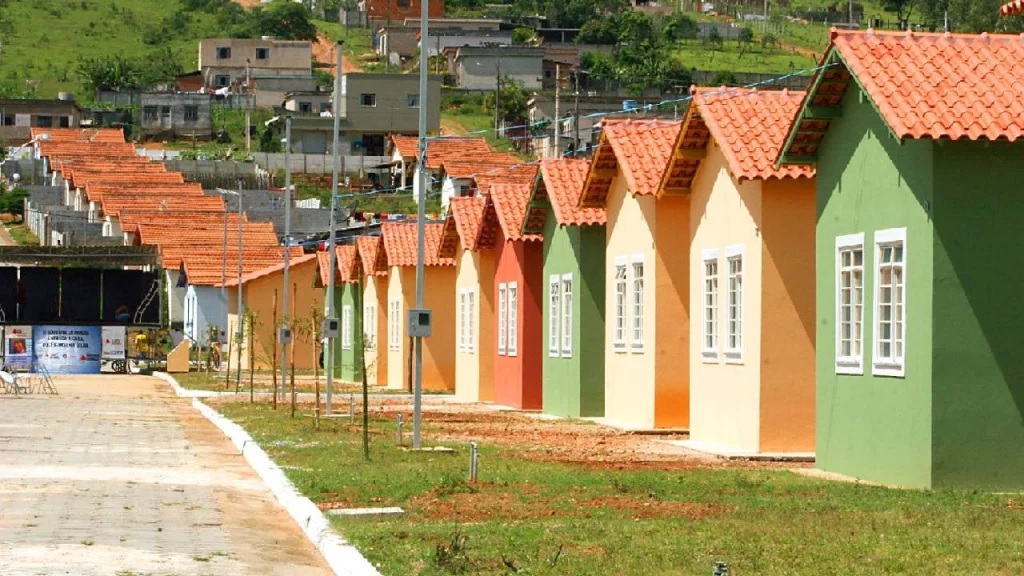
SindusCon’s data shows that the rebound of one of the main drivers of the economy is mainly focused in the Southeast, a little in the South and in some capital cities in the Northeast. In regions such as the North, where the economy is more dependent on public policies and where the ‘Minha Casa Minha Vida’ (“My Home, My Life”) program has greater relevance, there are still no signs of a rebound.
Even in the State of São Paulo, where the figures are positive, the rebound is uneven. It is mainly focused in the state capital. A survey by Secovi-SP (Housing Union) shows that the number of launches in the city grew 49.6 percent last year, while in the metropolitan region it decreased 4.1 percent.
Economist Ana Maria Castelo, of the Brazilian Institute of Economics (FGV/IBRE), believes that between 2006 and 2013, a period in which construction accelerated, growth was not the same throughout the country, but it soon spread. “There was the PAC (Growth Acceleration Program), for one, a factor that helped growth to occur throughout the country. Today, it doesn’t have the same intensity of dynamic growth,” she says.
Critical situation
Tocantins, Roraima, and Ceará were the states with the worst employment indicators in construction in 2019, with an average decline of 19.9 percent, 8.7 percent, and 6.25 percent, respectively.
According to the president of SindusCon in Ceará, Patriolino Dias de Sousa, the feeling is that the Ceará construction began to rebound from last year’s second half. “Before, stock was high and there were hardly any launches. In the last four years, developers were only completing works. But the drop in interest rates is starting to favor sales.”
As construction typically begins only six months after the developments are launched, Ceará’s construction companies are expected to start hiring now. Last year, launchings of real estate projects totaled some R$700 million (US$175 million) in sales in the state. Sousa expects the launchings to reach R$2 billion in 2020 – still far from the R$3.2 billion in 2014.
However, economists and professionals in the sector do not believe in a major change in the way construction will rebound this year. Eduardo Zaidan, SindusCon-SP’s vice-president of Economics, states that for growth to be achieved throughout the country, a more significant increase in investments would be required.
“When you make an investment, half the money goes to construction. That is why an improvement is so critical. If investment continues as it is, construction will continue more or less as it was last year,” Zaidan says.
Ana Maria, from the IBRE, also believes that 2020 should behave similarly to 2019, and there could be a slightly stronger growth in the level of employment at the end of the year. “If the (privatization) auctions go ahead, we may see an improved mood”.
Source: O Estado de S. Paulo
More: Brazil news in English, every day from The Rio Times.
Editorial responsibility: Matthias Camenzind, Editor-in-Chief · Editorial standards · Report an error
Brazil runoff, Sunday, October 25: Brazil runoff start time and results schedule. Latest: Brazil runoff polls, Flávio 51%, Lula 49%.