Brazil Voting Extension Drew 34,330 Votes

BRAZIL · ELECTION
Key Facts
- The country Brazil is Latin America’s biggest country, and on 25 October 2026 its voters re-elected Lula by 4,430,191 votes over Flávio Bolsonaro.
- Why it matters Donald Trump and, on election night, Flávio Bolsonaro pointed to the extra voting hours to question a result that shapes US-Brazil relations and Brazilian assets.
- Why now A Supreme Court justice extended voting on 25 October, Flávio Bolsonaro called for annulment that night, and Trump has questioned the vote.
- What happened Counts of the voting machine logs show about 34,330 votes registered after the original 17:00 closing time, roughly 0.03% of the ballots.
- The numbers Those late votes equal about 0.8% of Lula’s margin of 4,430,191 votes, so removing every one of them would leave him about 4.40 million ahead.
- What it means for you US readers can test the extension claim against a hard count, which shows the late votes alone cannot have changed who won.
- Still open How many voters could not vote because their machines had already closed is not measured by any count.
- Power Index Brazil ranks 1st of 14 in The Rio Times Latin America Power Index, with 75.0 points (October 2026 edition).
Live tonight
Brazil’s runoff, live
The official TSE count for Flávio Bolsonaro and Lula, updated every minute (voting closed at 7 p.m. Brasília, 6 p.m. ET).
Brazil election 2026 · Brazil election polls · Who will win: Brazil election odds · Brazil runoff date and results start · Brazil election results · Brazil election poll data (CSV) · All election stories
Prediction markets · who wins the runoff
Implied chance of winning Brazil’s presidency on 25 October, from traders’ prices.
Polymarket
Flávio Bolsonaro – · Lula – (US$249 million traded)
Kalshi (regulated in the US by the CFTC)
Flávio Bolsonaro 0.4% · Lula 99.6%
As of 25 October, 11:40 pm ET (03:40 Lisbon), updated every 20 minutes. Prices are bets, not polls, and can move fast.
Why we show this: prediction markets turn real-money bets into a live probability that moves within minutes of the news, which is why investors, campaigns and newsrooms in the United States now follow them closely. We show them next to polls and official results, never instead of them.
In Plain English
The Supreme Federal Court, known as the STF, is Brazil’s highest court, and one of its justices can issue an urgent preliminary order called a liminar. The Superior Electoral Court, known as the TSE, runs Brazilian elections and counts the votes.
The counts in this article come from time-stamped records of the electronic voting machines, which show when votes were registered but not how anyone voted. A cassação is the revocation of a winning ticket by an electoral court.
Only about 34,330 votes were registered on Brazil’s electronic voting machines after the original 17:00 closing time on Sunday 25 October 2026, according to Folha de S.Paulo’s count of the machine logs as relayed by DW, and to TSE records cited by Santa Portal. That is about 0.03% of the ballots and about 0.8% of Lula’s margin of 4,430,191 votes over Flávio Bolsonaro in the official results of the Superior Electoral Court (TSE).
Donald Trump told reporters in Iowa that the vote “looked like another rigged election, frankly” and that “With the extension given, it was very strange”, and the ANI report cites no evidence for either remark. Flávio Bolsonaro made the same extension the ground for his annulment call on election night, so the count shows how small it was in votes.
What the Supreme Court Ordered
Justice Cristiano Zanin of the STF granted an urgent order in a case filed by the Coligação Brasil Pronto Pra Mais over bus cuts in Salvador, Feira de Santana and Lauro de Freitas in Bahia, according to the STF, while DW and Santa Portal say the request came from Lula’s side. He extended voting until 19:00 Brasília time wherever machines had not yet closed, noting that both runoff campaigns had alleged transport problems, as first reported in Zanin Extends Brazil Voting to 6 p.m. ET.
TSE president Kassio Nunes Marques said he received the request around 15:30, that extending an election is possible but has to be thought out and structured, and that the measure was unprecedented at the court. Because the decision came after 17:00, thousands of machines had already closed and could not be reopened, according to the TSE.
What the Machine Logs Show
Folha de S.Paulo counted 34,330 votes after 17:00 in the logs, and the news site g1 counted 35,521, out of about 128 million voters who went to the polls, according to DW and the TSE. About 84.5% of the late votes came in the first five minutes, only 1,993 came after 18:00 and just 11 after 19:00, which DW says points to voters who were already in line.
DW adds that 468,043 of 497,897 machines, about 94%, recorded no vote at all after 17:00. Insper professor Pedro Burgos, who used TSE data, found that in most electoral zones the late votes came between 17:00 and 17:20, according to Santa Portal.
Data engineer Apolinário Passos counted 5,052 votes on 7,352 machines that closed only after 17:45, which Santa Portal presents as a figure that may be even smaller than the full count of 34,330. The newspaper calls 17:45 an estimate for separating machines kept open by the order from those still serving people already in line.
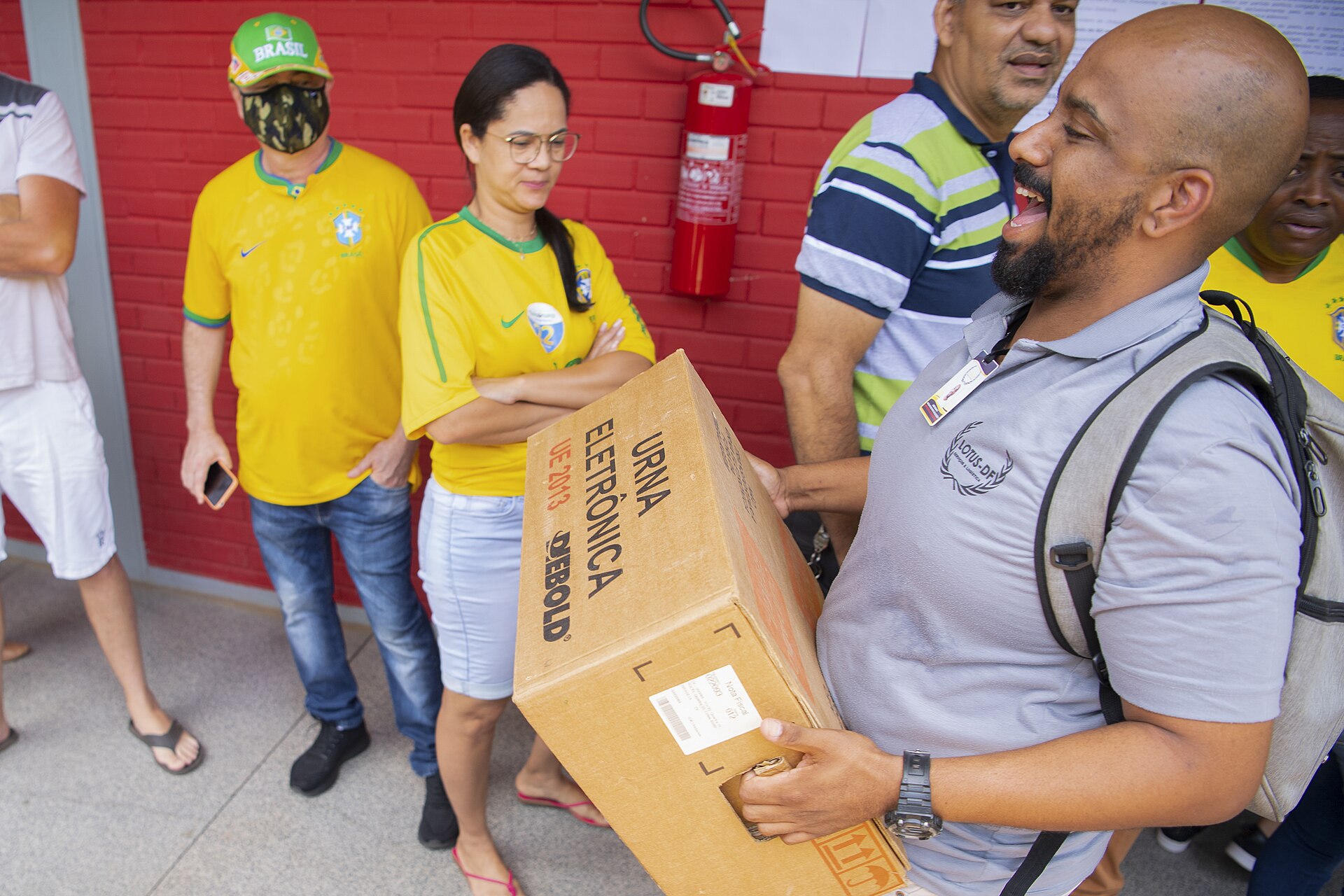
How the Count Compares With the Margin
Lula won 64,256,232 votes, or 51.79% of the valid votes, against 59,826,041 for Flávio Bolsonaro, or 48.21%, a margin of 4,430,191 votes, according to the TSE. The 34,330 late votes equal about 0.8% of that margin.
Even if every one of those late votes had gone to Lula and were struck from the count, he would still lead by about 4.40 million votes. The same arithmetic applied to the 35,521 votes in the g1 count leaves a lead of about 4.39 million.
What the Defeated Candidate and the TSE Say
Flávio Bolsonaro said on Sunday night that “É impossível reconhecer o resultado dessa eleição no contexto em que essas coisas aconteceram”, according to InfoMoney, and on Monday he dropped the annulment call that used the extension as its argument and said he would seek the revocation of Lula’s ticket over its alleged abuses, according to DW and Brasil 247. His election-night complaint was less about late votes than about voters whose machines had closed, since he said “Eu nunca vou saber se, num estado onde as urnas não foram reabertas, quantos votos eu poderia ter”.
InfoMoney adds that his campaign had also asked the electoral courts to extend voting in municipalities in São Paulo, Paraná and Santa Catarina because of rain, and recalls that Zanin was Lula’s lawyer before he joined the Supreme Court. Nunes Marques answered that “Não houve nenhuma alteração advinda da decisão judicial”, according to DW.
Flávio’s own Liberal Party recognised the result in a note on Monday while asking for clarifications, according to Agência Brasil. Liberal Party deputy Nikolas Ferreira said the chance of annulling the election is “praticamente nula”, according to DW.
What It Means for You
For US readers, the count separates two claims, one about whether the late votes could have changed the winner and one about whether voters were shut out, and only the first can be tested with the logs. Trump’s remark that the vote looked rigged came with no evidence in the ANI report.
Folha de S.Paulo reported, according to Brasil 247, that the US State Department held back a ready draft statement congratulating the Brazilian people on the vote after Flávio asked for annulment. Related coverage is in The Big Read on Brazil, in Can Bolsonaro Overturn the Election? and in How Washington Reacts to Lula’s Win.
What Is Not Known
No outlet counts how many people could not vote because their machines had already closed, which was the heart of Flávio’s election-night complaint. The logs record votes that were cast, not voters who left the line.
The full text of Zanin’s order and its clarification could not be opened for this article, so its wording rests on the STF’s summary. The counts also differ slightly between Folha and g1, and the original machine logs were not opened here.
Whether Flávio files the request to revoke Lula’s ticket that he announced on Monday, and with which court, is not known. The TSE must certify the winner by 18 December 2026, according to Gazeta do Povo.
Frequently Asked Questions
How many Brazilians voted after the 17:00 closing time?
About 34,330 votes were registered after 17:00 in Folha de S.Paulo’s count of the machine logs, and 35,521 in the count by g1. Either figure is about 0.03% of the ballots cast.
Could the extension have changed the winner?
Lula won by 4,430,191 votes, so the late votes equal about 0.8% of his margin. Removing all of them from his total would still leave him ahead by about 4.40 million.
Why did Brazil extend voting hours?
Justice Cristiano Zanin granted an urgent order after a coalition complained of cut bus service in three Bahia cities, a request DW ties to Lula’s party. He noted that both runoff campaigns alleged transport problems.
What did Trump say about Brazil’s election?
Trump told reporters in Iowa that the vote looked like another rigged election and that the extension was very strange. The ANI report cites no evidence for either remark.
Did Flávio Bolsonaro accept the result?
No, he said on Sunday night he would seek annulment, and on Monday, according to DW, he dropped that call for a bid to revoke Lula’s ticket. His Liberal Party recognised the result in a note on Monday while asking for clarifications.
Sources: Superior Electoral Court (TSE), 26 October 2026; Supreme Federal Court (STF), 25 October 2026; DW via O Povo, 27 October 2026; Santa Portal, 26 October 2026; InfoMoney, 25 October 2026; Brasil 247, 26 October 2026; Agência Brasil, 26 October 2026; ANI, 27 October 2026; Brasil 247, 26 October 2026; Gazeta do Povo, 5 October 2026.
This article was produced by The Rio Times’ automated newsroom system. How we use AI · Report an error · Editorial responsibility: Matthias Camenzind, Editor-in-Chief