Trinidad to Explain Estate Lockdown in House
Nine days into the Maloney closure, the law behind it meets its first parliamentary moment. The statement will show on what grounds the order rests.

TRINIDAD AND TOBAGO · LAW AND SECURITY
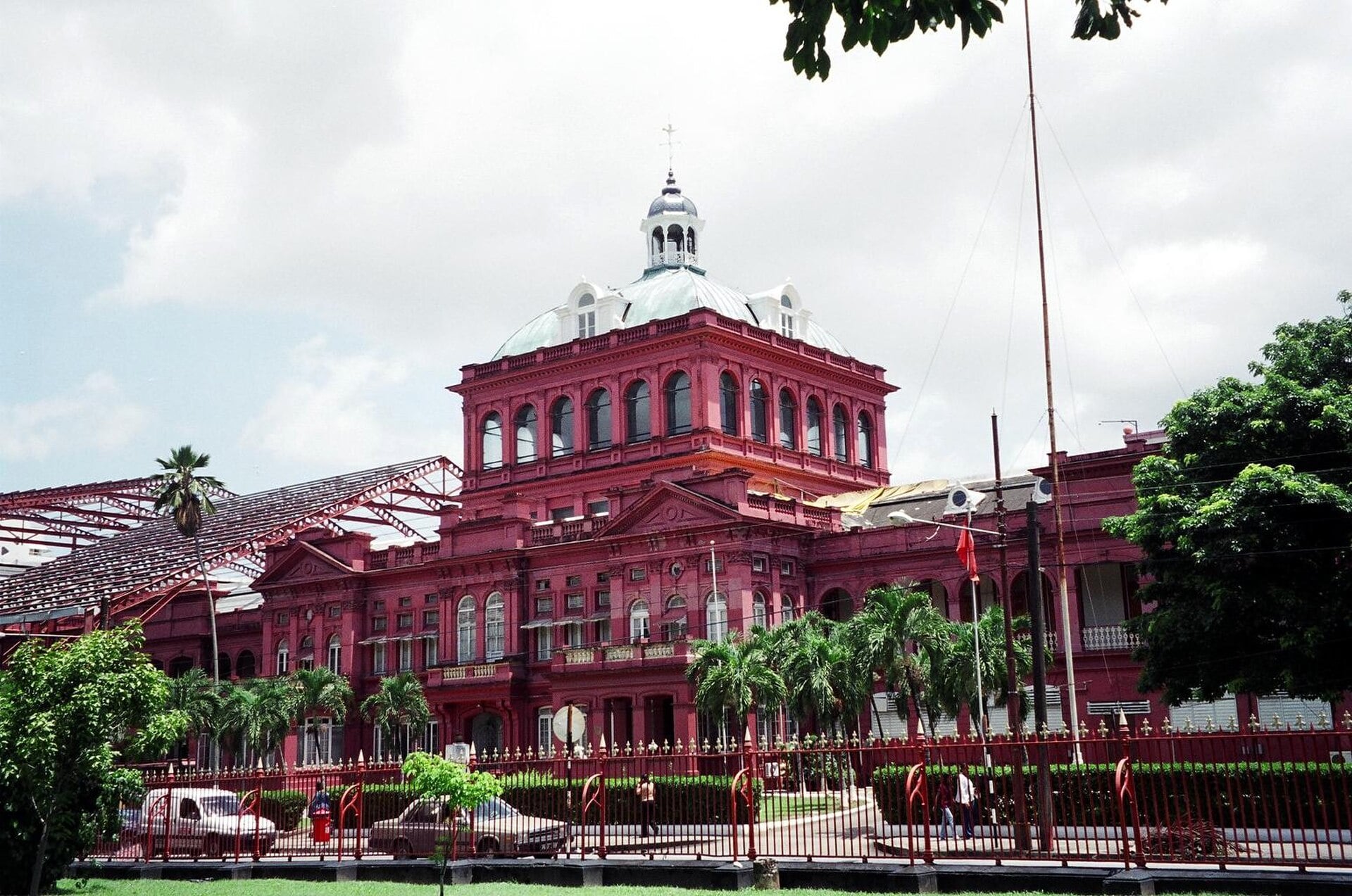
Trinidad and Tobago’s President, Christine Kangaloo, is due to present her reasons to Parliament on Friday 20 November 2026 for sealing one housing estate, the Maloney Buildings, under a nightly curfew. A new law, the Special Operations Act, 2026, obliges her to give the Speaker, who chairs the House of Representatives, a statement of the “specific grounds” for any such order.
It is the first use of a power that lets the state close off a small area instead of declaring a nationwide emergency. The Opposition has demanded the reasons, and the residents behind the cordon have been waiting nine days for them.
Key Facts
- Order President Kangaloo declared the Maloney Buildings a “closed area” on Tuesday 10 November 2026.
- Deadline The Act gave her until Tuesday 17 November to give the Speaker her reasons.
- Next The statement is presented to the House on Friday 20 November; officials say no debate.
- Open The House can annul the order at any time, and no end date has been announced.
- As of 19 November 2026, 08:30 GMT.
Nine days into the Maloney closure, the law behind it meets its first parliamentary moment. The statement will show on what grounds the order rests.
What The Law Says
The Special Operations Act, 2026 (Act No. 21 of 2026) was published in the Gazette, the government’s official journal, on 6 October 2026. Section 11 lets the President declare “any area within a district” a closed area when she is satisfied, on reasonable grounds, that homicide, shootings, kidnappings, gang activity, illegal firearms or gang intimidation threaten public safety.
The same section requires that ordinary policing cannot keep the peace there, and it makes every order subject to a “negative resolution” of the House. In plain terms, the order stands unless the House votes it down.
Within seven days of making an order, the President must deliver to the Speaker a statement setting out the specific grounds, for presentation to the House (section 11(2)). The House may annul an order at any time while it is in force, motions to do so may not be brought within three months of each other, and the President may revoke her own order whenever she chooses (section 11(3) to (5)).
What Has Happened At Maloney
The government’s formal order, Legal Notice 847, took effect on Tuesday 10 November, and a second one, Legal Notice 848, set the curfew from 9 p.m. to 5 a.m. Allister Guevarro, the Commissioner of Police, has said he acted after violence in Maloney Gardens on Monday 9 November and after intelligence of possible gang retaliation. Police say they have since searched about 600 apartments, up from 392 four days earlier.
On Tuesday 17 November officers recovered five firearms in a fig (banana) patch in Maloney Gardens, a find that residents dispute (see our separate report).
Attorney General John Jeremie, the government’s chief legal adviser, said on 14 November that a high rate of underemployment in the community, among other factors, had fuelled crime there. His remarks came four days after the order took effect.
What The Opposition Is Demanding
Pennelope Beckles, of the opposition People’s National Movement and Leader of the Opposition, wants the grounds published, an end date set and the orders debated in Parliament. She also asked that anyone detained have access to a lawyer, and she said the closure must be measured against the 17 November ruling of the Privy Council, the London-based final court of appeal, on the 2011 state of emergency (our report on that ruling).
Senator Amery Browne, the Opposition’s business leader in the Senate, the upper chamber of Parliament, asked this week for an urgent debate on the closure and the curfew. He says the Senate President gave no reason for not approving it, and he called the measures “disproportionate and discriminatory”.
Beckles’s lawyers have also written to the Attorney General, on 17 November, threatening legal action. They set a deadline of 4 p.m. on Friday 20 November for immediate safeguards, and a second deadline of 4 p.m. on Tuesday 24 November for a full response.
What The Government Says
The government has defended the operation as a response to gang violence in the area. Police Commissioner Guevarro says the closure targets gang violence in a single estate.
Police Commissioner Guevarro says the closure targets gang violence in a single estate. The Opposition says the measures are too broad.
Why It Matters
The Maloney order is the first closed area declared under section 11. The Privy Council reviewed the 2011 state of emergency on 17 November, and Beckles wants Maloney judged by the same standard.
The Act puts the first check in the House, which can annul an order by majority vote. The Privy Council noted on 17 November that the House could have ended the 2011 emergency at any time by a simple majority vote, and the House holds a similar lever here.
Anyone who breaks the permit rules of a closed area faces a fine of TT$50,000 (about US$7,400 at roughly TT$6.77 per US$1) and one year in prison on summary conviction, under the Act. That is the penalty the Act sets for breaking those rules.
What To Watch
The first date is Friday 20 November, when the President’s statement is presented to the House of Representatives and Beckles’s first deadline to the Attorney General expires at 4 p.m. The second is Tuesday 24 November at 4 p.m., her deadline for a full response.
What Is Not Known
The content of the President’s statement is not yet public, so the legal grounds she relies on are unknown, and it is also unknown whether the Speaker received it by the seven-day deadline. No end date or release criteria for the closed area have been announced, and it is unclear whether the House will vote on an annulment motion.
What It Means For You
The Maloney Buildings are a residential estate in Maloney Gardens, in Policing District 2, a police division, and not a tourist district. Anyone with family or business inside the closed area needs a permit to enter or leave it.
For readers following Caribbean security policy, the Friday statement shows how the government justifies a targeted measure in law. Officials say the statement will be presented without a debate.
Frequently Asked Questions
What is a closed area in Trinidad and Tobago?
It is a small area the President can seal off under the Special Operations Act, 2026 when gang violence or illegal guns threaten public safety. Movement in and out is controlled by permits, and a curfew can apply.
What must the President tell Parliament?
Within seven days of the order she must give the Speaker a statement of the specific grounds for it. That statement is due before the House on Friday 20 November.
Can Parliament end the Maloney closure?
Yes, the House of Representatives can annul an order at any time while it is in force, and the President can revoke it herself. Motions to annul may not be brought within three months of each other.
How long does the Maloney curfew last each day?
The curfew runs from 9 p.m. to 5 a.m., eight hours a night, unless a resident holds a permit. No end date for the closure has been announced.
Sources: Special Operations Act, 2026, Act No. 21 of 2026, Gazette of 6 October 2026 (https://www.ttparliament.org/wp-content/uploads/2026/10/a2026-21g.pdf); Legal Notice 848 of 10 November 2026; statements of the Attorney General (14 November), the Opposition Leader and Senator Amery Browne (17 November); Judicial Committee of the Privy Council, press summary of 17 November 2026 (https://jcpc.uk/cases/press-summary/jcpc-2025-0072). Related: our first report on the Maloney curfew; who holds power in Trinidad and Tobago.
This article was produced by The Rio Times’ automated AI newsroom. Editorial responsibility: Matthias Camenzind, Publisher and Editor-in-Chief. The Rio Times also runs Ask Rio Times, which answers from 100,000+ of our own articles, the daily Latin America Power Map, and prediction-market odds on elections and markets.. How we use AI · Report an error