Tanzania’s Electric Railway Took In US$64 Million From 2024 to March 2026

TANZANIA · TRANSPORT
Key Facts
- —The country Tanzania is a large East African nation whose Dar es Salaam port serves Rwanda, Burundi, Uganda and DR Congo.
- —What happened Tanzania’s electric railway took in 169.37 billion shillings (US$64.1 million) from June 2024 to March 2026, officials say.
- —How many riders About 5.5 million passengers used it in that time; the ministry puts the recent average at about 9,300 a day.
- —How fast it grew Passengers rose 22.4% to 2.51 million from July 2025 to March 2026, against the same months a year earlier.
- —Freight too Freight trains started in July 2025 and carried 102,452 tonnes of goods by March 2026.
- —The catch The total is income, not profit. Officials gave no running costs with it, and their latest total stops at March 2026.
- —What comes next Trains should run to Mwanza on Lake Victoria by the end of 2028, the rail company’s chairman says.
Tanzania’s electric railway took in 169.37 billion shillings (US$64.1 million) from its launch in June 2024 to March 2026. About 5.5 million passengers rode it in that time, Deputy Transport Minister David Kihenzile said on Friday 2 October 2026.
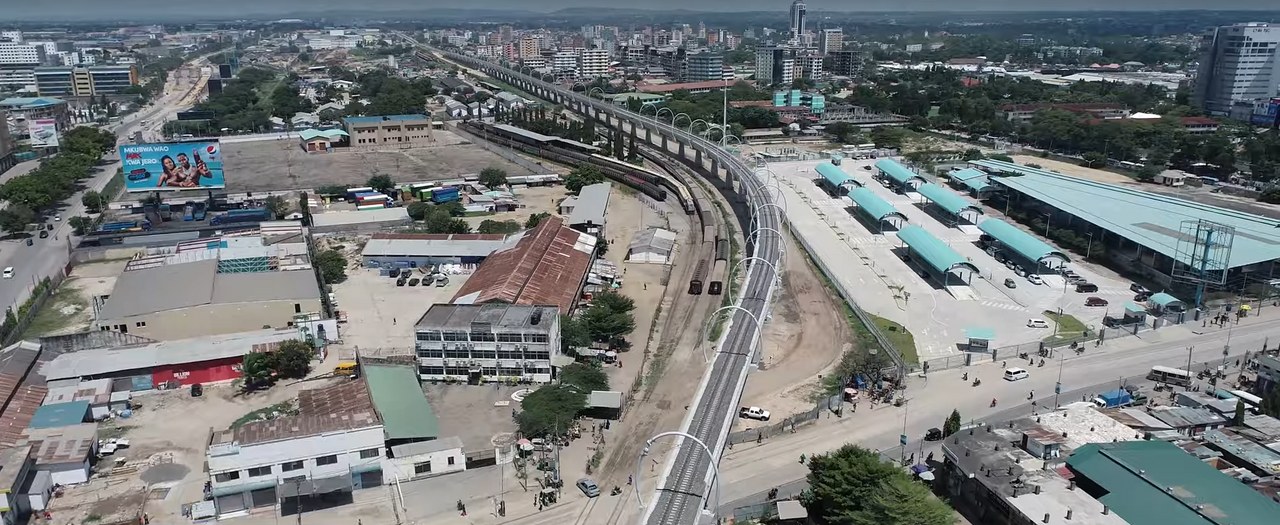
The line is the Standard Gauge Railway (SGR), an electric railway built to the world’s most common track width. Officials say the investment is paying off, but the figure is income, not profit.
What the Railway Has Earned
The line is run by Tanzania Railways Corporation (TRC), the state company that operates the country’s trains. Transport Minister Makame Mbarawa gave the full income figures in his budget speech to parliament in May 2026.
He said SGR services brought the state 169.37 billion shillings (US$64.1 million) from June 2024 to March 2026. Conversions in this article use about 2,642 shillings to the US dollar, the rate on 6 October 2026.
Almost half of that money came in the latest nine months on record. From July 2025 to March 2026, the line took in 82.77 billion shillings (US$31.3 million).
That is about 9.2 billion shillings (US$3.5 million) a month. Kihenzile repeated the overall total in Morogoro, a city about 190 kilometres west of Dar es Salaam by rail.
He spoke at Jakaya Kikwete station, where TRC signed a preliminary deal for a station hotel with the state Workers Compensation Fund. He said the income has strengthened TRC’s finances and cut its need for government subsidies, the state-owned Daily News reported.
Who Rides the Train
Ridership on Tanzania’s electric railway is growing. From July 2025 to March 2026, 2.51 million passengers travelled, up 22.4% from 2.05 million a year earlier, the minister said.
Trains between Dar es Salaam and Dodoma, the capital, carried about 280,000 people a month, or about 9,300 a day. The ministry expected more than three million riders in the year to June 2026.
That compares with about 400,000 passengers a year on the old metre-gauge railway, the ministry says. TRC board chairman Jaffer Machano says more than 2,800 people a day ride between Dar es Salaam and Morogoro alone.
When services opened in June 2024, the Land Transport Regulatory Authority (LATRA) set adult ordinary-class fares by distance. Dar es Salaam to Morogoro cost 13,000 shillings (US$4.92), and the 444-kilometre trip to Dodoma cost 31,000 shillings (US$11.73).
Freight Is the Next Test
TRC says the line is designed to haul up to 10,000 tonnes at a time, as much as about 500 lorries. Freight services began in July 2025 between Dar es Salaam and Ihumwa, near Dodoma.
From then to March 2026, TRC moved 102,452 tonnes of goods, the minister told parliament. The first container train left Pugu, on the edge of Dar es Salaam, in mid-February 2026 with 100 containers on 50 wagons.
A rail spur into Dar es Salaam port was 99.7% complete, with test freight runs under way, the minister said in May. Goods will then ride to Bahi, near Dodoma, and move onto the old line for onward travel.
The government is also building a 68,000-square-metre freight station at Morogoro to handle 600 containers a day. Lorries would carry goods from there to other regions and to neighbouring countries.
Less Help From the Treasury
The income from Tanzania’s electric railway is helping TRC pay more of its own way, officials say. Since January 2026, the company has covered salaries and other running costs without money from the government’s main fund, the minister said.
For about ten years before that, the state gave TRC 12.92 billion shillings (US$4.9 million) a year for salaries. The 2026/27 budget sets aside no salary subsidy for the company.
Building the line cost far more than it has earned so far. TRC’s project pages put the Dar es Salaam–Morogoro section at 2.7 trillion shillings (US$1.02 billion at today’s rate).
The next section, Morogoro to Makutupora, cost 4.4 trillion shillings (US$1.67 billion), it says. Income so far equals about 2.4% of those two price tags, before any running costs.
Work continues inland with a US$1.277 billion low-interest loan for the Makutupora–Tabora and Tabora–Isaka sections. Machano says trains should run all the way to Mwanza by the end of 2028.
What It Means for US Readers
For travellers, Tanzania’s electric railway is a regulated, shilling-priced alternative to the road from Dar es Salaam to Morogoro and Dodoma. A guide to Tanzania’s politics and economy has more background.
For investors, a 2023 change to the 2017 Railways Act opened railway land to private investment. Kihenzile said the government wants TRC to use its assets with partners for commercial buildings, farming, tourism and industry.
For policy watchers, railways are part of a contest over how Central Africa’s minerals reach the sea. Washington backs the Lobito Corridor, a rail route from DR Congo and Zambia to Angola’s Atlantic coast.
On the Indian Ocean side, a Chinese state builder will invest US$1.4 billion in TAZARA, the Tanzania–Zambia railway, the minister said. Tanzania’s own SGR is planned to reach Kigoma on Lake Tanganyika and Musongati in Burundi.
What Is Not Known
Officials have not said what Tanzania’s electric railway costs to run, including electricity, staff and maintenance. Without those numbers, the income figure alone does not show whether the line covers its costs.
The income figures also leave out repayments on the loans that paid for construction. The latest total officials have given, repeated on 2 October, stops at March 2026.
The freight figure ends in March too. The station hotel deal so far covers only feasibility studies, with no cost split or timetable published.
More: Tanzania news in English, every day from The Rio Times.
Frequently Asked Questions
How much has Tanzania’s electric railway earned?
Tanzania’s electric railway took in 169.37 billion shillings (US$64.1 million) from June 2024 to March 2026, the transport minister says. Of that, 82.77 billion shillings (US$31.3 million) came between July 2025 and March 2026.
Does the railway make a profit?
That is not clear. Officials have given income figures but not the line’s running costs or loan repayments. The rail company has paid its own salaries without state help since January 2026.
How much does a ticket cost?
At launch in June 2024, adult ordinary-class fares were 13,000 shillings (US$4.92) to Morogoro and 31,000 shillings (US$11.73) to Dodoma. Travellers should check current fares with the rail company before booking.
Where does the line run, and where will it go next?
Trains run between Dar es Salaam and Dodoma, the capital, by way of Morogoro. The line is being extended to Mwanza on Lake Victoria, with trains expected there by the end of 2028.
Why does this railway matter beyond Tanzania?
It is planned to link Dar es Salaam port with Burundi and, via Lake Tanganyika, with DR Congo. Central Africa’s minerals can also reach the sea by other routes, including the US-backed Lobito Corridor through Angola.
Sources: Daily News (Tanzania), 6 October 2026; Tanzania Railways Corporation (TRC), statement on the TRC–WCF agreement, 2 October 2026; Mwananchi, 2 October 2026; Ministry of Transport, 2026/27 budget speech summary, May 2026; LATRA, SGR ordinary-class fares notice, 10 June 2024; TRC, first SGR container train, 17 February 2026; TRC, port link and Bahi freight, 18 May 2026; TRC, board inspection Makutupora–Mwanza, 3 September 2026; TRC, Dar es Salaam–Morogoro project page, accessed 6 October 2026; TRC, Morogoro–Makutupora project page, accessed 6 October 2026.
This article was produced by The Rio Times’ automated newsroom system. How we use AI · Report an error · Editorial responsibility: Matthias Camenzind, Editor-in-Chief