Supreme Court Targets Bolsonaro’s Son Amid U.S. Scrutiny of Brazil’s Legal Tactics
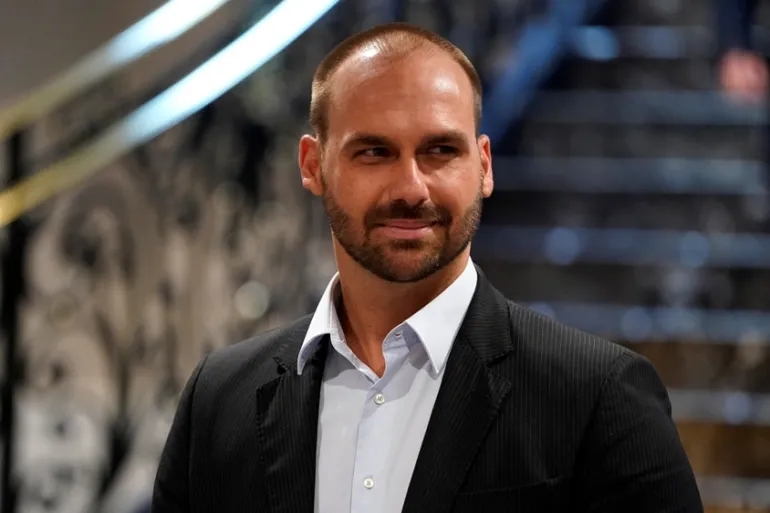
Brazil’s Supreme Court has launched an investigation into Eduardo Bolsonaro, son of former President Jair Bolsonaro, alleging he lobbied U.S. officials to sanction Brazilian judges—a move critics argue retaliates against growing American scrutiny of Justice Alexandre de Moraes’ controversial rulings.
The probe, approved by Moraes himself, coincides with U.S. Secretary of State Marco Rubio’s announcement that sanctions targeting Moraes under the Global Magnitsky Act are under active review.
This escalation exposes a deepening clash between Brazil’s judiciary and international critics who accuse it of mirroring Venezuela’s authoritarian legal tactics.
Eduardo Bolsonaro, residing in Florida since March 2025, publicly urged Republican lawmakers to impose visa bans and asset freezes on Moraes and other judges overseeing corruption cases against his father.
While Brazilian law permits political dissent, prosecutors claim Eduardo’s coordination with U.S. figures like Senator Rubio—who cited great possibility of sanctions—crosses into illegal foreign interference.
Judicial Power Struggles in Brazil
Moraes’ decision to investigate Eduardo followed Rubio’s remarks by one day, timing critics label as politically motivated payback. The scrutiny stems from Moraes’ unilateral actions, including banning X (Twitter) in Brazil, blocking conservative accounts, and prosecuting Jair Bolsonaro for alleged coup plotting.
U.S. legislators like Rep. María Elvira Salazar (R-FL) argue these measures suppress free speech and have pushed to revoke visas for Brazilian judges.
Moraes’ defenders frame his crackdown as necessary to combat disinformation, but leaked U.S. diplomatic cables reveal concerns over judicial overreach eroding democratic norms.
Brazil’s response—targeting Eduardo while Moraes faces international rebuke—parallels tactics seen in Venezuela, where courts systematically neutralize opposition.
Like Venezuelan judges who barred opposition candidates, Moraes has banned Bolsonaro from office and restricted media, consolidating power under the guise of protecting democracy.
Critics note both nations’ judiciaries increasingly serve partisan agendas rather than impartial justice. Jair Bolsonaro’s looming testimony about funding Eduardo’s U.S. activities underscores the case’s political stakes.
With the ex-president facing 43 years in prison if convicted, the investigation into Eduardo appears strategically timed to deter U.S. sanctions that could weaken Moraes’ authority.
As Brazil’s judiciary faces unprecedented global scrutiny, its retaliatory tactics risk cementing comparisons to Venezuela’s authoritarian slide—a narrative amplified by Eduardo’s portrayal of Moraes as a Gestapo leader exploiting legal systems to silence rivals.
More: Brazil news in English, every day from The Rio Times.
This article was produced by The Rio Times’ automated newsroom system. How we use AI · Report an error
Read More from The Rio Times