Vietnam is maneuvering through a high-stakes geopolitical landscape marked by South China Sea disputes.
Amid rising regional tensions, the country is pursuing a policy of “bamboo diplomacy,” which emphasizes flexibility and resilience.
This approach involves maintaining balanced relationships with both major powers in the region—China and the United States.
The core of Vietnam’s strategy involves using diplomatic channels to assert its maritime claims while avoiding direct confrontations.
This diplomatic balancing act is crucial, as the South China Sea is not only a key international trade route but also rich in resources like oil and gas, making regional stability vital for global economic security.
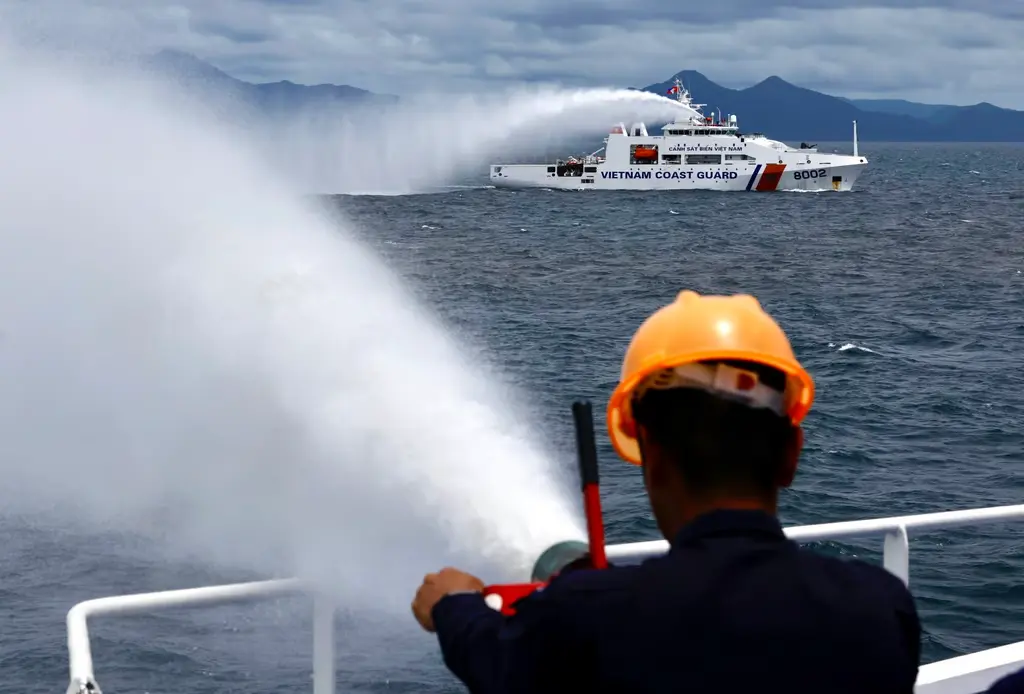
Vietnam’s engagement with China and the U.S. highlights its strategic positioning. The country’s leaders engage in high-level visits and participate in international forums like the UN General Assembly.
This ensures that Vietnam’s interests are safeguarded and its sovereignty is respected. Economically, Vietnam benefits significantly from its relationship with China, with bilateral trade reaching substantial figures.
At the same time, Vietnam is mindful of the power dynamics at play, using its economic ties strategically to manage its diplomatic interactions.
In essence, Vietnam’s careful diplomatic strategy in the South China Sea aims to protect its national interests without escalating tensions.
It navigates a path of strategic engagement in a region critical to both its own prosperity and global economic stability.
This article was produced by The Rio Times’ automated AI newsroom. Editorial responsibility: Matthias Camenzind, Publisher and Editor-in-Chief. The Rio Times also runs Ask Rio Times, which answers from 100,000+ of our own articles, the daily Latin America Power Map, and prediction-market odds on elections and markets.. How we use AI · Report an error