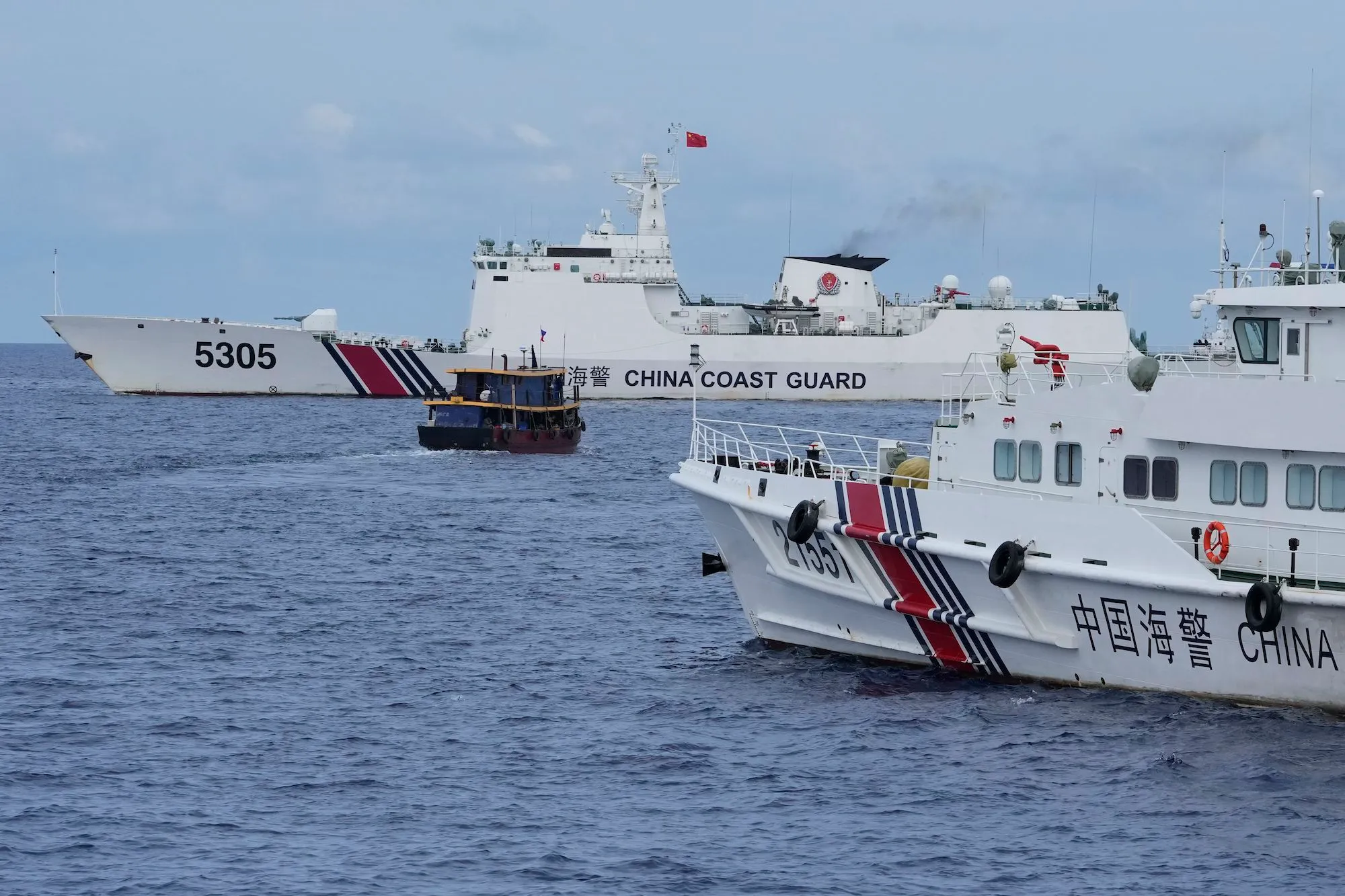
China has introduced a new coast guard vessel, which is significantly larger and more capable than its predecessors. This move emphasizes its strategic intent to dominate the South China Sea, a crucial international maritime route.
Modeled after a sophisticated destroyer but equipped for coast guard duties, this vessel symbolizes a major step in China’s plan to enforce its expansive territorial claims in the region.
The South China Morning Post reports that the ship, constructed in Shanghai, is equipped with advanced surveillance capabilities and a large operational range.
This allows it to patrol disputed waters more effectively and for longer durations without needing to resupply.
This vessel is part of the Zhaotou class, one of the largest Coast Guard ship classes worldwide. Its size signals China’s focus on using maritime law enforcement as a tool for regional dominance.
Regional Security and Strategic Responses
In contrast, Southeast Asian countries like the Philippines, Vietnam, and Malaysia are significantly outmatched in terms of maritime capabilities.
These nations, despite their smaller size and economic constraints, are actively trying to bolster their naval and coast guard forces to counter China’s maritime assertiveness.
The Philippines, for instance, has launched an “assertive transparency” strategy. This approach aims to expose and counteract Chinese activities in the area through media and international advocacy.
The disparity in maritime power highlights a critical regional security issue. There is a need for enhanced maritime capabilities and international cooperation among Southeast Asian nations to maintain a balance of power in the South China Sea.
This situation underscores the broader geopolitical tensions in the region, involving major powers such as the United States. The U.S. supports regional efforts to monitor and respond to China’s actions.
This ongoing maritime contest affects the countries directly involved and has significant implications for global trade and international maritime law.
It emphasizes the urgent need for strategic, balanced responses to ensure stability. This is crucial to prevent conflict in one of the world’s most vital waterways.
This article was produced by The Rio Times’ automated newsroom system. How we use AI · Report an error
Read More from The Rio Times