Spain Polls Split, Bettors Back Opposition
Key Facts
- Prediction markets. Polymarket gives Alberto Núñez Feijóo, leader of the conservative opposition, about 88% to be Spain’s next prime minister (6:22 p.m. ET, 6 November).
- Latest poll. SW Demoscopia, a Spanish pollster, 26 October to 5 November: Socialists (PSOE) 31.0%, conservative People’s Party (PP) 28.5%.
- Rival poll. Celeste-Tel, polling for radio network Onda Cero, 29 October to 3 November: PP 31.8%, PSOE 25.7%, Vox 19.2%.
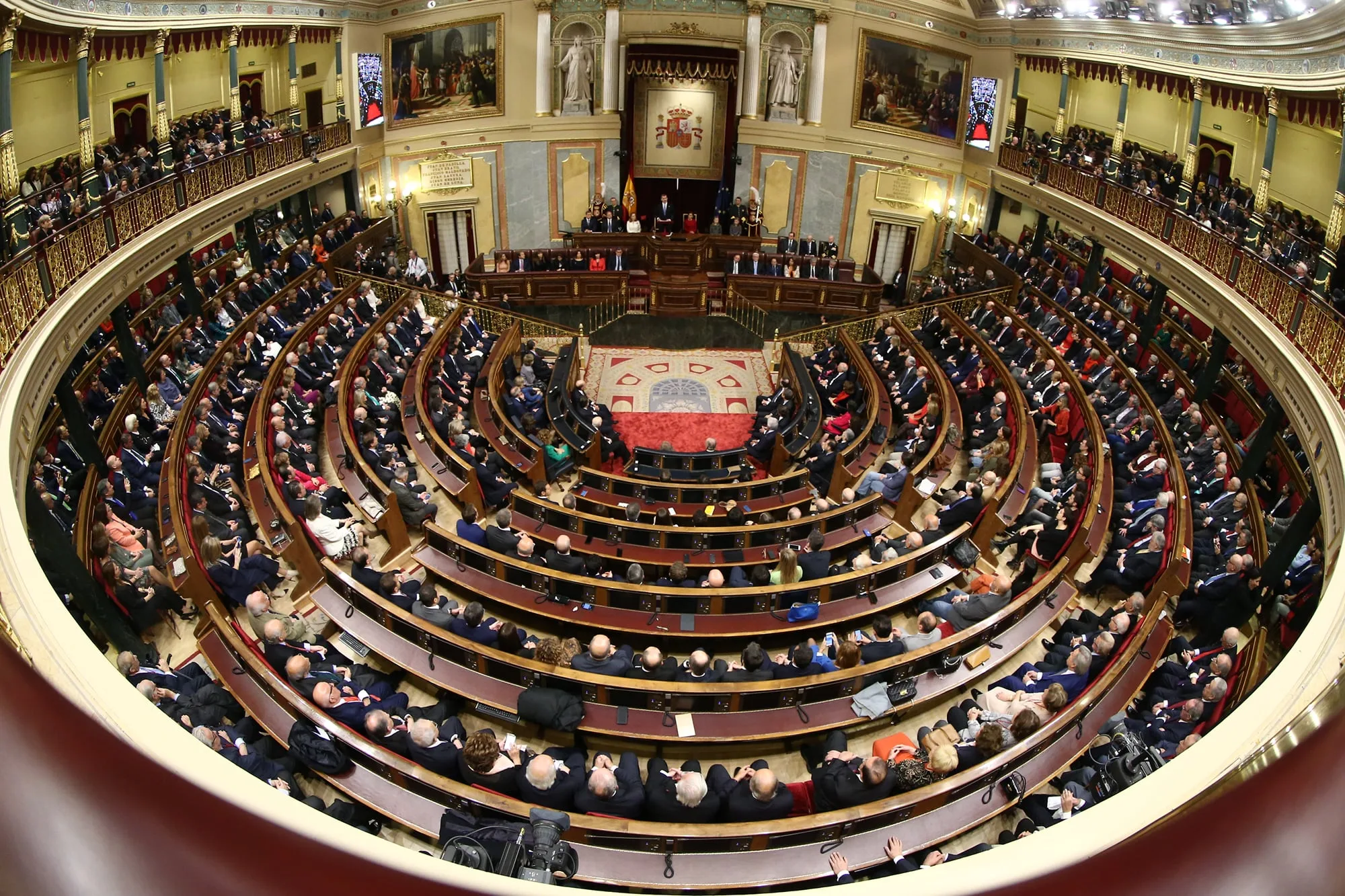
- Election day. Sunday 29 November 2026; all 350 seats in Congress, the lower house, are up; a majority is 176.
- Next fixed event. Pedro Sánchez v Feijóo debate on Mediaset, a private broadcaster, Monday 16 November; no start time published.
This story is part of our coverage of the Spain Election 2026. Dates, times and how to follow it are in our guide.
Latest: Spain Poll Shows Socialists Edging Ahead
Bettors Back Feijóo as Polls Diverge
Spain votes on 29 November, and the polls disagree on who leads. Bettors do not: on Polymarket, a prediction market, Alberto Núñez Feijóo, leader of the conservative People’s Party (PP), stood at about 88% to become the next prime minister at 6:22 p.m. ET on 6 November.
Our Spain Election 2026 page collects every report.
What Prediction Markets Say
Polymarket, a crypto-based market, put Prime Minister Pedro Sánchez, the Socialist incumbent, at about 11% and Santiago Abascal, leader of the conservative Vox party, at about 1%. About US$2.9 million has been traded on the question, and these prices are bets rather than polls.
Why we show this: prediction markets turn real-money bets into a live probability that moves within minutes of the news, which is why investors, campaigns and newsrooms in the United States now follow them closely. We show them next to polls and official results, never instead of them.
Live Market IntelligenceCrypto — Live Market Board
Rio Times · Live Market Intelligence
Crypto — Live Market Board
-0.20%
| Instrument | Last | Change | YoY | Prev. | High | Low | Volume |
|---|---|---|---|---|---|---|---|
| BTC | 75,787 | -0.20% | -25.16% | 75,942 | 76,282 | 75,067 | 31,050,444,800 |
| ETH | 2,234 | -0.03% | -32.54% | 2,234 | 2,246 | 2,212 | 11,761,666,048 |
| SOL | 89.97 | +0.93% | -42.00% | 89.14 | 91.12 | 89.04 | 2,658,446,848 |
| XRP | 1.17 | -2.58% | -46.85% | 1.21 | 1.22 | 1.17 | 2,584,262,144 |
| BNB | 692.73 | +0.68% | -27.03% | 688.03 | 697.42 | 686.31 | 1,431,258,496 |
| ADA | 0.18 | +2.13% | -65.27% | 0.18 | 0.19 | 0.18 | 252,135,008 |
| DOGE | 0.07 | +1.80% | -55.24% | 0.07 | 0.07 | 0.07 | 573,126,144 |
| AVAX | 8.33 | +2.23% | -48.24% | 8.15 | 8.44 | 8.15 | 203,455,552 |
| LINK | 10.86 | +1.93% | -26.23% | 10.65 | 10.99 | 10.65 | 267,320,032 |
| DOT | 0.91 | +0.90% | -65.68% | 0.91 | 0.94 | 0.91 | 62,654,912 |
| LTC | 52.59 | +2.02% | -39.56% | 51.55 | 53.29 | 51.55 | 171,099,824 |
| BCH | 263.76 | -2.80% | -44.17% | 271.37 | 278.03 | 262.04 | 194,275,136 |
| TRX | 0.32 | +0.13% | +12.16% | 0.32 | 0.32 | 0.32 | 338,309,952 |
| XLM | 0.15 | +0.72% | -43.03% | 0.15 | 0.16 | 0.15 | 114,061,528 |
| HBAR | 0.07 | +0.21% | -58.58% | 0.07 | 0.07 | 0.07 | 49,542,124 |
| NEAR | 3.70 | +1.20% | +76.50% | 3.65 | 3.80 | 3.64 | 526,666,112 |
| ATOM | 1.39 | +2.82% | -47.44% | 1.35 | 1.43 | 1.35 | 31,275,222 |
| AAVE | 130.56 | +1.75% | -33.72% | 128.31 | 133.00 | 128.22 | 240,513,040 |
What the Latest Polls Show
SW Demoscopia, a Spanish polling firm, put the Spanish Socialist Workers’ Party (PSOE) at 31.0% and the PP at 28.5% in fieldwork from 26 October to 5 November. It projected 127 seats for the PSOE, 116 for the PP and 63 for Vox.
Celeste-Tel, polling for the radio network Onda Cero from 29 October to 3 November, reached the opposite result. It had the PP at 31.8%, the PSOE at 25.7% and Vox at 19.2%.
PolitPro, a poll aggregator, put the PP at 29.8%, the PSOE at 26.0% and Vox at 18.8% on 6 November. Its projection gives the PP 128 seats, the PSOE 112, Vox 81 and the Broad Front, a new left-wing alliance led by former Barcelona mayor Ada Colau, 29 seats, so no single party reaches the 176 needed for a majority.
The state-run Center for Sociological Research (CIS) showed the widest Socialist lead, at 34.0% to 22.2% for the PP in fieldwork from 1 to 6 October. We found no November CIS poll.

The Calendar Ahead
Spaniards vote on Sunday 29 November, after Sánchez called the election on 5 October. Congress had rejected two housing decrees on 2 October, with the PP, Vox and Junts, a Catalan party, voting against them.
Both Sánchez and Feijóo have accepted a one-on-one television debate on Monday 16 November, hosted by the private broadcaster Mediaset. No start time has been confirmed.
The new Congress meets on 23 December, and a prime minister is chosen only after that. The official campaign runs from 13 to 27 November.
Campaign Themes Take Shape
Sánchez launched his pre-campaign in Dos Hermanas, near Seville, on 10 October with housing as the central theme, before a crowd his Socialists count at more than 5,000. Feijóo has said the vote is a choice between four more years of the present situation and a chance for change.
Madrid Mayor José Luis Martínez-Almeida, a PP politician, warned that the campaign would be “dirty”, blaming the left. Isabel Díaz Ayuso, the PP president of the Madrid region, told people not to vote by post, while Feijóo’s spokesman Borja Sémper urged Spaniards to vote either in person or by post.
What It Means for US Readers
A close, fragmented result would leave the choice of prime minister to talks among parties after the new Congress meets on 23 December. That timetable is why a name may not be settled in the days after the 29 November vote.
A lasting government matters to investors holding Spanish bonds and shares. Market prices can move fast and should be read next to the polls.
What Is Not Known
The polls disagree sharply. SW Demoscopia and the state-run CIS have the Socialists ahead, while Celeste-Tel and GAD3 put the PP in front, and we cannot say which will prove closer to the result.
It is unclear whether the PP and Vox together can reach 176 seats. A GAD3 poll for the newspaper ABC, reported on 12 October, projected about 198 seats for the two parties combined, while SW Demoscopia’s figures leave them short.
The start time and final format of the 16 November debate have not been confirmed. Atresmedia, a private broadcaster, has proposed a four-way debate on 26 November, and the parties disagree on which channel should host it.
Frequently Asked Questions
When is Spain’s general election?
Spain votes on Sunday 29 November 2026 for all 350 seats in Congress, the lower house, and 208 directly elected seats in the Senate, the upper house. A majority in Congress is 176 seats.
Who is favored to become prime minister?
Polymarket bettors gave Alberto Núñez Feijóo about 88%, against about 11% for Pedro Sánchez, at 6:22 p.m. ET on 6 November. Those prices are bets rather than polls, and the latest SW Demoscopia survey has the Socialists ahead.
When is the next scheduled event in the campaign?
Sánchez and Feijóo have accepted a Mediaset television debate on Monday 16 November. The start time has not been published.
Sources: Polymarket price feed (6:22 p.m. ET, 6 November); SW Demoscopia and Celeste-Tel poll releases; PolitPro aggregate; Center for Sociological Research (CIS); Spain’s official state gazette (BOE).
Editorial responsibility: Matthias Camenzind, Editor-in-Chief · Editorial standards · Report an error