Traders Put Spain’s Opposition at 89%

Published Thursday, Nov. 5, about 10:40 a.m. ET (4:40 p.m. Madrid) · Source: Polymarket, INE, Spain’s electoral decree, polling firms
Traders now put Alberto Núñez Feijóo, Spain’s conservative opposition leader, at about 89% to become prime minister after the Nov. 29 election. That is up from 84% in our Spain Election 2026 coverage earlier this week.
The jump comes after a deadly train collision and a minister’s resignation. Polls, meanwhile, show a much closer race, so the gap between bettors and voters is the story to watch.
Key Facts
- What. Spain votes on Sunday, Nov. 29, 2026, to elect the 350-seat Congress of Deputies and the Senate.
- Prediction markets. Polymarket: Feijóo 88.5%, Prime Minister Pedro Sánchez 9.3% to lead the next government (Nov. 5, 10:28 a.m. ET).
- Polls. Sondaxe, a Spanish polling firm, on Nov. 1: conservative People’s Party 29.2%, Socialists 26.9%, Vox 19.2%.
- Debates. Sánchez and Feijóo are set for a one-on-one debate on Monday, Nov. 16.
- Next step. The new Congress meets on Dec. 23, and only then can a new prime minister take office.
This story is part of our coverage of the Spain Election 2026. Dates, times and how to follow it are in our guide.
In plain English
Spaniards vote for parties, and parliament then picks the prime minister. Bettors are guessing who can build a majority, which is why a party at about 30% in polls can be a strong favourite.
Why Traders Favour Feijóo
Polymarket, a crypto-based prediction market, showed Feijóo, leader of the conservative People’s Party (PP), at about 89% to become prime minister on a page updated at 9 a.m. ET on Nov. 5. Sánchez, the Socialist (PSOE) leader, stood at about 9%.
Traders had US$886,600 on Sánchez’s contract and US$594,108 on Feijóo’s, and total volume on the market was US$2,771,225. The prices were not time-stamped separately and may lag.
What Prediction Markets Say
On Polymarket’s “Next Prime Minister of Spain” market (Nov. 5, 10:28 a.m. ET), Feijóo trades at 88.5% and Sánchez at 9.3%, with US$2.77 million traded. A separate Polymarket market on which party wins the most seats priced the People’s Party at 88.5% at 10:22 a.m. ET, with US$311,638 traded.
These prices are bets, not polls, and they price who governs, not who gets the most votes.
Why we show this: prediction markets turn real-money bets into a live probability that moves within minutes of the news, which is why investors, campaigns and newsrooms in the United States now follow them closely. We show them next to polls and official results, never instead of them.
Live Market IntelligenceCrypto — Live Market Board
Rio Times · Live Market Intelligence
Crypto — Live Market Board
-4.93%
| Instrument | Last | Change | YoY | Prev. | High | Low | Volume |
|---|---|---|---|---|---|---|---|
| BTC | 76,442 | -4.93% | -26.48% | 80,405 | 80,794 | 76,442 | 37,838,503,936 |
| ETH | 2,273 | -6.17% | -33.66% | 2,422 | 2,434 | 2,273 | 15,474,058,240 |
| SOL | 90.96 | -4.74% | -44.06% | 95.49 | 96.88 | 90.54 | 4,328,566,784 |
| XRP | 1.26 | -3.64% | -46.43% | 1.30 | 1.32 | 1.26 | 2,210,097,408 |
| BNB | 693.37 | -3.64% | -27.79% | 719.55 | 720.76 | 691.92 | 1,438,524,800 |
| ADA | 0.18 | -6.42% | -66.16% | 0.20 | 0.20 | 0.18 | 302,644,640 |
| DOGE | 0.07 | -5.88% | -56.70% | 0.08 | 0.08 | 0.07 | 685,349,760 |
| AVAX | 8.29 | -5.12% | -50.19% | 8.74 | 8.84 | 8.29 | 263,190,544 |
| LINK | 10.82 | -5.41% | -28.56% | 11.44 | 11.63 | 10.82 | 365,041,568 |
| DOT | 0.90 | -5.25% | -66.14% | 0.95 | 0.96 | 0.90 | 126,007,400 |
| LTC | 52.61 | -6.44% | -41.25% | 56.24 | 56.36 | 52.59 | 196,836,240 |
| BCH | 281.16 | -0.24% | -42.61% | 281.83 | 289.77 | 279.43 | 222,522,192 |
| TRX | 0.32 | -1.06% | +9.45% | 0.32 | 0.32 | 0.32 | 400,406,976 |
| XLM | 0.16 | -7.41% | -44.59% | 0.17 | 0.17 | 0.16 | 156,850,192 |
| HBAR | 0.07 | -6.10% | -61.11% | 0.07 | 0.07 | 0.07 | 65,178,060 |
| NEAR | 3.75 | -6.39% | +92.20% | 4.01 | 4.06 | 3.74 | 640,041,280 |
| ATOM | 1.43 | -3.17% | -46.46% | 1.48 | 1.54 | 1.43 | 43,054,284 |
| AAVE | 125.48 | -4.78% | -37.86% | 131.78 | 133.66 | 125.45 | 282,654,112 |
Polls Point in Different Directions
Sondaxe, a polling firm working for the newspaper La Voz de Galicia, published a poll on Sunday, Nov. 1, with fieldwork on Oct. 26 to 28. It put the PP at 29.2%, the PSOE at 26.9% and Vox, a conservative party, at 19.2%.
Its fieldwork ended on Wednesday, Oct. 28, the day a high-speed train collision near Urda, a town in Toledo province, killed 69 people. A Hamalgama Métrica poll published on Nov. 2 gave the PP 135 seats and the PSOE 106, but its interviews ran from Oct. 22 to 28.
No poll we found was conducted after the collision. The PP and Vox together are reported at or above the 176 seats needed for a majority in the 350-seat Congress.
The CIS, Spain’s state-run polling institute, published an October survey on Oct. 14 with the PSOE at 34% and the PP at 22.2%. That contradicts the commercial polls, and its fieldwork (Oct. 1 to 6) also predates the collision.
Dates That Matter
Sánchez called the election for Sunday, Nov. 29, after parliament rejected his government’s housing measures in early October. The INE, Spain’s national statistics institute, counts 38,728,356 registered voters, including about 2.77 million living abroad.
Sánchez and Feijóo are set for a one-on-one debate on Monday, Nov. 16. A four-way debate is planned for Thursday, Nov. 26, though the PSOE and the PP disagree on which broadcaster should host it.
After the vote, a successor can take office only once the new Congress meets on Wednesday, Dec. 23. Until then Sánchez stays prime minister with full powers, even though parliament is dissolved, and he becomes a caretaker leader only after the vote.
The Train Crash Backdrop
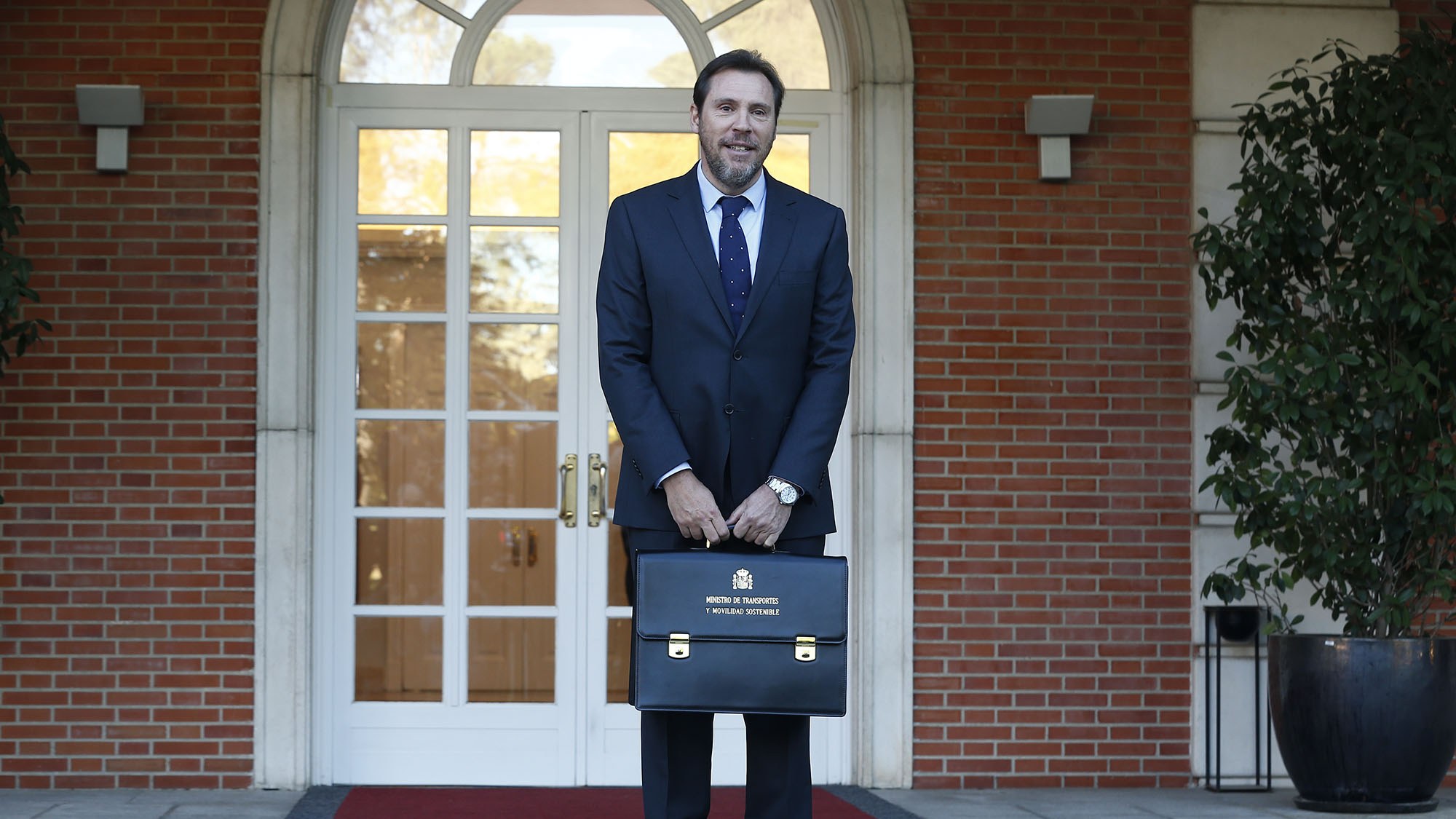
Transport Minister Óscar Puente resigned on Tuesday, Nov. 3, after the Urda collision. He also gave up heading the PSOE list for Valladolid.
What It Means for US Readers
Prediction markets such as Polymarket are increasingly followed in the United States alongside polls, and the Spanish contract is a live read on trader expectations. A conservative-led government would matter to US investors in Spanish banks, energy and infrastructure firms.
Spain’s next prime minister is not decided by the popular vote alone, since a candidate must win a parliamentary investiture vote. That is why a party polling near 30% can be priced near 89% to lead the government.
What Is Not Known
We found no poll taken after the collision, so its effect on voting intention is unclear. The broadcaster of the Nov. 26 debate, broadcast times and the exact campaign dates are unconfirmed, and we found no Senate projections.
Frequently Asked Questions
When is the Spanish general election?
Spain votes on Sunday, Nov. 29, 2026, for the Congress of Deputies and the Senate. Prime Minister Pedro Sánchez called the early vote after parliament rejected his government’s housing measures in early October.
What are the odds that Feijóo becomes prime minister?
Polymarket showed Alberto Núñez Feijóo at about 89% on a page updated at 9 a.m. ET on Nov. 5. These are traders’ bets rather than polls and can change quickly.
When are the televised debates?
Sánchez and Feijóo are set for a one-on-one debate on Monday, Nov. 16. A four-way debate is planned for Thursday, Nov. 26, but the broadcaster is disputed.
Why can a party near 30% be priced near 89%?
Spain’s prime minister is chosen by a vote in Congress, not by the popular vote. The market bets on who can win that vote, which depends on coalition arithmetic.
Sources: Polymarket prediction markets (Nov. 5); INE election figures (Oct. 9); royal decree calling the election (BOE, Oct. 6); Sondaxe, Hamalgama Métrica and CIS polls; Rio Times Spain Election 2026 hub and our earlier poll and markets report.
This article was produced by The Rio Times’ automated newsroom system. How we use AI · Report an error · Editorial responsibility: Matthias Camenzind, Editor-in-Chief