A Group Gave South Africa a 30 September Migrant Deadline. Nobody Is Enforcing It
SOUTH AFRICA · POLITICS
Key Facts
- —Who set it March and March, a Durban group founded in 2024. It announced the date on 17 August at the SADC summit.
- —What it asks It demands that governments deport, not that migrants leave. It is the group’s second deadline this year.
- —The police No special budget has been allocated. The joint command says a contingency figure is premature.
- —The real numbers 86,596 people were deported between 14 June and 20 August, under the state’s own plan.
- —The courts An interdict binds Operation Dudula. An attempt to interdict March and March was struck off.
- —The catch The declaration has no enforcement mechanism of its own, and no agency is preparing to execute it.
The deadline is a demand on the government, not an instruction to migrants, and no court order binds the group that set it. Two facts that most coverage of it leaves out.
A group called March and March has told South Africa to deport every undocumented foreign national by 30 September 2026. Two weeks out, no agency is preparing to act on it.
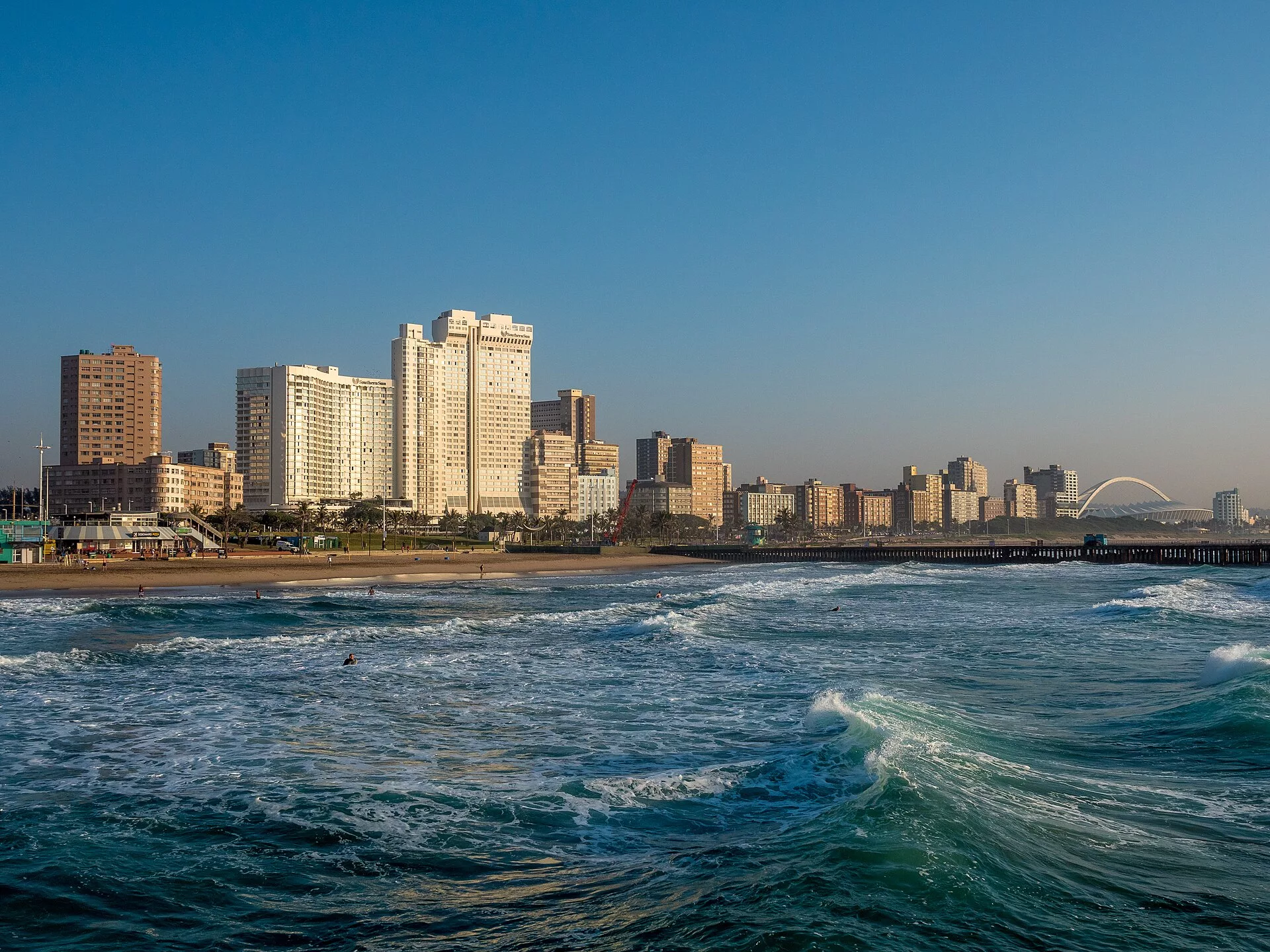
The date was announced on 17 August in central Durban, outside the venue of the regional bloc’s heads of state summit. The group’s founder, Jacinta Ngobese-Zuma, made the call.
Read what she actually demanded, because it is routinely misreported. She told regional leaders to fetch their people and told officials here to prepare for mass deportation by that date.
That is a demand on governments, not an ultimatum to individuals. The group has also called a national day of action for the same day.
It is the second such deadline this year. The first was 30 June, which passed with about 120 marches and more than 900 arrests.
Who the Group Is
March and March was founded in March 2024 by Ngobese-Zuma, a former radio presenter. It is a registered non-profit based in KwaZulu-Natal.
It is allied with Operation Dudula but is a separate organisation. Dudula is rooted in Gauteng and led by Zandile Dabula, and the two share slogans and have marched together.
In August the group said it wants to become an equivalent of the Afrikaner lobby group AfriForum for black South Africans. That is a statement of intent to institutionalise rather than to disband.
Ngobese-Zuma rejects the xenophobia label. In July she said whoever thinks the group is xenophobic can think so.
She added that its members are tired of explaining the same thing. It is the group’s standing answer to the charge.
In August she said the government should address the issue without calling it xenophobia. Dabula, for her part, has said she hopes South Africans can see the movement is for them.
Nobody Is Preparing for the Date
This is the part that decides how much the deadline matters. The police have allocated nothing for it.
Lieutenant-General Tebello Mosikili, who chairs the national joint operational structure, said on 9 September that there would be no specific budget. The structure works on its baseline.
Brigadier Athlenda Mathe, the national police spokesperson, said it was premature to give an operational contingency figure. The inter-ministerial committee on migration was non-committal on costs.
For scale, policing the June deadline cost 600 million rand, about US$37.2 million. Ian Cameron, who chairs parliament’s police committee, argued that existing resources properly planned would do better than repeating that.
Note the attribution there. Cameron chairs a committee and does not speak for parliament.
That distinction matters in a story where several people claim to speak for someone. It is also where most coverage slips.
What the State Is Actually Doing
The government is deporting at a scale that dwarfs anything the deadline could produce. It is doing so on its own plan, set out by President Cyril Ramaphosa in a national address on 7 June.
On 9 September the justice minister, Mmamoloko Kubayi, speaking as chair of the inter-ministerial committee on migration, gave the current figures. 86,596 foreign nationals were deported between 14 June and 20 August.
A further 4,200 or so were intercepted attempting to enter illegally between April and July. She said 90 percent of those repatriated had entered illegally.
An earlier figure is still widely quoted and is now two months stale. On 12 July the same committee reported 53,449 people processed for deportation or facilitated repatriation as of 11 July.
Roughly 80 percent of those were Malawian. The non-regional total was 2,615, including 1,159 Nigerians, 939 Ugandans and 431 Kenyans.
Counting from the other end gives a larger number. In August the Associated Press reported more than 178,000 people had fled or been deported since late May.
That figure rests on counts from the receiving countries rather than from Pretoria. The two methods do not measure the same thing.
Zimbabwe reported more than 115,000 and Malawi more than 56,000. Those are home-government counts, not Pretoria’s.
The Five Measures, and Which Are Real
Ramaphosa’s June address listed five things. They are not all in force and coverage tends to treat them as if they were.
Border controls are operational, with drones deployed, fencing and body cameras announced. Workplace inspections are also running, with 10,000 labour inspectors being recruited.
Dedicated immigration courts were announced to speed deportations but no enabling instrument has been identified. A biometric population register is in development rather than in use.
Tougher penalties for employers who hire undocumented workers require legislation that has not been enacted. The relevant bill has cleared cabinet and no more than that.
What the Courts Have Said
Three rulings matter and they are regularly conflated. On 4 November 2025 the Gauteng High Court in Johannesburg interdicted Operation Dudula and two named individuals.
Adams J barred them from demanding identity documents from private persons and from intimidation and assault. He also barred hate speech on grounds of nationality.
The order covers interference with access to healthcare, schools, housing and work. Dudula said it would appeal and no outcome has been reported.
On 4 December 2025 the same court ordered the city, health departments and police to guarantee access to two Johannesburg clinics. Trained security had to be posted at the entrances.
The third ruling is the one that matters here. The human rights commission sought an urgent interdict against both Dudula and March and March in Durban.
On 10 October 2025 it was struck off the roll for lack of urgency. The commission lost.
So no court order binds the group that set the September deadline. Anyone writing that the courts have restrained it is wrong.
The order that does exist has been openly flouted. Identity checks were documented at several clinics afterwards.
The health department spokesperson Foster Mohale said that if it is happening, people are deliberately breaking the law. He described it as undermining the court ruling.
The Violence Behind the Argument
This is not a dispute conducted only in press statements. In April a Cameroonian shop owner and three colleagues were attacked in Durban by about ten men.
They were beaten with golf clubs and sjamboks. No police response followed at the time.
At least two Nigerian men were killed in separate incidents in Johannesburg in April and May. Anti-migrant violence in Mossel Bay in late May left people dead and hundreds displaced.
By 8 July the government reported 205 cases opened, 350 suspects arrested and 112 matters on the court roll. Médecins Sans Frontières opened emergency humanitarian operations inside the country in July.
Mozambique says 11 of its citizens were killed. In May the foreign ministry replied to Ghana’s request for a continental debate on the attacks.
It said there was no credible evidence to draw that conclusion at that stage. It also warned of manipulated footage circulating.
The same reply condemned those who took the law into their own hands. It said such concerns must not be allowed to give rise to xenophobia directed at people from other African countries.
What to Watch
Kubayi’s committee has been consistent on one point since June. The management of immigration, deportation and repatriation is the exclusive responsibility of the state, and community identity checks are illegal.
What the government has not done is repudiate the date itself. No statement rejecting the 30 September deadline as such has been published.
Neither has any response to it from the home affairs ministry. That silence is itself worth noting two weeks out.
The context nobody should omit is the calendar. Local government elections fall in November.
A second deadline landing two months before them invites an obvious question. Nobody involved has tried to answer it.
On present evidence the date is a protest, not an operation. The deportations will continue either way, because they were never running on this timetable.
More: Africa news in English, every day from The Rio Times.
Frequently Asked Questions
What is the 30 September deadline?
A demand by the group March and March that governments deport all undocumented foreign nationals by that date, announced on 17 August in Durban.
Is the government enforcing it?
No. The police have allocated no budget for the date and say a contingency figure is premature. State deportations run on a separate plan announced in June.
How many people have been deported?
86,596 between 14 June and 20 August, according to the inter-ministerial committee on migration. Receiving countries count more than 178,000 departures since late May.
Have the courts stopped these groups?
Operation Dudula is under an interdict from November 2025. An attempt to interdict March and March was struck off for lack of urgency in October 2025.
Has there been violence?
Yes. Killings were reported in Johannesburg and Mossel Bay, and by early July the government recorded 205 cases and 350 arrests.
Sources: SAnews, Inter-Ministerial Committee on Migration, Department of International Relations and Cooperation, South African Police Service, Gauteng High Court, Durban High Court, Human Rights Watch, Associated Press.
This article was produced by The Rio Times’ automated newsroom system. How we use AI · Report an error · Editorial responsibility: Matthias Camenzind, Editor-in-Chief