
ECONOMY · SENEGAL
Key Facts
- —The country Senegal is a West African oil and gas producer that uses the CFA franc, a currency pegged to the euro.
- —Why it matters Senegal is restructuring its foreign debt, and the terms will decide how much international bondholders recover.
- —Why now The government asked major creditor groups for their “red lines” and hopes for agreements in principle by December.
- —What happened On Tuesday 13 October it emerged that a bondholder group had warned Dakar in writing that seeking a haircut could badly delay talks.
- —The numbers US$2.2 billion of bonds held by the group, out of US$5.2 billion outstanding; an IMF programme of about US$2.2 billion awaits approval.
- —What it means for you Holders of Senegal’s Eurobonds face a fight over possible losses, and any delay could also slow IMF money for Dakar.
- —Still open Whether Dakar will seek a cut in principal, how large it would be, and when the IMF board will vote.
Senegal bondholders holding about US$2.2 billion of its international bonds have warned Dakar against seeking a haircut on their debt. In a letter, the group said cutting the principal could significantly delay talks, Senegalese outlets reported on Wednesday 14 October.
The warning matters for US readers because the IMF, in which Washington is the largest shareholder, calls Senegal a test case for faster debt relief. A long fight would delay relief for Senegal and clarity for the investment funds that hold its bonds.
What the Senegal Bondholders Told Dakar
Reuters first reported the group’s moves on Tuesday 13 October, citing people with direct knowledge of the matter. The Dakar news sites SenePlus, Seneweb and Xalima carried the report in French.
The Senegal bondholders have hired the restructuring consultancy Alvarez & Marsal as financial adviser for the talks with the government. Their legal adviser is the US law firm White & Case, according to the same reports.
The group holds bonds with a face value of US$2.2 billion, out of US$5.2 billion of Senegal’s international bonds outstanding. That is about 42% of the stock, a large block in any negotiation.
The letter was sent about ten days before the report, in reply to a government request that major creditor groups state their red lines. Xalima noted that the firms involved have not confirmed the position publicly.
A haircut means creditors agree to get back less money than they are owed. It eases the burden on the state, but for bondholders it is a direct loss.
How Senegal Plans to Treat Its Debt
The Ministry of Economy, Finance and Planning, led by Minister Cheikh Diba, launched the Senegal Debt Treatment Plan on Tuesday 1 September 2026. It said the plan, known by its French initials PTDS, aims to bring debt service back to accepted norms.
Debt in CFA francs stays outside the plan, because the regional market is a key source of finance for the state. That leaves the foreign-currency debt, including the Eurobonds, at the centre of the talks.
Dakar says it will use an improved version of the G20 Common Framework, with a tight timetable and parallel talks with all creditors. The G20 and the Paris Club of official lenders launched the framework in November 2020 to rework unsustainable debts.
On Tuesday 6 October, IMF staff chaired a first virtual meeting between Senegal and all its external creditors. The ministry said no material non-public information would be shared, and Seneweb reports that Dakar wants agreements in principle by December.
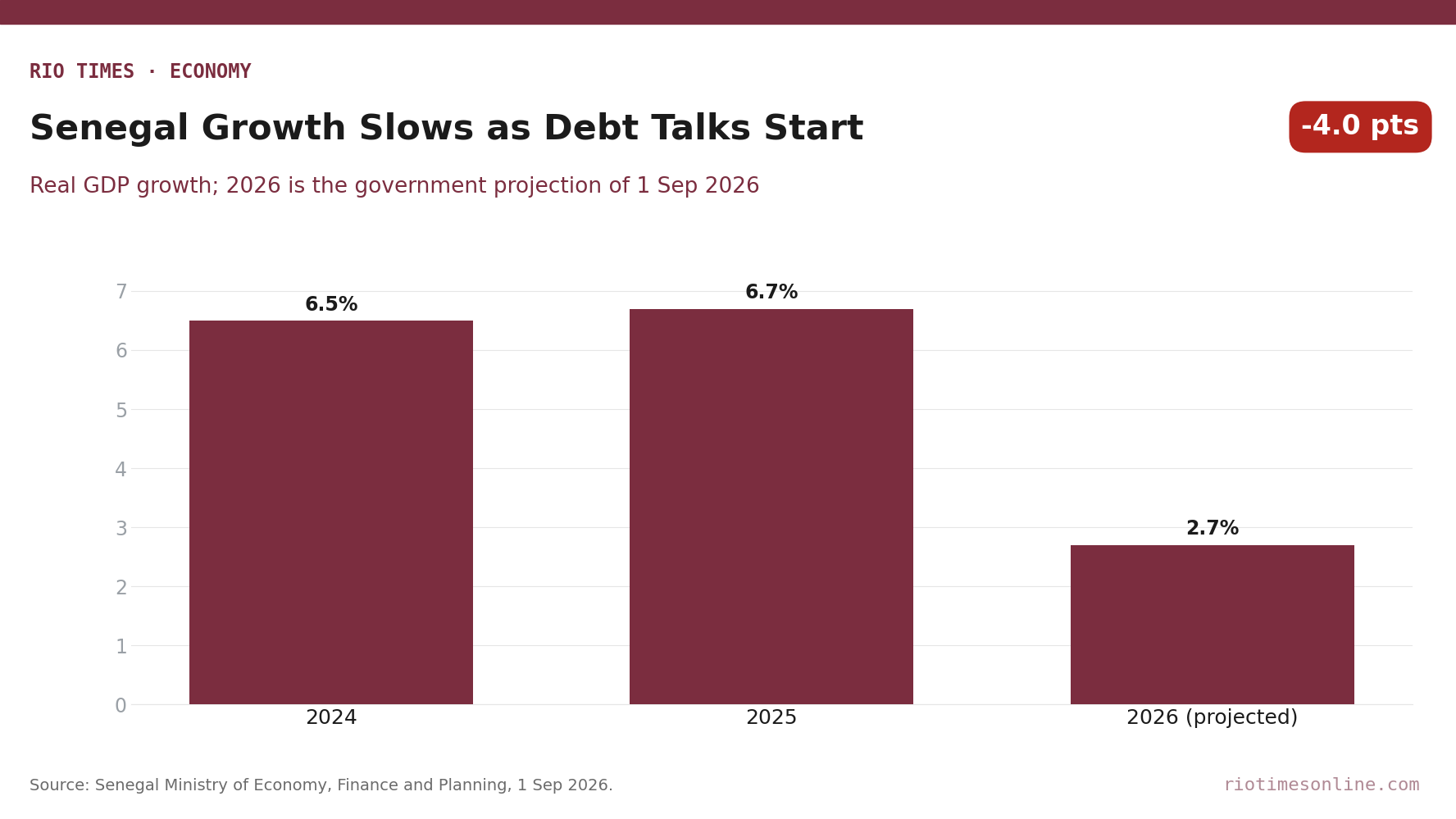
The ministry says reforms cut the budget deficit from 13.4% of GDP in 2024 to 6.4% in 2025. It projects growth of 2.7% in 2026, down from 6.7% in 2025, partly because of the war in the Middle East.
What the IMF Says
IMF Managing Director Kristalina Georgieva said in Bangkok on Wednesday that she was optimistic about Senegal’s debt treatment. She spoke at the annual meetings of the IMF and the World Bank, Africanews reported.
“My conversations with key creditors show everybody understands this is the test case to the playbook we have adopted through the Global Sovereign Debt Roundtable,” she said. She added that it was important to show that the improved Common Framework “can deliver results quickly.”
IMF staff have reached a staff-level agreement with Senegal on a new Extended Credit Facility of about US$2.2 billion. Dakar hopes for a first payment as early as November, but the IMF Executive Board must approve the deal first.
Senegal’s crisis began in 2024, when audits found public debt that the previous government had not declared. Debt is now put at about 130% of GDP, including state companies and guarantees, according to Africanews.
What It Means for US Readers
The letter shows Senegal bondholders drawing a line before formal talks have properly begun. How Dakar responds will shape both the size of any losses and the speed of a deal.
The case also matters beyond Senegal, because the IMF wants to prove that debt talks can move faster. The Common Framework has long been criticised for slow progress, notably in Zambia and Ghana.
There is a stabiliser, since debt in CFA francs is excluded and regional banks and savers are shielded from the bond talks. IMF staff have also already agreed a programme with Dakar, which gives creditors a common reference.
Our earlier report, Senegal Asks Creditors for More Time on Debt, covers the 6 October meeting. For background, see Senegal Explained: The Country, the Faye Government and What to Watch.
People moving to the country can read Taxes in Senegal for Expats: Rates, Residency and What Foreigners Pay and Opening a Bank Account in Senegal as a Foreigner: CFA Francs, Documents and Options. Both explain how the CFA franc and local rules affect foreigners.
What Is Not Known
The government has not said publicly whether it will seek a haircut, or how large any cut might be. The letter itself has not been published, and its content has not been independently confirmed.
No date has been set for the IMF board vote on the programme. It is also unclear whether official lenders and bondholders will accept comparable treatment, a core rule of the Common Framework.
The December target for agreements in principle comes from media reports, not from a published official timetable. The ministry has promised regular updates on the next steps of the process.
Frequently Asked Questions
What did Senegal’s bondholders say?
A group holding US$2.2 billion of Senegal’s international bonds warned in a letter that seeking a haircut could significantly delay talks. The letter answered a government request for creditors’ red lines.
What is a haircut?
A haircut is a cut in the principal that a borrower repays to its creditors. It reduces the state’s debt but means a direct loss for bondholders.
Who advises the bondholder group?
The group has hired Alvarez & Marsal as its financial adviser, according to Senegalese media reports. Its legal adviser is the law firm White & Case.
Is Senegal’s CFA franc debt affected?
No, the government says debt in CFA francs is outside its debt treatment plan. It wants to protect the regional market that finances the state.
When could a deal come?
Senegalese media say Dakar aims for agreements in principle by December. The IMF Executive Board must also approve a programme of about US$2.2 billion.
Sources: Seneweb, 14 October 2026; Xalima, 14 October 2026; SenePlus, 13 October 2026; Ministry of Economy, Finance and Planning, PTDS statement, 1 September 2026; Ministry of Economy, Finance and Planning, creditor meeting release, 30 September 2026; Africanews, 14 October 2026.
Editorial responsibility: Matthias Camenzind, Editor-in-Chief · Editorial standards · Report an error
Part of our ongoing coverage
Africa: The New Scramble — the great-power contest over the continent.
Living in or visiting Dakar? See this month's events.