Mali Explained: The Junta, the Gold and the Jihadist War Nearing Bamako
GUIDES · MALI
Key Facts
- —Capital Bamako, on the Niger River in the south-west. Mali is a landlocked Sahel state of 1,240,192 square kilometres, Africa’s eighth-largest country.
- —Population About 25.2 million in 2025, according to the World Bank. The census of 2022 counted 96.4 percent of Malians as Muslim.
- —Currency The West African CFA franc, pegged at 655.957 to the euro. On 29 September 2026 one US dollar bought about 577 CFA francs.
- —Language Thirteen national languages are official under the 2023 constitution, among them Bambara, Fula, Songhai and Tamasheq. French is now a working language only.
- —GDP About US$30.1 billion in 2025, or roughly US$1,190 per person, World Bank data show. Gold makes up close to 80 percent of exports.
- —Government A military transition led by General Assimi Goïta since the coups of 2020 and 2021. Political parties were dissolved in May 2025.
Mali explained for readers far from the Sahel. Who governs this vast desert country, why its gold matters, and how close its war has come to the capital.
Mali sits at the centre of the Sahel, the dry belt south of the Sahara where jihadist insurgencies have spread across several countries. Its army rulers broke with France and West Africa’s main bloc and turned to Russia. They also rewrote the rules for the foreign miners who dig its gold.
What kind of country is this?
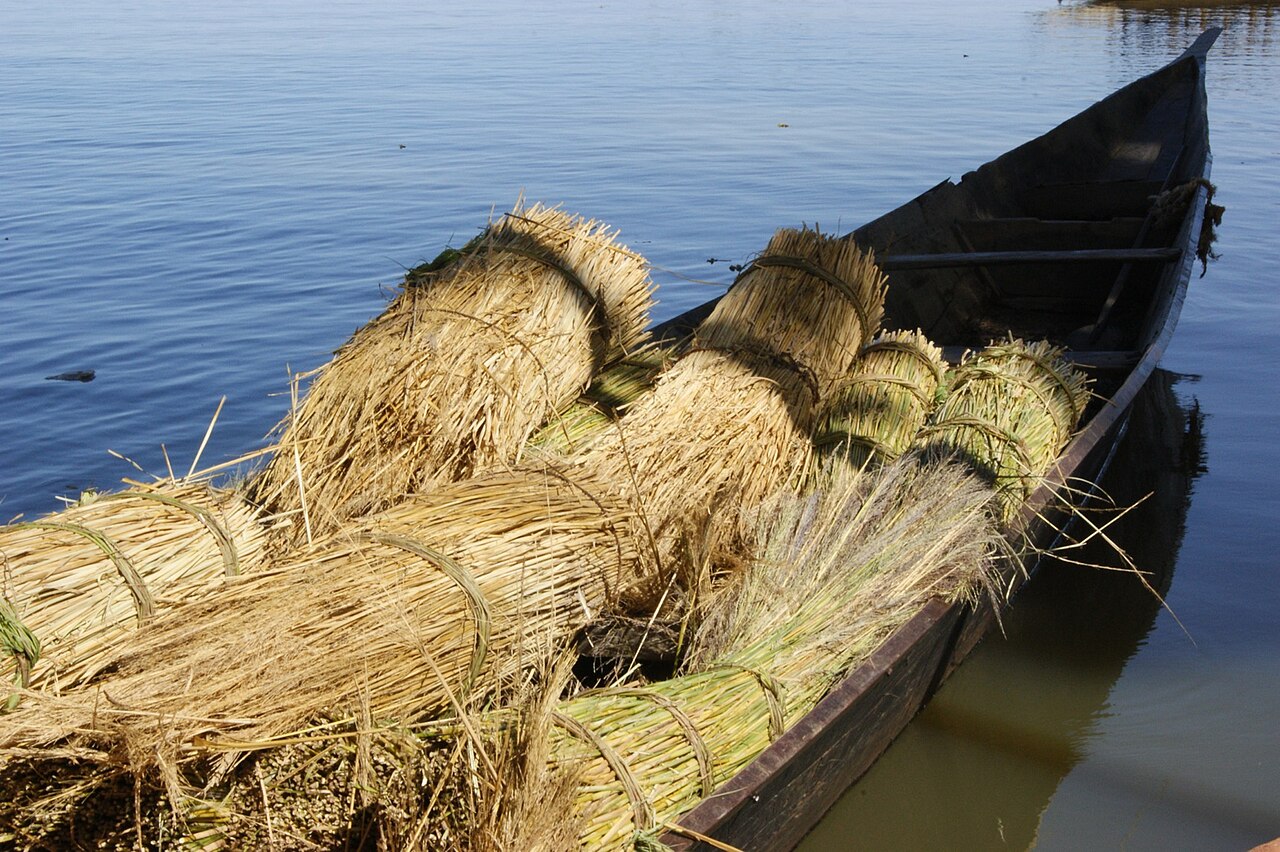
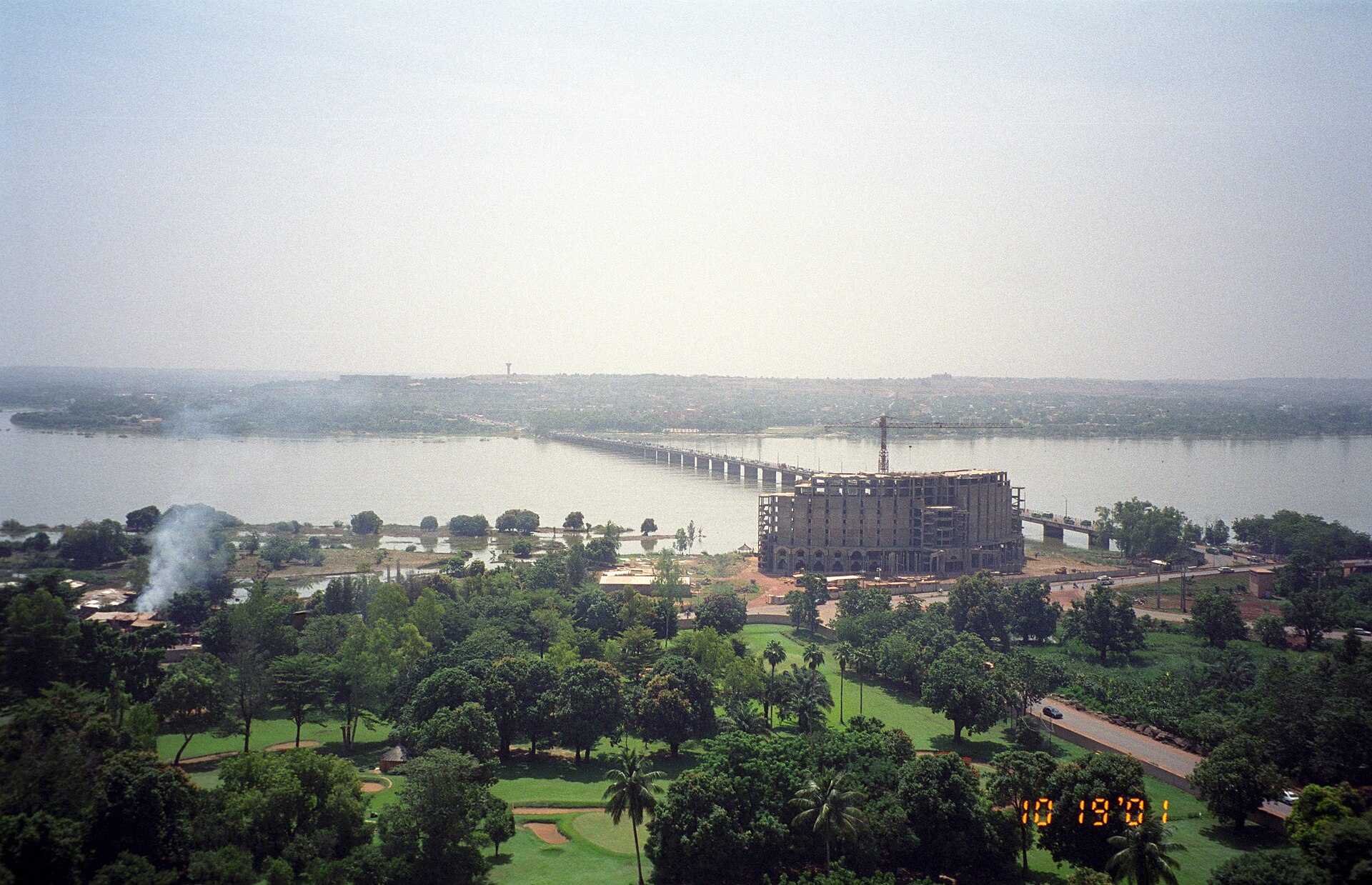
Mali is big, dry and landlocked, more than twice the size of metropolitan France. Its territory stretches from the Sahara in the north to wetter farmland in the south. Most people live in the south and along the Niger River, which arcs through the heart of the country.
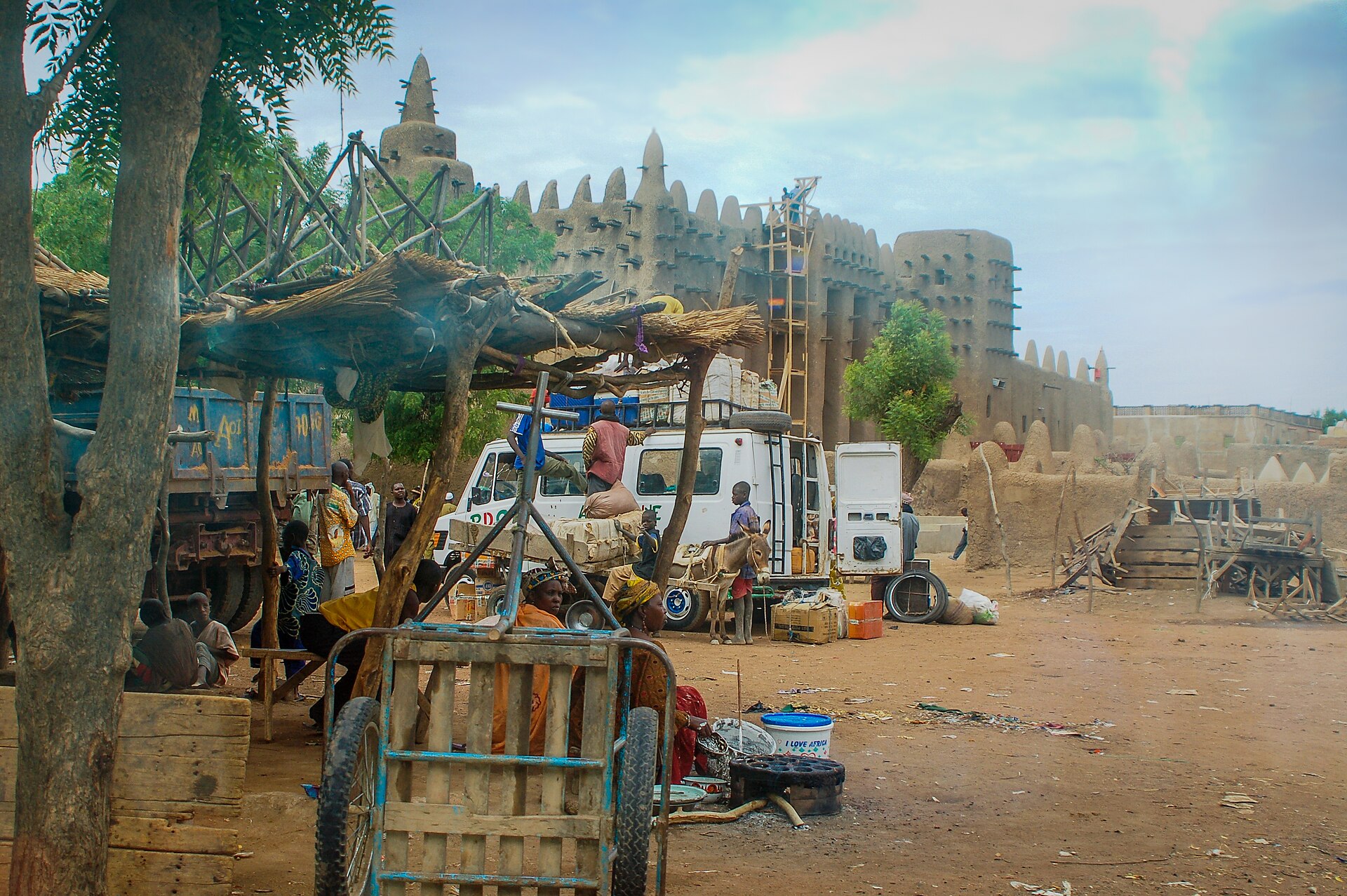
The river explains much of Mali’s history. Medieval empires grew rich on trade that passed along it and across the desert. Timbuktu and Djenné became famous centres of Islamic learning and commerce. Their mud-brick mosques still draw historians, even though few tourists can now reach them safely.
Modern Mali became independent from France on 22 September 1960, after the short-lived Mali Federation with Senegal broke up. Modibo Keïta was its first president. Moussa Traoré seized power in a 1968 coup and ruled until a popular uprising in 1991 opened two decades of multiparty politics.
That democratic period ended in 2012. A Tuareg rebellion in the north was quickly overtaken by jihadist groups, and soldiers toppled the elected government in Bamako. French troops intervened in 2013. A large United Nations mission, known as MINUSMA, followed. Neither ended the insurgency.
Society is young, rural and overwhelmingly Muslim. The 2022 census counted 96.4 percent of the population as Muslim. The World Bank estimates that 235,000 young people enter the labour market each year, far more than the formal economy can absorb.
Who runs Mali and how
Mali is run by soldiers. Colonel Assimi Goïta led the coup of 18 August 2020 that removed President Ibrahim Boubacar Keïta. On 24 May 2021 he staged a second coup against the civilian interim president, Bah Ndaw. The constitutional court declared him interim president four days later.
Since then the junta has steadily extended its hold. A new constitution was approved in a referendum on 18 June 2023. The Constitutional Court certified 96.9 percent in favour, on a turnout of 38.2 percent. Goïta promoted himself to general in October 2024. In May 2025 all political parties were dissolved.
In July 2025 the appointed National Transitional Council, which serves as parliament, gave Goïta a five-year term. It is renewable “as many times as necessary”, with no election required. Abdoulaye Maïga serves as prime minister, but real power sits with Goïta and a small circle of officers.
That circle lost a key member on Saturday 25 April 2026. Defence minister General Sadio Camara was killed when attackers struck his home in Kati, a garrison town near Bamako, Al Jazeera reported. On 4 May Goïta took over the defence portfolio himself.
The break with France and ECOWAS
Foreign policy has been rebuilt from scratch. French troops left in 2022 and the UN mission withdrew in 2023. Russian mercenaries from the Wagner Group arrived instead. Their role has since passed to Russia’s Africa Corps, which answers to the Russian defence ministry.
On 16 September 2023 Mali, Burkina Faso and Niger, all ruled by juntas, signed a mutual defence pact. It became the Alliance of Sahel States, or AES, and a confederation in July 2024. The three countries left the Economic Community of West African States (ECOWAS) with effect from 29 January 2025.
The AES has since added a joint biometric passport, an investment bank and a 0.5 percent levy on imports from outside the bloc. Its presidency rotates yearly. Goïta held it first and handed it to Burkina Faso’s Ibrahim Traoré in December 2025. A 45-seat confederal parliament was installed in Niamey on 24 August 2026.
How the economy works
Mali’s economy produced about US$30.1 billion in 2025, according to World Bank data. That is roughly US$1,190 per person, placing Mali among the poorest countries in the world. The last national survey, in 2021, found 45.5 percent of Malians below the national poverty line.
Rain-fed farming and services dominate output, the World Bank says. Cereals feed the country and cotton is the main cash crop after gold. Because most farms depend on rain, a poor rainy season hits household incomes hard.
Foreign earnings come overwhelmingly from gold. It accounts for close to 80 percent of exports. Mali is one of Africa’s leading producers, with large industrial mines run by foreign groups such as Barrick, B2Gold, Allied Gold and Resolute. Thousands of small artisanal miners dig alongside them.
The gold dispute and the rebound
In 2023 the junta adopted a new mining code designed to capture more value from the sector. It then pressed miners for back taxes and a bigger share of the profits. The biggest clash came with Barrick, operator of the Loulo-Gounkoto complex, in which Barrick holds 80 percent and the state 20 percent.
The government seized gold shipments, detained Barrick staff and placed the mine under provisional administration in 2025. The dispute ended on 25 November 2025. Barrick agreed to pay 244 billion CFA francs (about US$430 million at the time), Mining.com reported. In return Mali dropped all charges and handed back control.
The conflict cost output. Industrial production fell from 54.8 tonnes in 2024 to 42.2 tonnes in 2025, well below the record 66.5 tonnes of 2023. In the first half of 2026 it recovered to 23.5 tonnes, up about 30 percent, the mines ministry said. The full-year target is 43.2 tonnes.
Lithium is a newer bet. Mali made its first lithium shipments in 2025, the World Bank notes. The Bank expects mining to lift growth to 5.0 percent in 2026. Growth slowed to 4.1 percent in 2025 because of the fuel blockade.
Money and trade
Despite leaving ECOWAS, Mali still uses the West African CFA franc and stays in the West African Economic and Monetary Union. The franc is fixed at 655.957 to the euro, which keeps inflation low. On 29 September 2026 one US dollar bought about 577 CFA francs, according to open.er-api.com.
Being landlocked, Mali depends on roads from the ports of Dakar and Abidjan. It imports more than 40 percent of its energy needs, the World Bank says. Diesel also fuels about 60 percent of power generation. Any threat to the road corridors quickly becomes a threat to the grid.
What is happening right now
As of 25 September 2026, Mali faces its most serious security crisis since 2012. The main threat is Jama’at Nusrat al-Islam wal-Muslimin, or JNIM, al-Qaeda’s Sahel branch. It now works alongside the Azawad Liberation Front, a Tuareg separatist group active in the north.
On 3 September 2025 JNIM declared a blockade on fuel imports. Its fighters burned tanker convoys on the roads from Senegal and Côte d’Ivoire. Schools closed for two weeks in late October and November 2025. The US embassy told Americans on 28 October 2025 to leave immediately on commercial flights.
The government introduced nationwide fuel rationing in January 2026. The army now brings fuel into Bamako in large escorted convoys. On 14 September 2026 more than 900 tankers entered the capital under military protection, Al Jazeera reported.
The violence peaked in the coordinated offensive of 25 April 2026. JNIM and the Azawad Liberation Front struck Bamako, Kati, Mopti, Gao and Kidal at once. Fighting went on for more than a day. Defence minister Camara was among those killed.
September has brought fresh losses. On Thursday 10 September JNIM overran an army camp at Dioura in central Mali. The army has published no death toll. An officer told AFP that more than 50 personnel died, including five Africa Corps members. By 18 September security sources told AFP the toll had passed 100, and dozens of soldiers were reportedly taken prisoner.
On Tuesday 22 September Mali marked its 66th independence anniversary under the shadow of these attacks. The junta has not announced a change of strategy.
What to watch
Fuel convoys to Bamako. The size and frequency of escorted convoys is the clearest signal of whether the capital is being choked or supplied. A long gap between convoys usually shows first as queues at petrol stations and longer power cuts.
Gold output for 2026. The mines ministry targets 43.2 tonnes of industrial gold this year. Its full-year figures, usually published early in the following year, will show whether the recovery at Loulo-Gounkoto held. High world gold prices mean every tonne matters for the budget.
The AES rotation. Traoré’s one-year term as AES president began in December 2025, so a handover is due around December 2026. Watch also for progress on the promised joint currency. For now the three countries remain inside the CFA franc zone.
Army and Africa Corps losses. The Dioura attack and the killing of Camara raise questions about how long the current security model can hold. Any change in the size or role of Russia’s Africa Corps would be a major shift.
IMF and World Bank reviews. Mali has a staff-monitored programme with the IMF, whose second review was approved in March 2026. Future reviews will test whether the blockade is eroding revenue and pushing the deficit past the 3 percent of GDP regional ceiling.
What this means for foreigners
For travellers, the message from Western governments is blunt. The US State Department rates Mali at Level 4, “Do not travel”, citing terrorism, kidnapping, crime and unrest. Since 1 January 2026 Mali has also suspended visas for US citizens, with limited exceptions.
For investors, Mali offers large gold and lithium deposits but high political risk. The Barrick case showed that the state is willing to detain staff, seize output and rewrite terms. Settlements are possible, but on the government’s timetable.
For Europe and the Americas, Mali matters beyond its borders. Instability in the Sahel drives displacement, and UNHCR counted more than 400,000 internally displaced people in Mali in June 2026. The country is also a test of how far Russia can replace Western partners in Africa.
For gold markets, Mali is a mid-sized but visible supplier. Output swings there feed into the results of listed miners such as Barrick and B2Gold. B2Gold’s Fekola mine was Mali’s largest producer in the first half of 2026.
Connected Coverage
Mali Fuel Blockade Tightens the Siege on Bamako
Mali Junta Holds Crisis Meeting as Jihadist Attacks Surge in the Centre
Mali Industrial Gold Output Jumps 30 Percent in First Half of 2026
Mali Burkina Faso Niger Launch AES Sahel Confederation Parliament as Currency Plans Lag
JNIM Blockades Bamako Fuel Supply as Sahel Deaths Top Half of Global Terror Toll
What Is Not Known
The true toll of the war is unclear. The army rarely confirms its losses. Figures for the Dioura attack range from more than 50 to over 100 dead, all from unofficial sources. JNIM claims 150. Independent reporting from much of the country is not possible.
It is also unknown when, or whether, Mali will hold elections. Goïta’s mandate can be renewed without a vote. The size of Russia’s Africa Corps deployment, and the cost to Mali, have not been published.
Official economic data lag events. After the April 2026 offensive JNIM declared all routes into Bamako blocked, Africanews reported. Its effect on growth, revenue and prices will show only in later IMF and World Bank reports.
Sources: Population and output from the World Bank, and gold data from Mali’s Ministry of Mines via Mining.com. Travel rules come from the US State Department, with reporting by Al Jazeera and Africanews. All accessed 25 September 2026.
- World Bank — World Development Indicators, Mali
- World Bank — Macro Poverty Outlook, Mali, April 2026
- US State Department — Mali travel advisory
- Mining.com — Mali gold output jumps 30% in first half
- Mining.com — Barrick to pay Mali US$430 million to settle dispute
- Al Jazeera — Defence minister Sadio Camara killed
- Africanews — Dioura army base attack
- Arab News (AFP) — Dioura toll passes 100
- Africanews — JNIM declares Bamako blockade
Frequently Asked Questions
Who rules Mali in 2026?
General Assimi Goïta, who took power in coups in August 2020 and May 2021. A July 2025 law gave him a five-year term, renewable as many times as necessary, and political parties were dissolved in May 2025.
What is the Alliance of Sahel States?
A confederation of Mali, Burkina Faso and Niger, all ruled by juntas. It began as a defence pact on 16 September 2023, became a confederation in July 2024, and its members left ECOWAS with effect from 29 January 2025.
Why does gold matter so much to Mali?
Gold makes up close to 80 percent of Mali’s exports. Industrial output fell to 42.2 tonnes in 2025 during a dispute with Barrick, then rose about 30 percent to 23.5 tonnes in the first half of 2026.
What is the fuel blockade?
Since 3 September 2025 the al-Qaeda-linked group JNIM has attacked fuel tankers on the roads from Senegal and Côte d’Ivoire. Fuel now reaches Bamako in large army-escorted convoys, and rationing began in January 2026.
Is it safe to travel to Mali?
The US State Department rates Mali at Level 4, Do not travel, citing terrorism, kidnapping, crime and unrest. Since 1 January 2026 Mali has also suspended visas for US citizens, with limited exceptions.
What currency does Mali use?
The West African CFA franc, pegged at 655.957 to the euro. On 29 September 2026 one US dollar bought about 577 CFA francs. Mali still uses it despite leaving ECOWAS.
This article was produced by The Rio Times’ automated newsroom system. How we use AI · Report an error
Read More from The Rio Times