Russia Defends UN Veto Amid Mali Sanctions Debate
Russia’s UN envoy, Vasily Nebenzia, supported his country’s veto on a Mali resolution in the Security Council.
Nebenzia said Western nations aim to keep control over their old colonies and is convinced the proposed Mali sanctions had this goal.
Mali’s envoy, Issa Konfourou, spoke too. He said the sanctions were to enforce a peace deal from 2015.
These sanctions were for the north, controlled by former rebels. However, experts wanted to expand them to the south.
The European Union criticized Russia for stopping a popular resolution. From the EU, Olof Skoog warned that not acting weakens peace efforts. Canada and Japan agreed.
The U.S. raised concerns about Russia’s ties to the Wagner group.
Russia got support from Venezuela and North Korea. Mali faces ongoing danger from groups linked to ISIS and Al Qaeda.
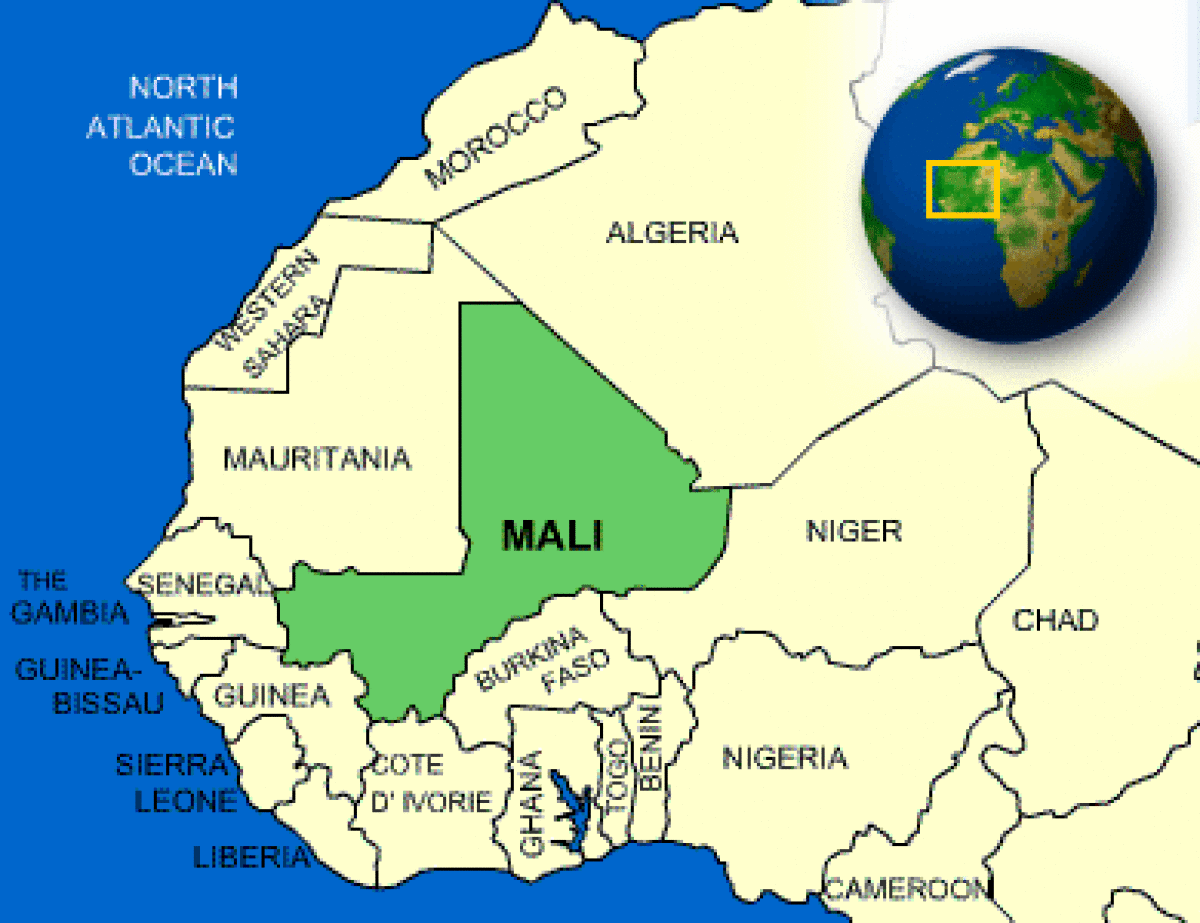
A military junta governs Mali after two coups. The country is not secure.
In June, Mali asked for a pullout of UN peacekeepers. The country is growing closer to Russia.
The meeting turned into a debate about veto power. Only five countries, like the U.S. and China, have this veto right.
This old system is under increasing global questions. But no country wants to give up this power.
Background
The UN Security Council has a complex history. Created after World War II, it aimed to maintain global peace.
Five permanent members have the veto power. They are the U.S., Russia, China, France, and the UK.
This power often creates tension and stalls action. For instance, the Council struggles in crisis situations like Syria.
Reforms are complex because current members don’t want to lose power. This stalemate puts the effectiveness of the Council.
This article was produced by The Rio Times’ automated newsroom system. How we use AI · Report an error
Part of our ongoing coverage
Africa: The New Scramble — the great-power contest over the continent.
Read More from The Rio Times