JNIM Blockades Bamako Fuel Supply as Sahel Deaths Top Half of Global Terror Toll
Geopolitics · Africa
—The stakes. The Liptako-Gourma borderlands of Burkina Faso, Mali and Niger now account for more than half of global terrorism-related deaths.
—The actors. Al-Qaeda affiliate JNIM and Islamic State Sahel Province are competing violently while expanding toward the Gulf of Guinea.
—The trigger. JNIM’s fuel blockade of Bamako, ongoing since September 2025, is pressuring Mali’s capital and disrupting regional trade corridors.
—The siege. At least 40 towns and villages in Burkina Faso, affecting up to 2 million people, were under jihadist blockade at the end of 2024 with acute food and medicine shortages.
—The toll. Nearly 6.8 million internally displaced persons and 1.3 million refugees across West Africa and the Sahel as of February 2026.
The world’s deadliest conflict zone is no longer contained to the Sahel’s remote tri-border areas. By September 2026, jihadist groups have turned coastal West Africa into a new front while blockading capital cities and besieging towns across Burkina Faso.
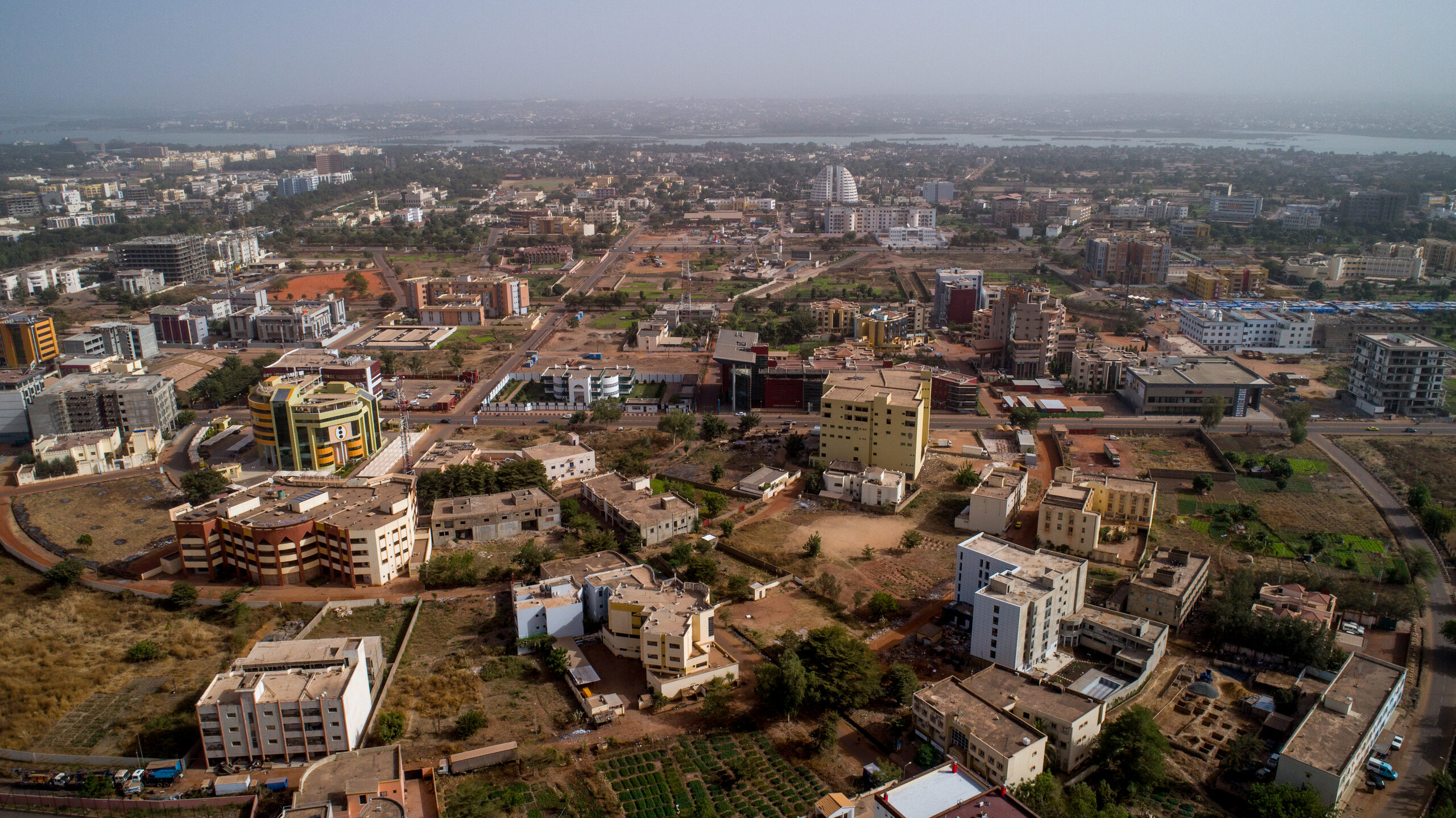
The Liptako-Gourma: Epicentre of Global Terrorism
The Liptako-Gourma tri-border area of Burkina Faso, Mali and Niger now accounts for more than half of global terrorism-related deaths, according to the Council on Foreign Relations Global Conflict Tracker updated on 29 July 2026.
Weak governance, poverty and climate stress are the structural drivers allowing jihadist groups to entrench in the Sahel, CFR analysts note.
This borderland has become the operational heartland for two rival jihadist networks fighting for territory, resources and ideological dominance.
The consolidation of jihadist control followed the withdrawal of French Operation Barkhane forces and the UN MINUSMA mission from Mali.
That vacuum allowed JNIM to expand territorial control rapidly across northern and central Mali while ISSP entrenched in northern Burkina Faso and western Niger.
JNIM: Al-Qaeda’s Dominant Force in the Central Sahel
Jama’at Nusrat al-Islam wal-Muslimin, known as JNIM, is the al-Qaeda affiliate and dominant jihadist group in the central Sahel, operating primarily in Mali and Burkina Faso.
The group expanded territorial control following the departure of French and UN forces from Mali, according to CFR’s assessment.
JNIM has been blockading Bamako’s fuel supply since September 2025, a tactic still in place in mid-2026 and placed severe pressure on Mali’s capital.
The fuel blockade has disrupted economic activity and trade corridors across the region, forcing the Malian state to divert resources to break the siege.
JNIM’s strategy combines territorial control with economic strangulation, making it the most operationally sophisticated jihadist actor in the Sahel.
Islamic State Sahel Province: The Rival Expanding South
The Islamic State Sahel Province, formerly known as ISGS, is the ISIS affiliate operating primarily in northern Burkina Faso, western Niger and the Mali-Niger border area.
ISSP competes violently with JNIM for territory and influence, with clashes recorded since 2020 and first reported clashes in Niger during 2026.
In early 2026, ISSP began broadcasting its footprint in southwestern Niger by claiming attacks in Dosso and southern Tahoua, and striking military sites in Niamey in January and Tahoua in March.
ACLED expert Héni Nsaibia reports first clashes between JNIM and ISSP in Niger and Nigeria in April 2026, marking intensifying rivalry across borders.
The ISSP expansion southward follows a broader trajectory of jihadist groups pushing toward the Gulf of Guinea from their Sahelian strongholds.
Southward Creep Toward Coastal West Africa
Militant groups linked to JNIM and Islamic State in the Sahel have steadily expanded operations toward the Gulf of Guinea, according to a May 2026 Stimson Center analysis titled ‘Southward Creep: The Sahel Insurgency Reaches Coastal West Africa.’
By 2021, JNIM fighters were already staging attacks from eastern Burkina Faso and southwestern Niger into northern Benin.
Attacks in border areas of Benin and Togo increased sharply between 2022 and 2024, according to the Stimson Center report.
Benin is among the hardest-hit coastal states, with fatalities rising sharply in 2025, though still below levels in Burkina Faso or Mali.
ACLED analysts reported in March 2025 a ‘new phase of expansion’ toward the coast, identifying the Dosso-Alibori corridor between Niger and Benin as a critical hotspot and the Burkina Faso-Togo border zone as critical hotspots.
Benin and Togo: The New Frontline
JNIM took control of large portions of southeastern Burkina Faso and southwestern Niger before spreading into northern Benin and Togo, as well as northwestern Nigeria, according to ADF-Magazine reporting from March 2026.
JNIM’s expansion into Benin began in 2021, with attacks in northern Benin increasing from 22 in 2021 to 176 in 2024, according to ACLED data cited by ADF.
Deaths in northern Benin more than doubled from 52 in 2022 to 131 in 2024.
International Crisis Group analysts say the militant advance beyond the Sahel, particularly into northern Benin and Togo, has become a major security concern for these states.
Benin recorded its deadliest year to date amid rising JNIM activity, according to Héni Nsaibia’s statement dated 20 April 2026.
A Regionalised Threat Across West Africa
Both JNIM and ISSP continue to expand into Niger’s southern border regions and Nigeria, according to ACLED’s Héni Nsaibia.
The Institute for Security Studies Africa warns that gradual expansion of armed groups into coastal countries reflects the risk of terrorism becoming regionalised.
JNIM’s disruption of trade corridors is compounding economic pressure across multiple West African states simultaneously.
The ISS Africa commentary from 30 July 2026 argues the Sahel security crisis demands action beyond assurances of solidarity.
The emergence of jihadist operational zones in Nigeria marks the first time both maj
Burkina Faso’s Blockaded Towns: The Siege Tactic
Non-state armed groups continue to target civilians and blockade cities for months or years in Burkina Faso, severely limiting access to food and basic services, according to ACAPS country profile updated 2 June 2026.
At least 40 towns and villages, primarily in Centre-Nord, Est, Nord and Sahel regions, were under blockade by end-2024, affecting up to 2 million people.
Many of these areas had been cut off from regular humanitarian access for over a year.
The northern city of Djibo in Soum province, near the Mali border, has been under blockade since 17 February 2022 by armed groups affiliated with JNIM.
These groups control access routes and prevent entry and exit of people and goods, creating siege conditions with acute shortages of food, water and medicine.
Djibo: A Besieged City Swollen by Displacement
Djibo’s population reportedly swelled from approximately 30,000 to about 300,000 as displaced villagers fled into the besieged town.
The massive influx of displaced people has overwhelmed whatever limited resources the blockaded city can access.
Blockades across Burkina Faso have caused acute shortages of food, water and medicine while severely restricting movement of civilians and aid organisations.
The siege tactic has become a defining feature of the Sahel conflict, with jihadist groups using starvation and isolation as weapons of war.
Humanitarian agencies report many blockaded areas have been inaccessible for over a year, leaving civilians without regular food deliveries or medical supplies.
The Army’s Controversial Role in Burkina Faso’s Sieges
A 6 July 2026 investigation by The New Humanitarian reports accusations from civilians that Burkina Faso’s army is preventing civilians from leaving government-held towns blockaded by jihadist rebels.
The report alleges the army is forcing civilians to remain in life-threatening conditions where there is lack of food and basic essentials.
The army’s strategy appears aimed at maintaining control of strategic towns even when they cannot break the jihadist blockade.
This tactic has drawn criticism from humanitarian organisations who argue it unnecessarily exposes civilians to prolonged suffering.
The accusations highlight the complexity of a conflict where both state and non-state actors face allegations of harming civilian populations.
The Humanitarian Toll: Millions Displaced and Isolated
As of end of February 2026, West Africa and the Sahel hosted nearly 6.8 million internally displaced persons plus 1.3 million refugees and asylum seekers, according to Leonardo Santos Simão, head of the UN Office for West Africa and the Sahel.
The UN official briefed the Security Council on the scale of displacement driven primarily by jihadist violence and state counter-operations.
The displacement figures represent one of the world’s fastest-growing humanitarian crises, with most displaced people located in Burkina Faso, Mali and Niger.
The concentration of displaced people in blockaded towns like Djibo creates secondary humanitarian emergencies as resources are overwhelmed.
The UN Security Council monthly forecast for July 2026 highlighted the need for sustained humanitarian access to prevent further deterioration in the Sahel region.
The AES Joint Force and Russian Africa Corps: The Counterweight
The Alliance of Sahel States, known as AES, brings together the military juntas of Burkina Faso, Mali and Niger in a mutual defence pact.
The AES joint force remains the primary state response to the jihadist expansion, though its record against JNIM and ISSP has been mixed.
The Russian Africa Corps has provided military support to AES states since the departure of French and UN forces.
Russian military assistance has focused on training, equipment and air support for the Sahelian armies, without reversing jihadist territorial gains.
Despite the AES-Russian partnership, the jihadist blockade of Bamako and expansion toward coastal states demonstrate the limits of conventional military responses to the spreading insurgency.
The Economic Weapon: Blockading Bamako
JNIM’s fuel blockade of Bamako, begun in September 2025 and continuing into early 2026, represents an escalation in the group’s economic warfare tactics.
The blockade has disrupted fuel supplies to the Malian capital, increasing prices and constraining economic activity across the country.
CFR identifies the Bamako blockade as a direct consequence of JNIM’s expanded territorial control following the withdrawal of French and UN forces.
The tactic shows JNIM’s ability to project power far from its rural strongholds and strike at the heart of the Malian state.
The blockade also demonstrates how jihadist groups can disrupt trade corridors that connect landlocked Sahel states to coastal ports and global markets.
Investors and businesses operating in the region increasingly face security risks that extend beyond rural conflict zones into capital cities.
Connected Coverage
DR Congo: Kinshasa Comics Festival Returns After Six Years
The Big Picture
Latest developments
- Three Fibre Cuts in One Day Knock Out Mobile Service in Northern Ghana — 26 September 2026
- Detty December Fest Lagos Runs 18 to 30 December in Nigeria, Opening Night from ₦50,000 — 26 September 2026
- Guinea-Bissau’s Junta Promises a Free Vote and Seeks a UN Council Seat — 26 September 2026
- Nigeria Motor Insurance May Shift to Third-Party Cover, an Insurer Says — 25 September 2026
This article was produced by The Rio Times’ automated newsroom system. How we use AI · Report an error · Editorial responsibility: Matthias Camenzind, Editor-in-Chief