Mali Burkina Faso Niger Launch AES Sahel Confederation Parliament as Currency Plans Lag
Politics · West Africa
—The stakes. The three junta-led states are trying to convert political rupture from ECOWAS into a functioning economic bloc with common institutions.
—The date. The Confederal Parliament of the Alliance of Sahel States was installed in Niamey on 24 August 2026 with 45 lawmakers, 15 from each member.
—The currency problem. As of September 2026 the AES still uses the West African CFA franc inside the WAEMU monetary union despite proposing a new joint currency and central bank.
—The trade shock. Leaving the ECOWAS customs union raises tariffs on food and goods moving between the AES and coastal anglophone economies.
—The investor question. The bloc’s appeal to resource nationalism and Russian support is hardening political risk even as mining and trade costs become less predictable.
The Alliance of Sahel States is no longer just a security pact. It is now building the scaffolding of a state-like confederation while still depending on the very regional monetary system its leaders reject.
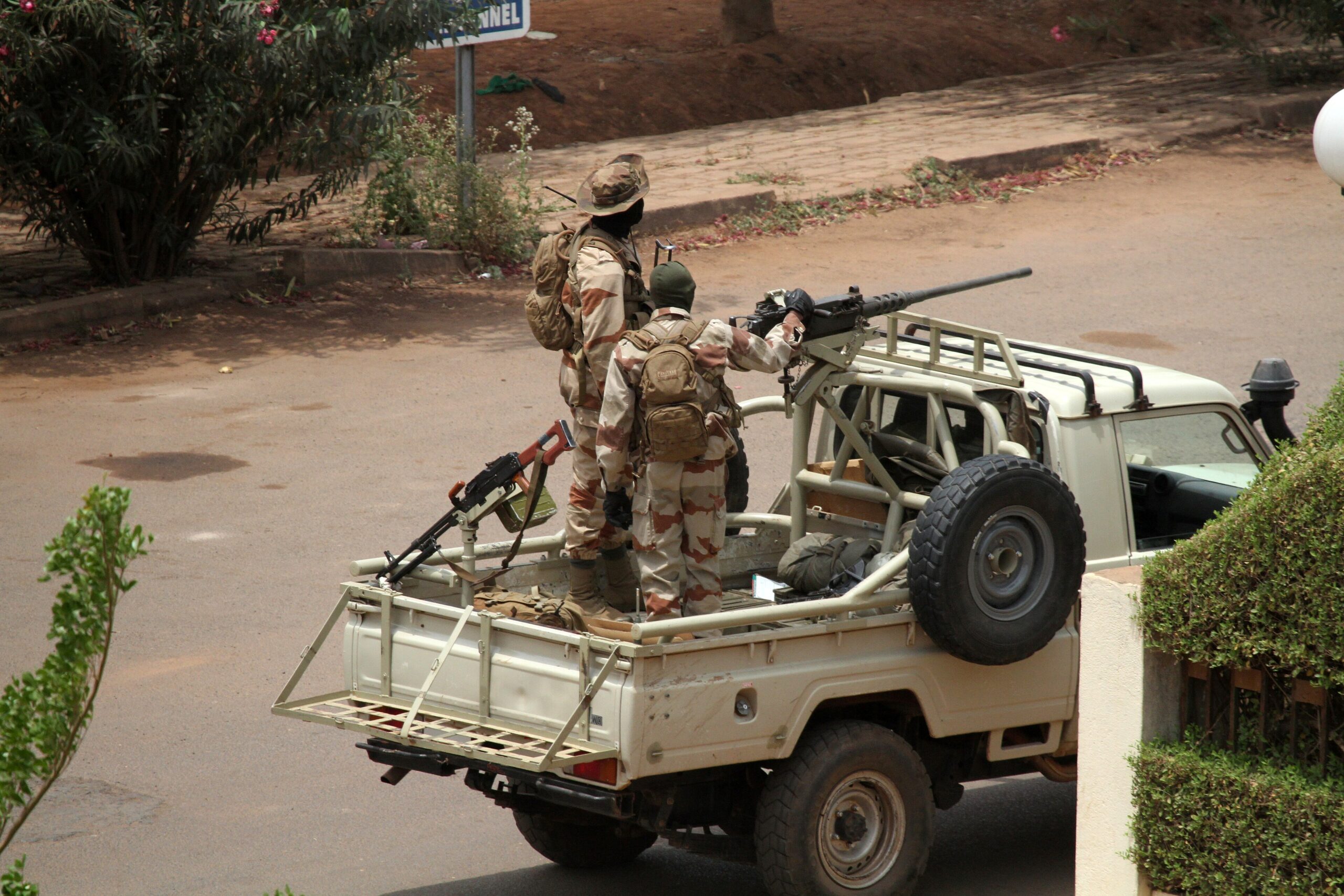
A Confederation Born from a Political Break
Mali, Burkina Faso and Niger announced their withdrawal from ECOWAS in January 2024 after tensions over coups and sanctions. The three junta-led countries then formed the parallel Alliance of Sahel States.
Their formal legal exit from ECOWAS became effective on 29 January 2025. ECOWAS offered a transition period until July 2025, but AES leaders called the departure irreversible.
The three states represent around 73 million people. Their exit reduced the ECOWAS economy by only about 7% to 8%, reflecting how poor and landlocked they are relative to coastal members.
Despite the political rupture, they remain inside the West African Economic and Monetary Union known as UEMOA or WAEMU. That membership keeps them tied to the West African CFA franc and its eight francophone economies.
The Parliament Installed in Niamey
The Confederal Parliament of the Alliance of Sahel States was formally installed in Niamey on 24 August 2026. It consists of 45 lawmakers, with 15 chosen by each member state.
The parliament is the clearest signal yet that the AES aims to behave like a proto-state. But legislative power remains subordinate to the three military rulers who dominate the project.
Confederal goals include pooling resources for energy and communications infrastructure, building a common market, and creating a monetary union with a proposed new currency.
The bloc also promises free movement of persons, industrialization, and investment in agriculture, mining and energy. Its stated final objective is federalizing into a single sovereign state.
The AES Passport and Free Movement
A joint biometric passport for AES citizens was introduced in January 2025, the same day the three states formally left ECOWAS. The passport gives the confederation a tangible identity document.
Mali’s military ruler and AES chairman Assimi Goïta said ECOWAS citizens would keep the right to enter, circulate, reside, establish and leave AES territory. That promise still requires practical implementation.
In response, ECOWAS told its member states to continue recognizing national passports and identity cards bearing the ECOWAS logo held by citizens of the three countries. It also asked members to keep applying the ECOWAS Trade Liberalization Scheme to their goods.
The uncertainty is mutual. It remains unclear how the 12 remaining ECOWAS states will treat citizens presenting only the new AES passport, and reciprocal approval is required for any permanent visa-free arrangement.
Currency Plans Remain on Paper
As of September 2026 the formal currency in all three AES states is still the West African CFA franc, known locally by its ISO code XOF. They remain inside the WAEMU monetary union despite political hostility to the arrangement.
AES documents propose a joint central bank and a new currency to replace the CFA franc. No such institution or currency has been implemented, and no implementation date has been set.
This creates a sharp contradiction. The confederation’s sovereignty narrative attacks the CFA franc as a colonial relic, yet its member economies still depend on the currency’s peg and convertibility guarantees.
For foreign investors, the currency gap is a warning sign. A new unbacked or partially backed currency could suddenly alter contract values, cross-border payments and debt service inside the AES.
The Cost of Leaving the ECOWAS Customs Union
By leaving ECOWAS, Burkina Faso, Mali and Niger exit the ECOWAS customs union. They remain in the francophone WAEMU monetary union, which cushions the monetary shock but not the tariff shock.
Their goods now face higher import duties in ECOWAS markets. The three states must use ECOWAS common external tariff rates and World Trade Organization Most Favored Nation rates, which are higher for some agricultural products.
A 0.5% community levy applies to goods from non-ECOWAS states, adding further cost. The hardest border zones are with anglophone coastal economies like Ghana and Nigeria rather than francophone neighbours.
These are not merely technical changes. They raise the cost of staple foods and inputs in a region already facing severe food insecurity and high transport costs.
Trade Distortions with Coastal Neighbours
The old ECOWAS system let landlocked Sahel states move goods through coastal ports under a common trade liberalization regime. That regime is now fragmented for the AES three.
Francophone coastal states such as Senegal, Côte d’Ivoire, Benin and Togo remain in WAEMU with the AES, which preserves some flows. The bigger rupture is with anglophone coastal economies.
Border closures and new customs checks would hit livestock, cereals and re-export trade, which are major livelihood sources in the Sahel. Analysts warn the breakup could push up food prices and worsen hunger in West Africa.
For investors in logistics, agriculture and consumer goods, the split means reconfiguring supply chains around different tariff and documentation regimes between two blocs.
Resource Nationalism in Gold and Uranium
The AES states sit on significant mineral wealth, especially gold in Mali and Burkina Faso and uranium in Niger. Their military governments have made resource nationalism a central political promise.
The confederal agenda includes investing in mining and energy with state-led control. This has already led to pressure on existing foreign mining contracts, particularly in West Africa’s gold sector.
Uranium is the most strategically sensitive case. Niger’s uranium has historically supplied French and European nuclear power chains, and its redirection is a key geopolitical signal.
For foreign investors, resource nationalism means higher tax and royalty demands, renegotiation of existing permits, and greater state equity participation. The legal framework for enforcing old contracts is becoming less predictable.
The AES has not yet created a common mining code or a shared resource revenue fund. That absence leaves each junta free to strike bilateral deals, often with Russian or other non-Western partners.
Russian Economic and Security Support
The three AES governments have deepened military and economic ties with Russia as they split from France and Western-led regional security frameworks. Russian support now functions as the confederation’s external security guarantee.
Russian military instructors, equipment and, in some cases, paramilitary forces are present across the Sahel. This support helps the juntas hold power but does not stabilize the countryside.
Russian economic arrangements are typically opaque and often tied to mineral extraction rights. This makes it hard for conventional investors to assess contract risk, security costs and counterparty reliability.
The Russian presence also raises the risk of sanctions exposure for foreign companies dealing with certain AES state entities or local intermediaries. Many global banks now apply elevated compliance checks to transactions linked to the three states.
The result is a two-tier investment environment: Western and multilateral capital retreats while Russian and some Gulf and Turkish interests move into mining, security logistics and infrastructure.
Border Closures and Everyday Economic Pain
Border friction is not only about tariffs. Security closures, military checkpoints and disputes over transport permits have made crossing frontiers slower and more expensive for traders and herders.
Small-scale cross-border trade, often carried by women and youth, is a lifeline in the Sahel. New documentation and inspection regimes eat into already thin margins.
For larger operators, delays at the new AES-ECOWAS boundary create inventory risk. Perishable goods and livestock suffer most from unpredictable crossing times.
The African Continental Free Trade Area was supposed to lower such barriers across the continent. The AES-ECOWAS split instead creates a new internal West African border at a time when regional trade should be deepening.
Investor Implications: Risk Without a Big Market
The AES’s combined population is roughly 73 million, but its combined economy is small and heavily informal. It is not large enough to replace the ECOWAS market, which still counts about 378 million people across its remaining twelve members.
Foreign investors now face a three-country market with high political risk, thin governance capacity and uncertain currency trajectory. The confederation’s common market exists mainly on paper.
Sectors that depend on regional supply chains, such as agribusiness, consumer goods and logistics, face new tariff and licensing costs. Mining and security-linked services face a different risk: political expropriation and reputational exposure.
There are still opportunities in gold services, energy equipment, satellite connectivity and import substitution. But these require local partners, political cover and a tolerance for abrupt rule changes.
The central question for investors is whether the AES can graduate from a security alliance to a rule-based economic bloc. So far the institutions are symbolic, and the sovereignty rhetoric outruns the economic base.
West Africa’s Fragmentation and What It Means
The AES-ECOWAS split is the first multi-state withdrawal from West Africa’s main political bloc. Mauritania left alone in 2000 and later took associate status. It sets a precedent that other aggrieved governments may watch.
The practical economic impact is smaller than the political shock. The AES states were marginal to ECOWAS output, but the split fractures a region already weakened by coups and insurgencies.
The creation of overlapping institutions, one political and one monetary, makes it harder to coordinate infrastructure, customs and security policy. It also weakens West Africa’s collective bargaining power with external partners.
A functioning AES economic bloc would require revenue sharing, a credible central bank, and a currency accepted by neighbours. None of those conditions exists in September 2026.
What exists is a sovereignty project with a parliament and a passport but no economic engine. Its future depends on whether mining revenue and Russian backing can buy stability faster than internal insecurity and trade costs erode it.
Connected Coverage
Togo Mourns Sena Alouka, Who Gave African Youth a Climate Voice
West Africa Cocoa Crop Set to Shrink as El Nino and Disease Bite
The Big Picture
Latest developments
- African Pulse for Friday, October 2, 2026 — 2 October 2026
- Kenya NASI Gains 0.2% as Turnover Jumps 44% | Kenya Market Report, Oct 2 — 2 October 2026
- Ghana Teachers’ Strike Hits Second Week Over Arrears — 2 October 2026
- Importers Ask GRA to Probe 28 Missing Tema Containers — 2 October 2026
This article was produced by The Rio Times’ automated newsroom system. How we use AI · Report an error · Editorial responsibility: Matthias Camenzind, Editor-in-Chief