Peru Keeps Rentista Visa at US$1000 Monthly Income as Foreigners Weigh Citizenship
Guides · Peru
—The mechanism. Peru’s rentista route grants residence to foreigners who prove a permanent pension or passive income of at least US$1,000 net per month.
—The document. Approved applicants obtain a carné de extranjería, the identity card issued by Migraciones after a change of migratory status.
—The timeline. The current naturalization procedure page still lists two consecutive years of legal residence, though a reported reform may extend this to five.
—The geography. Miraflores, Barranco, Arequipa, Cusco and northern beach towns are widely reported settlement bases for foreign retirees, not official census facts.
—The context. Fees and processing steps are handled online through the Agencia Digital de Migraciones and remain process-version sensitive.
Peru remains a standing option for retirees because its rentista route is built on permanent income rather than a one-time purchase. The official benchmark of US$1,000 per month makes the mechanism easy to understand, even though practical costs and legal timelines require careful verification.
The rentista visa and its lifetime-income logic
Peru’s rentista route is formally called calidad migratoria rentista residente, a migratory status for foreigners with a pension or permanent income. The current official Migraciones page says a foreigner who receives such income, of Peruvian or foreign origin, may apply for residence.
For foreign-source income, Migraciones states the applicant must prove a minimum net permanent income of US$1,000 per month. A consular page reproducing the requirements also confirms the amount is not less than US$1,000 monthly.
The income must enter Peru through a bank or financial institution supervised by the SBS, the country’s banking and insurance regulator. This is the heart of the lifetime-income logic: the approval is tied to a stable revenue stream, not a property purchase or a lump-sum deposit.
Migraciones says the application is filed through its digital system while the applicant is outside the country, in the current page wording. The same page states an attention period of 30 business days for the process.
Because requirements can vary between official pages, applicants should treat the current Migraciones page as the reference version. Older consular reproductions may show fee or wording differences.
The carné de extranjería after approval
The carné de extranjería is the identity document issued to foreigners by Migraciones. In practice, it follows approval of a residence category such as rentista and becomes the main physical proof of legal status inside Peru.
Migraciones currently says the carné is obtained through a change of migratory status. Official guidance lists passport copies, a certificate of no criminal records from the country of origin or prior residence, and a power of attorney if an agent is used.
The uploaded documentation is submitted in a single PDF through the digital system. The applicant must have valid migratory status for the resident-change process.
On the current rentista process page, the government fee is S/ 58.80 (about US$15), with payment code 07567. Fee amounts are process-version sensitive, so applicants should verify the live page at filing time.
Where foreign retirees live
There is no verified official registry in the retrieved material that quantifies retiree concentration by district or town. The settlement geography is therefore best framed as a widely reported market pattern rather than census fact.
In Lima, Miraflores and Barranco are commonly described in expatriate and relocation guides as the main urban bases for foreign residents. These districts anchor the coastal urban lifestyle that many newcomers seek.
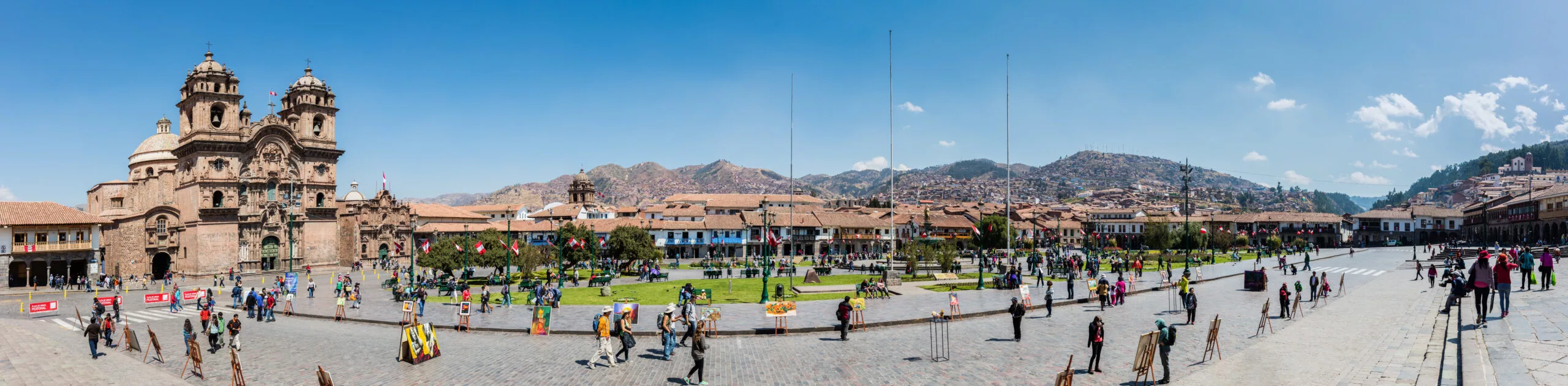
Arequipa, Cusco and northern beach towns are likewise referenced as secondary destinations for climate, scenery and a slower pace. Arequipa offers a highland city environment, Cusco sits near major Andean landmarks, and the northern coast draws people looking for beach living.
For a standing reference, these locations should be read as starting points for reconnaissance, not as official rankings of retiree populations.
Monthly budgets in US dollars
The verified official material does not provide a standard retiree budget. The only hard income benchmark confirmed here is the rentista requirement of US$1,000 per month from foreign-source income.
A budget section must therefore be presented as a market estimate range, not as official guidance. Lima districts such as Miraflores and Barranco typically command higher rents and service costs than provincial cities.
Arequipa, Cusco and northern beach towns generally have lower housing costs, though imported goods and private healthcare can narrow the difference in smaller markets.
A cautious reference would describe US$1,000 as the legal entry threshold while noting that comfortable urban living may require more, depending on rent, insurance and lifestyle.
Healthcare options
The retrieved sources do not provide a retiree-specific healthcare package or precise eligibility terms. The institutionally correct structure is to distinguish between private providers and state-linked systems.
Foreigners can rely on private clinics and hospitals, especially in Lima and larger regional cities, where many physicians and administrative staff work in English or with international patient experience.
Residents may also access public or contributory systems depending on legal and employment status, but the verification block does not spell out universal public coverage for retirees.
Without a source-backed document, the article should avoid promising public healthcare access and instead point readers to private insurance and private providers as the more predictable path.
The two-year citizenship path
The current official Migraciones naturalization procedure page says a foreigner over 18 with at least 2 consecutive years of legal residence may apply for nacionalidad peruana por naturalización, subject to migratory category.
The same page requires legal residence for at least 2 consecutive years and a minimum economic solvency threshold of 10 UIT or S/ 55,000 annual gross income (about US$14,700). The naturalization application fee is S/ 301.50, about US$80, with code 07564.
However, secondary coverage from 2025–2026 reports that a newer nationality law, Law 32421, would raise the general residence requirement to 5 continuous years once implementing rules enter into force. Those reports say official implementation timing had not been confirmed.
The safest verified statement is that the operating public procedure page still reflected 2 years at the time of the retrieved sources, but a reported legislative change may alter that rule once fully in force.
Practical notes under the current government
I could not verify any current legal rule specifically attributed to the Fujimori government in the retrieved sources. Present-day immigration and nationality procedures are governed by Migraciones and its current digital forms.
For a factual article, it is best to describe mechanics as institutional and digital rather than political. The rentista application is handled online through the Agencia Digital de Migraciones, with a stated 30-business-day attention period.
The current fee on the rentista page is S/ 58.80, while older consular reproductions show a different amount. Applicants should treat fee figures as process-version sensitive and use the live Migraciones page.
Required documents include a passport copy, a criminal records certificate, and a power of attorney if an agent is used. The package is uploaded in a single PDF.
How to read the process
The rentista route works best for people with stable pensions, annuities or verified passive income. Because the income must enter through an SBS-supervised institution, applicants should expect to document the source and the transfer channel.
Once approved, the carné de extranjería gives practical standing for opening accounts, signing leases and dealing with local institutions. It is the resident foreigner ID that follows the change of migratory status.
The citizenship route remains attractive in theory because the official page still shows a 2-year standard. But the reported Law 32421 creates uncertainty, so long-term planners should monitor implementing rules rather than assume the timeline.
In all cases, the practical advice is to verify the live Migraciones page, because fee codes, document lists and attention periods can change between process versions.
What the source set does not confirm
The verified research does not confirm a single official retiree budget, a standard healthcare package, or a government registry ranking foreign retiree locations. Those gaps matter for a standing-reference article.
It also does not confirm that current legal mechanics are tied to named political authorities. The safe institutional attribution is to Migraciones and the SBS, not to any government figure.
The location descriptions for Miraflores, Barranco, Arequipa, Cusco and northern beach towns are market observations from expatriate and relocation material. They should be labelled as widely reported settlement patterns, not official census fact.
Readers should treat the article as a verified map of mechanisms and thresholds, not as a full cost-of-living guide.
More: Peru news in English, every day from The Rio Times.
A standing reference for foreign investors
For foreign investors and potential residents, Peru’s retire in Peru route offers a clearly stated income threshold and a digital filing system. The main appeal is that residence is tied to income flow rather than a large capital outlay.
The lifetime-income logic means the applicant must keep proving a permanent stream, typically through a pension or other passive source. This structure favours retirees with defined-benefit pensions, government pensions or stable annuities.
The two-year citizenship page remains a strong draw in the public procedure, even though the reported reform may change the timeline. Anyone planning around citizenship should build in contingency for a five-year requirement.
Overall, the verified facts support a cautious but functional reference: meet the US$1,000 income test, file through the digital system, secure the carné, and monitor the citizenship rules as implementation moves forward.
Connected Coverage
Arcángel in Lima, Peru: 20th Anniversary Show at Estadio San Marcos on September 12, 2026
The Big Picture
Latest developments
- Peru Mining Group Sees 74% Sales Growth — 24 October 2026
- Mexican Duo Ha*Ash in Lima on 5 March 2027 — 24 October 2026
- Promigas Says 4 Peru Gas Projects Wait — 24 October 2026
- Peru Stimulus Plan Caps Bonuses at US$725M — 24 October 2026
This article was produced by The Rio Times’ automated newsroom system. How we use AI · Report an error · Editorial responsibility: Matthias Camenzind, Editor-in-Chief
Expat Guide to Peru
What The Rio Times publishes for foreigners who live in or move to Peru.
Start here
- Lima Rent for Foreigners in 2026 Averages US$979 a Month
- Peru Education and Healthcare Explained
- Peru’s New Crime Command and What It Means for Visitors
- Peru Security and Crime Explained 2026
City guides
Coming up in Peru
- Blessd Lima 2026: Peru Show at Arena 1 on 29 October Awaits Venue Reopening 29 Oct
- Hombres G in Lima, Peru: Two Nights of Spanish Pop-Rock at the Estadio Nacional, October 29–30, 2026 29 Oct
- Reggaeton Lima Festival 7 With Anuel AA on 31 October 31 Oct
- Haunted Superclub in Lurín, Peru: Carl Cox and Adam Beyer on 30–31 October 31 Oct
Understand Peru