Puebla’s Chiles en Nogada: An Ancestral Recipe for Mexico’s Flag Dish
Gastronomy & Heritage
Key Facts
—Season. Chiles en nogada are available in Puebla from July through September, peaking around Mexican Independence Day.
—Origins. By tradition the dish is credited to Augustinian nuns in Puebla in 1821, for Agustín de Iturbide. Historians reject that account.
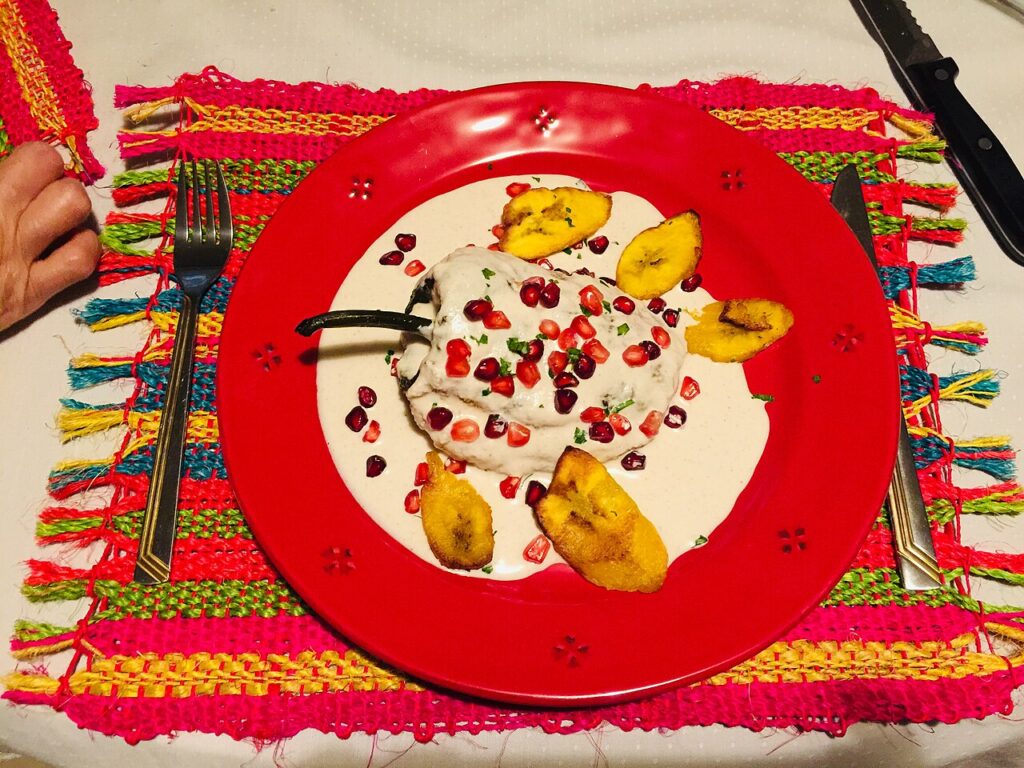
—Symbolism. The green chile, white walnut sauce, and red pomegranate mirror the colours of Mexico’s national flag.
—Cost. A plate costs between 250 and 600 pesos ($13–$33 USD), depending on the restaurant and town.
—Where to try. Top 2026 spots include Custodia Restaurante, Casa Reyna, and the festivals in Calpan and San Nicolás de los Ranchos.
Every summer, Puebla’s kitchens turn out chiles en nogada, a 200-year-old dish that carries the colours of the Mexican flag and the story of the country’s birth on a single plate.
A dish born from independence
The most widely told story places the invention of chiles en nogada in Puebla in 1821. Augustinian nuns from the Convent of Santa Mónica are said to have created the dish to honour Agustín de Iturbide.
Iturbide had just signed the Treaties of Córdoba, which sealed Mexico’s independence from Spain. The nuns prepared a celebratory meal using the finest late-summer ingredients the region could offer.
The result was a stuffed poblano chile bathed in a creamy walnut sauce and scattered with ruby-red pomegranate seeds. The green, white, and red presentation was no accident — it echoed the flag of the newly sovereign nation.
What goes into the ancestral recipe
The dish is a masterclass in balance and seasonality. A large, mild poblano chile is roasted and peeled, then filled with a sweet-savoury picadillo of minced pork, beef, chopped fruits, almonds, pine nuts, and spices.
The stuffed chile is draped in a cool nogada, a velvety sauce made from fresh walnuts, cream, and a touch of sherry or brandy. A crown of pomegranate seeds and parsley leaves completes the tricolour effect.
Every element depends on a narrow harvest window. Walnuts must be young and milky, pomegranates ripe, and poblano chiles at their peak — which is why the dish appears only from July through September.
The 2026 season in Puebla
This year, the chiles en nogada season officially runs from early July through mid-September, with many restaurants extending service to September 30. The timing is built around Mexican Independence Day on September 16.
Several well-regarded establishments have already announced their 2026 schedules. Custodia Restaurante in Puebla’s Centro Histórico will serve the dish until September 30, while Casa Reyna Puebla began its season on June 26 and runs through the same date.
The Tagers group is offering chiles en nogada from July 1 to September 16. For a more festive experience, the town of San Andrés Calpan hosts its annual festival throughout August, and San Nicolás de los Ranchos holds the International Chile en Nogada Festival on weekends in August.
What a plate costs in 2026
Prices vary by setting. Across Puebla, local authorities report an average range of 250 to 600 pesos per plate, which converts to roughly $13 to $33 USD at current exchange rates.
At the Calpan festival, plates are priced between 300 and 380 pesos, or about $16 to $20 USD. Restaurant versions in the city centre tend toward the upper end of the range, reflecting more elaborate preparations and formal service.
For visitors and expats, this makes chiles en nogada an accessible luxury. A world-class dish with two centuries of history costs less than a modest dinner in many global cities.
Why the dish matters beyond the table
Chiles en nogada are more than a meal. They are a seasonal marker tied to the agricultural rhythm of central Mexico, appearing when walnuts, pomegranates, and poblano chiles are harvested together.
The dish is also a living piece of national storytelling. Every September, families and restaurants across Puebla serve it as a culinary tribute to independence, reinforcing the link between food and identity that runs deep in Mexican culture.
For Puebla’s economy, the annual season draws food tourists from across Mexico and abroad. Hotels, markets, and tour operators all see a bump as visitors arrive specifically to taste the dish at its source.
The investor and expat read-through
Puebla’s gastronomic calendar is a quiet but real economic driver. The chiles en nogada season supports a supply chain of small-scale farmers, nut producers, dairies, and artisanal food businesses across the state.
For expats living in Mexico, the dish is a gateway to understanding the country’s regional food cultures. It rewards those who learn the seasons and seek out the authentic versions made in the city and towns where the recipe was born.
Investors watching Mexico’s tourism and agribusiness sectors can read the dish as a micro-indicator. Strong demand for seasonal, heritage foods signals a consumer market that values authenticity and is willing to travel for it.
What to watch next
The 2026 season runs through late September, with the biggest celebrations clustered around Mexican Independence Day on September 16. Restaurants in Puebla’s historic centre will be at their busiest that week.
The International Chile en Nogada Festival in San Nicolás de los Ranchos offers a more rural, community-driven experience on August weekends. Calpan’s festival runs the full month of August and is known for traditional preparations close to the original recipe.
For those who miss the window, the dish vanishes until July 2027. That scarcity is part of its charm — and a reminder that the best things on Mexico’s table are worth planning a trip around.
Background: our mexico economy guide.
Background: our nearshoring mexico guide.
More: Mexico news in English, every day from The Rio Times.
Correction, 20 August 2026
This article originally presented the 1821 nuns-and-Iturbide story as settled fact. It is not.
Historians, INAH researchers and the Santa Mónica convent museum itself treat it as a legend. Our fuller account is here: the chiles en nogada origin story historians no longer accept.
Frequently Asked Questions
What are chiles en nogada and why are they special?
Chiles en nogada are a classic Mexican dish of stuffed poblano chiles covered in walnut cream sauce and pomegranate seeds. They are special because their green, white and red colours mirror the Mexican flag, and because they are only available during the late-summer harvest. The popular 1821 origin story is disputed by historians.
When and where can I eat chiles en nogada in 2026?
The 2026 season runs from July through September, with many Puebla restaurants serving until September 30. Top spots include Custodia Restaurante, Casa Reyna Puebla, and Tagers, plus festivals in San Andrés Calpan (August) and San Nicolás de los Ranchos (August weekends).
How much do chiles en nogada cost in Puebla?
Prices in 2026 range from 250 to 600 pesos ($13–$33 USD) per plate across Puebla. At the Calpan festival, plates cost 350 to 400 pesos ($18–$22 USD), while upscale city-centre restaurants charge toward the higher end of the range.
This article was produced by The Rio Times’ automated newsroom system. How we use AI · Report an error
Read More from The Rio Times