Petrobras Bets US$11bn on Sergipe to Build a Northeast Gas Hub

Brazil · Energy
Key Facts
—Investment. Petrobras is investing about R$60 billion (US$11 billion) in the SEAP deepwater project.
—Production vessels. The project uses two FPSO vessels named P-81 and P-87 along with 32 wells.
—Capacity. Combined design capacity is 240,000 barrels of oil per day and 22 million cubic metres of natural gas per day.
—Gas share shift. The Northeast’s share of Brazil’s national gas supply is expected to rise from 16% to 31% by 2035.
—Timeline. First oil is expected around 2030 and gas flow to shore around 2031.
Petrobras approved the R$60 billion (US$11 billion) deepwater Sergipe Águas Profundas (SEAP) project, set to build a Northeast gas hub and roughly double the Northeast’s share of Brazil’s gas supply by 2035, with first oil around 2030 and gas flow from 2031.
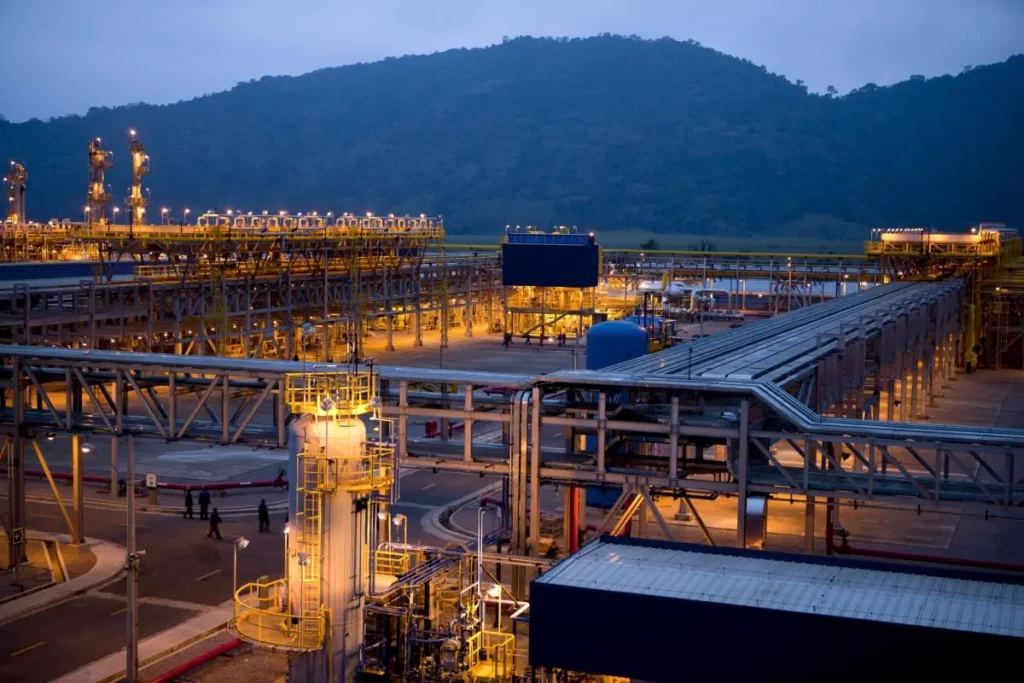
Petrobras Approves R$60 Billion SEAP Project
Petrobras’s board gave the final green light to the Sergipe Águas Profundas (SEAP) project on 14 April 2026. CEO Magda Chambriard publicly announced the investment on 28 May 2026 during a visit to Sergipe.
The project, divided into SEAP I and SEAP II, will require roughly R$60 billion (around US$11 billion). This makes it one of the largest deepwater developments in Brazil’s Northeast.
The investment targets the Sergipe-Alagoas Basin, located off the coast of Sergipe state. First oil is expected around 2030, with gas flowing to shore from 2031.
Deepwater Infrastructure and Production Capacity
Production will rely on two floating production, storage and offloading vessels, known as FPSOs. An FPSO is a ship-shaped platform that extracts oil and gas at sea, stores the output, and offloads it to tankers or pipelines – essential for fields far from shore.
Petrobras named these vessels P-81 and P-87.
The offshore setup includes 32 wells and a 134-kilometer subsea gas pipeline to bring natural gas to the Sergipe coast. The combined design capacity reaches 240,000 barrels of oil per day and 22 million cubic metres of natural gas per day. Of that gas, about 18 million cubic metres per day will be piped ashore.
The FPSOs will allow Petrobras to produce and store oil at sea before offloading it to shuttle tankers. Meanwhile, the dedicated gas pipeline will send onshore a large portion of the gas that would otherwise need to be reinjected or flared.
Live Company IntelligencePetróleo Brasileiro S.A. – Petrobras — the full investor dossier
Valuation & profitability
Price & risk
$29.6452-wk high
$55.36
Revenue trend · 6y
Ownership
Dividend
Doubling the Northeast Gas Share: a New Gas Hub
Brazil’s Northeast currently supplies around 16% of the nation’s natural gas. The SEAP project is designed to lift that share to about 31% by 2035, essentially doubling the region’s weight in the country’s gas market.
This shift means a larger chunk of Brazil’s domestically produced gas will come from the Northeast rather than relying on supplies from other regions or imported LNG.
For decades, the Northeast depended on gas piped from the Espírito Santo and Rio de Janeiro coasts or on costly liquefied natural gas (LNG) imports. Concentrating new deepwater gas production off Sergipe aims to turn the region into a domestic gas hub.
By boosting local supply, the project reduces the need for long-distance transport and exposure to volatile international LNG prices.
The 18 million cubic metres per day of gas piped to shore is a substantial volume. It will flow directly into the regional network, supporting industry and power generation.
What It Means for Expats and Investors
For foreign residents and investors in Brazil’s Northeast, the SEAP project signals long-term energy security and economic development. A reliable, domestically sourced gas supply can help stabilize energy costs for households and businesses, reducing the region’s historical vulnerability to external price shocks.
Industries that rely on natural gas – such as petrochemicals, fertilizers, and ceramics – stand to benefit from more predictable input costs. This could attract new investment to the region, creating jobs and infrastructure spin-offs.
Expats in manufacturing or energy sectors may see new opportunities as the local supply chain develops.
From an investment angle, Petrobras’s massive capex signals confidence in the region’s geology and demand outlook. While the project’s oil production will target export markets, the gas will primarily serve domestic needs.
Investors in Brazilian energy stocks or infrastructure funds should watch for contractor awards and subsea equipment orders as the project advances toward first oil in 2030.
Background: Petrobras and the Northeast Gas Market
Petrobras is Brazil’s state-controlled oil and gas giant, responsible for most of the country’s hydrocarbon production. Historically, the company’s deepwater expertise focused on the pre-salt fields in the Santos and Campos basins off the Southeast coast. The SEAP project marks a shift, proving that the Northeast’s offshore basins also hold large volumes of commercially viable oil and gas.
The Northeast region has long grappled with limited indigenous gas supply. Its gas network relied heavily on interconnector pipelines bringing gas from the Southeast, as well as LNG terminals in Bahia and Ceará.
That left the region exposed to supply disruptions and higher costs. The discovery and development of deepwater gas in the Sergipe-Alagoas Basin fundamentally changes that equation.
By investing in two large FPSOs and a dedicated gas pipeline, Petrobras is building the backbone of a new gas-producing province. When SEAP comes online, the Northeast will not only meet more of its own demand but also contribute significantly to the national grid.
This realignment could reshape Brazil’s domestic gas trade flows over the next decade.
Timeline and Next Steps
Following the final investment decision, Petrobras will now move to contract the major construction packages, including the two FPSO hulls and the subsea pipeline. The company has indicated that first oil is targeted for around 2030, with gas flowing to shore around 2031.
These timelines reflect the complexity of building and installing deepwater infrastructure.
The gap between oil-first and gas-first production is typical for projects that prioritize crude output. However, the gas pipeline will be laid in advance to ensure that by 2031 the onshore segment can receive the massive 18 million cubic metre daily flow.
No additional capacity numbers beyond the design figures have been released. Expect periodic updates as Petrobras awards contracts and achieves project milestones.
For now, the approved investment cements the SEAP complex as a cornerstone of Brazil’s energy strategy.
Background: Braskem Bond Tender Rejected Amid $9.4B Debt Crisis.
More: Brazil news in English, every day from The Rio Times.
Frequently Asked Questions
What is the SEAP project?
The Sergipe Águas Profundas (SEAP) project is a deepwater oil and gas development by Petrobras in the Sergipe-Alagoas Basin off the coast of Sergipe, Brazil. It involves two FPSOs, 32 wells, and a subsea gas pipeline, with a total investment of about R$60 billion (US$11 billion).
What is an FPSO?
An FPSO is a Floating Production, Storage and Offloading vessel. It is a ship-shaped platform that extracts oil and gas from wells on the seafloor, stores the hydrocarbons onboard, and offloads them to tankers or pipelines.
FPSOs are ideal for deepwater fields far from shore, where building a fixed platform is impractical.
How will the project change the Northeast’s gas supply?
By 2035, SEAP is expected to nearly double the region’s share of Brazil’s national gas supply from around 16% to 31%. This will reduce the Northeast’s reliance on imported LNG and gas piped from other states, making it a domestic gas hub and improving supply security.
Connected Coverage
Brazil’s Regulator Forces Its Way Into a Petrobras Gas Standoff
Petrobras Caps a Gas Price Jump, Softening the August Increase
Sources: Petrobras; Agência Brasil; O Globo.
This article was produced by The Rio Times’ automated newsroom system. How we use AI · Report an error · Editorial responsibility: Matthias Camenzind, Editor-in-Chief
Brazil runoff, Sunday, October 25: Brazil runoff: date, poll closing times and when results start. Latest: Brazil runoff polls, Flávio 51%, Lula 49%.