Peru Decree Powers: Deputies Draft Compromise Limited to Security and El Niño
POLITICS · PERU
Key Facts
- —The country Peru, governed since July 2026 by President Keiko Fujimori. Its restored Congress has two chambers, a Chamber of Deputies and a Senate.
- —What happened Party advisers agreed a compromise text late on 30 September granting decree powers on two areas only, security and El Niño, deputy Franck Krklec told RPP (Andina, 1 Oct).
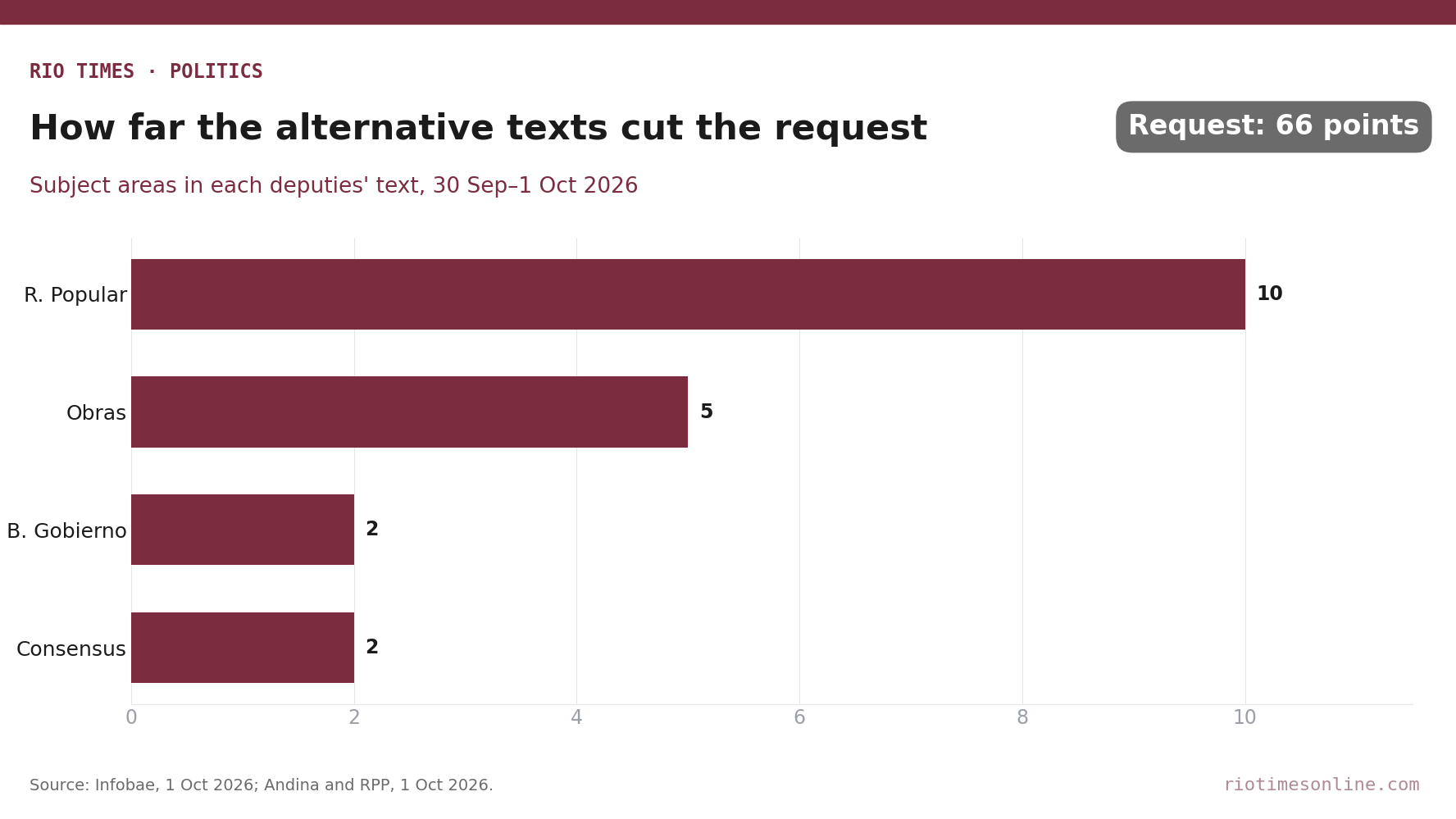
- —The numbers The government asked on 28 August for 120 days to legislate on 66 points in eight areas. Three party texts proposed 10, five and two areas (Infobae, 1 Oct).
- —What it means for you Faster decrees on crime and El Niño preparations are possible. Tax, mining and labour items would stay with ordinary, slower lawmaking under the compromise.
- —Still open The Constitution Committee was due to vote from 2 p.m. Lima time on 1 October. Ministers have ruled out a confidence vote over the request.
Peru decree powers sought by President Keiko Fujimori now look set to survive in a much smaller form. A compromise text limits them to public security and the El Niño weather emergency.
The deal was announced on 1 October, after a committee draft had urged rejecting the request outright. Talk of a confidence vote against Congress, raised by commentators, has been dismissed by ministers.

From Rejection to a Narrow Deal
On 28 September a draft opinion of the Deputies’ Constitution Committee recommended archiving the request. Its author, committee chair Giannina Avendaño of Juntos por el Perú, called the measures general and imprecise.
The committee debated for two days and paused on 30 September without a vote. El Comercio reported that it suspended the session to weigh new texts from three parties.
Renovación Popular proposed 10 subject areas, the Partido Cívico Obras five and the Partido del Buen Gobierno two, Infobae reported. Each would set Peru decree powers far below the original package.
What the Compromise Covers
Renovación Popular deputy Franck Krklec told RPP that technical teams worked until 10 p.m. on Wednesday. “There is white smoke,” he said, describing an agreed text.
According to Krklec, the Peru decree powers in that text cover public security and El Niño, including support for farming. He said it draws on proposals from Obras, Buen Gobierno and his own party.
Fuerza Popular, the president’s party, has signalled it will accept cuts. Deputy César Revilla told Canal N that his bloc would not insist on all 66 points, Infobae reported.
Revilla said every bloc wanted environmental matters left out. He still defended the original text as his party’s starting position.
Why a Confidence Vote Came Up
Pressure rose on 29 September, when Fujimori said deputies were “testing our patience”. Her remark fed speculation that the government might escalate the dispute.
Political scientist Miguel Ángel Ibarra told the broadcaster RCR that Prime Minister Luis Galarreta could seek a confidence vote. A rejected cabinet could, he argued, eventually expose the Chamber to dissolution.
Ministers have rejected that route. Labour Minister Juan Sheput said the idea had “never” been discussed in the Council of Ministers, Infobae and El Comercio reported.
Justice Minister Ernesto Álvarez said “definitely” no confidence question would be raised, according to El Comercio. Sheput called talk of closing Congress a “conspiracy theory”.
The government filed its request on 28 August, which led to the committee draft urging rejection. Security policy has been a flashpoint, as shown by the opposition move against the minister in charge of the police.
What Is Not Yet Known
The committee vote had not taken place by midday in Lima on 1 October. Krklec said he was optimistic it would pass the same day.
The exact wording of the compromise has not been published. Ahora Nación leader Alfonso López-Chau said on 30 September that a joint opposition text might only be ready by Friday, Exitosa reported. It is also unclear when the full Chamber would vote, or how far Fujimori’s security agenda can advance without the other items.
Sources: Andina, 1 Oct 2026; RPP, 1 Oct 2026; Infobae, 1 Oct 2026; Infobae, 1 Oct 2026; El Comercio, 30 Sep 2026; El Comercio, 30 Sep 2026; Infobae, 30 Sep 2026; RCR, 30 Sep 2026; Exitosa, 30 Sep 2026.
Read More from The Rio Times