
PERU · OIL AND GAS
Key Facts
- The country Peru is a South American oil producer whose state company Petroperú runs the 1,106-kilometre (687-mile) Norperuano Pipeline from the Amazon to the Pacific coast.
- Why it matters Illegal taps can leak crude near farms and water, and they test the security of a line the state classes as a National Critical Asset.
- Why now Petroperú announced on 22 October 2026 a tenth illegal tap since June, at kilometre 696+154 in Olmos, Lambayeque.
- What happened A tenth illegal tap on the pipeline was found in Olmos, and crude oil is described spreading across a rural road near crop fields in the Racalí area.
- The numbers Ten illegal taps have been found since June, and Section II of the pipeline, where the Olmos tap sits, has been halted since 12 July 2024.
- What it means for you The reports reviewed show no effect on fuel supply or exports, but repeated taps raise leak and cleanup risks for the state company.
- Still open How much crude escaped, who made the tap, and what the environmental regulator finds.
- Power Index Peru ranks 5th of 14 in The Rio Times Latin America Power Index, with 54.7 points (October 2026 edition).
In Plain English
Petroperú is Peru’s state oil company, and the Norperuano Pipeline, known as the ONP, is the line that carries crude from the Amazon across the Andes to the coast. A clandestine tap is an illegal connection that thieves attach to a pipeline to draw off crude.
OEFA is Peru’s environmental enforcement agency, and Osinergmin is the energy and mining regulator. The pipeline is divided into sections, and Section II is the stretch that includes Olmos in Lambayeque and Sechura in Piura.
Petroperú, Peru’s state oil company, found a clandestine tap on its Norperuano Pipeline at kilometre 696+154 in Olmos, Lambayeque, and said so on 22 October 2026, and the local newspaper Correo reports that crude oil spread across a rural road near crop fields. It is the tenth illegal tap found since June, and no volume of crude spilled has been published.
Petroperú activated its emergency response plan and sent staff from the Bayóvar Terminal for containment work, and it says it is coordinating with the police and prosecutors and has informed the regulators Osinergmin and OEFA and the Energy and Mines Ministry. The company has called for stronger surveillance of the pipeline after what it describes as continuing attacks.
What Happened in Olmos
Correo reports that residents of the hamlet of Racalí, in the Piedra Negras annex of Olmos district, saw people outside the village in the early morning of Thursday 22 October. Crude then spread over several metres of a dirt road beside crop fields, nearly covering it, and residents dug trenches and filled buckets to hold it back, the paper says.
Petroperú places the connection at kilometre 696+154 of Section II of the pipeline, in Olmos district, Lambayeque province. It says such acts by third parties are illegal interventions that compromise the integrity of the pipe and put people and the environment at risk.
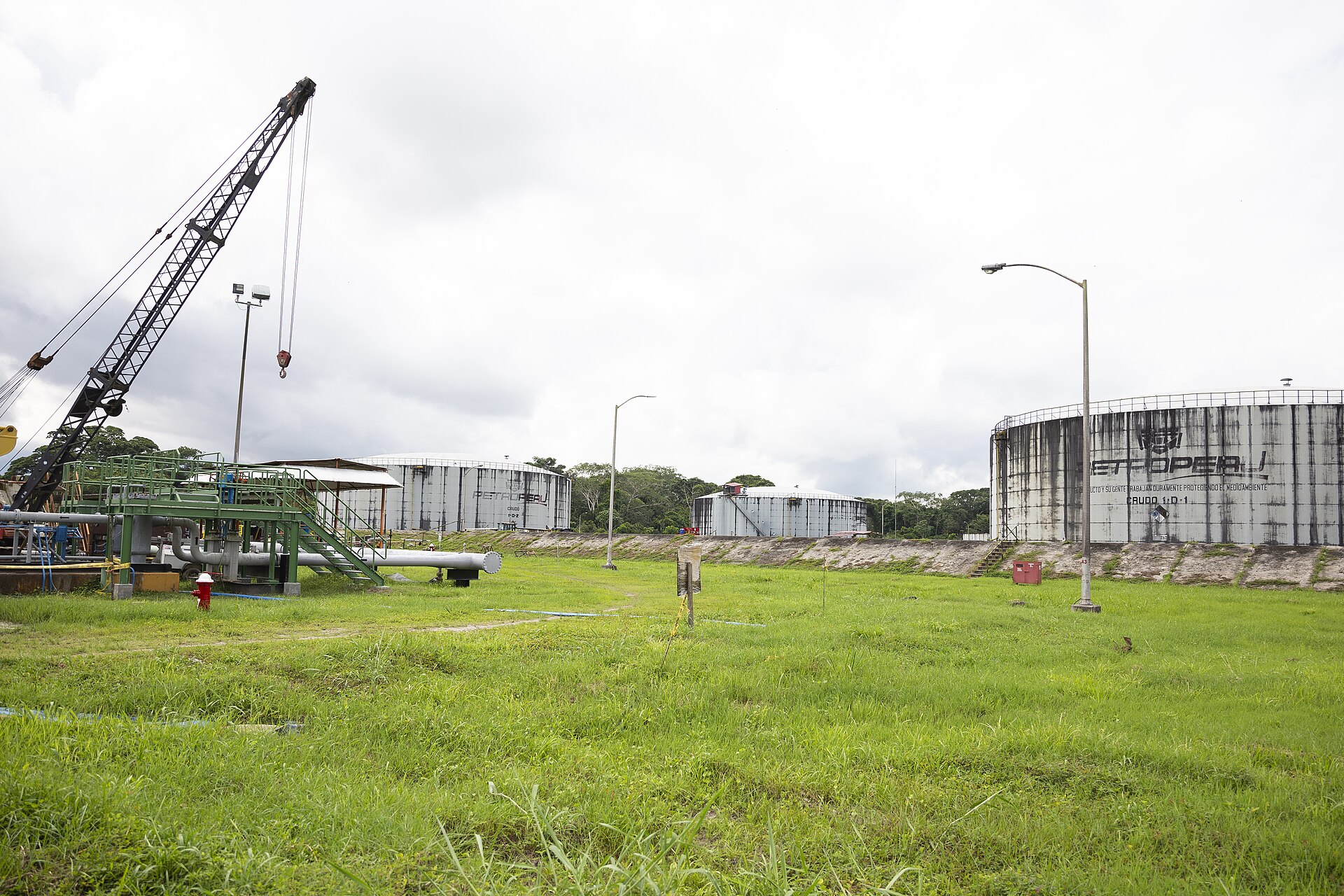
Correo adds that police verified the residents’ complaint, and it notes that crude can seep into aquifers, wells and canals and cause respiratory problems when inhaled. The paper attributes the leak to people stealing fuel but does not say who they were.
A Pattern of Taps Since June
Petroperú’s 22 October note counts ten clandestine connections since June, and its 20 October note reported the ninth, at kilometre 806+855 of Section II in Sechura, Piura. Inspectors there found an installed valve, a two-inch hose and other items presumably used to extract crude, and no spill was detected.
The 20 October note also says Section II has been halted since 12 July 2024 because of low crude inventories at Station 5. The pipeline carries the official status of National Critical Asset, and Petroperú says the taps show the continuity of attacks against it.
Separately, on 21 October Petroperú reported a crude seep at kilometre 15+524 of Section I in Urarinas, Loreto, where it installed barriers to stop the crude spreading and said the cause was under investigation. The company says 16 events attributed to third parties have been recorded in that section over five years, and the most recent earlier one was in 2022.
What the Pipeline Is
The Norperuano Pipeline is 1,106 kilometres (687 miles) long and crosses the regions of Loreto, Amazonas, Cajamarca, Lambayeque and Piura, running through coast, highlands and jungle, according to Petroperú. The company says it has carried more than 900 million barrels of oil.
The company’s wider finances and the Talara refinery are covered in Petroperu Talara Refinery Hit by Stoppages as Debt Costs Mount. Attacks on the line have a long history, and the 21 and 22 October notes show them continuing in both Loreto and Lambayeque.
What It Means for You
For US readers, the case shows the security risk around Peru’s oil infrastructure, where repeated illegal taps can raise leak, cleanup and repair costs for the state company. The reports reviewed show no effect on fuel supply or exports from the Olmos event.
Residents near the line face the most direct risk, since crude on a farm road can reach crops and water. More Peru news is on the Peru news page.
What Is Not Known
No volume of crude spilled has been published, and the sources do not say how far it spread beyond the dirt road or whether it reached crops, canals or water. They also do not say whether Section II was moving crude at the time, since Petroperú says it has been halted since July 2024.
It is not known who installed the tap, and the sources reviewed mention no arrests. No OEFA notice on the Olmos event appeared in the regulator’s news list on 27 October, so any sanction, cleanup order or health check is not yet known.
Frequently Asked Questions
What happened to the Norperuano Pipeline in Olmos?
Petroperú found a clandestine tap at kilometre 696+154 of Section II in Olmos, Lambayeque, and Correo reports that crude spread across a rural road. Petroperú activated its emergency response plan on 22 October 2026.
How many illegal taps has the pipeline had?
Petroperú counts ten clandestine connections since June, the latest announced on 22 October 2026 in Olmos. The ninth was announced on 20 October in Sechura, Piura, with no spill detected.
How much oil was spilled?
No volume has been published. Correo says crude spread over a dirt road beside crop fields, and residents dug trenches and used buckets to contain it.
Who is responsible for the tap?
It is not known who installed the connection. Petroperú calls such taps illegal interventions by third parties, and Correo attributes the leak to people stealing fuel without naming anyone.
How long is the Norperuano Pipeline?
It is 1,106 kilometres (687 miles) long and crosses Loreto, Amazonas, Cajamarca, Lambayeque and Piura, according to Petroperú. The company says it has carried more than 900 million barrels of oil.
Sources: Petroperú press note NP-064, 22 October 2026; Petroperú press note NP-061, 20 October 2026; Petroperú press note NP-063, 21 October 2026; Petroperú Norperuano Pipeline site, accessed 27 October 2026; Correo, 26 October 2026; OEFA news list, checked 27 October 2026.
This article was produced by The Rio Times’ automated newsroom system. How we use AI · Report an error · Editorial responsibility: Matthias Camenzind, Editor-in-Chief