PARAGUAY · FOREIGN POWERS
Key Facts
- Power Index Paraguay ranks 10th of 14 in The Rio Times Latin America Power Index, with 36.0 points (October 2026 edition).
- The country Paraguay is a landlocked country of 7.01 million people with a US$49.3 billion economy in 2025.
- The United States On 21 October 2026 Washington announced US$11.75 million in security aid and a new anti-drug office in Asunción.
- China and Taiwan Paraguay recognises Taiwan, and on 12 October 2026 China sanctioned one of its ministers.
- Brazil Brazil and Paraguay each own half of the Itaipú dam, which supplies about 90% of Paraguay’s electricity.
- The IMF The IMF finished its yearly review on 28 August 2026 and expects 4.4% growth this year.
Paraguay foreign influence matters to US readers because Washington is an increasingly active suitor, with new aid, investment and nuclear talks. This guide shows who brings money, soldiers, loans and markets, and what each wants back.

In Plain English: Who Is Who
Paraguay is a landlocked country in the middle of South America, with 7.01 million people in 2025, World Bank data show. Its economy was worth US$49.3 billion that year and grew 6.6%.
President Santiago Peña, a conservative from the long-ruling Colorado Party, leads the government. Rubén Ramírez Lezcano, the foreign minister, handles its dealings with other states.
The outside players fall into five groups. They are the United States, China and Taiwan, Brazil, lenders such as the IMF and the World Bank, and private companies.
Each group wants something different. Washington wants security partners and investment, while Beijing wants Paraguay to end its ties with Taiwan, and Brazil wants electricity from the Itaipú dam.
Lenders want sound budgets and reforms in return for loans and ratings. Companies want reliable power and open export markets.
The United States Brings Security Aid and Capital
On 21 October 2026 the US State Department published a fact sheet on a visit by Deputy Secretary of State Christopher Landau. He met President Peña and Foreign Minister Ramírez and led a trade delegation to Asunción from 19 to 21 October.
The department said it is giving US$5.5 million to fight terrorist financing and US$6.25 million against organised crime. Together that is US$11.75 million in security aid.
Washington will open its first anti-drug bureau office in Paraguay, in Asunción, to serve the Southern Cone. A US counterterrorism adviser is also being prepared for deployment to the capital.
Landau and Ramírez signed an agreement on intercepting suspected drug flights, which takes effect after an exchange of diplomatic notes. They also signed a memorandum of intent on PISCES, a US passenger-screening system meant to counter terrorist travel.
The two countries also began talks on a so-called 123 Agreement, the US legal framework for exporting civil nuclear equipment. The State Department says US investment offers a trusted alternative to predatory financing from strategic competitors.
China and Taiwan Pull in Opposite Directions
Paraguay is the only South American country that recognises Taiwan instead of the People’s Republic of China. It has no formal diplomatic ties with Beijing.
On 12 October 2026 China’s foreign ministry announced sanctions on Paraguay’s communications minister, Gustavo Villate, and on Belize’s foreign minister, Francis Fonseca. The measures freeze their assets in China, deny them entry to Hong Kong and Macau, and ban Chinese organisations and individuals from dealing with them.
Beijing said the two had taken a series of egregious actions and statements and that it was defending its sovereignty against Taiwan separatism. Villate runs MITIC, Paraguay’s ministry of information and communication technologies.
Taiwan is a self-ruled island that Beijing claims as its own, and Paraguay is one of the few governments that still recognise it. That gives Taipei a loud voice in Asunción and gives Beijing a reason to punish officials.
For US readers the contest matters because Washington presents its own investments as the alternative to Chinese lending. Paraguay sits at the centre of that argument in South America.
Brazil and the Itaipú Dam
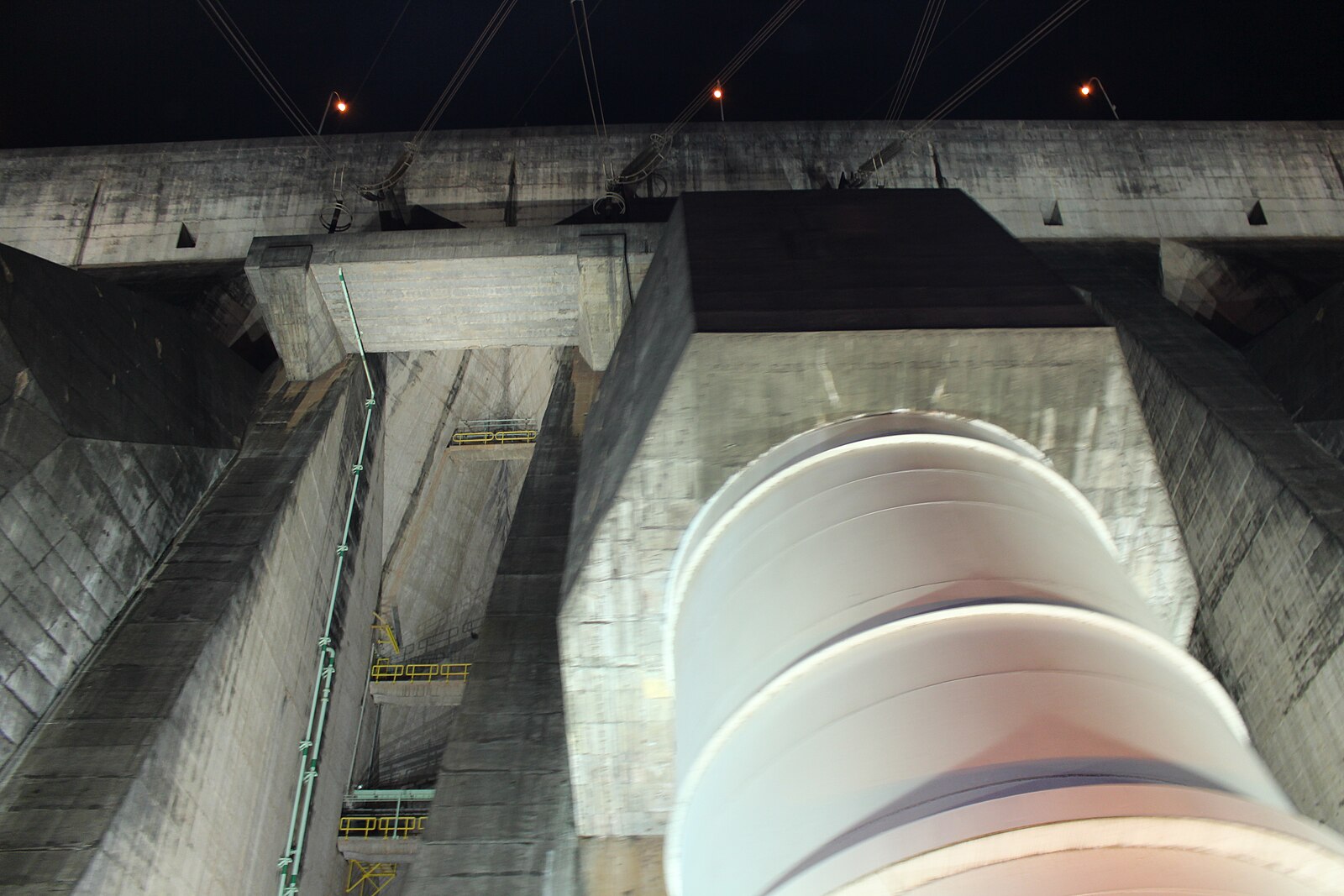
Itaipú, a giant dam on the Paraná River, is owned in equal halves by Brazil and Paraguay under a treaty signed on 26 April 1973. Each country owns half of the electricity it produces.
The plant has 20 generating units of 700 megawatts each, or 14 gigawatts in all. It produced 83,800 gigawatt hours in 2023, the operator Itaipú Binacional says.
The dam provides about 90% of the electricity Paraguay consumes and about 10% of Brazil’s, the operator says. That makes it Paraguay’s main power source and its biggest tie to Brazil.
The treaty’s financial annex, known as Annex C, governs how the electricity is priced and shared. The two governments have discussed a revision, which matters for power bills in Brazil and for ANDE, Paraguay’s state electricity company.
Lenders: the IMF and the World Bank
The International Monetary Fund, the global lender of last resort, finished its 2026 yearly review of Paraguay on 28 August 2026. It said the economy grew 6.6% in 2025 and projected 4.4% growth for 2026.
The IMF expects the budget deficit to widen from 2% of output in 2025 to 3.5% in 2026. Most of that pays off unpaid bills built up from 2023 to 2025, and the IMF wants the legal limit restored by 2028.
On 22 January 2026 the IMF board completed reviews of two programmes. A Policy Coordination Instrument carries no loan, while a climate-linked Resilience and Sustainability Facility released about US$117 million (SDR 85.6 million).
The World Bank says its current lending portfolio totals US$535.3 million across five investment projects in health, farming, transport, urban resilience and education. Moody’s and S&P, two US credit-rating agencies, rated Paraguay investment grade in July 2024 and December 2025.
The Bank’s private-sector arm, the International Finance Corporation, has a committed portfolio of US$373.3 million, mostly in finance and agribusiness. Its insurance arm, MIGA, is deploying US$92 million in guarantees with two Paraguayan state-backed lenders.
Foreign Companies and Investors
A US Commercial Service guide published in March 2024 cites the Central Bank of Paraguay for US$7.05 billion of foreign direct investment stock. That is the money firms have put into factories, farms and services.
In that guide Brazil was the largest investor at US$904 million, and the United States came second at US$892 million. The Netherlands followed with US$779 million, Spain with US$589 million and Chile with US$536 million.
New foreign investment, net of withdrawals, was US$1.18 billion in 2025, World Bank data show. That compares with US$1.10 billion in 2024.
The newest big US name is Crusoe, an American artificial-intelligence computing company that plans an initial site powered by Itaipú in mid-2027. Its partner is Araico, a Paraguayan energy developer, and the State Department calls the plan potentially one of the largest private investments in Paraguay’s history.
Uranium Energy Corp, a US mining company, announced a US$12 million investment in one of its uranium concessions in Paraguay. Together the two announcements show Washington steering US capital toward power, data and minerals.
Europe, the Diaspora and Money From Abroad
On 23 March 2026 the European Commission said the interim trade part of its Mercosur agreement would apply provisionally from 1 May 2026. Mercosur is a South American trade bloc that includes Argentina, Brazil, Paraguay and Uruguay.
The Commission said Paraguay had recently ratified the deal and was expected to send its notification soon. For Paraguayan beef and grain exporters the deal opens a new market on paper.
Paraguayans abroad also send money home. Workers’ remittances reached US$1.53 billion in 2025, up from US$1.14 billion in 2024, or 3.1% of output, World Bank data show.
That sum is larger than the net foreign direct investment of US$1.18 billion recorded in 2025. Families abroad therefore added more cash than foreign firms did that year.
What It Means for US Readers
For US investors, Paraguay offers investment-grade ratings, growth of 6.6% in 2025 and a government that openly favours Washington. The risk is political pressure from Beijing, which has already sanctioned one minister.
The State Department fact sheet of 21 October 2026 says nothing about visas for Americans. US taxpayers fund the US$11.75 million in security aid, and US firms in power, data and minerals are the Paraguay foreign investors being courted.
Our own Latin America Power Index tracks Paraguay among the region’s key states. See also our guides to Paraguay geopolitics, investing in Paraguay as a foreigner and Asunción.
What Is Not Known
The start date of the aerial intercept agreement is open, because it needs an exchange of diplomatic notes. The opening date of the new narcotics office and the arrival of the counterterrorism adviser have not been announced.
The terms of any Annex C changes between Brazil and Paraguay are not settled. How far Beijing will go beyond its sanctions on one minister is also unclear.
Whether Crusoe’s data campus reaches its mid-2027 start depends on power contracts and permits that are not all public. The date Paraguay completes its notification for the EU trade deal is also open.
More detail is in our reports on the IMF review, the US security aid and the AI hub power contract.
Frequently Asked Questions
Who are the biggest foreign players in Paraguay?
The United States, China and Taiwan, Brazil, the IMF, the World Bank, the European Union and foreign companies all play roles. Brazil was the largest source of foreign direct investment, at US$904 million, in a guide published in March 2024.
Does Paraguay recognise China?
No. Paraguay recognises Taiwan and has no formal ties with Beijing. On 12 October 2026 China sanctioned its communications minister, Gustavo Villate.
How much security aid did the United States announce?
The State Department announced US$11.75 million on 21 October 2026. That is US$5.5 million against terrorist financing and US$6.25 million against organised crime.
Who owns the Itaipú dam?
Brazil and Paraguay own it in equal halves under a treaty signed on 26 April 1973. It supplies about 90% of the electricity Paraguay uses.
What does the IMF say about Paraguay’s economy?
On 28 August 2026 the IMF projected 4.4% growth for 2026 after 6.6% in 2025. It expects the budget deficit to widen to 3.5% of output this year.
How big are remittances to Paraguay?
Workers abroad sent US$1.53 billion to Paraguay in 2025, or 3.1% of output, World Bank data show. That was up from US$1.14 billion in 2024.
Sources: US Department of State, fact sheet U.S.-Paraguay Cooperation to Advance Prosperity and Security, 2026-10-21; IMF, Executive Board concludes 2026 Article IV consultation with Paraguay (Press Release 26/280), 2026-08-28; IMF, Paraguay sixth review under the PCI and fourth review under the RSF (Press Release 26/014), 2026-01-22; World Bank, Paraguay country overview, 2026-04; World Bank, World Development Indicators for Paraguay, 2026-10; Itaipú Binacional, company website, 2026-10; European Commission, EU-Mercosur interim trade agreement to apply provisionally from 1 May 2026, 2026-03-23; US Commercial Service, Paraguay Country Commercial Guide, 2024-03-05.
This article was produced by The Rio Times’ automated newsroom system. How we use AI · Report an error · Editorial responsibility: Matthias Camenzind, Editor-in-Chief
Expat Guide to Paraguay
What The Rio Times publishes for foreigners who live in or move to Paraguay.
Start here
- Best Places to Live in Paraguay for Expats 2026, Ranked
- Investing in Paraguay as a Foreigner 2026 — Taxes and Property
- Uruguay vs Paraguay for Expats in 2026: Cheap Living or a Tax Holiday
- Moving to Paraguay in 2026 — Rents, Heat and the First Year
City guides
Coming up in Paraguay
- Marco Antonio Solís in Asunción, Paraguay: Gratitud Tour Plays the Jockey Club on 31 October 31 Oct
- Ed Sheeran in Asunción, Paraguay: First-Ever Show in the Country at La Nueva Olla on November 26, 2026 — FINNEAS Opens 26 Nov
Understand Paraguay
Brazil runoff date: Sunday, October 25, poll closing times and when results start · Brazil runoff polls: Flávio 51%, Lula 49% · Kalshi and Polymarket odds
Rotate for Best Experience
This report is optimized for landscape viewing. Rotate your phone for the full experience.
You've reached your free article limit
Subscribe to The Rio Times for unlimited access to our news, expat and nomad guides and market intelligence on Latin America and Africa.
Keep reading for free
Your first article was on us. Register with your email address to read 6 free articles every month. You will also receive The LatAm Brief: what moved in Latin American markets, politics and expat life, every weekday morning.
Expat Guide to Paraguay
What The Rio Times publishes for foreigners who live in or move to Paraguay.
Start here
- Best Places to Live in Paraguay for Expats 2026, Ranked
- Investing in Paraguay as a Foreigner 2026 — Taxes and Property
- Uruguay vs Paraguay for Expats in 2026: Cheap Living or a Tax Holiday
- Moving to Paraguay in 2026 — Rents, Heat and the First Year
City guides
Coming up in Paraguay
- Marco Antonio Solís in Asunción, Paraguay: Gratitud Tour Plays the Jockey Club on 31 October 31 Oct
- Ed Sheeran in Asunción, Paraguay: First-Ever Show in the Country at La Nueva Olla on November 26, 2026 — FINNEAS Opens 26 Nov
Understand Paraguay